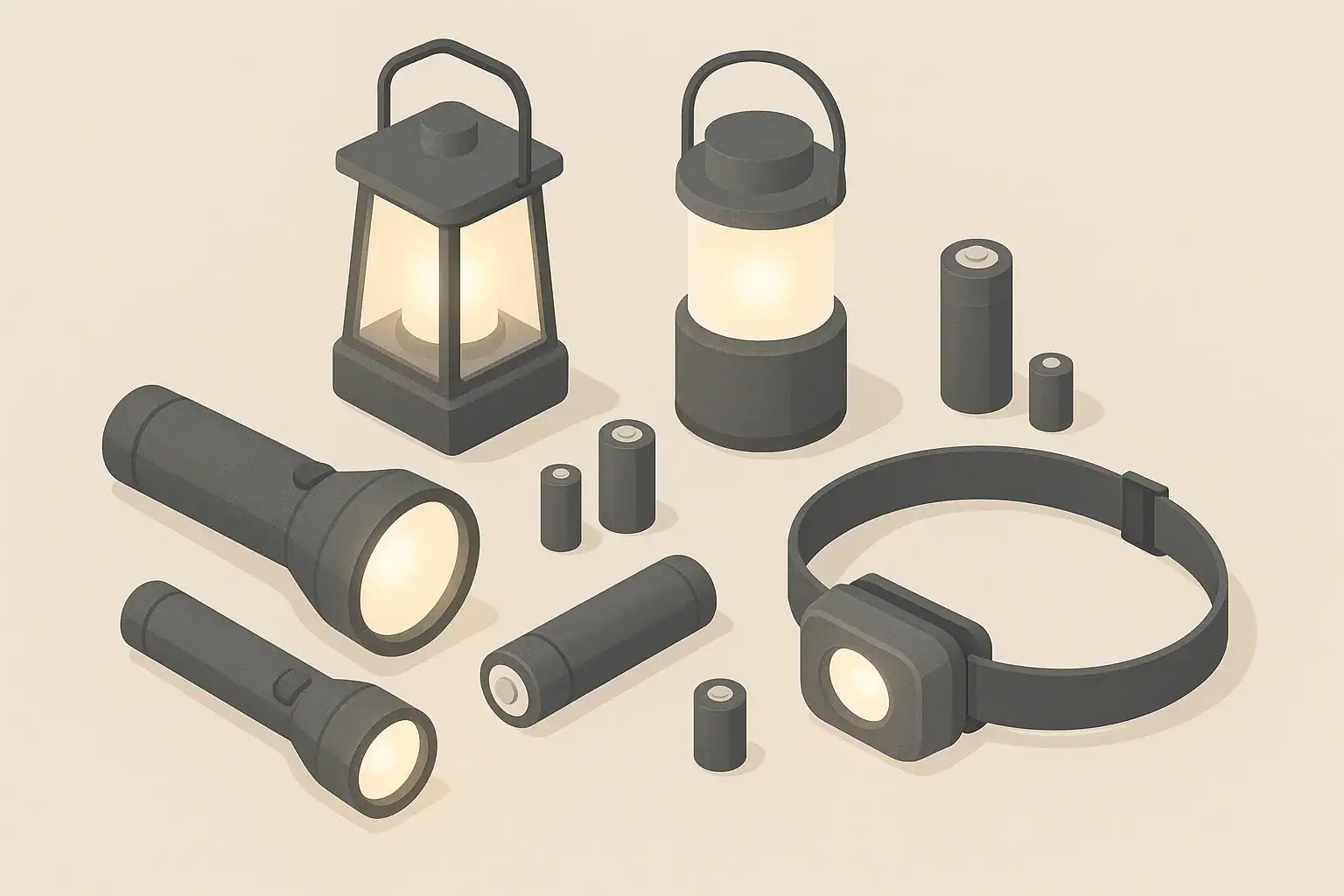
Why Solar Lanterns Matter for Everyday Emergencies
Solar lanterns have become a common addition to home emergency kits. They offer light without disposable batteries, plug-in power, or fuel. For short-term emergencies like storms, localized blackouts, or public safety shutoffs, a few well-chosen solar lanterns can cover many basic lighting needs.
However, solar lighting has real limits. It depends on daylight, storage capacity, and how you actually use the light at home. Understanding these tradeoffs helps you decide whether solar lanterns are a primary or backup option in your emergency plan.
This guide looks at what solar lanterns realistically can and cannot do during common U.S. emergencies in apartments, houses, and small spaces.
How Solar Lanterns Work in Simple Terms
Most solar lanterns combine three things in one device:
- A small solar panel that charges an internal battery
- A rechargeable battery that stores energy
- LED lights that draw relatively little power
During the day, the panel converts sunlight to electricity, topping up the internal battery. At night or during a blackout, the battery powers the LEDs to provide light. Some models also offer USB charging for phones, but this draws from the same small battery that powers the light.
In practice, this means solar lanterns are excellent at providing modest, long-lasting light in a targeted area, but they are not miniature power plants. Their design favors efficiency and simplicity over raw power.
| If you need… | Solar lanterns are… | Better primary option |
|---|---|---|
| Room-filling light for reading, games, or cooking | Often suitable if placed centrally and used on lower brightness | Plug-in lantern on backup power or multiple LED lanterns |
| All-night hallway or bathroom safety lighting | Good choice when run on low or medium brightness | Small battery tap lights or night lights on backup power |
| Occasional bright task lighting (repairs, first-aid) | Useful as part of a mix of lights | High-output LED flashlight or headlamp with spare batteries |
| Phone charging for multiple people over several days | Usually limited; treat as a backup only | Dedicated power bank or small power station with solar |
| Main light source for multi-day storm season | Helpful if you can recharge daily and use light sparingly | Mix of battery lanterns, flashlights, and solar for redundancy |
| Outdoor pathway or stair safety during outages | Useful, especially if moved between indoor and outdoor spots | Solar path lights plus a handheld flashlight or headlamp |
Note: This table offers planning guidance only. Example values for illustration.
What Solar Lanterns Do Well During Emergencies
When used within their limits, solar lanterns can make power outages more manageable and less stressful. They are particularly strong in a few areas.
Reliable Light Without Ongoing Fuel or Batteries
Solar lanterns shine in situations where access to stores or fuel may be interrupted for a few days.
- No fuel storage needed: Unlike candles or liquid-fuel lanterns, there is no open flame or fuel can to manage.
- Reduced battery anxiety: When charged in advance and given some daily sun, they can extend your lighting options without constant battery replacement.
- Good for repeated outages: Areas with frequent short blackouts or seasonal storms benefit from lights that recharge between events.
Safer, Cool-Running Light for Families and Small Spaces
For apartments, homes with kids or pets, or crowded spaces, solar lanterns offer safety advantages over candles and traditional fuel lanterns.
- No open flame: Reduced fire risk compared to candles or oil lamps.
- Cool or mildly warm surfaces: LEDs usually run cooler than incandescent bulbs or metal fuel lanterns.
- Stable and portable: Many designs can stand on a table, hang from a hook, or be carried safely.
This makes them useful in bedrooms, hallways, and shared family spaces during nighttime outages.
Energy-Efficient Light for Essential Areas
Solar lanterns are well suited for lighting a few key spots in your home rather than trying to replicate normal full-house lighting.
Common practical uses include:
- Illuminating a central living area so people can move around safely
- Providing low-level light in a bathroom or hallway at night
- Offering a reading light for one or two people
- Lighting a small kitchen area for simple meal prep
Most lanterns offer multiple brightness settings. Lower settings can often extend run time significantly, making them more suitable for multi-night outages.
Helpful for Short-Term and Daytime-Heavy Events
Solar lanterns work best in emergencies where you still have decent daytime sun between nights without power. Examples include:
- Summer thunderstorms that cause evening or overnight outages
- Planned public safety shutoffs during fire season with sunny days
- Short-term grid issues where power is out for a day or two
In these situations, you can use the lanterns at night, then recharge them in a sunny window or outdoors during the day.
Limits of Solar Lanterns You Need to Plan Around
Solar lanterns are not a complete replacement for all other lighting and power solutions. Being realistic about their limits helps you avoid frustration during an actual emergency.
Limited Energy Storage and Brightness
Solar lanterns are designed to be compact and portable, which means their internal batteries are relatively small. As a result:
- Brightest modes may last only a few hours on a full charge.
- Medium or low modes usually extend run time but give less light.
- Trying to light a large room at high brightness can drain power quickly.
This is fine for targeted, occasional lighting, but not for running bright lights all night in multiple rooms.
Dependence on Weather and Sun Exposure
Solar charging is directly affected by sunlight. Typical limitations include:
- Cloudy or stormy weather: Overcast days may significantly slow charging.
- Short winter days: Fewer daylight hours reduce total charging time.
- Shaded apartments: North-facing windows or obstructed views can limit access to direct sun.
In some emergencies, such as multi-day winter storms or heavy smoke events, you should plan for reduced solar performance and rely more on devices that were fully charged before the event.
Modest Phone-Charging Capability
Some solar lanterns offer USB ports for device charging. This is useful, but with clear limitations:
- Phone charging draws from the same small battery that powers the light.
- Charging one or two phones can significantly reduce available lighting time.
- Replenishing that energy through the built-in solar panel may take many hours of good sunlight.
It is more realistic to think of a solar lantern as an emergency phone charger of last resort, not your primary communication power source. Dedicated power banks or small solar panels are better suited for keeping phones going over several days.
Not Ideal as Your Only Lighting Source
Relying solely on one or two solar lanterns for all lighting needs can be stressful during prolonged outages, especially with multiple people in the home. For example:
- Children may need night lighting in more than one room.
- Older adults may prefer brighter, more consistent light for safety.
- Shared living spaces may need more than one light source for comfort.
Solar lanterns work best as part of a mixed lighting plan that includes flashlights, headlamps, and possibly battery-powered or plug-in lights connected to backup power.
Using Solar Lanterns in Different Home Situations
The same solar lantern can play different roles depending on where you live, who you live with, and the kinds of emergencies you face most often.
Apartments and Small Spaces
Apartment dwellers often have limited storage and may have restricted access to outdoor space.
- Charging strategy: Use the sunniest window (often south-facing) as a daily charging station.
- Placement: One lantern can serve as a movable main light between living area, bathroom, and bedroom.
- Noise and safety: Solar lanterns are quiet and clean, making them apartment-friendly compared with some fuel-based options.
In small spaces, even one or two lanterns, plus a couple of flashlights, can cover most basic lighting needs for short outages.
Houses with Multiple Rooms and Family Members
In larger homes, you may want to deploy solar lanterns strategically.
- Keep one in the main living area as a central light.
- Reserve another for the kitchen or dining table for meal prep and eating.
- Use a third near stairs or main hallways to reduce trip hazards.
Bedrooms can be served by small battery-operated lights or flashlights so that solar lanterns are not spread too thin. This approach maintains flexibility while still benefiting from solar recharging.
Homes with Kids, Seniors, or Pets
For households with varying mobility and comfort needs, solar lanterns support a safer, calmer environment.
- Nighttime bathroom trips: Place a lantern on low in the hallway or just outside the bathroom.
- Comfort for kids: Use the lantern as a nightlight on low brightness in a shared space.
- Pet safety: Light areas with water bowls, stairs, or pet gates to prevent accidents.
Because they do not produce open flames or fumes, solar lanterns are easier to use safely near bedding, pet crates, and children’s play areas, as long as the devices are handled per their instructions.
Planning Around Common Emergency Scenarios
Solar lantern performance can look very different in a summer thunderstorm compared with a winter ice storm. Thinking through a few likely local scenarios helps you set realistic expectations.
Short Blackouts (Up to 24 Hours)
For brief outages, solar lanterns often excel:
- Charge them fully ahead of time during normal conditions.
- Use medium or low brightness to stretch run time through the night.
- Recharge the next day if power is still out and sun is available.
In these situations, solar lanterns can usually handle most lighting needs without any special strategy.
Multi-Day Outages in Sunny Conditions
During longer outages in relatively sunny weather, such as after some windstorms or during wildfire-related shutoffs, solar lanterns can refresh themselves daily.
- Rotate lanterns: charge one in the sun while using another indoors.
- Keep usage focused: limit high-brightness usage to short tasks.
- Prioritize lighting essential areas only after dark.
Combining solar lanterns with a few battery lights and a charged power bank provides more flexibility and resilience.
Winter Storms and Short Days
In winter, shorter daylight hours and cloud cover make solar charging less predictable.
- Pre-charge lanterns before storms when forecasts mention possible outages.
- Use solar lanterns mostly on low settings and for key safety areas.
- Back them up with regular battery-powered lights and extra batteries.
In these conditions, treat solar lanterns as a helpful supplement rather than your primary, long-term light source.
Wildfire Smoke and Poor Air Quality
In some regions, wildfire smoke can dim sunlight and reduce solar output. At the same time, you may be keeping windows closed to improve indoor air quality.
- Charge lanterns before air quality worsens if possible.
- Place solar panels in the brightest available window, even if somewhat dimmed by smoke.
- Conserve power by running lights only when needed, especially if the situation may last several days.
If you regularly face wildfire seasons, it can be helpful to pair solar lanterns with non-solar lighting options stored indoors away from smoke.
Integrating Solar Lanterns into a Simple Home Readiness Plan
Solar lanterns work best when treated as one piece of a broader, low-stress emergency plan.
Build a Layered Lighting Setup
Consider a mix of lighting types, each serving a clear role:
- Solar lanterns: Nightly room and hallway lighting, especially on low or medium brightness.
- Flashlights: Focused beams for walking, checking on neighbors, or inspecting outside areas.
- Headlamps: Hands-free task lighting for cooking, simple repairs, or caring for children and pets.
- Battery lanterns or string lights: Supplemental area lighting for longer gatherings or shared meals.
This layering allows you to preserve solar lantern battery life for where it is most helpful while other devices handle occasional high-intensity needs.
Basic Routine to Keep Solar Lanterns Ready
A few simple habits can keep your solar lights prepared without much effort:
- Store them fully charged in an easy-to-reach location.
- Top them up in a sunny window once every month or two, or per manufacturer guidance.
- Test them briefly when clocks change or during seasonal home checks.
- Keep charging cables and any adapters in the same bin or drawer.
This low-maintenance routine helps ensure they will function as expected when the power goes out.
Set Expectations with Household Members
During an outage, it helps if everyone understands how and when to use solar lanterns so you do not drain them too quickly.
- Agree on which rooms get lanterns at night.
- Decide who is responsible for placing them in sunlight during the day.
- Explain that phone charging from lanterns is for real need, not entertainment.
- Show kids how to carry and set them up safely.
Clear, calm expectations can make the experience smoother for the whole household.
| Lighting type | Typical battery setup (example only) | Pros and cons in outages | Storage tip |
|---|---|---|---|
| Solar lantern | Built-in rechargeable battery charged by solar panel | Pros: no fuel, recharges with sun; Cons: weather-dependent, limited output | Store charged; give it periodic sun exposure to maintain battery |
| LED flashlight | Rechargeable or disposable AA/AAA or similar | Pros: bright, focused beam; Cons: easy to misplace, battery use can add up | Keep one in each bedroom and near exits with labeled spare batteries |
| Headlamp | Rechargeable cell or small AA/AAA-style batteries | Pros: hands-free; Cons: elastic bands and switches can wear over time | Store in a small pouch to protect lens and keep with spare batteries |
| Battery-powered lantern | Several AA/AAA or medium-sized batteries | Pros: good area light; Cons: uses multiple batteries at once | Rotate batteries into household use every year to keep them fresh |
| Plug-in light on backup power | Powered by small backup battery or power station | Pros: familiar light quality; Cons: depends on keeping backup charged | Include in your pre-storm charging checklist and test occasionally |
| Mini tap light | Coin cell or small AA/AAA batteries | Pros: compact night lighting; Cons: smaller batteries may be less common in your home | Store with a note listing battery size so replacements are easy to buy |
Example values for illustration.
Key Takeaways for Calm, Practical Use of Solar Lanterns
Solar lanterns can meaningfully reduce stress during power outages by providing safe, quiet, renewable light. They are especially useful for lighting key rooms, hallways, and shared spaces, and they fit well in apartments and family homes alike.
At the same time, they have clear limits. Sunlight, battery size, and brightness settings all affect how long they can run. Solar lanterns are most effective as part of a broader lighting plan that includes other battery-powered options and some basic habits for keeping everything charged and ready.
By understanding what solar lanterns can and cannot do in realistic emergency scenarios, you can use them confidently without expecting them to cover every need on their own.
Authoritative sources
Safety recommendations can change. Confirm critical details with current official guidance and local authorities.
- CDC: Carbon Monoxide Poisoning Basics
- USDA FSIS: Keep Food Safe During Emergencies
- U.S. CPSC: Battery Safety
Frequently asked questions
How long will a typical solar lantern run during a power outage?
Run time varies by model, battery capacity, and brightness setting. Many consumer solar lanterns provide 1–4 hours on their brightest setting and 6–24+ hours on low settings on a full charge; exact numbers depend on the specific lantern. Test your devices ahead of time and use lower settings to extend runtime when needed.
Can solar lanterns reliably charge phones during emergencies?
Some lanterns include a USB port, but they share the same internal battery that powers the light. That means they can often provide one partial charge or a single full charge for a low-battery phone, but charging multiple phones will quickly reduce available lighting. For repeated phone charging, a dedicated power bank or small power station is more reliable.
Will solar lanterns recharge adequately during cloudy, smoky, or winter conditions?
Solar charging is reduced in overcast skies, heavy smoke, and short winter days, so lanterns may charge much more slowly or not fully recharge indoors. Placing panels in the brightest available window helps, but you should pre-charge devices before anticipated events. Treat solar lanterns as supplemental when sunlight is limited.
How should I store and maintain solar lanterns so they’re ready for emergencies?
Store lanterns charged in an accessible location and top them up in a sunny window every month or per manufacturer guidance. Keep charging cables and adapters together, test units periodically (for example when clocks change), and follow battery care recommendations to prolong life. These simple habits reduce the chance of finding flat batteries during an outage.
Are solar lanterns safe to use around children, pets, and indoors?
Yes. Solar lanterns use LEDs and have no open flame, which reduces fire and fume risks compared with candles or fuel lanterns. They typically run cool and are designed to be stable and portable, but you should still follow manufacturer instructions, keep them dry, and supervise small children to avoid accidental damage.
- Simple checklists and realistic planning
- Water, power, lighting, and pantry basics
- Family plans (kids, pets, seniors) and seasonal prep
Affiliate disclosure
As an Amazon Associate, we earn from qualifying purchases. Some links on this site may be affiliate links. If you buy through these links, we may earn a small commission at no extra cost to you. This helps support our content. Learn more.