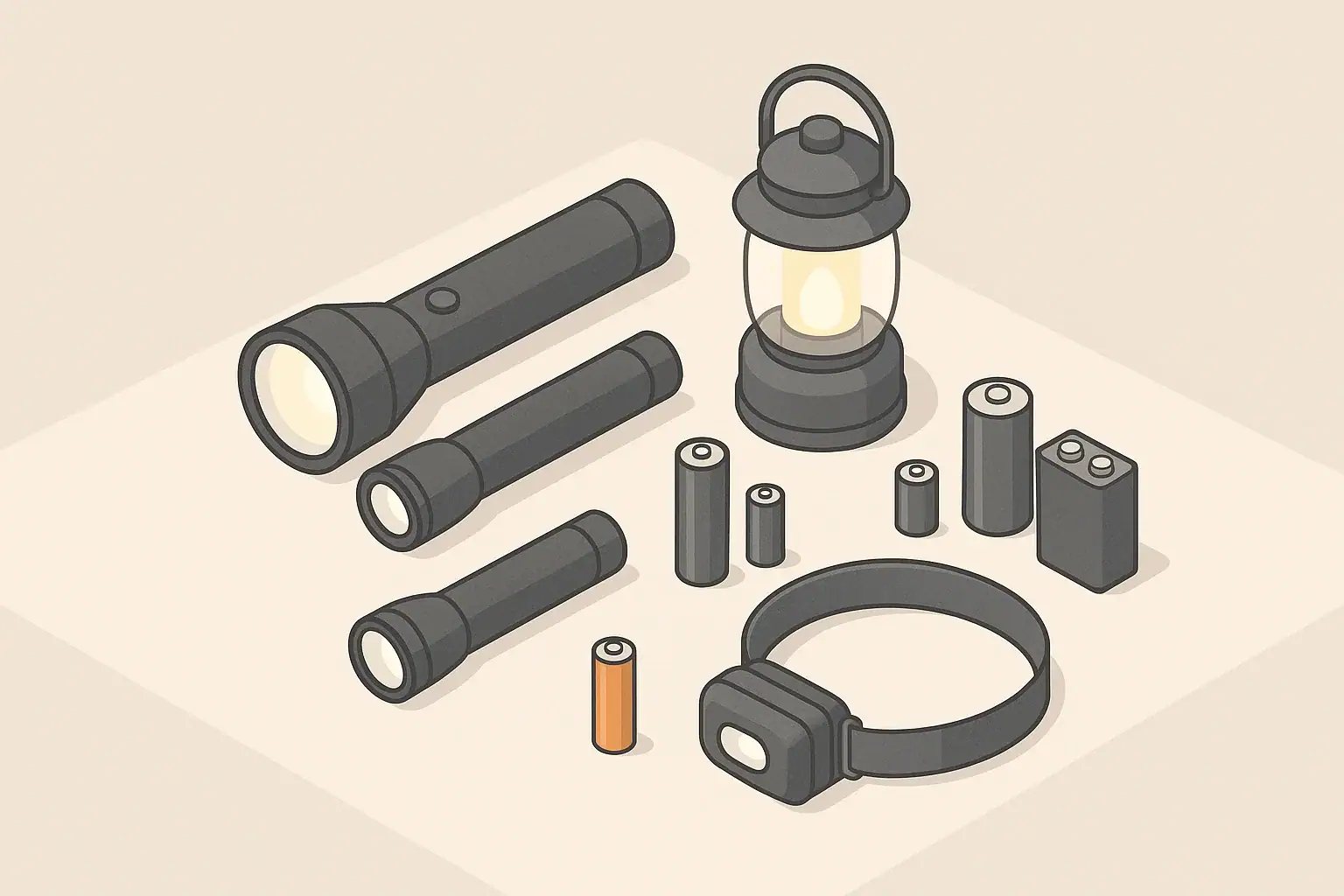
Why Battery Basics Matter for Everyday Readiness
Power outages and short-term disruptions are common in many parts of the United States, whether from winter storms, heatwaves, or routine grid issues. Having the right batteries on hand makes it easier to keep lights on, small devices running, and communication available without turning your home into a storage closet full of random sizes and chargers.
This guide explains the basics of common household battery types—AA, AAA, 18650, and other rechargeables—in practical, plain language. The goal is simple: help you choose a small, sensible mix of batteries that fits your home, whether you live in an apartment or a house, with or without kids and pets.
We will look at how these batteries differ, where they are typically used, what to consider for backup lighting and small electronics, and how to store and use them safely.
AA and AAA Batteries: The Everyday Workhorses
AA and AAA batteries are the most common sizes in U.S. homes. They power remote controls, small flashlights, clocks, toys, and many battery-powered emergency lights and emergency radios. For basic home readiness, most people will rely heavily on these two sizes.
Physical Size and Typical Uses
AA and AAA batteries are both cylindrical, but AA are larger and usually hold more energy than AAA of the same chemistry.
- AA batteries: Often used in flashlights, battery-powered lanterns, radios, and many medium-sized devices.
- AAA batteries: Common in remote controls, small headlamps, and compact devices where size matters more than runtime.
For home readiness, AA batteries are usually the more important size to stock, because many emergency-friendly lights and radios are designed around AA cells. However, if your household has lots of AAA-only devices (for example, remote controls or small headlamps for kids), plan some AAA as well.
Disposable vs Rechargeable AA/AAA
AA and AAA batteries come in two main categories: disposable (single-use) and rechargeable.
- Disposable (alkaline or similar)
- Used once and then recycled or discarded according to local guidance.
- Good for long shelf life storage when kept in a cool, dry place.
- Simple option for people who do not want to manage chargers.
- Rechargeable (commonly nickel-metal hydride, NiMH)
- Can be charged many times with a compatible charger.
- Reduce waste and ongoing cost when used regularly.
- Some types are designed to hold charge well in storage; look for “low self-discharge” or similar terms when shopping.
For blackout planning, a mix can work well: rechargeable AA/AAA for regular household use, plus a small reserve of disposables stored for emergencies.
Pros and Cons of AA/AAA for Readiness
AA and AAA batteries have several advantages for everyday preparedness:
- Widely available in most stores.
- Compatible with many basic flashlights, lanterns, and radios.
- Easy to share among different devices in the home.
Potential downsides include:
- Less energy per cell than larger lithium cells like 18650, which can mean shorter runtimes in high-powered devices.
- Rechargeable AA/AAA require a separate charger and a power source (wall outlet, car adapter, or solar panel) for recharging.
Example values for illustration.
| Battery type | Typical voltage (per cell) | Common uses at home | Readiness pros | Readiness trade-offs |
|---|---|---|---|---|
| AA disposable (alkaline) | About 1.5 V | Flashlights, radios, toys | Long shelf life, easy to find | Single-use, recurring cost |
| AA rechargeable (NiMH) | About 1.2 V | Frequent-use lights, remotes | Reusable, good for daily use | Needs charger and power source |
| AAA disposable (alkaline) | About 1.5 V | Remotes, small headlamps | Compact, widely available | Less energy than AA per cell |
| AAA rechargeable (NiMH) | About 1.2 V | Compact lights, small devices | Reusable, good in small gear | Shorter runtimes than AA |
| 18650 lithium-ion | About 3.6–3.7 V | High-output lights, battery packs | High energy in one cell | Needs compatible charger, more care |
| Power bank (lithium inside) | Varies; outputs 5 V USB | Phones, small USB devices | Simple USB output, portable | Not user-serviceable cells |
What Is a 18650 Battery and How Is It Different?
As more people use brighter flashlights and compact power devices, 18650 batteries have become more common. The term “18650” refers to the approximate size: about 18 mm in diameter and 65 mm long.
Key Characteristics of 18650 Cells
Most 18650 batteries are lithium-ion rechargeables. Some general features include:
- Higher voltage per cell: Commonly around 3.6–3.7 volts per cell, compared with about 1.2–1.5 volts for AA/AAA.
- Higher energy in a single cell: One 18650 can often power a bright flashlight or lantern for longer than a single AA, depending on the device and settings.
- Rechargeable by design: Intended for repeated charge cycles with an appropriate charger.
Because of these traits, 18650 batteries are frequently used in:
- High-output flashlights and headlamps.
- Some battery-powered lanterns and work lights.
- Battery packs and some portable power devices (usually built-in, not user-replaceable).
Protected vs Unprotected 18650 Cells
Some 18650 cells include an internal protection circuit, while others do not. The protection circuit can help prevent overcharging, over-discharging, or short circuits, within design limits.
- Protected cells
- Often slightly longer than unprotected cells because of the small circuit attached.
- Commonly recommended for general consumer use where compatible.
- Unprotected cells
- Used in devices or battery packs that already have built-in protection.
- Require more careful handling and proper matching to intended equipment.
Always check your device manufacturer’s instructions to see which type is recommended, and follow them carefully.
When 18650 Batteries Make Sense for Home Readiness
18650-powered devices can be very useful, but they are not necessary for every household. They tend to fit best when:
- You want one or two bright, long-running flashlights or headlamps for specific tasks (for example, walking a dog at night during a power outage, or checking on a basement).
- You are comfortable managing a dedicated lithium-ion charger and paying attention to charging times and safety instructions.
- You prefer fewer batteries with higher capacity per cell instead of many AA/AAA cells.
If you prefer simple, widely-available options, you can absolutely build a solid home lighting and backup plan around AA and AAA devices without using 18650 cells at all.
Rechargeable vs Disposable: Planning for Short-Term Outages
For realistic home readiness, especially in small spaces or apartments, it often makes sense to strike a balance between convenience and resilience. That usually means using rechargeable batteries in daily life and keeping a modest stash of disposables for times when recharging may be difficult.
Benefits of Rechargeable Batteries
Rechargeable batteries shine when they are used regularly and maintained thoughtfully.
- Cost-effective over time: A set of rechargeables can often be used many times, which can reduce long-term costs compared to buying disposables repeatedly.
- Convenient for routine use: Use rechargeables in high-drain devices you rely on often, like flashlights, wireless accessories, or kids’ toys.
- Pairs well with backup power: If you have a small power station, car adapter, or basic solar panel, you can recharge batteries without grid power.
Where Disposable Batteries Still Help
Disposable batteries can be valuable even in a rechargeable-focused home:
- Long storage: Kept in a cool, dry place, discrete packages of disposable batteries can sit unused for years, ready for an unexpected outage.
- No charging needed: If you lose power for longer than planned or lack a way to recharge, disposables give you a simple fallback.
- Useful in low-drain devices: Wall clocks, simple remotes, and some detectors can run for a long time on a single disposable cell.
Balancing Both in a Small Home
For apartments or smaller homes where storage is limited, consider a simple approach:
- Choose a core battery size for most of your emergency lights and radio (often AA).
- Buy a set of rechargeable batteries and a compatible charger for everyday use.
- Store one or two unopened packs of disposable batteries as a backup reserve.
This strategy avoids overflowing drawers of mismatched batteries while still giving you options if an outage lasts longer than your rechargeable supply.
Battery Safety and Storage in the Home
Safe use and storage are just as important as choosing the right battery type. Good habits protect your devices, your home, and anyone who might handle the batteries, including children and older adults.
General Safety Tips for All Battery Types
- Avoid mixing types: Do not mix old and new batteries, or different chemistries (for example, mixing rechargeable and disposable) in the same device, unless the manufacturer clearly states it is acceptable.
- Install correctly: Follow the polarity markings (+ and –) in your device. Incorrect installation can cause malfunction or damage.
- Prevent short circuits: Keep loose batteries in cases or original packaging so the terminals do not touch metal objects (like keys or coins).
- Do not crush or puncture: Avoid bending, crushing, or opening batteries. Damaged batteries should be handled cautiously and disposed of according to local guidance.
- Use compatible chargers: Only use chargers designed for the specific battery type and size. AA/AAA chargers are not the same as 18650 chargers.
Storage Tips for Families, Kids, and Pets
Households with children or pets should take extra care with battery storage and disposal.
- Keep out of reach: Store batteries in a secure drawer, cabinet, or container that children and pets cannot easily access.
- Watch for small batteries: Button and coin cells, while not the focus of this article, are especially risky if swallowed. Keep them and any loose batteries away from young children.
- Label storage: Use simple labels or color-coding on containers to mark “new” vs “used” batteries, so you do not mix them accidentally.
Where to Store Batteries at Home
Most common household batteries store best in a cool, dry place, away from direct sunlight and heat sources.
- Avoid extreme temperatures: Attics, hot garages, and areas near heaters can shorten battery life or increase the risk of leakage.
- Use organizers: Simple plastic cases or small boxes make it easier to organize sizes and keep contacts covered.
- Do not freeze unless instructed: Some older advice suggested refrigeration or freezing, but for most modern household batteries, normal indoor conditions are adequate unless the manufacturer clearly suggests otherwise.
Disposal and Recycling
Battery disposal rules vary by location, so check local or state guidance:
- Single-use alkaline batteries: Some areas allow disposal in regular household trash; others encourage or require recycling.
- Rechargeable and lithium-based batteries: These often require special recycling and should not be placed in regular trash, especially large lithium-ion packs.
- Community collection points: Many communities provide drop-off points at recycling centers or participating stores.
Building a Simple Battery Plan for Your Home
Instead of buying batteries randomly, it can help to think through how many and which types you actually need. Consider your living situation, typical weather risks, and who is in the home.
Step 1: List Your Critical Battery-Powered Items
Walk through your home and identify items that would matter during a power outage or short disruption. Common examples include:
- Flashlights and headlamps (for each person, if possible).
- Battery-powered lantern or area light for a main room.
- Weather or emergency radio.
- Small fan or other comfort items, if battery-powered and realistic for your space.
Note what battery sizes each device uses: AA, AAA, 18650, or built-in rechargeable packs.
Step 2: Standardize Where Reasonable
Over time, you can choose replacement devices that use the same battery sizes, which simplifies storage. For example:
- Choosing AA-based flashlights, lanterns, and radios so one set of rechargeables and disposables works for all.
- Using AAA only in devices where very small size is important, like compact headlamps or slim remote controls.
- Reserving 18650-powered devices for specific roles, like a bright main flashlight for outdoor use.
Step 3: Estimate a Modest Reserve
How many batteries you need depends on your goals. For typical short outages:
- For AA/AAA: Consider enough batteries to run your key lights and radio for several evenings, plus some margin for kids’ or seniors’ devices.
- For 18650: A couple of spare cells per 18650-based light is often sufficient for short, occasional use.
- For USB devices: A small power bank can back up phones and some rechargeable lights if you do not want to manage separate cell types.
Think in terms of nights of lighting rather than exact hours. For example, if a lantern or flashlight can reasonably run on low or medium brightness for an evening on one set of batteries, plan one set per evening you want to cover, then adjust for your household size.
Example values for illustration.
| Lighting type | Battery type | Pros and cons | Storage tip |
|---|---|---|---|
| Small handheld flashlight | AA or AAA | Easy to share batteries; moderate runtime | Store with one fresh set installed, one spare set nearby |
| Headlamp for hands-free use | AAA or 18650 | Great for cooking or tasks; battery size depends on design | Keep in a labeled pouch so each person can find theirs quickly |
| Room lantern for shared space | AA or built-in rechargeable | Lights a whole area; may use several cells | Store with batteries removed if long-term; keep pack nearby |
| High-output search flashlight | 18650 | Very bright; good for outdoor checks | Store charged cells in a case away from metal objects |
| Kids’ night light or small lantern | AA or AAA | Low output but comforting; long runtimes on low | Place where kids can reach with supervision during outages |
| Stairway or hallway safety light | AA or AAA | Helps prevent trips and falls in the dark | Pre-position lights in known spots; check batteries twice a year |
Keeping Your Battery Plan Simple and Sustainable
A calm, realistic approach to home readiness does not require a large stash of batteries or specialized equipment. Focusing on a few battery types (often AA and AAA, with 18650 if it suits your needs) and a handful of reliable lights can cover most everyday scenarios, from brief evening outages to storm-related blackouts lasting a couple of days.
Review your battery-powered gear once or twice a year, ideally at the same time you check smoke detectors or adjust clocks. Replace or recharge batteries, verify that children and older family members know where the flashlights and lanterns are kept, and confirm that your chargers and power banks are where you expect them to be.
Over time, these small routines make power disruptions much less stressful. With a straightforward battery plan in place, your home can stay safer, more comfortable, and better prepared for the everyday surprises that come with changing seasons and weather.
Related guides: Battery Organizer for Emergencies: Sizes, Rotation, and Leak Prevention · Gluten-Free Emergency Pantry: Shelf-Stable Basics Without Overbuying.
Authoritative sources
Safety recommendations can change. Confirm critical details with current official guidance and local authorities.
- U.S. CPSC: Battery Safety
- Ready.gov: Preparedness Tips for People with Disabilities
- Ready.gov: Prepare Your Pets for Disasters
Frequently asked questions
How do AA/AAA rechargeable (NiMH) batteries compare to disposable alkalines for long-term storage?
Disposable alkaline cells generally hold charge longer on the shelf and are a simple backup for infrequent use, while standard NiMH rechargeables have a lower nominal voltage and higher self-discharge over time but are cost-effective for regular use. Low self-discharge NiMH variants retain charge much longer and are a practical middle ground for emergency readiness.
Can I use 18650 cells in devices designed for AA or AAA batteries?
No — 18650 cells are physically larger and have a much higher nominal voltage (about 3.6–3.7 V) than AA/AAA cells, so they are not directly compatible. Using the wrong cell type can damage the device or create safety risks; only use battery types specified by the manufacturer or appropriate battery holders and voltage regulation.
What safety precautions should I take when storing and transporting 18650 lithium-ion cells?
Store 18650 cells in protective cases so terminals cannot contact metal objects, keep them in a cool, dry place away from heat sources, and avoid physical damage or punctures. For longer-term storage, many recommend keeping lithium-ion cells at a partial state of charge (about 30–50%) and always use chargers designed for lithium-ion chemistry.
How many spare batteries should I store for short-term outages in a small apartment?
Aim to store enough to run your key lights and a radio for several evenings — commonly one fresh set per light per evening, plus one spare set as a margin. Practically, that might mean 2–3 spare AA/AAA sets for a small household and one or two extra 18650 cells for each 18650-based flashlight, adjusted for household size and usage.
Are protected 18650 cells necessary for consumer flashlights?
Protected 18650 cells include a small circuit that can help prevent overcharge, over-discharge, and short circuits, adding an extra layer of safety for general consumers. They are often recommended unless the flashlight or battery pack already includes built-in protection; always follow the device manufacturer’s guidance.
- Simple checklists and realistic planning
- Water, power, lighting, and pantry basics
- Family plans (kids, pets, seniors) and seasonal prep
Affiliate disclosure
As an Amazon Associate, we earn from qualifying purchases. Some links on this site may be affiliate links. If you buy through these links, we may earn a small commission at no extra cost to you. This helps support our content. Learn more.