Power outages in apartments are usually short, but they can still be disruptive and unsafe if you cannot see clearly. Hallways, stairwells, and windowless bathrooms can go completely dark, and many apartments restrict open flames, making candles a poor choice for both safety and lease compliance.
A simple, well-planned lighting kit gives you reliable, flameless light for moving around, cooking basic food, checking on kids or pets, and staying calm. You do not need expensive gear or complicated backup power systems. A few affordable lights, extra batteries, and a plan for where to keep them can cover most everyday outage scenarios.
This guide focuses on renters and small spaces, helping you build a compact lighting kit that works in apartments without using candles.
Why Apartment Lighting Kits Matter (Without Candles)
Power outages in apartments are usually short, but they can still be disruptive and unsafe if you cannot see clearly. Hallways, stairwells, and windowless bathrooms can go completely dark, and many apartments restrict open flames, making candles a poor choice for both safety and lease compliance.
A simple, well-planned lighting kit gives you reliable, flameless light for moving around, cooking basic food, checking on kids or pets, and staying calm. You do not need expensive gear or complicated backup power systems. A few affordable lights, extra batteries, and a plan for where to keep them can cover most everyday outage scenarios.
This guide focuses on renters and small spaces, helping you build a compact lighting kit that works in apartments without using candles.
Core Pieces of a Candle-Free Lighting Kit
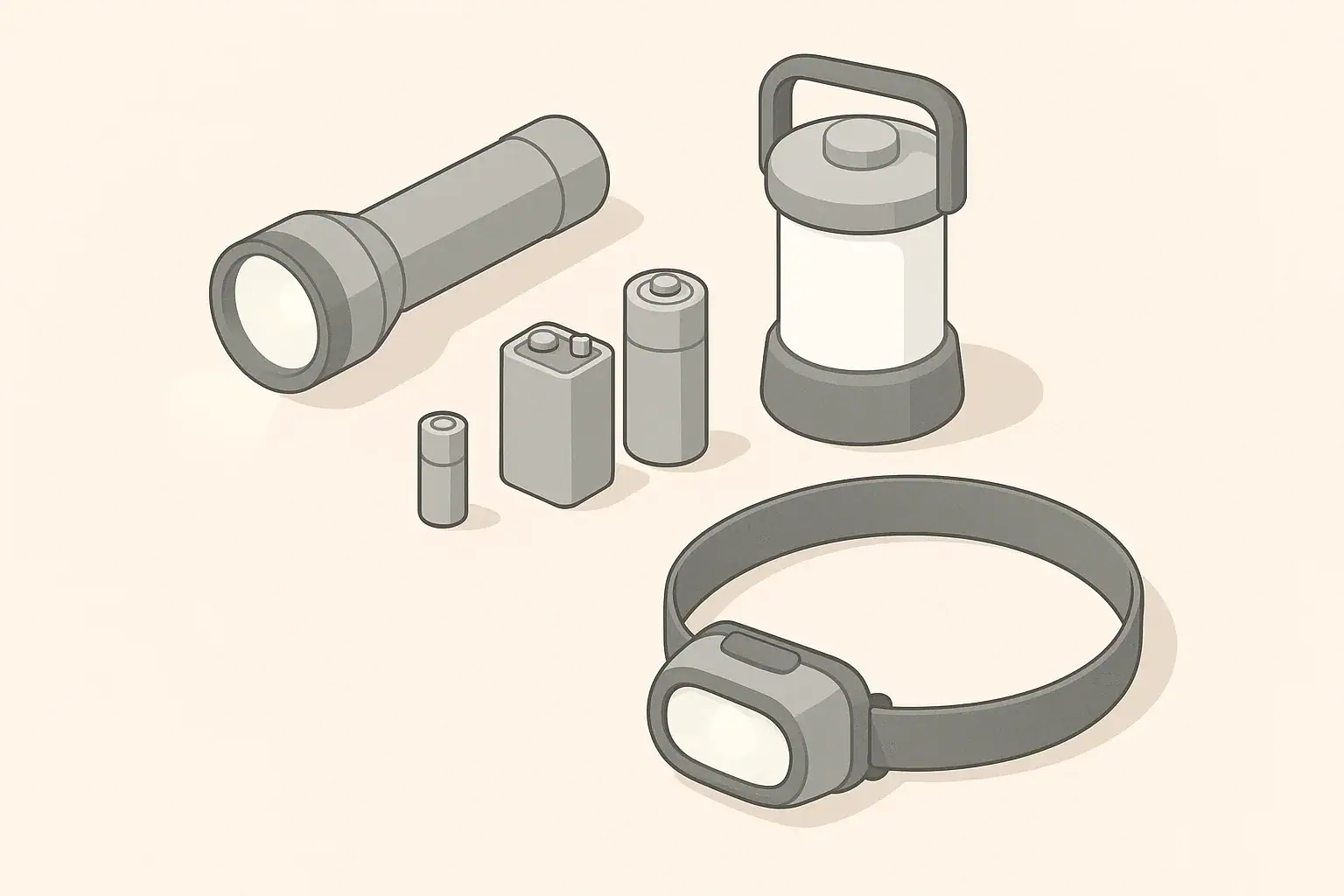
A good apartment lighting kit is small, simple, and easy to use in a hurry. Aim for a mix of hands-free light, room-filling light, and focused light.
1. Hands-Free Light for Moving Around
Hands-free lighting is especially helpful in apartments with narrow hallways, stairs, or if you need to carry a child, pet, or supplies.
- Headlamps: Useful for walking around, doing small tasks, or climbing stairs while keeping both hands free.
- Clip-on or wearable lights: Small lights that clip to clothing, belts, or hats can be a good alternative if headlamps feel uncomfortable.
Plan for at least one hands-free light per adult or teen who might move around during an outage.
2. Area Lighting for Rooms
Area lights are designed to illuminate a space rather than a single spot. They help reduce trip hazards and make it easier for everyone to stay in one main room.
- LED lanterns: Compact lanterns can sit on a table or floor and light up a room for reading, playing games, or preparing simple food.
- Stick-on or hanging lights: Small battery-powered puck or strip lights can be mounted in closets, hallways, or bathrooms in advance.
For a small apartment, two to three area lights are usually enough to keep a main living area, bathroom, and entryway usable.
3. Focused Task Lights
Task lights help with detailed work when you do not need to light an entire room.
- Compact flashlights: Good for checking electrical panels, looking under sinks, or guiding your way through a dark hallway.
- Keychain lights: Useful for quick tasks or for keeping in a purse or pocket when coming home to a dark building.
Keep at least one small flashlight in a fixed, easy-to-reach spot like by the front door or in a kitchen drawer.
Example values for illustration.
| If this is you… | Then prioritize… | Why it helps |
|---|---|---|
| Studio or one-bedroom, single person | 1 lantern, 1 flashlight, 1 headlamp | Covers one main room plus safe movement without taking much space |
| Family with young kids | 2 lanterns, 2+ headlamps or clip-on lights | Keeps shared room bright and lets adults move around hands-free |
| Senior or limited mobility | Bright area lights, easy on/off switches | Reduces trip hazards and avoids fiddly buttons in the dark |
| Pet owner in upper-floor unit | Hands-free light plus backup flashlight | Makes stairwells and hallways safer when walking pets |
| Shared roommates | Lanterns in common areas, small lights in each room | Everyone has their own light while kitchen and living room stay usable |
| Frequent short outages | Rechargeable lights near main outlets | Easy to top up between outages with minimal battery use |
How Many Lights and Batteries Do You Really Need?
You want enough light for a typical evening or overnight outage without filling closets with gear. A practical target is to plan for one full evening (about 4–6 hours) of comfortable light for everyone at home.
Estimating Lighting Needs by Room
Use this as a flexible starting point and adjust for your layout and preferences:
- Main living area: 1 primary lantern or bright area light.
- Bathroom: 1 small lantern or mounted light that can live there full time.
- Bedroom(s): 1 compact flashlight or small lamp per occupied bedroom.
- Hallway/entry: 1 small light if your hallway is windowless or long.
In a one-bedroom apartment, that might mean two lanterns and two flashlights, plus one or two headlamps. In a two- or three-bedroom apartment, you might add one more lantern and extra headlamps or small lights.
Planning Battery Capacity
Battery needs depend on how many hours of light you want and how bright the lights are. Rather than aiming for precise calculations, plan in broad strokes:
- Assume each main lantern will run for several evenings on a full set of batteries at a low or medium brightness setting.
- Assume smaller flashlights or headlamps will last multiple evenings for short, on-and-off use.
As a simple rule of thumb for a small apartment kit:
- Store at least two full spare sets of batteries for each battery-powered light that is not rechargeable.
- If using rechargeable lights, plan a way to recharge them (portable power bank, power station, or solar panel if allowed on a balcony or near a window).
Balancing Disposable and Rechargeable Options
Many apartment kits work best with a mix of both:
- Disposable batteries: Simple, long shelf life, and no charging schedule to remember.
- Rechargeable lights: Cost-effective over time and ideal if outages are frequent and short.
Choose whichever fits your routine. The important part is consistency: stay with a small number of battery sizes so you do not have to stock every type.
Safe Lighting Practices in Small Spaces
In apartments, space is tighter, exits are shared, and smoke or fire can spread quickly. That is why candle-free lighting is strongly preferred, especially during stressful events like storms or building power issues.
Why to Skip Candles and Open Flames
Even if your lease does not explicitly ban candles, they come with added risk:
- Open flames can be tipped over by kids, pets, or a bumped table.
- They add heat and smoke to a confined space.
- They may violate building rules or insurance expectations.
Battery-powered and rechargeable lights remove these fire risks and are easier to use safely while moving around.
Placement Tips for Safer Movement
Think about how you naturally move through your apartment in the evening, then match your lighting plan to that path.
- Entryway: Keep a flashlight or headlamp in a small basket, hook, or drawer right by the main door.
- Bathroom: Store a small lantern or mounted light that can stay there full time.
- Kitchen: Place one area light where it can illuminate counters and the sink.
- Stairwells and hallways: If your building hallways are very dark during outages, keep a personal light accessible before you leave your unit.
Kid, Senior, and Pet Considerations
Different household members may need different lighting setups.
- Kids: A small, easy-on lantern or nightlight-style device they can keep near the bed may be more comforting than a bright flashlight.
- Seniors: Look for simple switches, larger buttons, and non-slip bases for lights that stay on tables or countertops.
- Pets: Ensure cords are minimal and lights are steady so curious animals do not knock them down.
Storage, Maintenance, and Rotation
A lighting kit only helps if it works when you need it. A little organization and a simple rotation habit go a long way.
Where to Store Your Lighting Kit
In small apartments, you may not have a dedicated storage closet, but you can still keep things organized and easy to grab.
- Central bin or box: Use a clear container and store all extra lights and batteries together.
- Entryway or hall closet: Ideal for quick access during a building-wide outage.
- Bedside drawer: Keep at least one small light within reach of the bed.
Label the container if that helps household members find lights quickly, and tell everyone where the kit lives.
Battery Storage Best Practices
To keep batteries in good shape:
- Store them in a cool, dry place away from direct heat.
- Keep original packaging or use battery cases so loose batteries are not rolling around together.
- Do not mix old and new batteries in the same device.
If you have small children, store extra batteries out of reach, as they can be a choking hazard.
Simple Maintenance Schedule
You do not need anything complicated. A quick seasonal check is enough for most homes:
- Every 6–12 months: Test each light, replace worn-out batteries, and recharge rechargeable units.
- Before storm seasons: In areas with hurricanes or winter storms, do an extra check before the season begins.
- After any outage: Note which lights were used heavily and replace or recharge batteries soon after.
Integrating Lighting With Backup Power and Other Preparedness
Lighting is one part of a bigger short-term readiness plan. When your lights share power sources with phones, small fans, or other devices, planning how you will use that power becomes more important.
Using Power Banks and Small Power Stations
Many modern lights can plug into portable battery packs. This can be helpful if your apartment frequently loses power for a few hours at a time.
- Power banks: Handy for topping up small lanterns or headlamps that charge via common cables.
- Small power stations: Can power lights plus a few other essentials like phone chargers or a low-power fan.
If you rely on rechargeable-only lights, make sure your backup power source is itself kept charged between outages.
Coordinating Light With Other Needs
During an outage, good lighting makes other tasks easier:
- Water: A lantern near the sink helps you safely use stored water or a basic water filter.
- Food: Area lighting in the kitchen supports simple, no-cook meals from your pantry.
- Communication: A bright, focused light makes it easier to check your phone, battery radio, or written contact list without eye strain.
Think of your lighting kit as part of an overall plan so you are not trying to juggle flashlights while taking care of other needs.
Example values for illustration.
| Lighting type | Battery type (common examples) | Pros and cons | Storage tip |
|---|---|---|---|
| Compact flashlight | AA or AAA batteries | Easy to find; may need multiple batteries for longer use | Keep spare packs in a small case to avoid loose rolling batteries |
| Small lantern | AA, AAA, or similar size cells | Good room light; battery use depends on brightness level | Store an extra full set of batteries in the same container as the lantern |
| Headlamp | AAA batteries or built-in rechargeable cell | Hands-free use; small batteries can be easy to misplace | Keep headlamp and spare batteries together in a labeled pouch |
| Rechargeable area light | Built-in rechargeable battery | No disposable batteries to store; must remember to recharge | Plug in for a top-up during monthly or seasonal preparedness checks |
| Keychain or pocket light | Small coin cell or tiny rechargeable | Ultra portable; generally lower brightness and runtime | Attach to key ring or bag so it does not get lost in drawers |
| Mounted closet or hallway light | AA, AAA, or built-in rechargeable | Provides automatic light where ceiling lights may fail | Check and replace or recharge batteries during seasonal deep cleans |
Putting It All Together: A Simple Starter Kit List
If you want a straightforward packing list to begin, here is a basic kit for a small apartment that avoids candles and open flames:
- 2 small LED lanterns for main living area and kitchen or bathroom.
- 2 compact flashlights (one by the door, one in the bedroom).
- 2 headlamps or wearable lights for hands-free movement.
- Spare batteries: at least two full extra sets for each non-rechargeable light.
- 1 small power bank or other charging option if relying on rechargeable lights.
- 1 clear storage container or pouch to keep everything together and visible.
From there, adjust up or down based on your household size, layout, and how often your area experiences outages. The goal is simple: reliable, safe light that fits your apartment and helps everyone stay steady and comfortable when the power goes out.
Authoritative sources
Safety recommendations can change. Confirm critical details with current official guidance and local authorities.
- USDA FSIS: Keep Food Safe During Emergencies
- U.S. CPSC: Battery Safety
- CDC: Guidelines for Cleaning Safely After a Disaster
Frequently asked questions
What should be included in an apartment emergency lighting kit for a one-bedroom unit?
A practical starter kit for a one-bedroom apartment typically includes two small LED lanterns (one for the main living area and one for the kitchen or bathroom), two compact flashlights, one or two headlamps for hands-free movement, at least two full spare sets of batteries for non-rechargeable lights, and a small power bank if you use USB-rechargeable lights. Keep everything in a clear container near the entryway so it is easy to grab during an outage.
How many spare batteries should I store for non-rechargeable lights?
Store at least two full spare sets of batteries for each non-rechargeable light in your kit so you can cover several evenings of low-to-medium brightness use. Keep batteries in a cool, dry place and avoid mixing old and new batteries in the same device to prevent reduced runtime or leakage.
Can I recharge lights during an outage using a power bank or small power station?
Yes, many USB-chargeable lanterns and headlamps can be recharged from a power bank, and small power stations can run multiple lights plus a few low-power devices. Make sure the power bank or station is charged ahead of time and check device voltage and run-time ratings so you do not exceed the backup source’s capacity.
Where should I place lights in a small apartment to improve safety during a blackout?
Keep a flashlight or headlamp by the main door, a small lantern or mounted light in the bathroom, an area light in the kitchen near counters and the sink, and at least one bedside light or flashlight. Position lights to follow your usual movement paths and consider hands-free options for stairs or when carrying items.
Are rechargeable lights better than disposable-battery lights for apartments with frequent short outages?
Rechargeable lights are cost-effective and convenient for frequent short outages if you have a reliable way to recharge them between events. Disposable batteries have a longer shelf life and are useful if outages are rare, so a mixed approach—keeping a few rechargeable units plus some disposable spares—is often the most practical solution.
- Simple checklists and realistic planning
- Water, power, lighting, and pantry basics
- Family plans (kids, pets, seniors) and seasonal prep
Affiliate disclosure
As an Amazon Associate, we earn from qualifying purchases. Some links on this site may be affiliate links. If you buy through these links, we may earn a small commission at no extra cost to you. This helps support our content. Learn more.