Why Outage Lighting Matters in Everyday Homes
When the power goes out, the right lighting makes the difference between a mildly inconvenient evening and a stressful situation. Good light helps you move safely, avoid trips and falls, prepare simple food, and keep kids and pets calm. You do not need specialized gear or a large budget. A few well-chosen lights, stored in known spots, can cover most short-term outages at home.
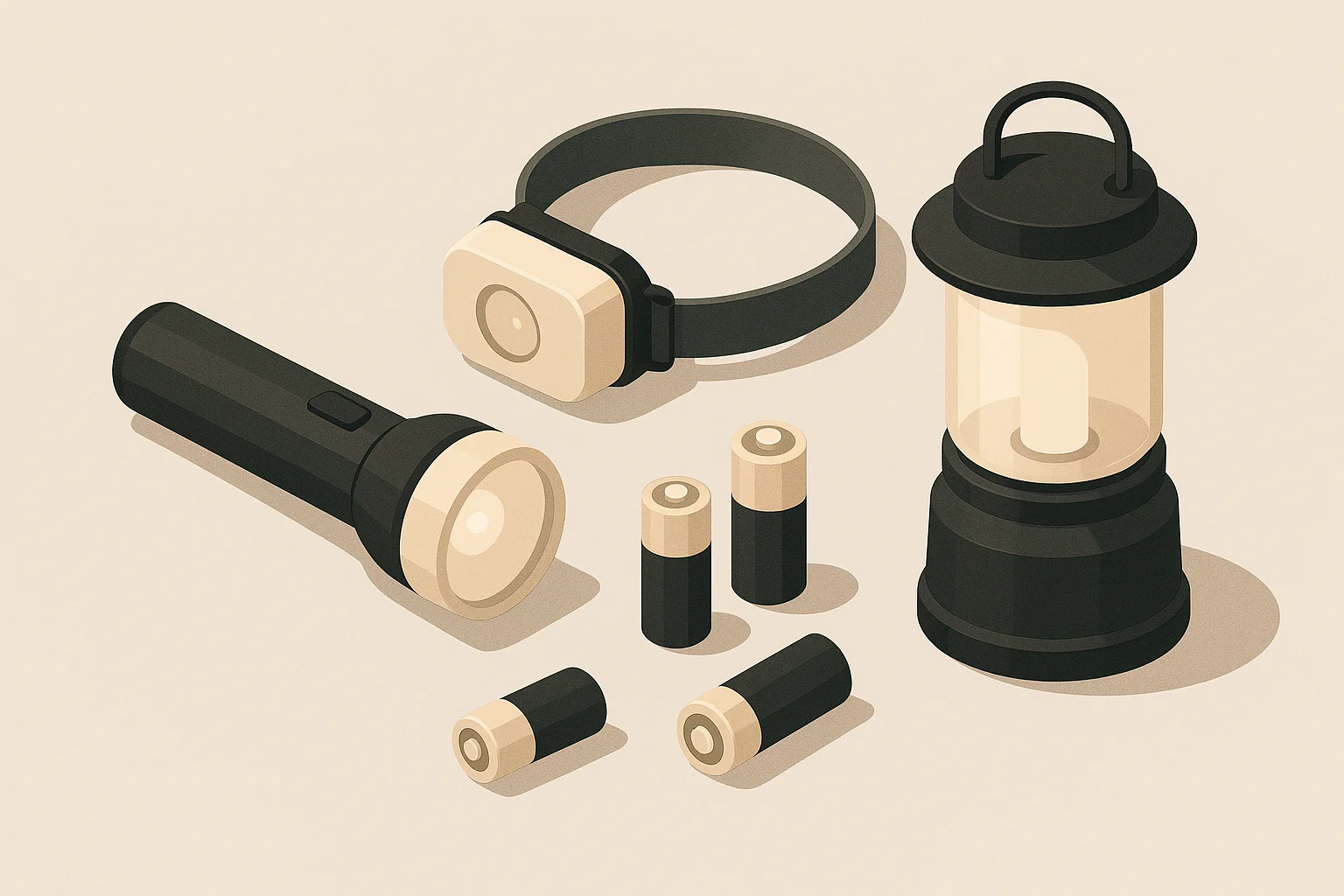
This guide compares three common options for home blackouts:
- Flashlights
- Headlamps
- Lanterns
The focus is on practical, calm readiness for apartments and houses, renters and homeowners, and families with kids, pets, or seniors.
Flashlights: Simple, Focused Light for Moving Around
Flashlights are the easiest starting point for most homes. They provide a focused beam that is great for walking around, checking the breaker panel, or looking into closets and cabinets.
When Flashlights Work Best
- Quick hallway trips: Getting to the bathroom, front door, or circuit breaker.
- Checking on the house: Looking for water leaks, checking the fridge, or inspecting windows during storms.
- Individual use: One person walking or reading while others sleep.
Pros of Flashlights
- Easy to understand and use: Most people are familiar with them.
- Good range and control: Focused beam lets you see specific spots clearly.
- Compact: Can live in a junk drawer, bedside table, or coat pocket.
- Good for kids and guests: Simple on/off operation.
Limitations of Flashlights
- Use up a hand: You have to hold them, which can be awkward while cooking, carrying a child, or helping someone up stairs.
- Not ideal for group lighting: They light where you point, not the whole room.
- Easy to misplace: They roll under furniture or into couch cushions.
Simple Flashlight Planning Tips
- Keep at least one flashlight in or near each bedroom.
- Store one in a central spot, such as near the main entry or kitchen.
- Use standard battery sizes that match other devices in your home where possible.
- Check that kids and older family members know exactly where one flashlight is and how to turn it on.
| Situation | Best First Choice | Why It Helps |
|---|---|---|
| Walking through dark hallways or stairs | Flashlight or headlamp | Focused beam helps you see steps and obstacles clearly. |
| Cooking or making snacks during an outage | Headlamp or lantern | Keeps hands free while lighting your work area. |
| Keeping a living room usable for a few people | Lantern | Spreads light around the room more evenly. |
| Checking the electrical panel or under sinks | Flashlight | Directional light for looking into tight spaces. |
| Helping small children feel less scared | Lantern plus simple flashlight | Soft room light plus a personal light for comfort. |
| Walking a dog outside in a blackout | Headlamp | Hands free for leash and door, light points where you look. |
| Assisting an older adult on stairs | Headlamp plus flashlight | Headlamp lights your view; flashlight can aim at steps. |
Example values for illustration.
Headlamps: Hands-Free Light for Tasks and Caregiving
Headlamps are lights you wear on your head, usually with an adjustable strap. They shine where you are looking, which makes them very useful for tasks that need both hands.
When Headlamps Work Best
- Cooking or washing dishes: You can safely use both hands while keeping counters well-lit.
- Caring for kids or pets: Ideal when carrying a baby, guiding a toddler, or holding a leash.
- Helping seniors: Lights your line of sight while your hands are free to offer support.
- Apartment stairwells: Helpful when navigating poorly lit common areas during building-wide outages.
Pros of Headlamps
- Hands-free: The biggest advantage in kitchens, bathrooms, and on stairs.
- Follows your gaze: Wherever you look, you can see clearly.
- Compact and light: Easy to store in a drawer or small bin.
- Good for shared tasks: One person can work while another holds a child or carries items.
Limitations of Headlamps
- Comfort varies: May feel awkward or tight for some people, especially young kids or those sensitive to headbands.
- Can bother others: If you look directly at someone, the beam may shine in their eyes.
- Not ideal for group room lighting: Still a focused beam, not a full-room solution.
Simple Headlamp Planning Tips
- Keep at least one headlamp in the kitchen or nearby, where you are likely to need both hands.
- Consider a headlamp for the person most likely to move around helping others during an outage.
- Store it with extra batteries in a labeled bag or box so the set stays together.
- Have each adult or teen try it on once so the strap is sized before you need it.
Lanterns: Area Lighting for Rooms and Groups
Lanterns are designed to light up an area instead of a narrow spot. They are especially useful when a few people share a space, such as a living room, bedroom, or small kitchen.
When Lanterns Work Best
- Family rooms: Reading, playing games, or talking during an outage.
- Bedrooms: Keeping the room softly lit so kids feel safer.
- Bathrooms: Placed on a counter or shelf to light the whole room.
- Small gatherings: A couple of people eating or planning by the table.
Pros of Lanterns
- Area light: Spreads light in all directions, making spaces feel more normal.
- Hands-free once placed: Just set it on a stable surface or hang it.
- Comforting for kids: Soft, steady light can feel less harsh than a bright beam.
- Good for group safety: People can see each other and move around more easily.
Limitations of Lanterns
- Bulkier: Usually larger than a flashlight or headlamp, which can matter in small apartments.
- Less focused: Not ideal for inspecting tight spaces or working on small details.
- Child and pet safety: Needs stable placement where it is unlikely to be knocked over.
Simple Lantern Planning Tips
- Plan for at least one lantern for your main living area.
- If budget allows, add one lantern for the kitchen or a shared bedroom.
- Decide in advance where lanterns will go: coffee table, kitchen counter, hallway shelf.
- If your lantern has multiple brightness settings, use lower settings when possible to stretch battery life.
How Many Lights Does a Typical Home Need?
The exact number depends on the size of your home and how many people live there. For short, common outages, many households can manage with a simple mix of each type.
Example Setup for an Apartment
- 2 flashlights: One near the front door, one in the bedroom.
- 1 headlamp: Stored in or near the kitchen.
- 1 lantern: For the main living area or shared bedroom.
Example Setup for a Small to Medium House
- 3–4 flashlights: Bedrooms and main entry area.
- 2 headlamps: One in the kitchen, one with someone who often handles home tasks.
- 2 lanterns: One for the main living space, one for kitchen or a bedroom.
These are only planning examples. You can start with what you already own and add items gradually.
Battery Planning for Short-Term Outages
Good lighting only helps if you can power it. A simple battery plan keeps your lights ready for power outages caused by storms, high winds, or equipment failures.
Standard vs Rechargeable Batteries
- Standard disposable batteries: Easy to store and replace, but you must remember to keep extras on hand.
- Rechargeable batteries: Can save waste and money over time, but require a charger and access to power to recharge.
For many homes, a mix works well. For example, lanterns might use standard batteries for long shelf life, while frequently used flashlights and headlamps use rechargeable batteries.
Simple Battery Stocking Ideas
- Pick one or two common battery sizes for most of your lights to simplify storage.
- Keep at least one full extra set of batteries for each light you rely on.
- Store batteries in a cool, dry place, away from direct heat sources.
- Check batteries a couple of times a year, for example when you change clocks or do seasonal chores.
Using Rechargeable Options During Outages
If you use rechargeable lights or batteries, think about how you will recharge them when the power is out. Options might include:
- A small power bank for recharging a headlamp or compact light.
- A larger power station if you already own one for other uses.
- Charging devices in advance when a storm is forecast.
Placement and Safety in Small Spaces
In apartments and smaller homes, where space is limited, placement and safety matter as much as the lights themselves. A few simple habits can reduce trips, falls, and other accidents when the power is out.
Safe Placement Ideas
- Keep walkways clear: Place lanterns and lights where they will not create new tripping hazards.
- Use stable surfaces: Tables, countertops, wide window sills, or sturdy shelves.
- Avoid edge placement: Keep lanterns away from where children or pets might bump them.
- Light stair edges: In multi-level homes, place a small light near the top and bottom of stairs.
Helping Kids, Seniors, and Pets
- Kids: Give older children a simple flashlight they know how to use. For younger kids, use a lantern or night-light style light in their room area.
- Seniors: Place an easy-to-use flashlight or lantern within reach of the bed and in the bathroom.
- Pets: Keep enough light near food and water areas so pets can move around comfortably.
Seasonal and Regional Considerations
Different regions face different outage patterns. Your lighting mix can stay the same year-round, but you might use it differently depending on the season.
Winter Storms and Ice
- Longer dark hours: You may run lights longer each day in winter, so plan extra batteries.
- Cold interiors: If your home cools down, keep lights and batteries away from cold drafts when possible.
- Stairs and porches: Make sure paths are well-lit to reduce slips near icy entries.
Summer Thunderstorms and Hurricanes
- Evening outages: Many outages start with afternoon or evening storms; keep a lantern where it is easy to grab as it gets dark.
- Heat and humidity: If you are opening windows for airflow, consider where wind might tip over lights.
- Evacuation possibility: Headlamps and small flashlights are easier to pack quickly in a go-bag if you need to leave.
Wildfire Smoke and Air Quality Events
- Staying indoors: Use lanterns to keep a few rooms well-lit while limiting how often people move around.
- Reduced visibility outside: Headlamps and flashlights can help if you must briefly go outside in dim, smoky conditions.
| Lighting Type | Typical Battery Approach (Example) | Pros / Cons | Simple Storage Tip |
|---|---|---|---|
| Small flashlight | Standard disposable cells | Simple and widely available; must restock periodically. | Keep one spare set in a small labeled bag. |
| Larger household flashlight | Rechargeable batteries | Lower waste over time; needs power for recharging. | Recharge during routine chores a few times a year. |
| Headlamp | Rechargeable built-in battery | Easy to plug in; depends on power bank or outlet. | Top off charge when severe weather is forecast. |
| Headlamp (replaceable cells) | Small standard batteries | Can swap in fresh batteries; keep track of size. | Store extra cells in the same container as the headlamp. |
| Lantern for living room | Larger disposable cells | Long shelf life; bulkier batteries to store. | Keep batteries in original packaging in a dry cabinet. |
| Compact lantern or table light | Rechargeable built-in battery | No loose cells to manage; must remember to charge. | Add to your seasonal home checklist for charging. |
| Backup task light | Mix of disposable and rechargeable | Flexible but more to track. | Note battery type on a small card in your kit. |
Example values for illustration.
Simple Routine to Keep Your Lights Ready
A short, regular check is usually enough to keep your home’s outage lighting reliable.
Quarterly Five-Minute Check
- Turn on each flashlight, headlamp, and lantern for a few seconds.
- Replace weak or corroded batteries right away.
- Confirm every family member knows the location of at least one light.
- Move any lights that have drifted into cluttered or unsafe spots.
Before-Storm Quick Prep
- Fully charge any rechargeable lights and power banks.
- Place a lantern in the main living area and a flashlight in each bedroom.
- Set one headlamp in the kitchen where it is easy to grab in the dark.
With a small mix of flashlights, headlamps, and lanterns, and a simple routine to keep them ready, most households can handle typical power outages calmly and safely.
Related guides: Red Light vs White Light During Outages: Night Vision and Sleep Tips · Low-Power Night Lighting Ideas for Safer Hallways and Bathrooms.
Authoritative sources
Safety recommendations can change. Confirm critical details with current official guidance and local authorities.
- CDC: Carbon Monoxide Poisoning Basics
- USDA FSIS: Keep Food Safe During Emergencies
- U.S. CPSC: Battery Safety
Frequently asked questions
How long do batteries typically last in flashlights, headlamps, and lanterns during an outage?
Battery life depends on the light type, brightness setting, and battery chemistry. As a rough guide, LED flashlights and headlamps on medium settings often run 5–20 hours on fresh disposable cells, while small lanterns on low can run 10–50+ hours. Running at maximum brightness or using older batteries will reduce those runtimes.
Which type of light should I grab first when a power outage begins at night?
If you need to move around quickly or check something, grab a flashlight or headlamp for focused, mobile light; choose a headlamp if you need both hands. If the goal is to keep the household calm and provide shared illumination, place or grab a lantern for area light so people can see each other and move safely.
Can I rely on rechargeable flashlights and headlamps if the outage lasts several days?
Rechargeable lights are practical if you have a way to recharge them during an extended outage, such as charged power banks, a larger power station, or solar chargers. It’s wise to keep at least one or two lights that use disposable batteries as backup in case you cannot recharge.
Are battery lanterns safer than candles or fuel lanterns for indoor use?
Yes—battery (LED) lanterns are much safer than open flames because they eliminate fire and indoor carbon monoxide risks. If you must use candles or fuel lanterns, do so with extreme caution on stable surfaces and with good ventilation, but prefer battery options whenever possible.
How should I store and maintain lights and spare batteries so they are ready when needed?
Store lights and spare batteries in a cool, dry place and keep each light’s spare batteries together in a labeled bag or box. Check batteries and device charges quarterly, replace corroded or weak cells, and top off rechargeable devices before forecast storms.
- Simple checklists and realistic planning
- Water, power, lighting, and pantry basics
- Family plans (kids, pets, seniors) and seasonal prep
Affiliate disclosure
As an Amazon Associate, we earn from qualifying purchases. Some links on this site may be affiliate links. If you buy through these links, we may earn a small commission at no extra cost to you. This helps support our content. Learn more.