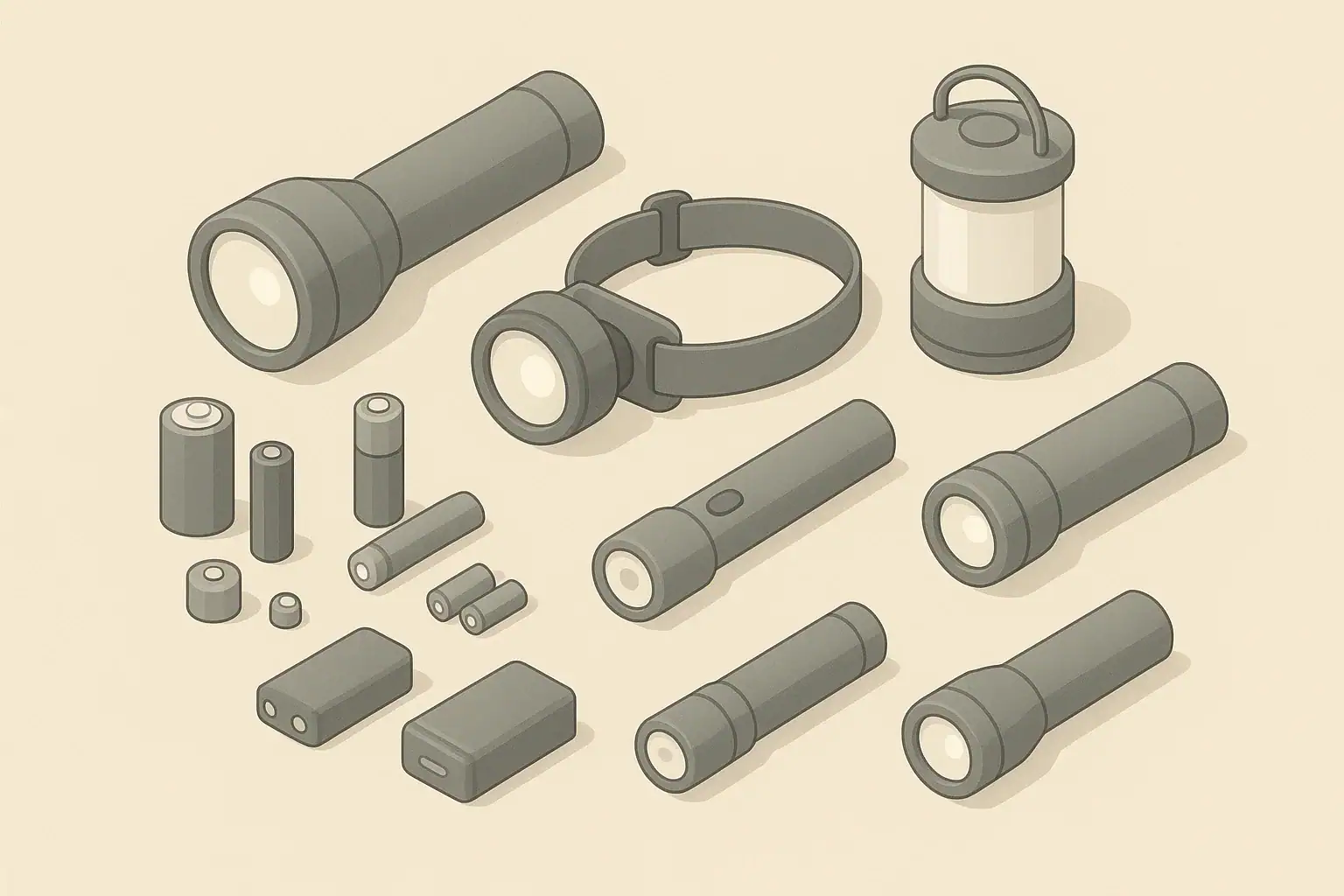
For short-term home emergencies in the U.S. — like winter storms, hurricanes, or neighborhood power outages — your batteries are often your most important energy source. They keep flashlights, headlamps, small lanterns, radios, and basic medical devices running when the lights go out.
Most households rely on three main battery types for these situations:
- Alkaline (common disposable household batteries)
- Primary lithium (disposable lithium batteries, not rechargeable)
- NiMH (nickel-metal hydride) rechargeable batteries
Each type behaves differently when stored for years, used in cold weather, or cycled regularly. Choosing the right mix can help you avoid dead flashlights, leaky batteries, and scrambling to find power in the dark.
This guide focuses on practical home readiness — not extreme or long-term survival scenarios. The goal is to build a calm, realistic battery plan that works in apartments, houses, and small spaces, with kids, pets, and older adults in mind.
Why Battery Choice Matters for Emergencies
For short-term home emergencies in the U.S. — like winter storms, hurricanes, or neighborhood power outages — your batteries are often your most important energy source. They keep flashlights, headlamps, small lanterns, radios, and basic medical devices running when the lights go out.
Most households rely on three main battery types for these situations:
- Alkaline (common disposable household batteries)
- Primary lithium (disposable lithium batteries, not rechargeable)
- NiMH (nickel-metal hydride) rechargeable batteries
Each type behaves differently when stored for years, used in cold weather, or cycled regularly. Choosing the right mix can help you avoid dead flashlights, leaky batteries, and scrambling to find power in the dark.
This guide focuses on practical home readiness — not extreme or long-term survival scenarios. The goal is to build a calm, realistic battery plan that works in apartments, houses, and small spaces, with kids, pets, and older adults in mind.
Alkaline Batteries for Emergency Storage
Alkaline batteries are the classic household disposable battery. They are widely available, relatively inexpensive, and compatible with most flashlights, radios, and basic devices.
Strengths of Alkaline Batteries
- Easy to find: Available in nearly every store, often in bulk packs.
- Familiar sizes: Common in AA, AAA, C, D, and 9V, matching most emergency devices.
- Simple to use: No charger or special handling needed.
- Decent shelf life: Many alkaline batteries are designed to last several years in storage when kept in a cool, dry place.
Limitations for Long-Term Storage
- Leak risk: Over time, especially in heat or when fully drained and left in devices, alkaline batteries may leak and damage equipment.
- Cold performance: They can lose performance in very cold temperatures (such as unheated garages in winter).
- Waste volume: In a long outage, you may go through many disposables.
Best Uses for Alkaline in Emergencies
Alkaline batteries work well for:
- Flashlights and lanterns you rarely use except during outages
- Simple battery-powered clocks and radios
- Remotes or low-drain devices in your emergency kit
For most homes, it is practical to keep a modest reserve of alkaline batteries in common sizes that match your existing gear.
Example values for illustration.
| Battery type | Shelf life tendency (stored, unopened) | Best suited for | Key storage note |
|---|---|---|---|
| Alkaline | Several years in cool, dry conditions | Infrequently used flashlights and radios | Rotate every few years and check for leaks |
| Primary lithium | Often longer than alkaline (many years) | Critical devices and cold-weather use | Keep for priority gear you must trust |
| NiMH rechargeable | Best when charged and cycled periodically | Frequently used lights and gadgets | Plan a simple recharge schedule |
| Low self-discharge NiMH | Can hold charge for many months | Everyday plus emergency crossover | Mark charge date on storage case |
| Standard NiMH | Discharge faster in storage | High-use devices rotated often | Avoid long-term storage unused |
| Mixed kit (all three) | Depends on type mix | Balanced home readiness setup | Match battery types to device priority |
Lithium Batteries for Emergencies
Primary lithium batteries (non-rechargeable) are a step up in performance compared with standard alkaline batteries. They are also more expensive, so most people reserve them for critical or high-value uses.
Strengths of Lithium Batteries
- Longer shelf life tendency: Many primary lithium batteries are designed to remain usable for well over a decade in proper storage, which is often longer than typical alkaline batteries.
- Better cold-weather performance: Lithium chemistry generally handles low temperatures more reliably than alkaline and can be helpful in winter conditions.
- Lighter weight: Useful for headlamps and portable radios where reduced weight is helpful.
- Lower leak risk than alkaline: While no battery is leak-proof under all conditions, primary lithium batteries are often less prone to leakage than alkalines over long storage periods.
Limitations and Considerations
- Higher cost: More expensive than alkaline batteries, which matters if you are equipping a whole household.
- Disposability: Still single-use, so they create waste and must be replaced after draining.
- Chemistry differences: Some devices may have guidance on battery type; check manuals for any specific warnings.
Best Uses for Lithium in Emergencies
Lithium batteries are well suited for:
- High-priority flashlights (like one kept by the bed or in a go-bag)
- Headlamps used for hands-free tasks in outages
- Devices stored in very cold places, such as vehicles in winter
- Critical items that may sit unused for many years but must work on demand
Because of the cost, a common approach is to use lithium batteries only in a few must-work devices, while relying on alkaline or NiMH for the rest of the household gear.
NiMH Rechargeable Batteries and Home Readiness
NiMH (nickel-metal hydride) rechargeable batteries can be charged hundreds of times and used in many of the same devices that take alkaline batteries. Over time, they can reduce waste and ongoing costs, especially for families that use battery-powered lights and gadgets daily.
Two Main NiMH Styles: Standard vs Low Self-Discharge
- Standard NiMH: Often have higher capacity but lose their charge relatively quickly in storage. These work best in devices that are used and charged often.
- Low self-discharge NiMH: Designed to hold a useful charge for many months or more when stored, making them more suitable as a crossover between everyday and emergency use.
Strengths of NiMH Rechargeables
- Reusable: Can be recharged many times, reducing the need to stock large piles of disposables.
- Good for frequent use: Ideal for the flashlights and headlamps you use around the house or yard regularly.
- Pairs well with small solar or USB chargers: Useful for longer outages when you can recharge from a power bank or small solar panel.
Limitations for Emergency Storage
- Self-discharge: All NiMH batteries gradually lose charge in storage, though low self-discharge versions do so more slowly.
- Needs a reliable charger: For emergency use, you will need a charger that can run from household power, a power bank, or a small backup power source.
- Not ideal as the only option: If a long outage begins when your rechargeables are low, you may have limited runtime without a way to charge.
Best Uses for NiMH in Emergencies
NiMH rechargeable batteries are a strong fit for:
- Everyday flashlights and headlamps that also serve in emergencies
- Battery-powered lanterns used frequently on patios or during camping trips
- Devices that support USB or solar charging workflows through a charger
For most households, NiMH rechargeables are most useful as a complement to alkaline or lithium, rather than a complete replacement.
Comparing Shelf Life and Storage Factors
When you ask what stores best for emergencies, you are mainly thinking about shelf life, reliability after sitting untouched, and how forgiving each battery type is in real-world home storage conditions.
Typical Shelf Life Tendencies
In general terms, when stored properly in their original packaging or a protective case in a cool, dry location:
- Primary lithium: Often designed to remain usable for a decade or more.
- Alkaline: Commonly usable for several years.
- Low self-discharge NiMH: May hold a practical charge for many months or longer, but still slowly lose charge over time.
- Standard NiMH: Discharge more quickly in storage and are better for frequent use than long-term idle storage.
These tendencies can vary by manufacturer and specific product design, so always check packaging for any printed date ranges or storage guidance.
Temperature and Humidity Considerations
Most household batteries do best in a stable indoor environment:
- Avoid heat: Prolonged high temperatures can shorten battery life and increase leak risk, especially for alkaline batteries.
- Avoid high humidity: Damp areas like basements, bathrooms, or outdoor sheds are not ideal long-term storage spots.
- Moderate cold is usually fine: Many batteries can tolerate typical indoor winter temperatures, though extreme cold can reduce performance temporarily.
Leak and Corrosion Risk
Over time, some disposable batteries can leak, especially if left inside devices that fully drain them. To limit damage:
- Store long-term spares in their original packaging or a dedicated case, not in devices.
- For items you rarely use (like a backup lantern), remove the batteries after use and store them nearby.
- Check stored equipment annually for any signs of residue or corrosion.
Building a Practical Battery Strategy for Your Home
No single battery type is best for every situation. A small, balanced mix usually serves households better than a one-size-fits-all approach.
Consider Your Living Situation
Your battery plan should match your space and family needs:
- Apartment dwellers: Space is limited, so prioritize a compact selection of high-quality flashlights and headlamps, plus a smaller number of spare batteries in the most common sizes.
- Single-family homes: You may maintain more devices (lanterns, radios, motion lights), so standardize on a few common battery sizes to simplify storage and resupply.
- Families with kids: Account for toys, sound machines, and nightlights that might suddenly matter in a blackout.
- Older adults: Ensure easy-to-operate lights and radios with clear on/off switches and larger battery compartments.
A Simple, Balanced Mix
A realistic, low-stress battery strategy might look like this:
- Alkaline reserve: A modest stock of alkaline AA and AAA batteries (and C or D if your lanterns need them) stored in a labeled container indoors.
- Lithium for critical gear: A small number of primary lithium batteries in the sizes used by your most important flashlight, headlamp, or radio.
- NiMH for daily use: A set of low self-discharge NiMH rechargeables for the lights and gadgets you use every week, plus a reliable charger that can connect to a wall outlet or small backup power source.
Rotation and Labeling
To keep your emergency batteries ready without overthinking it:
- Label containers with the month and year you last checked or replaced the contents.
- Once a year, test your main lights and radios and replace any weak batteries.
- Move older alkaline batteries into everyday devices and restock your emergency set with newer ones.
- Recharge your NiMH batteries a few times per year and note the date on a small card or piece of tape.
Battery Safety in Power Outages
Storing and using batteries safely is just as important as choosing the right type. Most battery problems can be avoided with a few basic habits.
Safe Storage Practices
- Keep in original packaging or cases: This prevents terminals from touching and reduces short-circuit risks.
- Separate new and used batteries: Use small containers or bags labeled “new” and “used” so you do not mix them up during an outage.
- Avoid metal clutter: Do not store loose batteries with keys, coins, or tools that can bridge the terminals.
- Child and pet safety: Store batteries out of reach and sight, especially small button cells, which can be hazardous if swallowed.
Using Batteries Safely in Devices
- Insert correctly: Follow the plus (+) and minus (−) markings to avoid overheating or damage.
- Do not mix types or ages: Avoid combining old and new batteries, or mixing alkaline, lithium, and NiMH in the same device.
- Watch for overheating: If a device becomes unusually hot, turn it off and remove the batteries.
- Inspect for leaks: If you see residue in a battery compartment, do not touch it with bare hands. Carefully clean or replace the device following the manufacturer’s guidance.
Disposal and Recycling
Local rules differ on how to dispose of batteries. Many communities offer recycling or special collection for rechargeables and certain disposable batteries. Check your local waste or recycling guidance for details, and store used batteries in a small, clearly labeled container until you can drop them off.
Lighting and Battery Choices for Different Scenarios
Your battery plan becomes easier when you connect it to specific, realistic situations your household might face. Here are a few common U.S. scenarios and how different battery types may play a role.
Short Neighborhood Blackouts (A Few Hours)
For brief evening outages, you mainly need safe, portable light and perhaps a way to listen to local news.
- Alkaline: Usually enough for flashlights, a small lantern, and a basic radio.
- NiMH: Good for everyday lights that you also use during outages.
Storm-Related Outages (A Day or More)
Winter storms, hurricanes, or strong summer storms may leave you without power overnight or for a couple of days.
- Alkaline: Serve as the backbone for multiple lanterns and flashlights, especially for kids’ rooms and hallways.
- Lithium: Useful in the one or two lights you absolutely need to trust for longer runtime, especially if your home is cold.
- NiMH: Can be topped up in advance if you expect a storm, then recharged from a small power bank or backup power station if the outage lasts.
Evacuation or Go-Bag Situations
If you need to leave home temporarily due to a wildfire threat, flooding, or building issue, compact and light gear matters.
- Lithium: Attractive for go-bags thanks to lighter weight and long shelf life in storage.
- NiMH: Can work if you carry a small charger and expect access to power along the way.
- Alkaline: Still useful as a simple backup, especially if you want batteries that can be replaced easily from most stores.
Example values for illustration.
| Lighting situation | Preferred battery type | Pros and cons | Storage tip |
|---|---|---|---|
| Bedside emergency flashlight | Primary lithium | Very long shelf life tendency; higher cost | Store loaded, test briefly once a year |
| Children’s nightlight lantern | Alkaline | Inexpensive and easy to replace | Keep spares in a labeled box nearby |
| Everyday kitchen flashlight | Low self-discharge NiMH | Rechargeable and ready for frequent use | Recharge on a simple seasonal schedule |
| Outdoor headlamp for winter storms | Primary lithium | Better cold-weather performance | Store in a small pouch by outerwear |
| Radio for news and weather | Alkaline or NiMH | Flexible; can swap rechargeables and disposables | Keep spare set of batteries taped to radio |
| Lantern for shared living room | Alkaline or NiMH | Easy to stock alkaline; NiMH saves waste | Store lantern and batteries together in one bin |
Key Takeaways for Calm, Practical Battery Readiness
Alkaline, lithium, and NiMH batteries each have a role in home emergency planning. Alkaline batteries are widely available and work well as a straightforward backup for most household lights and radios. Primary lithium batteries shine in a smaller set of critical devices where long shelf life and cold performance matter. NiMH rechargeables are ideal for everyday lights that you also rely on during outages, especially when paired with a simple charging plan.
By matching each battery type to specific devices and scenarios — and by storing them safely in a cool, dry place with occasional checks — you can build a low-stress, realistic battery setup that supports your household during common power disruptions without taking up much space or attention.
Authoritative sources
Safety recommendations can change. Confirm critical details with current official guidance and local authorities.
- U.S. CPSC: Battery Safety
- CDC: Guidelines for Cleaning Safely After a Disaster
- Ready.gov: Preparedness Tips for People with Disabilities
Frequently asked questions
Which battery type lasts longest in storage for emergencies?
Primary (non-rechargeable) lithium batteries typically have the longest shelf life and can remain usable for a decade or more when stored properly. Alkaline batteries commonly last several years, while low self-discharge NiMH may hold a useful charge for many months but will slowly lose capacity. Actual longevity depends on manufacturer and storage conditions (cool, dry place).
Can I mix alkaline, lithium, and NiMH batteries in the same device?
No — you should not mix different battery chemistries or old and new cells in the same device. Mixing can lead to poor performance, reduced runtime, and in some cases leakage or overheating. Always follow the device manufacturer’s guidance for battery type.
What’s the best battery choice for cold-weather emergency gear?
Primary lithium batteries are generally the best choice for cold-weather use because their chemistry maintains voltage better at low temperatures. Alkaline batteries lose capacity in very cold conditions, while NiMH rechargeables perform reasonably but may need more frequent charging. Store lithium batteries in a warm pocket before use if very cold to help performance.
How should I store batteries to reduce leak and corrosion risk?
Store batteries in their original packaging or in a dedicated case in a cool, dry place to minimize leak risk and prevent terminal shorting. Remove batteries from devices that will sit unused for long periods and separate new from used cells. Check stored batteries annually and rotate older alkalines into everyday devices before they begin to degrade.
Are NiMH rechargeables practical as the only emergency power solution?
NiMH rechargeables are excellent for frequent-use lighting and can save money and waste, but they are not ideal as the sole emergency option because they self-discharge and require a reliable charger. Low self-discharge NiMH reduce this drawback, and pairing them with a power bank or small backup charger improves practicality. For long-term storage needs, keep a small supply of disposables (alkaline or lithium) as a backup.
- Simple checklists and realistic planning
- Water, power, lighting, and pantry basics
- Family plans (kids, pets, seniors) and seasonal prep
Affiliate disclosure
As an Amazon Associate, we earn from qualifying purchases. Some links on this site may be affiliate links. If you buy through these links, we may earn a small commission at no extra cost to you. This helps support our content. Learn more.