Moving around a dark home at night is when many minor accidents happen: stubbed toes, slips on bathroom floors, or tripping over clutter in a hallway. Gentle, low-power lighting can make these spaces easier to navigate without fully waking everyone up or using much electricity.
Low-power night lighting is especially helpful for:
- Seniors or anyone with limited mobility who may need the bathroom at night
- Families with young children who might wake and wander
- Homes where someone works night shifts and sleeps during the day
- Short-term power outages, when safe paths through the home still matter
In everyday life, night lights help you avoid bright overhead lights that can be jarring and disrupt sleep. In minor emergencies, the same low-power lighting can help keep everyone calm and oriented, especially in hallways, stairways, and bathrooms.
Why Low-Power Night Lighting Matters for Everyday Safety
Moving around a dark home at night is when many minor accidents happen: stubbed toes, slips on bathroom floors, or tripping over clutter in a hallway. Gentle, low-power lighting can make these spaces easier to navigate without fully waking everyone up or using much electricity.
Low-power night lighting is especially helpful for:
- Seniors or anyone with limited mobility who may need the bathroom at night
- Families with young children who might wake and wander
- Homes where someone works night shifts and sleeps during the day
- Short-term power outages, when safe paths through the home still matter
In everyday life, night lights help you avoid bright overhead lights that can be jarring and disrupt sleep. In minor emergencies, the same low-power lighting can help keep everyone calm and oriented, especially in hallways, stairways, and bathrooms.
Key Principles for Safe Night Lighting in Hallways and Bathrooms
Before choosing specific lights, it helps to think about what you need the lighting to do and where the real risks are in your home. Focusing on a few simple principles keeps things practical and affordable.
Prioritize Pathways and Transition Points
You do not need to light every corner. Focus on the specific spots where people are most likely to walk at night:
- The route from each bedroom to the nearest bathroom
- Top and bottom of stairways or steps
- Narrow hallways or tight turns
- Changes in floor height or surface (for example, carpet to tile)
Marking these “transition points” with small lights reduces the chance of missteps, especially when people are drowsy or half-awake.
Use Soft, Indirect Light
Night lighting should be just bright enough to see the floor, doorways, and obstacles. Too much brightness can:
- Cause glare, especially on shiny tile or bathroom fixtures
- Wake you fully and make it harder to go back to sleep
- Disturb others who are sleeping nearby
Indirect light that bounces off walls or floors is usually more comfortable than a bare, exposed bulb. Lights aimed downward or with frosted covers help achieve this.
Favor Low Power and Long Runtime
Low-power lights are useful both for routine nights and for outages. In everyday use, they save electricity. During an outage, they stretch the life of batteries or backup power sources. It can help to look for options described as “night light” levels or that mention long runtimes at low brightness.
For planning purposes, many small LED night lights run on just a few watts when plugged in, and battery-powered night lights can often last many nights of typical use on one set of batteries (exact times depend on brightness and battery size). Treat any runtime estimates as rough guidelines, not guarantees.
Consider Who Lives in Your Home
Different households have different needs. When planning, think about:
- Children: Place lights low on the wall or near the floor where kids can see the path clearly.
- Seniors: Emphasize even light on stairs, uneven floors, and bathrooms; avoid sudden dark patches.
- Pets: Keep portable lights or cords out of chewing or tripping range.
- Renters: Look for plug-in or adhesive solutions that do not require drilling or rewiring.
| Home situation | Primary area to light | Low-power option to consider | Notes |
|---|---|---|---|
| Apartment with narrow hallway | Hallway floor and doorways | Plug-in LED night light | Easy to move when rearranging furniture |
| House with stairs near bedrooms | Top and bottom steps | Motion-activated step or wall lights | Helps reduce trips on first and last step |
| Home with young children | Path from bed to bathroom | Low-mounted, always-on night lights | Provides consistent light for frequent trips |
| Senior living alone | Bedroom to bathroom route | Battery night lights plus small lantern backup | Maintains light during short outages |
| Shared hallway in small condo | Shared corridor and bathroom entry | Motion-activated wall lights | Cuts glare and saves power when empty |
| Pet-friendly home | High-traffic areas pets cross at night | Night lights above floor level | Reduces chewing and tripping on devices |
Types of Low-Power Night Lights for Hallways
Hallways are often windowless and can be completely dark at night or during an outage. A few thoughtfully placed low-power lights can guide people safely between rooms without lighting up the whole home.
Plug-In LED Night Lights
Plug-in LED night lights are common and easy to use. They work well for renters and homeowners alike because they use existing outlets and require no installation tools.
Features often found on plug-in night lights include:
- Light sensors: Turn the light on at dusk and off at dawn automatically.
- Adjustable brightness: Lets you choose a softer level for narrow spaces.
- Directional designs: Aim the light down to illuminate the floor.
Because they typically use only a small amount of power, you can leave a few on overnight without a significant impact on energy use. In an outage, they will turn off, so it helps to pair them with at least one battery-powered option as backup.
Motion-Activated Hallway Lights
Motion-activated lights turn on only when someone passes by. This can be helpful when you want the hallway completely dark most of the time, or when multiple people use the same hallway at different hours.
Common motion-activated options include:
- Battery-powered stick-on lights: Mounted with adhesive strips or magnetic backings.
- Plug-in motion night lights: Combine a sensor with a standard outlet-based design.
- Low-level step lights: Installed along baseboards in houses where you can add hardware.
Battery-powered motion lights use their power only when needed. For example, a compact LED motion light may run for many brief activations on one set of batteries, but actual runtime depends on brightness, battery quality, and how often people walk by. Treat manufacturer’s runtime ranges as general guides and test your own setup.
Guide Lights Near Doors and Obstacles
In addition to general pathway lighting, single “guide lights” can call attention to specific hazards or waypoints such as:
- Slightly raised thresholds between rooms
- Low furniture or decorative items that stick into the hallway
- Door handles or light switches that are easy to miss in the dark
Small, low-level lights placed near these spots can help prevent bumped shins and confusion, especially at night or during a brief power interruption when people may be using backup lighting.
Low-Power Night Lighting for Bathrooms
Bathrooms combine darkness, hard surfaces, and often water. Low-power night lighting here is mainly about preventing slips and making it easier to move around without turning on bright overhead fixtures.
Soft Lighting for Entries and Sinks
The brightest point in the bathroom usually does not need to be the overhead light. Consider:
- A low-level night light near the door so you can see as soon as you enter.
- A small, soft light near the sink to find the faucet and soap.
- An indirect light aimed at the floor rather than the mirror to reduce glare.
Plug-in night lights or low-profile battery lights are common choices here. Aim them so they do not shine directly into the eyes of someone using the sink or mirror.
Floor and Toilet Area Lighting
For nighttime bathroom trips, the key is seeing where you are stepping and where the toilet is, without harsh brightness. Useful strategies include:
- Placing a small, low-brightness light on the wall near the floor.
- Using motion-activated lights that come on only when someone enters.
- Keeping the floor clear of loose rugs or items that can be tripped over.
If the bathroom is shared, softer lights can keep one person from waking others with bright overhead lighting in the middle of the night.
Moisture Awareness and Safety
Bathrooms are humid, and water can splash onto surfaces. When using electrical night lights in bathrooms, follow basic safety practices:
- Use devices designed for indoor use in damp environments.
- Avoid placing lights where they are likely to be splashed directly by water.
- Keep cords and battery compartments away from sinks, tubs, and showers.
- Regularly check that outlets and covers are in good condition.
If you are unsure about hard-wired installations in a bathroom, consider simple plug-in or battery options and consult a qualified professional for any electrical work.
Battery-Powered Options for Short Outages
Even if you rarely lose power, having a simple plan for nighttime lighting during brief outages helps everyone move safely. Hallways and bathrooms are top priorities because they are used often and can be completely dark without electric light.
Portable Lanterns and Flashlights
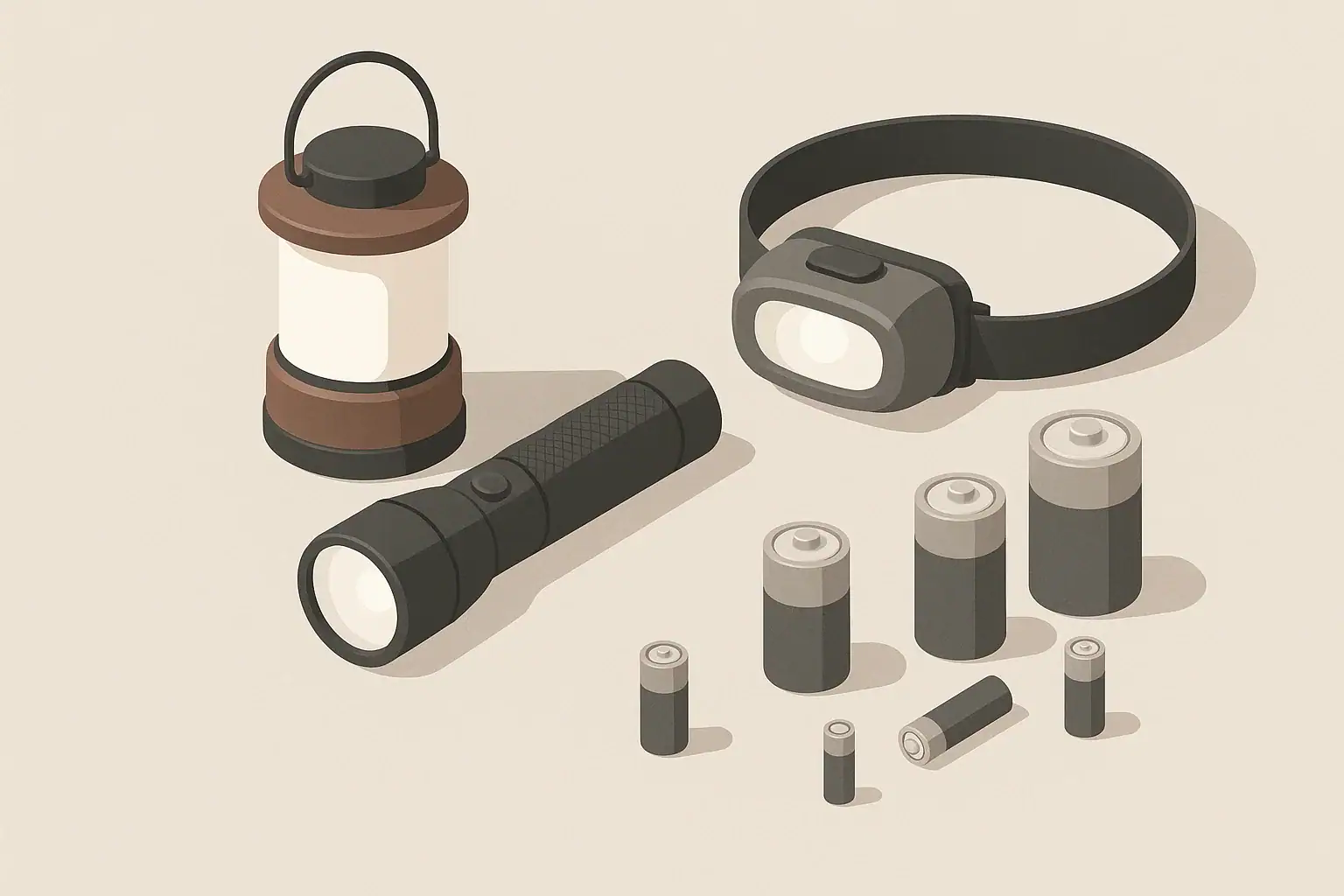
Portable lanterns and flashlights can double as your outage lighting and your regular emergency kit. For hallways and bathrooms, consider:
- Compact lanterns: Provide 360-degree or wide-area light; can sit on a counter or shelf.
- Flashlights: Useful for targeted light, such as checking a breaker panel or looking under a sink.
- Headlamps: Free your hands, which can be helpful if you need to assist a child or carry items.
At lower brightness settings, many LED lanterns can operate for many hours on one set of batteries. Exact runtimes depend on the model and settings, so it can be helpful to test yours at a low level one evening to understand how long it will last.
Rechargeable Lights and Power Banks
Rechargeable lights reduce the need to store large numbers of disposable batteries. During an outage, you can recharge some of them from:
- Small battery power stations or power banks
- Vehicle outlets (with appropriate cables)
- Small solar panels in longer disruptions, if you have them
For a bathroom or hallway, a small rechargeable light left plugged in during normal times can act as a night light, then continue to provide light for a while after the power goes out. Check the instructions so you know whether the light stays on automatically during outages.
Simple Storage and Labeling
In an outage, you may be moving around in partial darkness, so organization matters. To make battery-powered options easier to find:
- Store at least one small lantern or flashlight in or near each bathroom.
- Keep a larger lantern in a central hallway cabinet or closet.
- Store backup batteries in a clearly marked container in the same spot.
- Walk your household through where these items are located.
This turns a minor nighttime outage into a manageable situation rather than a scramble in the dark.
Planning Light Levels and Placement
Each home is different, but a little planning goes a long way. The goal is enough light to see safely, not to recreate daylight.
Test Your Night Paths
To check your current setup, try this simple exercise:
- Wait until night, then turn off all main overhead lights.
- Walk from each bedroom to the nearest bathroom using only your existing night lights.
- Note any spots where you feel unsure of your footing or have to reach blindly for door handles.
- Add or adjust lights in those specific areas.
Repeat the walk as if there were a brief power outage, using only your portable lights. This helps you decide where to store lanterns or flashlights so they are easy to reach.
Aim Lights to Reduce Glare
Soft, shaded pathways are more comfortable than harsh beams. To reduce glare in hallways and bathrooms:
- Point lights toward the floor or a nearby wall, not directly at eye level.
- Use frosted covers or indirect placement (for example, behind a small object) to diffuse light.
- Avoid aiming lights straight at mirrors, which can multiply brightness.
Adjust positions gradually until you can see the floor clearly without feeling dazzled.
Balancing Efficiency and Comfort
Very dim lights save energy but might not be enough for all users, especially those with limited vision. Very bright lights use more power and can disturb sleep. You can strike a balance by:
- Using slightly brighter lights at the start and end of stairways.
- Choosing softer lights in bedrooms and directly outside bedroom doors.
- Using motion-activated lights in shared spaces where constant light is not needed.
Many households find that a mix of always-on low-level lights and motion-activated lights gives both comfort and efficiency.
Maintenance, Batteries, and Simple Checkups
Low-power lighting is most useful when it actually works at the moment you need it. Simple, occasional checkups keep things ready without a lot of effort.
Seasonal Walk-Throughs
Once or twice a year, take a few minutes to:
- Confirm all plug-in night lights still turn on at night.
- Test motion-activated lights to make sure their sensors and timers feel right.
- Look for any loose fixtures, damaged cords, or cracked casings and replace as needed.
- Clear clutter from hallways and around bathroom entries.
Seasonal checks are especially useful before times when outages are more likely, such as winter storms or strong summer thunderstorms in many parts of the United States.
Battery Rotation and Storage
For battery-based lights, it helps to track both what you have and how old it is. General tips include:
- Store spare batteries in a cool, dry place in their original packaging or a dedicated container.
- Consider writing the purchase month and year on the package with a marker.
- Use older batteries first for non-critical items, saving newer ones for emergency lighting.
- Check any rechargeable batteries every few months and top them up according to manufacturer guidance.
If a light will not be used for a long time, some people choose to remove its batteries to reduce the chance of leakage. This is especially relevant for lights stored in rarely used closets or guest bathrooms.
| Lighting type | Typical battery type | Pros and cons overview | Simple storage tip |
|---|---|---|---|
| Compact flashlight | Small disposable cells | Widely available; may drain faster at high brightness | Keep a spare set in a labeled pouch nearby |
| Medium household lantern | Larger disposable cells | Longer potential runtime; heavier and bulkier | Store upright in a dry cabinet with batteries nearby |
| Rechargeable lantern | Built-in rechargeable pack | No loose batteries; needs periodic charging | Top off charge a few times per year |
| Motion-activated wall light | Small disposable cells | Only uses power when activated; needs replacements occasionally | Note installation date to estimate when to check batteries |
| Headlamp | Small disposable or rechargeable cells | Hands-free use; small size makes it easy to misplace | Hang on a hook near the main hallway or bedroom |
| Plug-in emergency night light | Built-in rechargeable pack | Acts as night light and outage backup; runtime varies | Test a few times a year by unplugging briefly |
Putting It All Together in a Simple Home Plan
Low-power night lighting does not have to be complicated or expensive. A basic plan might include:
- One or two plug-in night lights for key hallway stretches.
- A soft, low-level light in each bathroom that stays on at night.
- At least one portable lantern or flashlight stored within reach of each bathroom.
- A small supply of spare batteries or a way to recharge lights if the power is out for a while.
- A quick walk-through with everyone in the home so they know where lights and backups are.
With a few thoughtful choices, your hallways and bathrooms can stay safer and easier to navigate every night, and you will be better prepared for those times when the lights unexpectedly go out.
Related guides: Garage and Basement Lighting Plan: Safe Paths Without Grid Power · Gas Furnace in a Power Outage: What Still Needs Electricity?.
Authoritative sources
Safety recommendations can change. Confirm critical details with current official guidance and local authorities.
- U.S. CPSC: Battery Safety
- CDC: Guidelines for Cleaning Safely After a Disaster
- Ready.gov: Preparedness Tips for People with Disabilities
Frequently asked questions
How bright should low power night lighting be for hallways without causing glare?
Aim for a level that makes the floor and any obstacles visible without creating glare; many night lights used for pathways provide roughly 5–20 lumens. Use downward-facing or frosted fixtures and test positions at night to ensure you can see safely without being dazzled.
Are motion-activated lights better than always-on low power night lighting for safety and energy use?
Motion-activated lights save energy by only turning on when needed and are useful in shared or infrequently used hallways. However, always-on low-level lighting can be safer and less startling for people with limited mobility or vision, especially near stairs.
Can I use battery-powered night lights in bathrooms safely?
Yes, if you choose devices intended for indoor, damp environments and place them away from direct splashes and wet areas. Keep battery compartments and cords clear of sinks and tubs, and replace any units with cracked casings or loose parts.
Should I choose rechargeable lights or disposable-battery lights for outage preparedness?
Rechargeable lights reduce waste and can be convenient if you keep them topped up during normal use, but verify that they will remain illuminated during an outage. Disposable batteries can be useful as a separate backup supply for longer outages; a mix of both types often provides the best resilience.
Where is the best placement for low-power night lighting to reduce trips and glare?
Place lights low on walls or aimed at the floor at key transition points: bedroom doorways, top and bottom of stairs, and near toilet areas or raised thresholds. Avoid aiming lights directly at mirrors or eye level and use diffusers to soften the beam.
- Simple checklists and realistic planning
- Water, power, lighting, and pantry basics
- Family plans (kids, pets, seniors) and seasonal prep
Affiliate disclosure
As an Amazon Associate, we earn from qualifying purchases. Some links on this site may be affiliate links. If you buy through these links, we may earn a small commission at no extra cost to you. This helps support our content. Learn more.