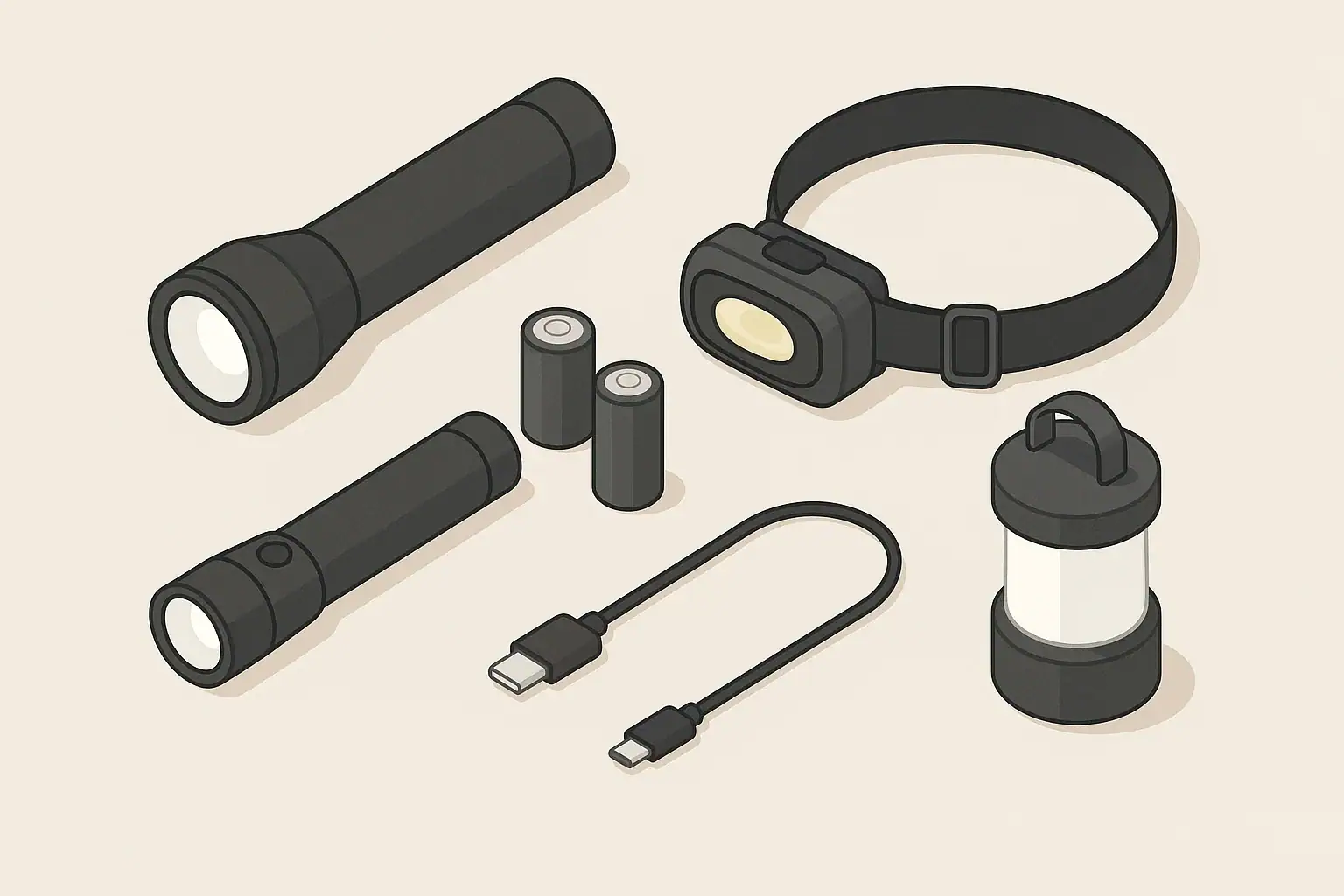
Rechargeable lights are a simple, practical way to stay safe and comfortable during a power outage. This article explains which types of rechargeable lights work best in different homes, how long you can expect them to run, simple charging routines to keep them ready, and what to do in the first hours of a blackout. You’ll also find tips for charging during extended outages, household-specific considerations for kids, seniors, and pets, and a short checklist to improve readiness without a big budget. Read through the overview below to jump to the section you need.
Why Rechargeable Lights Matter in Everyday Blackouts
Rechargeable lights are one of the simplest ways to make a home more comfortable and safe during a power outage. Instead of hunting for loose batteries or candles, you can plug in a lantern or flashlight ahead of time and know it will be ready when the lights go out.
For most households in the United States, realistic blackout scenarios include:
- Short neighborhood outages that last a few hours
- Storm-related outages that last overnight or a couple of days
- Rolling blackouts during heatwaves that last a few hours at a time
In these situations, rechargeable lights can cover basic needs without a lot of gear or technical knowledge. The key is to understand charging plans, runtime expectations, and how to match your lights to your space and family.
Types of Rechargeable Lights and Where They Fit in Your Home
Different rechargeable lights work better in different spaces and situations. A simple mix can cover most everyday blackout needs in apartments, houses, and shared living spaces.
Rechargeable Flashlights
Rechargeable flashlights are useful for moving around safely, checking the breaker panel, or walking pets outside. They are usually compact, bright, and easy to store in drawers or go-bags.
Best uses:
- Quick trips to the bathroom or kitchen
- Checking outside conditions from a porch or balcony
- Individual light for one person at night
Rechargeable Lanterns
Lantern-style lights are designed to light up a wider area. They can sit on a table or counter so multiple people can see and move around more easily.
Best uses:
- Lighting a living room or kitchen table for games, reading, or meals
- Providing area light in a bedroom or hallway
- Shared light for families with kids or older adults
Headlamps and Wearable Lights
Rechargeable headlamps or clip-on lights are especially helpful when you need both hands free. They are useful in small apartments where you may be moving around tight spaces or managing pets and kids.
Best uses:
- Cooking simple meals during a blackout
- Carrying children or assisting someone with limited mobility
- Working on small tasks like changing batteries or checking fuses
Plug-In Emergency Night Lights
Some small lights stay plugged into outlets and turn on automatically when power goes out. These can double as night lights under normal conditions and provide basic path lighting during an outage.
Best uses:
- Hallways and stairways
- Bathroom and bedroom doorways
- Entry areas so you can find your main lantern or flashlight
Example values for illustration.
| If this sounds like your home… | Start with this mix of lights | Why it works |
|---|---|---|
| Small apartment, 1–2 people | 1 lantern, 2 flashlights, 1 headlamp | Covers main room, bathroom trips, and hands-free tasks |
| Family with kids | 2 lanterns, 3–4 flashlights or small lights for kids | Shared light plus individual comfort lights for children |
| House with stairs | 2–3 lanterns, 2 headlamps, 2 plug-in path lights | Area lighting plus safer stair and hallway visibility |
| Older adult living alone | 1 lantern, 2 easy-switch flashlights, 1 plug-in light | Minimizes complexity and keeps light within easy reach |
| Shared house or roommates | 2 lanterns, 1 flashlight per person | Shared common-area lighting with personal backups |
| Pet-focused home | 1 lantern, 2 flashlights, 1 headlamp | Hands-free options for feeding, walking, and calming pets |
Understanding Runtime: How Long Rechargeable Lights Usually Last
Runtime is how long a light can stay on between charges. Actual runtime depends on the brightness level you choose, the battery size, and how old the battery is. Instead of memorizing exact numbers, it is more useful to understand general expectations and how to stretch your runtime.
Typical Runtime Ranges (Illustrative)
As general examples only:
- A small rechargeable flashlight on low brightness might run several hours on a charge.
- A medium lantern on low or medium might cover an evening or more of light.
- Headlamps on low can often last through multiple blackout evenings if used only when needed.
High brightness modes usually cut runtime significantly. For blackout planning, assume you will mostly use low to medium brightness, with short bursts of higher brightness when necessary.
How to Stretch Your Runtime During a Blackout
You can often double or triple practical runtime by changing how you use your lights rather than buying more equipment.
- Use the lowest brightness that still lets you see clearly. This is often enough for walking around indoors.
- Light only the spaces you are using. Turn off or dim lanterns when you move to another room.
- Concentrate people in fewer rooms. One lantern in the living room may serve the whole family instead of lighting separate rooms.
- Use headlamps for task lighting. They focus light where you need it, so you may not need to light an entire room.
- Reserve high brightness for short tasks. For example, checking outside or inspecting something briefly.
Planning for One Night vs. Multiple Nights
Think about blackouts in two tiers:
- Single-evening outages: Most rechargeable lights, charged in advance, can handle several hours of use on low or medium. One full charge per light is usually enough.
- Multi-night outages: You may need a rotation plan, with some lights in use and others charging from a power bank, vehicle, or small solar setup during the day.
For realistic planning, assume you want enough rechargeable lighting to cover at least two full evenings in case power does not return as quickly as expected.
Charging Plans Before the Power Goes Out
A simple charging routine is often enough to keep rechargeable lights ready. The goal is to avoid discovering empty batteries during a storm or heatwave.
Weekly and Monthly Routines
You can build light charging into regular household rhythms:
- Weekly: Check that frequently used rechargeable flashlights or headlamps are topped up, especially if kids borrow them.
- Monthly: Charge lanterns and plug-in emergency lights, even if you have not used them recently.
- Before storms or extreme weather: Fully charge all lights and power banks when you first hear a weather forecast mentioning possible outages.
Where to Charge and Store Lights
Keep charging simple and visible so you remember to do it:
- Use a single “charging spot” such as a kitchen counter or entry table.
- Store at least one lantern and one flashlight where you can find them in the dark, such as by the front door or in a common hallway.
- For families, consider a small basket or box labeled for emergency lights and power banks so everyone knows where they are.
Cord Types and Compatibility
Most modern rechargeable lights use common charging connectors such as USB-based cables. When choosing lights, it can be helpful to:
- Favor models that use the same cable type where possible.
- Keep spare cables in your emergency drawer or kit.
- Label cables or use color-coded ties to quickly match lights and chargers.
Charging During a Blackout: Practical Options
If a blackout lasts longer than one evening, you may need ways to recharge your lights while the grid is still down. You do not necessarily need complex systems; even simple options help.
Power Banks and Portable Batteries
A basic power bank can recharge flashlights, headlamps, and some lanterns through USB or similar connectors.
Planning tips:
- Keep at least one fully charged power bank stored with your emergency lights.
- Use power banks for essential items first: lights, then phones for communication.
- Recharge power banks whenever severe weather is forecast or after use.
Charging from a Vehicle
Most vehicles can charge small devices through built-in ports or a simple adapter, as long as you use them responsibly.
Consider:
- Charging power banks and lights during the day, when it is safer to go outside.
- Avoiding long idling with closed garage doors for safety reasons. Move vehicles outside first.
- Running the engine only as needed to maintain the vehicle battery while charging devices.
Small Solar Panels for Everyday Readiness
Compact, foldable solar panels designed to charge power banks can be useful in areas prone to longer outages, especially in sunny regions. These are slower than wall outlets but can extend your lighting options when the grid is down for multiple days.
Basic approach:
- Use daytime hours to recharge power banks.
- Use those power banks at night to recharge or power your lights.
- Store solar gear in an easy-to-access spot, such as a closet near a window or balcony.
What to Expect During the First Hours of a Blackout
The first few hours of a power outage can feel disorienting, especially at night. Knowing what to expect and having a simple routine reduces stress.
Step 1: Switch to Your “Core” Lights
When the power goes out:
- Grab your main lantern for the living room or central area.
- Assign one flashlight or headlamp to each adult or older child.
- Turn on any plug-in emergency night lights, if present, to mark hallways and bathrooms.
Step 2: Check Safety and Comfort
Use your lights to do a quick safety sweep:
- Make sure stoves or ovens are safely turned off.
- Secure pets and help children find a comfortable spot.
- Locate your backup power, extra batteries, and any weather updates from a battery-powered or hand-crank radio.
Step 3: Shift to Low-Brightness Modes
Once everyone is settled:
- Dim lanterns to the lowest comfortable brightness.
- Use headlamps or flashlights only when moving between rooms.
- Encourage shared activities in one room so you can use fewer lights.
Planning for Multiple Nights Without Power
If it becomes clear that the outage may last more than one evening, shift from “we’ll wait it out” to a simple rotation and charging plan.
Set Up a Light Rotation
Choose which lights are “active” and which are on standby or charging:
- Use one main lantern in the common area and keep another fully charged as backup.
- Rotate headlamps and flashlights so at least one per person has most of its charge preserved.
- Turn off or greatly limit decorative or extra lights.
Daytime Charging Routine
During daylight hours:
- Plug lights and power banks into any available power source (vehicle, portable battery, small solar panel) if the grid is still down.
- Prioritize charging lights for evening use over non-essential devices.
- Use natural light as much as possible by opening curtains and blinds where it is safe and comfortable to do so.
Adjusting Expectations
During longer blackouts, you may need to accept dimmer overall lighting. The goal shifts from recreating normal brightness to having enough light to move safely, prepare simple food, and handle basic tasks.
Safety Tips: Using Rechargeable Lights Wisely
Rechargeable lights are generally safer than open flames, but there are still some simple safety habits to follow.
Avoid Open Flames Where Possible
Rechargeable lights reduce the need for candles and fuel-based lanterns, which can increase fire risk and may produce fumes. For most households, especially with children, pets, or limited mobility, rechargeable electric lighting is a safer primary choice.
Mind Heat and Charging Surfaces
When charging lights or power banks:
- Place them on hard, non-flammable surfaces with some airflow.
- Avoid covering them with blankets, pillows, or clothing.
- Do not charge devices on soft bedding or where they can easily be knocked into water.
Prevent Trips and Falls
During a blackout, lighting helps reduce falls, but cords and equipment can introduce new hazards.
- Keep charging cables away from main walkways.
- Use a stable surface for lanterns, away from the edges where they can be bumped.
- For homes with older adults or young children, keep hallways and bathrooms gently lit throughout the night.
Battery Care and Storage
Rechargeable batteries generally last longer when they are not fully drained for long periods. Basic care includes:
- Charging lights every few months if they are stored unused.
- Keeping them in a cool, dry place away from direct sunlight.
- Checking for signs of damage such as swelling or cracked casings and discontinuing use if found.
Special Considerations: Kids, Seniors, and Pets
Different household members have different lighting needs in a blackout. Planning for them ahead of time makes the experience calmer for everyone.
Kids
Children often feel more secure when they have their own small light they can control.
- Assign each child a simple rechargeable flashlight or small lantern.
- Show them how to turn it on and off before an outage.
- Let them know where it lives when not in use, such as on a nightstand or in a drawer.
Seniors or People With Limited Mobility
For older adults or anyone with mobility challenges:
- Place a lantern or flashlight within easy reach of their bed or favorite chair.
- Use plug-in emergency night lights near bathrooms and hallways.
- Consider headlamps or wearable lights so they do not need to carry a flashlight and a cane or walker at the same time.
Pets
Pets can become anxious during storms and outages. Lighting can help maintain routines.
- Keep feeding and water stations softly lit at usual times.
- Use a headlamp or flashlight for nighttime walks so you can see steps, curbs, and uneven ground.
- Avoid shining bright lights directly into animals’ eyes.
Quick Lighting Inventory and Upgrade Ideas
You can improve your blackout readiness in small steps without overhauling everything at once. A short inventory can show you what you already have and where you might add a piece or two over time.
Five-Minute Home Lighting Check
Walk through your home and note:
- How many rechargeable lights you have (flashlights, lanterns, headlamps, plug-in lights).
- Where they are stored and whether everyone knows their locations.
- Whether they are currently charged.
- How many power banks or portable battery options you have.
- If you have at least one light suitable for each main area (kitchen, living room, bathroom path).
Simple, Gradual Upgrades
Over time, you might choose to:
- Add one more lantern so you can light a shared space and a bathroom path.
- Standardize on one or two charging cable types for simplicity.
- Add a basic power bank dedicated to emergency lighting and phone charging.
- Introduce a small solar charger if you live in an area where outages can last several days.
Example values for illustration.
| Lighting type | Typical battery setup (example) | Pros and cons | Storage tip |
|---|---|---|---|
| Rechargeable flashlight | Built-in battery charged by USB | Simple to use, no loose cells; depends on charging source | Store near entryway with cable wrapped neatly around base |
| Rechargeable lantern | Internal pack plus option to run at low brightness | Good room coverage; larger and heavier to store | Keep in a central closet or under coffee table for quick access |
| Headlamp | Small internal battery or light rechargeable cell | Hands-free; easy to misplace if not assigned a spot | Hang on a hook near the door or by the bed |
| Plug-in emergency night light | Built-in backup battery that charges from outlet | Automatic; limited brightness and runtime | Install in hallway outlets and test occasionally |
| Portable work light | Rechargeable pack, often brighter output | Very bright for tasks; may drain faster on high modes | Store in utility area or garage, charged before storms |
| Small clip-on book light | Built-in rechargeable cell | Comfort light for kids; not for room lighting | Keep near beds for reading and nighttime reassurance |
Bringing It All Together Calmly
A practical rechargeable lighting plan does not require complex gear or a large budget. With a few well-chosen lights, a simple charging routine, and realistic expectations about brightness and runtime, most households can move through short blackouts and multi-night outages with much more comfort and safety.
By treating blackout lighting as a normal part of home organization—like having basic pantry items or spare blankets—you can be ready for common weather events and grid issues without panic. Over time, small adjustments to your mix of lights and charging options will make blackouts feel less like emergencies and more like manageable interruptions.
Authoritative sources
Safety recommendations can change. Confirm critical details with current official guidance and local authorities.
- USDA FSIS: Keep Food Safe During Emergencies
- U.S. CPSC: Battery Safety
- CDC: Guidelines for Cleaning Safely After a Disaster
Frequently asked questions
How often should I charge my rechargeable lights if I keep them stored for emergencies?
For lights kept primarily for emergencies, check and top them up about once a month and fully charge larger lanterns every 1–3 months. Also charge all lights and power banks when a storm or outage is forecast to avoid discovering depleted batteries at the last minute.
Can a phone power bank recharge my lantern or flashlight during a blackout?
Yes—most USB-chargeable flashlights, headlamps, and many lanterns can be recharged from a power bank as long as the connector and voltage are compatible. The number of charges depends on the power bank capacity and the device battery size, so prioritize charging essential lights first.
What runtime can I realistically expect from rechargeable lanterns and headlamps during a blackout?
Expect several hours on low for small flashlights and an evening of usable light from a medium lantern on low or medium settings; headlamps on low can last multiple evenings if used sparingly. High-brightness modes reduce runtime considerably, so plan around low/medium use and rotating devices.
How should I set up a charging rotation for multi-night outages?
Keep one or two lights active each evening while charging backups during the day using a power bank, vehicle outlet, or small solar panel. Rotate which devices you use so at least one lantern and one flashlight retain most of their charge for nightly use.
What safety precautions should I follow when charging and storing rechargeable lights?
Charge devices on hard, non-flammable surfaces with good airflow and keep cables away from walkways to prevent trips. Inspect batteries for swelling or damage and stop using any compromised unit; store lights in a cool, dry place and keep spare cables labeled and accessible.
- Simple checklists and realistic planning
- Water, power, lighting, and pantry basics
- Family plans (kids, pets, seniors) and seasonal prep
Affiliate disclosure
As an Amazon Associate, we earn from qualifying purchases. Some links on this site may be affiliate links. If you buy through these links, we may earn a small commission at no extra cost to you. This helps support our content. Learn more.