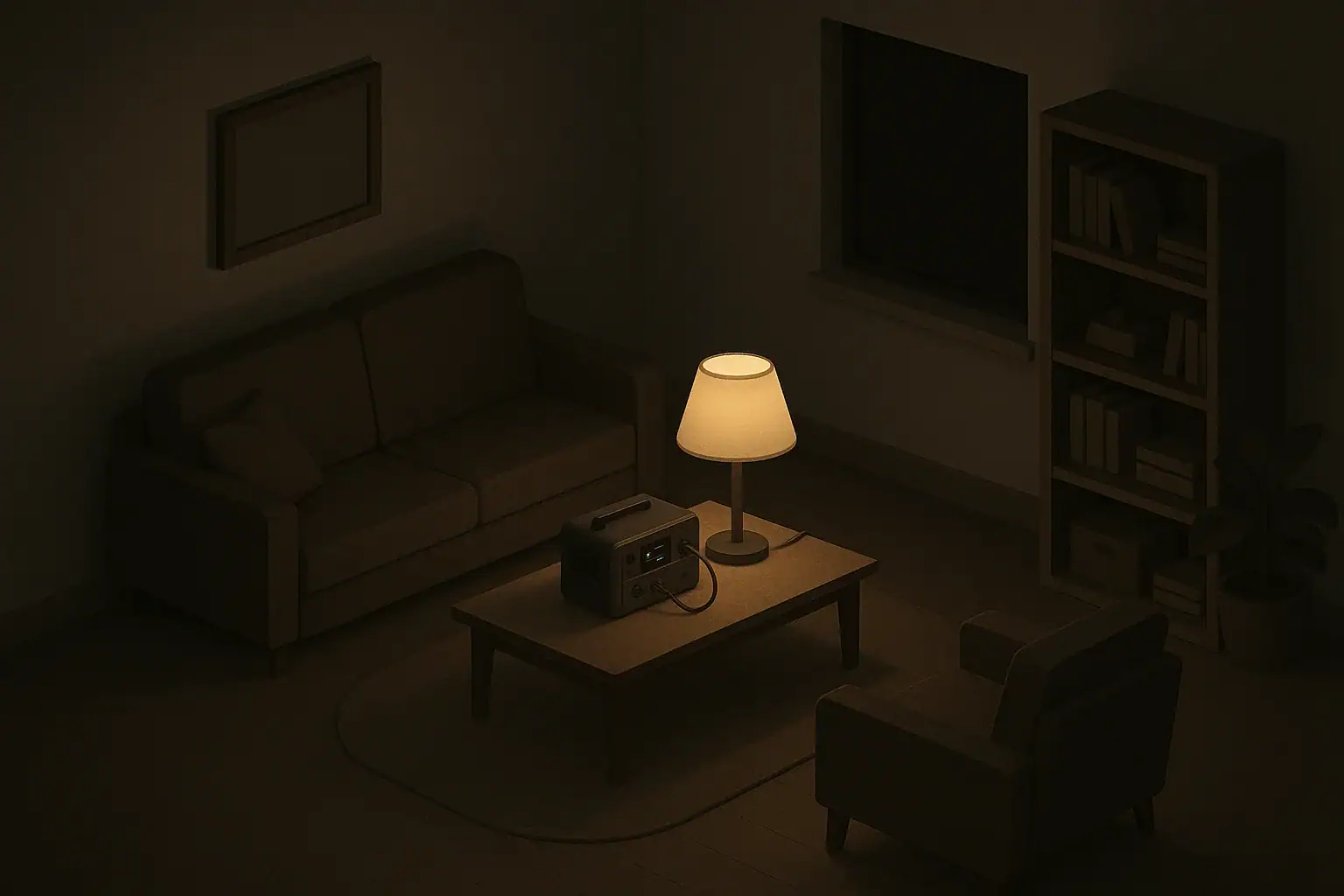
In short power outages or local emergencies, batteries keep the basics running: light, communication, and small safety devices. For most households, the main battery-powered items are:
- Flashlights, lanterns, and headlamps
- Small radios (battery or hand-crank with battery backup)
- Battery-operated candles or nightlights
- Smoke and carbon monoxide detectors
- Portable fans or small USB-powered devices (with a power bank)
Choosing between rechargeable and disposable batteries is less about one being “better” and more about how you actually live, what type of home you’re in, and what kind of emergencies you are likely to see. The best setups usually use both types in a planned way.
Both rechargeable and disposable batteries have a place in home readiness. Understanding their strengths and weaknesses helps you stock a mix that fits your situation.
Why Batteries Matter in Everyday Emergencies
Rechargeable vs Disposable: Big Picture Differences
What to Know About Rechargeable Batteries
Rechargeable batteries work well for items you use often, or for emergencies where you still have some way to recharge (like a power bank, small power station, or solar panel).
Key points:
- Cost over time: Higher upfront cost, but can be used many times, so they often save money if you use them regularly.
- Best for frequent use: Ideal for everyday flashlights, kids’ devices you use in blackouts, and small USB-powered gear.
- Recharging options: Can be recharged from wall outlets (when power is available), power banks, car outlets, or small solar panels.
- Self-discharge: Some types slowly lose charge in storage; low self-discharge models hold charge longer but still need periodic checking.
- Temperature sensitivity: Performance can drop in very cold or very hot conditions, so storage location matters.
What to Know About Disposable Batteries
Disposable batteries are simple, widely available, and good for long storage with little attention.
Key points:
- Long shelf life: Many types stay usable for several years when stored properly.
- Good for rarely used gear: Smoke alarms, backup flashlights, and emergency-only lanterns.
- No charger needed: Useful if you have limited power, no solar, or live in a small space with few outlets.
- Waste and cost over time: You throw them away after use, and frequent replacement adds up.
- Still need checking: Old batteries can leak; a quick annual inspection helps avoid damage to devices.
Example values for illustration.
| Situation | Rechargeable focus | Disposable focus |
|---|---|---|
| Short, frequent outages (1–4 hours) | Everyday flashlights, lanterns you recharge after each use | Small reserve of AA/AAA for backup lights |
| Occasional severe storms (1–3 days) | Core lights on rechargeables plus power bank or small solar | Larger stash of AA/AAA and a set of spares for radios |
| Apartment with limited storage | Rechargeables to reduce bulk and waste | Compact pack of mixed sizes for devices you cannot easily recharge |
| House with garage or storage room | Rechargeables for most lighting and small fans | Disposables for alarms and rarely used backup gear |
| Limited budget now | Start with one charger and a small set of cells | Begin with a basic variety pack, upgrade over time |
| No access to car or solar | Recharge when grid power returns between events | Keep extra disposables in sealed containers |
| Need very simple setup | Use in a few key devices you test regularly | All emergency lights on disposable batteries |
How Many Batteries Do You Really Need?
For most households planning for short-term emergencies (a few hours to a few days), you do not need an enormous supply. You do need a realistic estimate based on your devices and family size.
Step 1: List Battery-Powered Devices
Walk through your home and write down every item you might rely on in an outage:
- Flashlights (note how many and what battery sizes)
- Lanterns or battery candles
- Headlamps (especially helpful for cooking or moving around safely)
- Portable radio
- Battery-powered fan (if you live in a hot climate)
- Smoke and carbon monoxide detectors
Next to each, list the battery type (AA, AAA, 9V, etc.) and how many it takes.
Step 2: Plan for a 3-Day Outage
A three-day window is a reasonable starting point for everyday people. As an example only, a family might decide on:
- Lighting: One main lantern for common areas and one flashlight or headlamp per person.
- Information: One small radio for news and weather updates.
- Safety: Working batteries in all detectors, plus one full change of spares.
For planning, you might assume something like:
- A lantern running a few hours per evening at a moderate brightness level.
- Each flashlight or headlamp used in short bursts, not left on constantly.
- The radio used occasionally to check updates.
These assumptions keep battery needs modest while still giving you a usable level of comfort and safety.
Step 3: Convert That Into Battery Counts
After listing devices and battery sizes, you can decide on a simple stocking rule of thumb, such as:
- Enough batteries installed in each device plus at least one full replacement set.
- An extra small pool of common sizes (AA and AAA) for unexpected needs.
For example-only planning, a household might aim for:
- Several sets of AA rechargeables for frequently used lights.
- A similar number of AA disposable batteries as a fallback.
- A modest number of AAA disposables for smaller devices.
- A couple of spare 9V batteries for detectors if your home uses them.
Your exact numbers will depend on how many people you live with, how many floors or rooms you have, and how much lighting you feel is necessary to move around safely.
Best Uses for Rechargeable Batteries in Emergencies
Rechargeables shine when they are used often and recharged regularly. That keeps them in rotation and lets you confirm they are working long before an outage.
Everyday Devices That Double as Emergency Gear
Devices you use during normal life are the easiest to keep ready:
- Daily-use flashlights: Keep one in the kitchen or near the front door on rechargeables. You will notice quickly if they need charging.
- Headlamps: Very useful for cooking, carrying kids, or caring for pets in the dark. Recharge though a wall outlet, power bank, or small power station.
- Battery-powered reading light or desk light: Can become a comfortable emergency light source in an apartment.
Rechargeables and Small Backup Power
If your home includes a power bank or a small portable power station, rechargeables become even more valuable. You can:
- Charge AA/AAA batteries with a USB-powered charger.
- Top off flashlights and headlamps with built-in rechargeable batteries.
- Use a small solar panel to slowly recharge your power bank or power station between storms or rolling outages.
In these setups, you are less dependent on a large stash of disposable batteries and can stretch your stored power further over several days.
When Rechargeables Are Not Ideal
Rechargeables are not perfect for every situation. They may be less ideal if:
- You rarely test or use your devices and might forget to charge them.
- You do not have reliable access to outlets, a car, or solar charging between emergencies.
- You need a very simple, low-maintenance kit for someone who is unlikely to handle regular charging (for example, some seniors).
In those cases, rechargeables can still play a role, but they should not be your only line of defense.
Best Uses for Disposable Batteries in Emergencies
Disposable batteries work especially well in gear that stays on standby for long periods or must be ready even if you forget about it for a while.
Long-Standby Safety Devices
Some devices are critical but rarely touched:
- Smoke alarms and carbon monoxide detectors: Often mounted near ceilings or in hallways, these need steady, reliable power and periodic testing.
- Backup flashlights: Stored in a known location for emergencies only.
- Emergency radio: Kept in a bin or drawer until needed.
Disposable batteries with a long shelf life reduce the risk that these devices are found empty in the middle of a storm or nighttime outage.
Simple, Low-Maintenance Kits
Disposable batteries are helpful when you are building a kit for someone who needs a straightforward setup:
- An older relative who may not want to manage chargers or solar panels.
- A child’s room kit with a basic flashlight and extra batteries.
- A guest room flashlight and batteries stored together in a labeled bag or container.
In these cases, a periodic check and replacement schedule is usually enough to keep the kit ready.
When Disposables Fall Short
Depending only on disposable batteries has trade-offs:
- In a long outage, you can run through batteries quickly, especially with bright lanterns.
- After a regional event, stores may be crowded or temporarily out of stock.
- Throwing away many used batteries can feel wasteful and requires proper disposal according to local guidance.
This is why many households choose a blend: disposables for long-standby devices and a core of rechargeables for items that see more use.
Apartment vs House: Adapting Your Battery Strategy
Your living situation affects both how many batteries make sense and how you recharge them.
In Apartments and Small Spaces
In smaller homes, storage space and access to outdoor power options may be limited. Practical approaches include:
- Focus on multipurpose devices: One good lantern and a few headlamps can replace many smaller lights.
- Compact charging: A small USB charger for AA/AAA batteries and a power bank you can top up at work or a community space between events.
- Moderate stash of disposables: A resealable container with a mix of AA, AAA, and any specialty sizes you need.
If your apartment has limited natural light, prioritize a bit more lighting capacity for hallways and interior rooms, especially if you share the space with kids, seniors, or pets.
In Houses With More Storage
Larger homes may see more diverse needs, such as lighting staircases, basements, and detached garages. You might:
- Place small flashlights or push lights in key locations (stairs, hallways, bathrooms).
- Keep a more robust set of rechargeables and simple labeling so you know which sets are charged.
- Store a somewhat larger reserve of disposables, especially if you live in a region with frequent storms or grid instability.
If your house includes a place for a small power station or compact solar panel, that can extend how long your rechargeable batteries remain useful during multi-day outages.
Battery Safety, Storage, and Rotation
A modest, well-maintained battery supply is more useful than a large, unorganized stash. Basic care goes a long way.
Safe Battery Storage
General storage tips:
- Keep batteries in a cool, dry place, away from direct sunlight and heat sources.
- Avoid mixing loose batteries in drawers where they can touch metal objects; use original packaging or dedicated containers.
- Do not store new and used batteries together; label or separate partially used cells.
For households with children or curious pets, store batteries out of reach and avoid leaving small button-cell batteries in accessible locations.
Rotation and Simple Checkups
Set a simple reminder once or twice a year to:
- Press the test button on smoke and carbon monoxide detectors.
- Turn on each emergency flashlight and lantern to confirm they work.
- Check for any signs of leakage or corrosion and remove affected batteries safely.
- Top off rechargeable batteries and mark the date on a note or in a digital reminder.
This light level of maintenance keeps you familiar with your gear and reduces surprises during a real outage.
Integrating Batteries With Your Lighting Plan
A calm, safe home during an outage depends more on a thoughtful lighting plan than on raw numbers of batteries. Combine your battery choices with realistic expectations for how you will light your space.
Prioritize Safety Lighting First
Plan lighting around what you truly need to do in the dark:
- Navigate stairs, hallways, and bathrooms without tripping.
- Prepare simple food and water safely.
- Check on children, older adults, or pets during the night.
For many households, this can be covered by:
- One lantern for a main living area.
- One flashlight or headlamp per person.
- Optional nightlight-style devices for kids’ rooms.
Use Lower Brightness and Task Lighting
Full brightness is not always necessary. During outages, battery life can be extended by:
- Running lanterns on low or medium settings instead of maximum.
- Using headlamps or small task lights for cooking and reading rather than lighting entire rooms.
- Grouping activities into one or two rooms to reduce how many lights are on at once.
These habits work well with both rechargeable and disposable batteries, reducing how often you need to change or recharge them.
Example values for illustration.
| Lighting type | Common battery type | Pros and cons for emergencies | Simple storage tip |
|---|---|---|---|
| Handheld flashlight | AA or AAA | Easy to share and move; can drain quickly if left on high brightness | Store with batteries inserted and a spare set rubber-banded nearby |
| Headlamp | AAA or built-in rechargeable | Hands-free; good for cooking and moving on stairs | Keep one by each bed with a small pouch for extra batteries |
| Tabletop lantern | AA, larger cells, or built-in rechargeable | Lights shared spaces; may use more power than a single flashlight | Store in a known central spot; use lower brightness by default |
| Compact emergency light | AA or AAA | Good for small rooms; limited coverage per light | Place in bathrooms or hallways with a backup set of cells |
| Battery candle or nightlight | AA, AAA, or button cells | Gentle light for kids or hallways; low power use | Keep spares sealed; check occasionally for leaks |
| Clip-on reading light | AA, AAA, or USB rechargeable | Efficient task lighting; not for whole-room lighting | Store near books or bedside; recharge after each serious outage |
Putting It All Together: A Simple Mixed Battery Plan
A calm, practical approach for most homes is to use both rechargeable and disposable batteries in a clear, intentional way:
- Rechargeables: Everyday flashlights, headlamps, and frequently used lanterns that you recharge regularly.
- Disposables: Long-standby devices like detectors, backup flashlights, and an emergency radio.
- Charging options: At least one way to recharge during longer outages, such as a power bank or a small power station, and possibly a compact solar panel if it fits your space and budget.
- Organization: Label containers by battery size, keep instructions with each device, and set a simple checkup reminder once or twice a year.
With this kind of balanced plan, you avoid both overbuying and underpreparing, and you can adjust over time as you learn what works best in your home.
Authoritative sources
Safety recommendations can change. Confirm critical details with current official guidance and local authorities.
- CDC: Carbon Monoxide Poisoning Basics
- U.S. CPSC: Battery Safety
- CDC: Guidelines for Cleaning Safely After a Disaster
Frequently asked questions
Should I prioritize rechargeable or disposable batteries for a 3-day home emergency kit?
For a three-day kit, a mix is best: use rechargeables for everyday flashlights, headlamps, and devices you can top up with a power bank or solar, and keep disposables for long-standby items like smoke alarms and backup flashlights. Include at least one charging option (power bank or small solar) if you plan to rely on rechargeables during extended outages.
How often should I test or replace batteries in smoke and carbon monoxide detectors?
Test detectors monthly and replace disposable batteries at least once a year or according to the device manufacturer’s guidance; replace rechargeable cells when performance drops or per the detector’s instructions. Also inspect devices for corrosion and replace any leaking batteries immediately.
Can I recharge AA or AAA batteries with a USB power bank during an outage?
Yes — NiMH AA/AAA rechargeables can be charged with a USB-powered battery charger connected to a power bank or portable power station, and many USB-chargeable lights can be topped up directly. Never attempt to recharge disposable alkaline or zinc-carbon batteries and always use a charger made for the battery chemistry you have.
Which battery sizes should I stock most heavily for household emergencies?
Focus on AA and AAA cells since most flashlights, lanterns, and small radios use those sizes; also keep a modest supply of 9V and button cells for detectors and specialty devices. Store spare sets with the devices they serve and label containers so you can grab the right size quickly.
How does storage life compare between rechargeable and disposable batteries?
Disposable alkaline batteries typically have a longer shelf life (often 5–10 years) and are better for long-term standby devices, while standard NiMH rechargeables self-discharge faster and may lose capacity in storage. Low self-discharge rechargeable models hold charge longer and can be a good compromise if you prefer rechargeables for regular emergency use.
- Simple checklists and realistic planning
- Water, power, lighting, and pantry basics
- Family plans (kids, pets, seniors) and seasonal prep
Affiliate disclosure
As an Amazon Associate, we earn from qualifying purchases. Some links on this site may be affiliate links. If you buy through these links, we may earn a small commission at no extra cost to you. This helps support our content. Learn more.