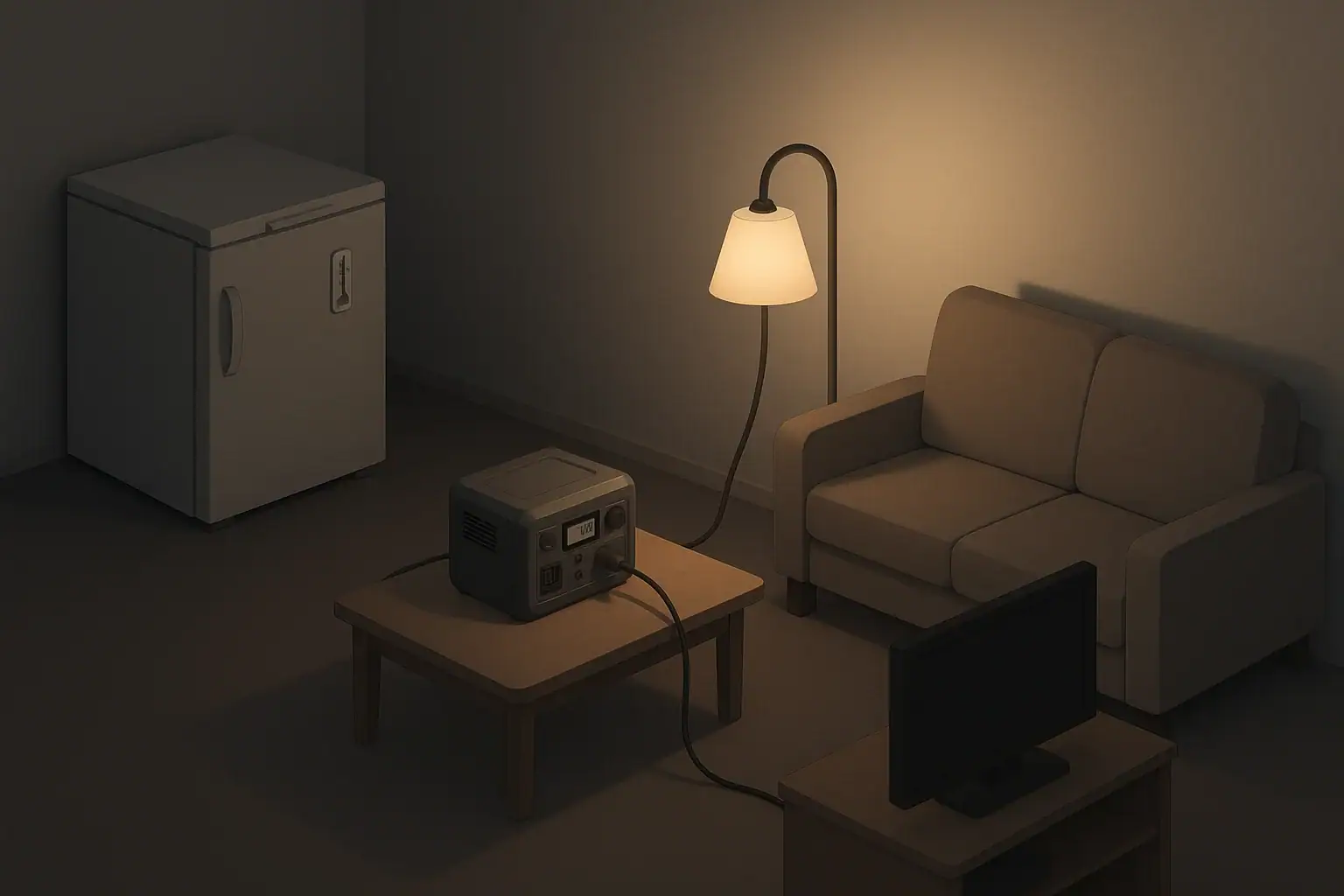
Frozen food is one of the easiest ways to keep a practical emergency pantry without needing extra cabinets or special shelving. But it only works if your freezer actually stays cold. A simple freezer alarm and thermometer setup can alert you early to temperature problems, so you can adjust, cook, or move food before it’s at risk of spoilage.
In normal day-to-day life, that might mean catching a freezer door that did not close all the way. During a power outage or storm, it can help you decide whether food is still safe to keep or whether it needs to be used quickly. For renters or people in apartments who may not control building power or have easy backup options, early warning can be especially helpful.
This guide focuses on practical, low-stress steps to monitor your freezer temperature, understand basic food safety timeframes, and fit a simple alarm setup into small homes, shared spaces, or busy family life.
Why Freezer Alarms Matter for Everyday Home Readiness
Freezer Temperature Basics for Food Safety
You do not need lab-level precision at home, but you do need a consistent, cold temperature. A home freezer that is too warm lets food quality degrade faster and reduces your flexibility during power interruptions.
Target Temperature Range
Many households aim for a freezer setting that keeps food solidly frozen. In practice, that means:
- Food stays hard-frozen, not soft or slushy around the edges.
- Packages do not feel sticky or flexible when you squeeze them.
- Ice cream stays firm rather than soupy.
If your thermometer regularly shows temperatures well above freezing, or if you notice soft spots in frozen items, your freezer is running warm and you have less margin in a power outage.
Why Stable Temperature Matters
Frozen foods handle short temperature swings better than refrigerated food, but problems build up over time. Warmer conditions may lead to:
- Faster loss of texture and flavor.
- More noticeable freezer burn.
- Less time before food needs to be cooked or discarded after a power cut.
An alarm and thermometer help you notice patterns: for example, temperatures creeping up after you load a lot of unfrozen food, or a door gasket that leaks on hot days.
Example values for illustration.
| Task | Why it matters | Notes |
|---|---|---|
| Read freezer thermometer once a week | Catches slow temperature drift | Check at roughly the same time of day |
| Confirm food is fully frozen | Backup check if thermometer fails | Test a dense item in the center |
| Listen for alarm tests or status beeps | Ensures alarm unit is powered | Review manual test method monthly |
| Inspect door seal for gaps or frost | Prevents slow warming and ice buildup | Look along entire edge of the gasket |
| Avoid blocking air vents inside freezer | Helps maintain even temperature | Leave space around vents and fan area |
| Note any frequent temperature alarms | Signals a pattern, not just a one-off | Record day, time, and cause if known |
| Review settings after large grocery runs | Extra warm food can strain the freezer | Consider smaller batches or pre-chilling |
Types of Freezer Thermometers and Alarms
Freezer monitoring can be as simple as a basic analog thermometer or as involved as a multi-sensor alarm system. The best choice depends on your space, budget, and how much detail you want.
Stand-Alone Freezer Thermometers
These are basic devices that show the current temperature. Common styles include:
- Hanging thermometers that hook onto a wire shelf.
- Standing thermometers that sit on a flat surface.
- Stick-on thermometers that attach to a wall or basket.
They do not alarm by themselves, but they are inexpensive and useful for confirming that your freezer setting is reasonable.
Built-In Temperature Displays
Some freezers include a digital temperature readout or indicator lights. These are convenient but still benefit from a separate thermometer to double-check accuracy from time to time.
Freezer Alarms with Sensors
Cold-zone alarms typically work in one of two ways:
- Simple high-temperature alarms that stay in the freezer and emit a sound when the temperature rises above a set level.
- Remote-sensor alarms with a probe or wireless sensor in the freezer and a display or sound unit outside, where you can see or hear it without opening the door.
Some models can monitor multiple appliances, which can be helpful if you have a separate chest freezer for bulk storage.
Features to Consider (Without Overcomplicating)
When choosing a thermometer or alarm, useful features may include:
- Clear display that you can read at a glance, even in dim light.
- Audible alarm loud enough to hear from nearby rooms.
- Adjustable alert threshold so you can set what counts as “too warm” for your needs.
- Battery backup so the alarm keeps working during short power fluctuations.
- Weather-resistant sensor rated for low temperatures.
Planning Your Freezer Alarm and Thermometer Setup
Before installing anything, think about how you use your freezer and what kind of alerts you actually need. This helps you avoid buying overly complex systems that do not fit your daily routine.
Assess Your Freezer Situation
Consider these factors:
- Location: Kitchen, garage, basement, or outdoor area.
- Type: Upright vs. chest freezer, built-in vs. standalone.
- Usage: Daily access vs. long-term storage.
- Household: Kids opening the door often, shared housing, or seniors who need louder alarms.
For example, an upright freezer in a busy family kitchen might benefit from a door-ajar alarm and a temperature alarm, while a chest freezer in the basement may only need a temperature alarm with a remote display upstairs.
Choose Alarm Thresholds That Make Sense
Your alarm threshold should give you useful warning without going off constantly. Many people choose a warning point that gives them time to check the door, adjust the setting, or limit opening during a power issue. Anything that triggers frequent nuisance alarms will probably get ignored, so it is better to pick a realistic threshold and watch for patterns over time.
Keep It Simple and Visible
Place any displays or alarm units somewhere you naturally walk past. This might be:
- On the refrigerator or freezer door (if the unit is magnetic).
- On a nearby counter at eye level.
- Mounted on a wall just outside a pantry or utility room.
If you have to bend behind the freezer to see it, you are less likely to notice a slow warming trend.
How to Install and Position a Freezer Thermometer
Installation is usually straightforward, but a few small details can make the readings more reliable.
Step 1: Let the Freezer Stabilize
If you have just plugged in a new freezer or recently changed the temperature setting, give it several hours to stabilize before trusting the first reading. Adding a lot of room-temperature food at once also temporarily warms the interior.
Step 2: Place the Thermometer in a Representative Spot
To avoid misleading readings:
- Avoid placing the sensor right against the walls, floor, or ceiling of the freezer.
- Do not put it directly in the airflow from an interior fan or vent.
- Try to position it near the middle of the space or on a middle shelf.
In a chest freezer, consider suspending the thermometer slightly above the bottom, attached to a basket or container so it does not get buried under food.
Step 3: Secure Cables or Probes
If your alarm uses a wired probe:
- Run the cable along the most direct path to the door edge.
- Avoid routing it where baskets or drawers might pinch it.
- Gently close the door on the cable, watching to be sure the seal still sits flat.
Some door gaskets can compress around a thin cable; if the seal no longer looks tight, consider a different routing option or a wireless sensor.
Step 4: Give It Time and Record a Baseline
After placement, let the thermometer sit for several hours without opening the freezer. Then:
- Record the temperature reading and the time of day.
- Check again after 24 hours.
- Note any big differences between early morning and evening.
This gives you a sense of your freezer’s normal pattern, which can help you spot subtle problems later.
Setting Up and Testing a Freezer Alarm
A freezer alarm only helps if it is installed correctly and you know what to do when it sounds. Treat setup as part of your broader home readiness plan.
Mount the Alarm Unit in a Practical Place
Position the main alarm component (the part that beeps or displays numbers) where:
- You can hear it from the rooms you use most.
- It is protected from splashes, heat, or bumping.
- It does not interfere with opening the freezer door.
For small apartments, a simple placement on the refrigerator side or a nearby wall may be enough. In larger homes, consider a location closer to bedrooms if you want to hear overnight alerts.
Set the Alert Threshold
Follow the device instructions to choose a high-temperature trigger point. A practical approach is:
- Start with the default factory setting if one exists.
- Watch how often it alarms during a normal week.
- Adjust slightly if brief door openings cause frequent alerts.
The goal is to be warned about sustained warming, not a single quick door open for a bag of frozen vegetables.
Test the Alarm Regularly
Build a quick test into your household routine:
- Use the built-in test button if available.
- Or temporarily raise the setpoint or briefly warm the sensor according to instructions.
- Confirm the sound is loud enough and the display is readable.
Mark a reminder in a calendar or planning app to test every month or at the start of each season, similar to how many people check smoke alarms.
Plan What to Do When It Alarms
Agree in advance on simple steps, especially in households with kids or multiple adults:
- Who checks the door seal and interior light first.
- Who decides whether to avoid opening the door during a suspected outage.
- Where you will move food if the freezer is clearly failing (for example, to a neighbor’s freezer or a cooler with ice).
A short written note on the side of the freezer or inside a household binder can help everyone respond consistently.
Freezer Monitoring During Power Outages
Power interruptions are one of the most common times when freezer alarms prove their value. A calm, simple plan helps you protect food without constantly opening the door to check.
Before an Expected Outage
If you have advance warning, such as for a storm:
- Make sure the freezer is at its normal cold setting.
- Freeze reusable ice packs or containers of water in open spaces.
- Avoid major grocery runs that completely fill the freezer with unfrozen items right before the event.
Extra frozen mass can help keep temperatures stable longer once the power goes out.
During a Short Outage
For brief interruptions:
- Keep the freezer door closed as much as possible.
- Use your alarm and thermometer readings, not guesswork, to decide if you need to act.
- Note the time the power went out and when it returns.
An alarm with battery backup or a sensor that logs maximum temperature can give you a clearer picture of what happened while the power was off.
During a Longer Outage
For more extended outages, consider:
- Grouping critical items (such as food you plan to cook first) toward the top or in baskets.
- Opening the freezer briefly and deliberately, only when you are removing items to cook.
- Using insulated coolers with ice or frozen water containers to keep food colder if the freezer interior warms noticeably.
Your thermometer and alarm help you decide when to shift from “keep the door closed” to “use this food soon.” If temperatures rise steadily and stay high, it may be time to focus on cooking what you can and simplifying what remains.
Integrating Freezer Monitoring Into Your Overall Home Readiness
A freezer alarm and thermometer are just one piece of a broader, calm approach to home readiness. They work best when combined with simple plans for backup power, food rotation, and safe lighting.
Pairing Freezer Monitoring With Backup Power
If you use any backup power options (from a small indoor power station to a larger setup), it helps to know roughly how much energy your freezer uses. You do not need exact numbers, just a sense of scale:
- Freezers generally cycle on and off rather than running at full power continuously.
- Keeping the door closed reduces how often the compressor runs.
- Using backup power for shorter, strategic runs can sometimes be enough to keep temperatures in a safe range.
Your thermometer readings can guide when you briefly power the freezer to pull temperatures back down, rather than running it nonstop during an outage.
Using Freezer Space as Part of Pantry Readiness
Frozen items can complement shelf-stable foods:
- Freeze extra portions of meals you already cook.
- Keep simple, versatile ingredients (like plain frozen vegetables) that go with many dishes.
- Reserve a small section for items you want to use first if the alarm shows a problem.
Labeling and organizing your freezer by “use sooner” and “use later” can make it simpler to respond when temperatures start to creep up.
Staying Calm and Practical
The goal of freezer monitoring is not to worry constantly, but to remove guesswork. Instead of opening the door repeatedly during a blackout, you can glance at a display or listen for an alarm and make measured choices about what to cook, what to move, and when to leave the door closed.
Example values for illustration.
| Food type | Storage tip | Rotation interval idea | No-cook or low-cook use |
|---|---|---|---|
| Frozen leftovers | Label with date and portion size | Plan to use within a few months | Reheat on stove or in oven during outage |
| Frozen bread and tortillas | Freeze in smaller bundles | Rotate monthly into regular meals | Thaw at room temperature for sandwiches |
| Frozen vegetables | Keep common favorites together in one bin | Use oldest bag first each week | Lightly cook on camping stove if needed |
| Canned beans | Store in a cool, dry cabinet | Rotate into meals every month or two | Rinse and eat in salads or wraps |
| Dry pasta and grains | Use clear containers if possible | Mark purchase month on the container | Cook with minimal water and fuel |
| Nut butters | Keep sealed until needed | Use oldest jar first, restock yearly | Spread on crackers or bread without cooking |
| Shelf-stable milk or alternatives | Store in the back of a cabinet | Rotate into recipes every few months | Use in cereal or simple drinks |
Quick Checklist: Keeping Your Freezer Ready Year-Round
A few small habits keep your freezer, alarm, and thermometer working smoothly:
- Check the thermometer reading weekly and note anything unusual.
- Test the freezer alarm monthly and replace batteries as needed.
- Keep the door gasket clean and free of debris so it seals well.
- Avoid overpacking the freezer so air can circulate.
- Use labeled containers and a simple rotation system for frozen foods.
- Include freezer monitoring in your written power outage plan.
With these steps, your freezer becomes a reliable part of everyday meals and short-term emergency planning, without adding stress or complexity to your home.
Authoritative sources
Safety recommendations can change. Confirm critical details with current official guidance and local authorities.
- US EPA: Emergency Disinfection of Drinking Water
- USDA FSIS: Keep Food Safe During Emergencies
- U.S. CPSC: Battery Safety
Frequently asked questions
What temperature should I set my freezer to, and when should the alarm trigger?
For food safety, aim for about 0°F (−18°C), which keeps items fully frozen and slows quality loss. Set your alarm to alert you when temperatures rise above that level for a sustained period, or choose a slightly warmer early-warning threshold if brief door openings cause nuisance alerts. The key is to balance timely warning with minimizing false alarms.
Where is the best place inside the freezer to position a thermometer or sensor?
Place the sensor near the middle of the stored space, away from walls, the door, and direct airflow from vents or fans. In chest freezers, suspend the thermometer slightly above the bottom so it won’t be buried under food and gives a representative reading.
How often should I test my freezer alarm and replace its batteries?
Test the alarm at least monthly using the device test function or by following the manufacturer’s method, and check the display for readable output. Replace batteries according to the device guidance or at least once a year, and always before a season where outages are more likely.
Will a freezer alarm still alert me if the power goes out?
Only alarms with battery backup or self-powered sensors will continue to alert during a mains outage; units that rely solely on household power will not. Consider battery-backed sensors or wireless units with independent power if outage notification is important to you.
If the alarm sounds, what immediate steps should I take to protect frozen food?
First check the thermometer reading and inspect the door seal without leaving the door open longer than necessary. If the freezer is still cold, keep the door closed; if it is steadily warming, prioritize moving perishable items to coolers with ice or another freezer, and plan to cook or use at-risk foods promptly.
- Simple checklists and realistic planning
- Water, power, lighting, and pantry basics
- Family plans (kids, pets, seniors) and seasonal prep
Affiliate disclosure
As an Amazon Associate, we earn from qualifying purchases. Some links on this site may be affiliate links. If you buy through these links, we may earn a small commission at no extra cost to you. This helps support our content. Learn more.