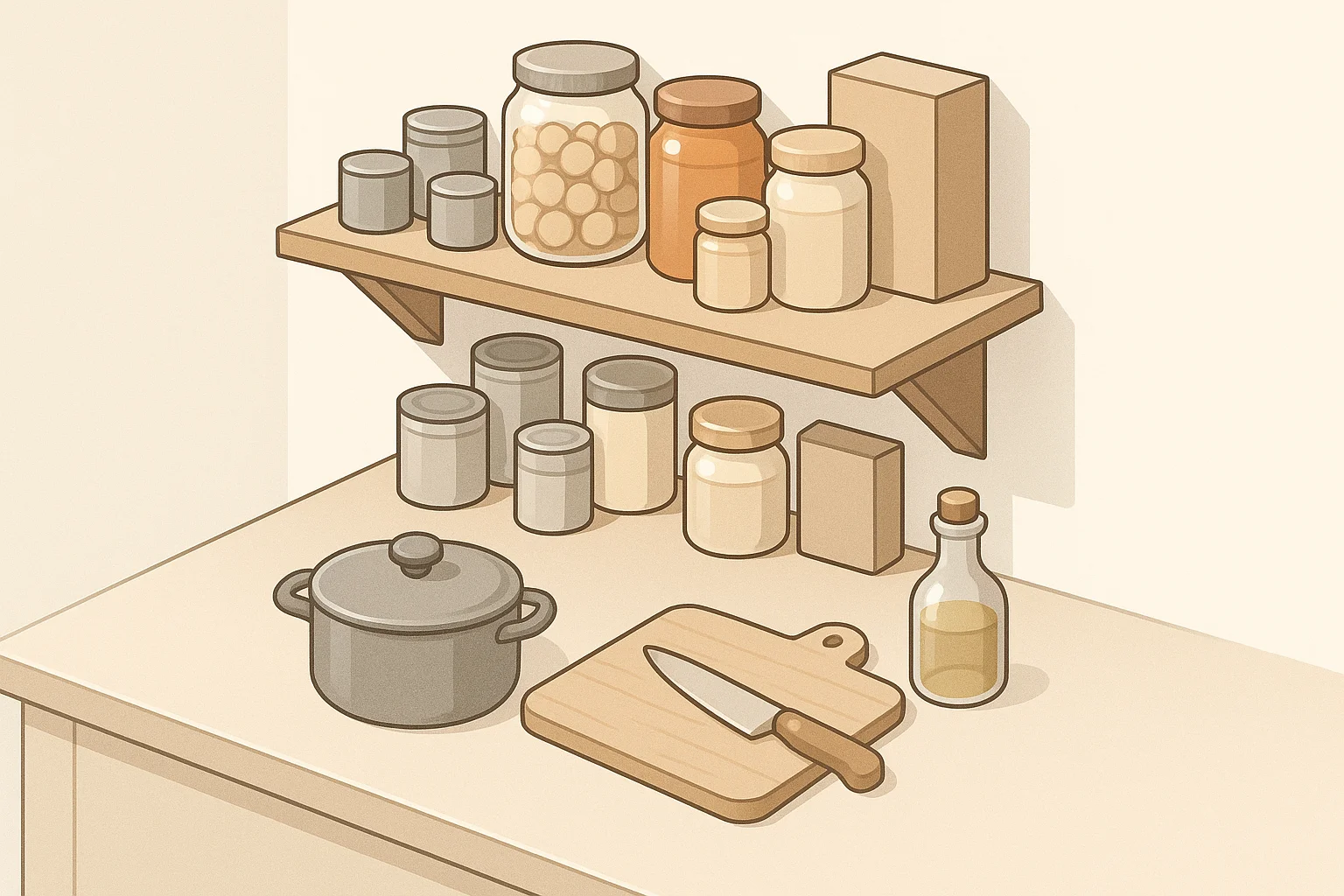
Preparing a short-term emergency pantry doesn’t have to be overwhelming or expensive. This guide walks through a practical approach to build a 7-day plan that fits your household, space, and eating habits without encouraging wasteful or panic buying. It focuses on familiar, shelf-stable staples you can rotate into regular meals, simple meal templates for no-cook or low-cook situations, and small storage strategies for apartments or shared housing. Whether you’re planning for seasonal storms, brief utility outages, or just want a calm buffer, the steps below are designed to be realistic and manageable.
Why a 7-Day Emergency Pantry Is a Practical Goal
A 7-day emergency pantry is a realistic, calm way to prepare for short-term disruptions without turning your home into a storeroom. It helps in everyday situations like winter storms, hurricanes, heatwaves, or local water main breaks, when grocery trips may be difficult or power may be out for a few days.
Instead of focusing on rare, extreme scenarios, a 7-day plan centers on meals you will actually eat. This keeps waste low and prevents overbuying. You are building a flexible buffer, not a separate “prepper” stash you never touch.
Key ideas for a practical 7-day pantry:
- Use what you already eat: Prioritize familiar foods so rotation is easy.
- Plan around no-cook and low-cook meals: Helpful if power or gas is limited.
- Think in meals, not just items: Cans and boxes become useful when grouped into simple, filling meals.
- Match your space: A small apartment pantry can still cover 7 days with careful choices.
Step 1: Estimate How Much Food You Actually Need
Before buying anything extra, estimate how much food your household typically uses in a week. This helps you avoid overbuying and crowding your cabinets.
Start With People and Pets
Make a quick list of everyone in your home and how they usually eat. Include pets so you are not scrambling for their food in an emergency.
- Number of adults
- Number of children (and typical appetites)
- Any seniors with different eating patterns
- Number and type of pets
Use Your Current Week as a Baseline
Look at a normal week of meals and snacks. You can do this by:
- Reviewing recent grocery receipts
- Looking at your usual online grocery order history
- Writing down what everyone eats for a few days
From this, estimate:
- Breakfasts per person: For example, cereal and milk, oatmeal, or toast and nut butter.
- Lunches and dinners: Consider how often you cook versus order out.
- Snacks: Useful for kids, stress, and long days without normal routines.
Set a Simple Target
Instead of trying to stock a precise calorie amount, aim for a practical count, such as:
- 7 breakfasts per person
- 7 main meals per person (lunch or dinner)
- A few snacks per person per day
This gives you a clear goal without complicated math.
Example values for illustration.
| Task | Why it matters | Notes |
|---|---|---|
| List people and pets | Prevents running short on meals or pet food | Include guests who visit often |
| Review a normal week of meals | Shows real portions and habits | Use grocery receipts or a quick food log |
| Count needed breakfasts | Covers daily routine without extra stress | Simple items like oats or cereal work well |
| Count needed main meals | Helps size your pantry realistically | Plan at least 1 hearty meal per day |
| Plan no-cook options | Covers power or gas outages | Include canned foods with manual opener |
| Note any special diets | Avoids last-minute food issues | Allergies, low-sodium needs, or baby food |
Step 2: Choose Shelf-Stable Staples You Already Like
The best emergency pantry is built mostly from foods you already eat. Shelf-stable staples can be rotated into regular meals, so nothing sits forgotten at the back of a shelf.
Core Pantry Categories
Consider building around these broad categories, then customize to your taste:
- Grains and starches: Rice, pasta, oats, instant grains, crackers, shelf-stable tortillas, instant potatoes.
- Canned or shelf-stable proteins: Beans, lentils, fish, chicken, shelf-stable tofu or plant-based proteins, nut butters.
- Canned fruits and vegetables: Mixed vegetables, tomatoes, corn, peaches, pears, applesauce.
- Ready meals and soups: Canned soups, chili, stews, shelf-stable boxed meals.
- Breakfast items: Oats, cereal, pancake mix that only needs water, shelf-stable milk or milk alternatives.
- Snacks and quick energy: Nuts, trail mix, granola bars, crackers, dried fruit.
Plan for Limited or No Cooking
In a power outage, you may have:
- No stove or oven
- Limited use of a grill or camp stove (if safe and allowed)
- No refrigerator or freezer after a period of time
Balance your pantry between:
- No-cook foods: Ready-to-eat canned meals, nut butter and crackers, canned beans, canned fruit, meal bars.
- Low-cook foods: Items that cook quickly using minimal fuel, like instant rice, instant oats, or thin pasta.
Consider Dietary Needs Without Overcomplicating
If anyone has allergies, intolerances, or other dietary needs, set aside a few clearly labeled items that are always safe for them. You do not need entirely separate sets of food, just a handful of reliable options.
Step 3: Build Simple 7-Day Meal Ideas
Instead of stockpiling random items, turn your staples into simple meal ideas. This makes it easier to see what you really need and helps reduce stress if you ever have to rely on the pantry.
Sample No-Cook and Low-Cook Meal Ideas
Use these as templates and plug in foods your household prefers.
- Breakfast ideas:
- Instant oats with dried fruit and nuts
- Cereal with shelf-stable milk
- Crackers with nut butter and a piece of fruit (fresh or canned)
- Lunch and dinner ideas:
- Canned beans, rice, and canned vegetables mixed into a simple bowl
- Canned soup or chili with crackers or instant rice
- Canned fish or chicken on crackers or tortillas with canned vegetables
- Pasta with canned tomatoes and seasoning
- Snack ideas:
- Nuts or trail mix
- Granola or snack bars
- Dried fruit or applesauce cups
Turn Meals Into a 7-Day Outline
Make a simple outline such as:
- Days 1–2: Use fresh foods first (refrigerator and freezer items if power is out).
- Days 3–5: Rely more on canned and boxed pantry items that may require light cooking.
- Days 6–7: Focus on no-cook items in case fuel is limited.
This shows you how much of each item you actually need and helps you avoid buying excess that will not be used.
Step 4: Avoid Overbuying in Small Spaces
Many people live in apartments, shared housing, or small homes where storage is limited. You can still build a solid 7-day pantry without stacking boxes to the ceiling.
Prioritize Dense, Versatile Foods
In tight spaces, choose foods that give you many meal options with minimal volume:
- Beans and lentils: Canned or dry, useful in many recipes.
- Rice and instant grains: Compact, pair well with almost anything.
- Nut butter: High in energy, works for meals and snacks.
- Concentrated flavors: Spices, bouillon, sauces help prevent food fatigue.
Use Hidden Storage Spots
Consider areas that are often overlooked:
- Top shelves of closets
- Under-bed storage bins
- Cabinets above refrigerators
- High kitchen shelves for light, shelf-stable items
Scale to Your Reality
If a full 7-day supply for everyone feels impossible because of space, aim for 3–5 days at first, then gradually add a bit more. Any buffer is better than none, and you can adjust as your space and budget allow.
Step 5: Special Considerations for Families, Seniors, and Pets
Different households have different needs. A pantry that works well for a single adult may not fit a family with young children or older adults.
Households With Children
Children may handle disruptions more easily when familiar foods are available. Consider:
- Comforting snacks like crackers, fruit cups, and simple cookies.
- Easy grab-and-eat items they can handle themselves.
- Drinks they like that do not require refrigeration once opened (where possible).
You can also set aside a small “special treats” box reserved for emergencies to make the situation feel less stressful.
Seniors or Limited Mobility
For older adults or anyone with limited strength or mobility, focus on:
- Lighter containers that are easy to open and lift.
- Meals that do not require heavy pots or long cooking times.
- Foods that are easy to chew and swallow, if needed.
Keep frequently used items on lower shelves to reduce reaching or climbing.
Pets
Pets rely completely on you for food and water. For them, store:
- At least several days of their usual food, plus a little extra buffer.
- A separate container of water as part of your overall water plan.
- Any special items they need, such as litter or simple treats.
Label pet supplies clearly so they are not used or moved by accident.
Step 6: Safe Storage, Shelf Life, and Rotation
Once you have your 7-day pantry, keeping it fresh and organized is more important than continually adding more. A small, well-managed pantry is more useful than a large, neglected one.
Where and How to Store Pantry Items
Store food in a place that is:
- Cool and dry, away from heaters and direct sunlight.
- Protected from pests.
- Easy to reach and see, so you do not forget what you have.
If you live in a very warm area or do not have a cool pantry, consider smaller quantities with more frequent rotation.
Understand Date Labels
Common food date labels include phrases like “best if used by” or “use by.” These are typically about quality, not safety rules. Always rely on your senses and basic food safety practices. When in doubt, set aside any item that looks, smells, or tastes off.
Rotate With a Simple System
To avoid waste:
- Use a “first in, first out” approach: new items go to the back, older items to the front.
- Check your pantry a few times a year and move nearing-date items into your regular meal plan.
- Replace what you use so the 7-day buffer stays intact.
Example values for illustration.
| Food type | Storage tip | Rotation interval idea | No-cook use |
|---|---|---|---|
| Canned beans | Store in a cool, dry cabinet | Plan to use within about 1 year as an example | Rinse and eat with crackers or rice |
| Canned vegetables | Group by type for easy access | Rotate into soups or sides a few times per year | Eat cold or at room temperature if needed |
| Canned fruits | Keep away from freezing temperatures | Use as snacks or dessert every few months | Serve straight from the can or cup |
| Dry grains (rice, oats) | Use airtight containers if possible | Plan meals that use them several times a month | Some instant oats can be soaked in water |
| Nut butters | Store sealed until needed | Rotate by using in snacks and sandwiches | Spread on crackers or bread |
| Snack bars | Keep in a box or basket together | Use and restock a few times a year | Quick ready-to-eat option |
Step 7: Keep It Simple With a Short Review Routine
A 7-day emergency pantry does not need constant attention. A brief review a few times a year is usually enough to keep it ready and aligned with how you actually eat.
Quick Seasonal Check
At the start of a new season or before regional weather events you expect (such as hurricane or winter storm seasons), spend a few minutes to:
- Scan for items nearing their date and plan to use them soon.
- Check that you still have roughly 7 days of simple meals for everyone.
- Confirm that manual tools, like a can opener, are easy to find.
Adjust as Life Changes
Update your pantry if household members, jobs, or routines change. New roommates, babies, or pets may shift what you need. A short note in a calendar or reminder app can help you remember to review your pantry without it becoming a major project.
By focusing on realistic amounts, familiar foods, and gentle, regular rotation, you can maintain a calm, functional 7-day emergency pantry that supports your household during short-term disruptions without overbuying or filling every corner of your home.
Related guides: Dietary Needs in an Emergency Pantry: A Practical Planning Checklist · Food Spoilage Cleanup After an Outage: What to Toss and Document.
Authoritative sources
Safety recommendations can change. Confirm critical details with current official guidance and local authorities.
- CDC: Carbon Monoxide Poisoning Basics
- USDA FSIS: Keep Food Safe During Emergencies
- CDC: Guidelines for Cleaning Safely After a Disaster
Frequently asked questions
How much food should I store per person for a 7-day emergency pantry?
Use your current week’s consumption as a baseline and aim for 7 breakfasts and 7 main meals per person, plus a few snacks each day. This practical approach avoids complicated calorie calculations and reduces waste by focusing on foods you already eat.
What is the easiest rotation system to keep a 7-day pantry fresh?
Use a first-in, first-out system: place new purchases behind older items and move nearing-date items into your regular meal plan. Check the pantry a few times a year and replace what you use so the buffer remains ready.
Which no-cook items are most useful if cooking isn’t possible?
Ready-to-eat canned beans, canned fish or chicken, nut butter with crackers, canned fruit, meal bars, and shelf-stable milk are practical no-cook options. They provide protein, calories, and variety without needing a stove or refrigeration.
How should I include pet food and water in a 7-day plan?
Store at least several days of your pet’s usual food plus a small buffer, and include a separate container of water for them as part of your overall water plan. Label pet supplies clearly and rotate them like human food so you do not run short.
What are space-saving tips for a small apartment to cover a 7-day emergency pantry?
Prioritize dense, versatile foods such as rice, beans, nut butters, and instant grains, and use hidden spots like top closet shelves or under-bed bins for light items. If a full 7-day supply isn’t feasible at first, aim for 3–5 days and gradually add more as space allows.
- Simple checklists and realistic planning
- Water, power, lighting, and pantry basics
- Family plans (kids, pets, seniors) and seasonal prep
Affiliate disclosure
As an Amazon Associate, we earn from qualifying purchases. Some links on this site may be affiliate links. If you buy through these links, we may earn a small commission at no extra cost to you. This helps support our content. Learn more.