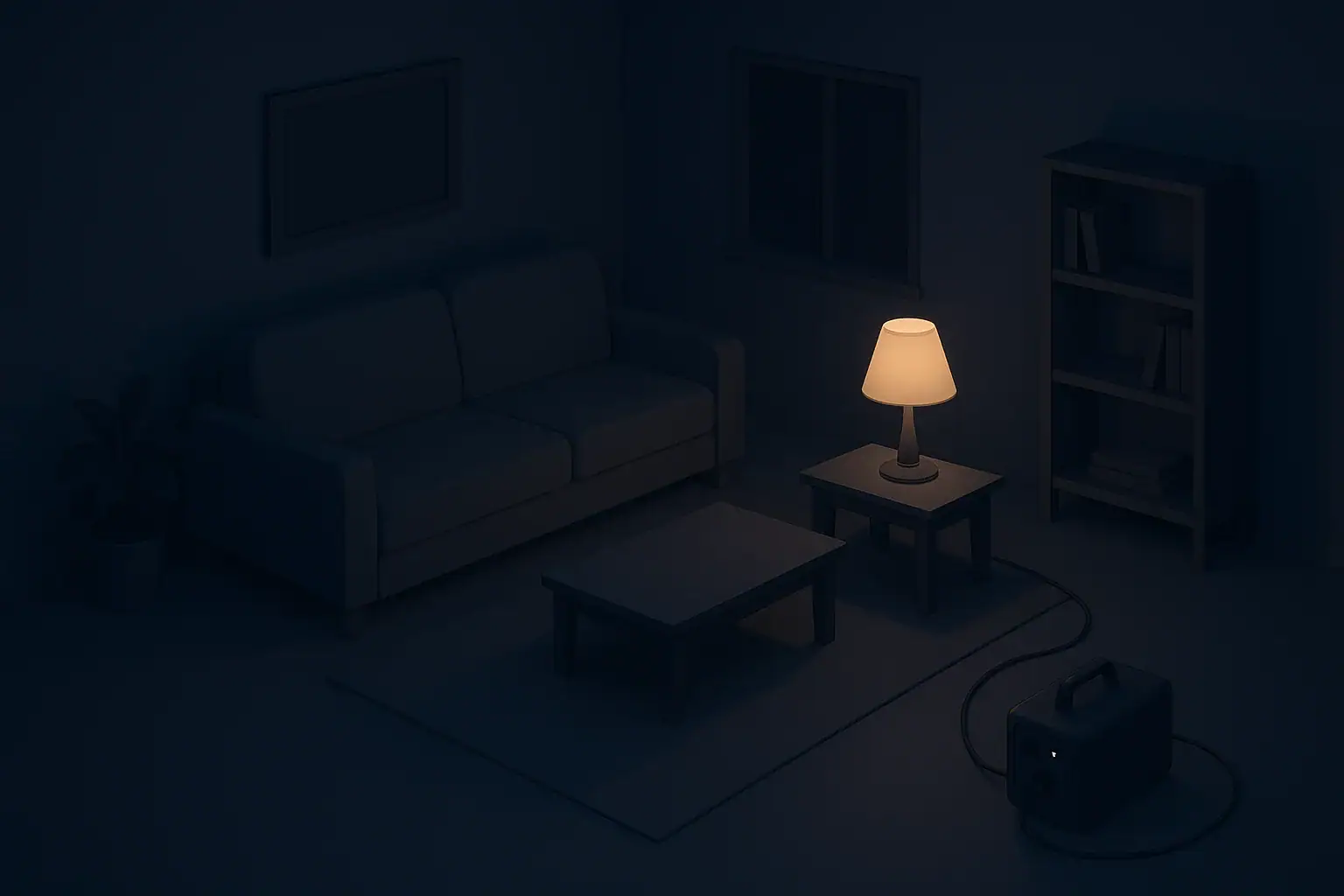
When the power goes out, an electric garage door can quietly turn from a daily convenience into a serious obstacle. If your car is inside, you may be unable to leave for work, pick up kids, or get to a store. If your car is outside, you might not be able to secure the home at night or during bad weather.
Most modern garage door openers have a built-in manual release, but many people never practice using it until they are already in the dark during a storm or neighborhood outage. A few minutes of preparation can make the difference between a calm, quick exit and a stressful scramble by flashlight.
This guide walks through:
- How the manual release works and when to use it
- Step-by-step instructions to open and close the door safely without power
- A practical safety checklist for families, kids, and older adults
- Simple blackout readiness tips specific to garages
Why Electric Garage Doors Matter During a Blackout
When the power goes out, an electric garage door can quietly turn from a daily convenience into a serious obstacle. If your car is inside, you may be unable to leave for work, pick up kids, or get to a store. If your car is outside, you might not be able to secure the home at night or during bad weather.
Most modern garage door openers have a built-in manual release, but many people never practice using it until they are already in the dark during a storm or neighborhood outage. A few minutes of preparation can make the difference between a calm, quick exit and a stressful scramble by flashlight.
This guide walks through:
- How the manual release works and when to use it
- Step-by-step instructions to open and close the door safely without power
- A practical safety checklist for families, kids, and older adults
- Simple blackout readiness tips specific to garages
Before the Lights Go Out: Get to Know Your Garage Door
Understanding your own garage setup before a blackout makes everything easier. Not all garages are the same, and your options in a power outage depend on a few key details.
Key Parts to Locate in Advance
On a calm day when you have good lighting, take a few minutes to find these items:
- Manual release cord: Usually a red or bright-colored handle hanging from the opener track. This disconnects the door from the motor.
- Interior door handle: A handle or grip on the garage door itself for lifting and lowering by hand.
- Garage door lock: Some doors have a manual lock bar or slide bolt. Know whether yours is used and how to unlock it.
- Any keyed entry: If your garage has an exterior key lock or side door, confirm you have working keys.
- Emergency release instructions: Many doors or openers have a small instruction label near the track. Read and understand it ahead of time.
Test the Door Balance Safely
A well-balanced garage door should move smoothly and not feel extremely heavy. An unbalanced or damaged door can be unsafe to operate by hand.
With power available:
- Close the door fully using the opener.
- Pull the manual release cord with the door closed.
- Lift the door by hand about halfway and gently let go.
If the door stays roughly in place or moves slowly, it is likely reasonably balanced. If it slams down or flies up, the springs or hardware may need professional adjustment. Avoid operating a clearly unbalanced door by hand during a blackout.
Example values for illustration.
| Task | Why it matters | Notes |
|---|---|---|
| Locate manual release handle | Allows door to move without power | Show all drivers in the household |
| Practice disconnecting and reconnecting | Reduces confusion in an actual outage | Practice in daylight with power on |
| Check for manual door locks | Prevents trying to lift a locked door | Unlock before using manual release |
| Store a flashlight in the garage | Helps you find cords, handles, and exits | Use fresh batteries on a simple schedule |
| Confirm exterior access (key or side door) | Lets you enter the garage if power is out | Keep a spare key where adults can reach it |
| Explain safety rules to kids | Reduces risk of kids playing with the door | Emphasize staying clear of a moving door |
Using the Manual Release During a Blackout
When the power goes out and the garage door opener will not respond, the manual release is your main tool. The exact mechanism can vary, but most follow a similar pattern.
General Safety Precautions First
Before pulling any cords or lifting the door, run through a quick safety check:
- Clear the area: Keep children, pets, and bystanders away from the door path.
- Check for damage: Look for obviously broken springs, bent tracks, or frayed cables. If you see serious damage, do not operate the door by hand.
- Make sure the door is fully closed: Manual release is safest to use when the door is in the down position.
- Unlock any manual locks: Verify that slide bolts or handle locks are disengaged.
- Use lighting: Turn on battery-powered work lights or flashlights so you can see what you are doing.
Step-by-Step: Disconnecting the Door from the Opener
Use these general steps as a starting point. If you have manufacturer instructions, follow those first.
- Stand in a stable position. Face the garage door from inside the garage, standing clear of the path the door will travel.
- Locate the manual release handle. This is usually a cord and handle hanging down from the opener rail.
- Confirm the door is closed and unlocked. If the door is partially open, support it if possible and use extra caution; a heavy door can move suddenly.
- Pull the release handle firmly. You will often feel or hear a click as the trolley disengages from the opener arm.
- Test the disconnection gently. Attempt to lift the door a few inches to confirm it moves freely from the opener.
Opening the Door Manually
Once the opener is disengaged:
- Grip the door handle. Use both hands and keep your feet positioned for balance.
- Lift smoothly. Raise the door slowly along the tracks. Avoid sudden jerks.
- Do not walk under a moving door. Wait until the door is fully open and stable before walking or driving under it.
- Secure the door in the open position. If your door does not stay fully open, have an adult hold it while a vehicle is moved. Do not prop with makeshift supports that could slip.
- Limit open time. Close the door manually once vehicles and people are clear, especially in bad weather or at night.
Closing the Door Manually
To close the door safely without power:
- Check the path. Confirm there are no people, pets, or objects under the door path.
- Grip the handle from the inside. Stand where you can step back as the door lowers.
- Lower the door gradually. Use both hands and control the descent. Do not let the door slam.
- Make sure it is fully closed. The bottom seal should rest firmly on the floor.
- Engage manual locks if needed. If you use a slide bolt or handle lock, secure it once the door is down and you are inside or safely outside, depending on your plan.
Reconnecting the Opener After Power Returns
When electricity is restored, you will need to reconnect the garage door to the opener so it can operate normally again.
General Reconnection Steps
Different opener designs reconnect in slightly different ways, but most follow one of these patterns:
- Automatic re-engagement: Some models reconnect automatically the next time you press the wall button or remote, after you manually move the door to a certain position.
- Manual re-engagement: Others require you to pull the release handle again or slide a lever back into place to lock the trolley to the opener arm.
A basic approach that works with many systems:
- Ensure the door is fully closed. A partially open door can cause sudden movement when the opener engages.
- Pull the manual release handle toward the opener. This often resets the latch so it can catch the trolley.
- Press the wall button once. The opener should run, and the trolley should reconnect with a click.
- Watch the full open-and-close cycle. Stay ready to release the button if the door moves unevenly or encounters an obstruction.
After a Blackout: Quick Safety Check
Once the opener is working again, take a moment to confirm:
- The door reverses properly when it meets resistance.
- The photo eyes (if present) are aligned and not blocked.
- Any manual locks you used are fully disengaged.
- The manual release cord is accessible and not tangled.
Who Should (and Should Not) Operate the Manual Release
In many households, more than one person drives, but not everyone should be responsible for operating a heavy overhead door during a blackout.
Assigning Responsibility
Consider designating one or two adults as the primary people to handle the manual release. They should:
- Be physically able to lift and lower the door safely.
- Understand how the springs and cables work in general terms.
- Know the signs of damage that mean you should stop and call a professional.
Guidance for Kids, Teens, and Older Adults
- Young children: Teach them not to touch the release cord or play near the door tracks. Emphasize that the door is heavy equipment.
- Teens who drive: Walk through the manual release and lifting process with them in full daylight. Make a clear rule that if the door feels too heavy or does not move smoothly, they should not force it.
- Older adults or anyone with limited strength or mobility: It may be safer for them to avoid operating the door manually. Discuss alternative plans, such as parking one vehicle outside when severe weather or likely outages are forecast.
Garage Safety Checklist for Power Outages
A short written checklist can reduce stress in the middle of a blackout. You can print or write a version of the list below and keep it on an interior wall of the garage where it is easy to see with a flashlight.
Immediate Steps When the Power Goes Out
- Use a battery light to check the breaker panel if it is safe to do so.
- Confirm that only your home is dark or if the neighborhood is out as well (looking outside or checking with a neighbor).
- Decide whether you need to move vehicles in or out now or can wait.
- Clear kids and pets away from the door area before any manual operation.
If You Need to Open the Door Manually
- Verify the door is closed and manual locks are off.
- Pull the manual release cord while standing clear.
- Lift the door smoothly, keeping fingers away from joints and pinch points.
- Have another adult hold the door if it does not stay open by itself.
- Move the vehicle, then close the door right away if conditions allow.
Keeping the Garage Secure and Safe
- Do not leave the door partially open for ventilation if you can avoid it; it may invite pests or intruders.
- Never run a vehicle inside the garage with the door closed; exhaust can build up quickly.
- Store extension cords, tools, and boxes away from the door tracks so you are not tripping in the dark.
- Keep a simple battery lantern or flashlight hung near the interior garage door into the house.
Blackout Planning: Garages, Lighting, and Basic Power Needs
Garages often become informal storage for emergency items. With a little planning, you can make the garage a useful and safe space during short-term outages.
Simple Lighting for the Garage
Because garages usually have few windows, they can be very dark during a blackout. Safer lighting options include:
- Battery lanterns: Provide broad, stable light while leaving hands free to operate the door.
- Headlamps: Useful if you need both hands to handle the door or move items.
- Clip-on lights: Small, battery-powered units that can attach to shelves or metal surfaces.
Avoid using open flames, such as candles, in a garage. The area may contain flammable liquids, cardboard boxes, or other combustibles.
Parking Strategy When Outages Are Likely
If your area is expecting a storm, heatwave, or other event that often leads to blackouts, adjust how you park:
- Consider leaving one vehicle outside, especially if someone in the household has frequent appointments or caregiving duties.
- Keep the outside vehicle fueled to a reasonable level in case gas stations cannot operate pumps temporarily.
- Avoid parking so close to the garage door that it is difficult to operate the door manually.
Basic Backup Power for Garage Essentials
Some households use small backup power options for minimal garage needs, like powering a single work light, charging a phone, or briefly operating a tool. Understanding rough power use helps you choose what is realistic to run during an outage.
Example values for illustration.
| Device type | Typical watts range (example) | Planning notes |
|---|---|---|
| LED work light | 10–30 watts | Low draw; suitable for small backup power |
| Battery charger for phones | 5–15 watts | Use sparingly to preserve backup capacity |
| Small portable fan | 20–50 watts | Helps with comfort in warm garages |
| Cordless tool battery charger | 50–150 watts | Charge only when needed during longer outages |
| Garage door opener (brief use) | 100–300 watts while running | Many people instead use manual release to save power |
| Small air compressor | 200–600 watts | Typically not a priority during short outages |
Putting It All Together Calmly
Most power outages are short and manageable. By becoming familiar with your electric garage door’s manual release, practicing once or twice in good conditions, and keeping simple lighting and basic tools in the garage, you can treat a blackout as an inconvenience rather than a crisis.
Focus on clear roles in the household, safe manual operation, keeping pathways uncluttered, and having at least one vehicle ready to move when storms or other events are likely. Those small, practical steps support everyday readiness without needing specialized equipment or complex plans.
Authoritative sources
Safety recommendations can change. Confirm critical details with current official guidance and local authorities.
- CDC: Carbon Monoxide Poisoning Basics
- U.S. CPSC: Battery Safety
- Ready.gov: Prepare Your Pets for Disasters
Frequently asked questions
How do I operate an electric garage door during a blackout if the opener won’t work?
Locate and pull the manual release cord on the opener rail to disconnect the trolley, then lift the door by the interior handle using both hands and steady, controlled motion. Make sure the door is unlocked, the path is clear, and someone else is nearby to help if the door does not stay open.
Is it safe to manually operate a garage door that seems heavy or unbalanced during a power outage?
No. If the door slams, rises suddenly, or feels unusually heavy, the springs or cables may be damaged and manual operation can be dangerous. Stop and call a qualified technician rather than forcing the door.
Will my garage door opener reconnect automatically after power is restored?
Some opener designs re-engage automatically the next time you press the wall button, while others require you to pull the release handle back toward the unit or reset a lever. After power returns, ensure the door is fully closed, pull the release toward the opener if needed, then run a single open/close cycle and watch for proper operation.
What should I do to prepare my garage so my electric garage door during a blackout is easy to use?
Identify and test the manual release in good lighting, keep a flashlight or battery lantern in the garage, check that manual locks are operable, and practice lifting the door when power is on to confirm it’s balanced. Also assign one or two adults to be familiar with the steps and review safety rules with teens and children.
Can I leave a vehicle inside the garage overnight if there’s a blackout?
Yes, but make sure the door is fully closed and secured, and never run the vehicle inside the closed garage because of carbon monoxide risk. If outages are likely for an extended time, consider parking at least one vehicle outside so someone can leave quickly if needed.
- Simple checklists and realistic planning
- Water, power, lighting, and pantry basics
- Family plans (kids, pets, seniors) and seasonal prep
Affiliate disclosure
As an Amazon Associate, we earn from qualifying purchases. Some links on this site may be affiliate links. If you buy through these links, we may earn a small commission at no extra cost to you. This helps support our content. Learn more.