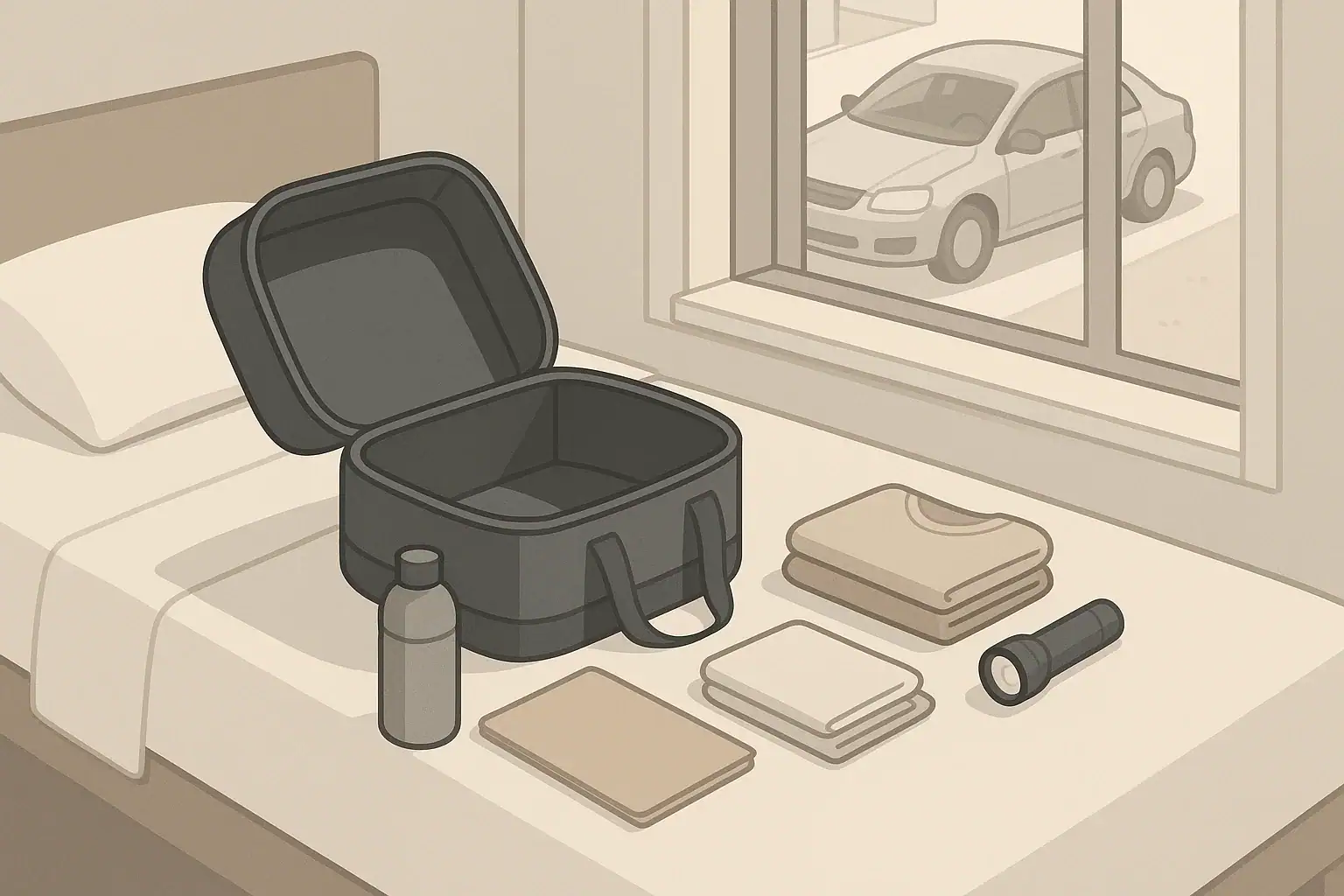
A car emergency kit is a simple way to handle common problems on the road and short-notice evacuations. You do not need to prepare for extreme scenarios to benefit from one. A basic kit helps with flat tires, minor injuries, long traffic delays, and getting temporarily stranded in bad weather.
For many people in the United States, the car may be the most practical place to keep a portion of their emergency supplies. This is especially true for renters, apartment dwellers, and families who might need to leave home quickly during wildfires, hurricanes, or building issues such as water damage or gas leaks.
Think of your car kit as a bridge: it helps you stay safe and reasonably comfortable for a short period until you can get home, reach a safer location, or receive assistance. The goal is calm, realistic readiness, not heavy overpacking.
Why a Car Emergency Kit Matters for Everyday Drivers
A car emergency kit is a simple way to handle common problems on the road and short-notice evacuations. You do not need to prepare for extreme scenarios to benefit from one. A basic kit helps with flat tires, minor injuries, long traffic delays, and getting temporarily stranded in bad weather.
For many people in the United States, the car may be the most practical place to keep a portion of their emergency supplies. This is especially true for renters, apartment dwellers, and families who might need to leave home quickly during wildfires, hurricanes, or building issues such as water damage or gas leaks.
Think of your car kit as a bridge: it helps you stay safe and reasonably comfortable for a short period until you can get home, reach a safer location, or receive assistance. The goal is calm, realistic readiness, not heavy overpacking.
Planning Your Car Emergency Kit: How to Right-Size It
Before buying supplies, consider how you actually use your car. A commuter in a city will plan differently from a family driving long rural distances or someone in an area with winter storms or wildfire evacuations.
Key questions to guide your planning:
- Typical drive time: Are most trips under an hour, or do you regularly drive several hours at a time?
- Climate and seasons: Do you face snow and ice, extreme heat, wildfire smoke, hurricanes, or flooding?
- Passengers: Do you regularly drive with kids, older adults, or pets who have specific needs?
- Storage space: Do you have a small sedan trunk, a hatchback, or a larger vehicle with more room?
Use these answers to build a layered kit:
- Everyday layer: Items you use often, like phone charging, napkins, and basic tools.
- Breakdown layer: Items for flat tires, dead batteries, or waiting for help.
- Evacuation layer: Light, grab-and-go items that support a short evacuation away from home.
Example values for illustration.
| Task | Why it matters | Notes |
|---|---|---|
| Assess usual trip length and routes | Matches kit size to real risks | Note longest regular drive and most remote sections |
| List climate and seasonal hazards | Guides clothing, water, and shelter items | Include winter storms, heatwaves, wildfire smoke, hurricanes |
| Count regular passengers and pets | Ensures enough water and comfort items | Plan at least one small item per child or pet |
| Map trunk and cabin storage spots | Prevents overpacking and clutter | Reserve space for groceries and strollers |
| Decide what stays in car vs. go-bag | Keeps essentials reachable in an evacuation | Documents and medications often fit better in a go-bag |
| Set a review reminder | Stops supplies from expiring unnoticed | Example: quick check every 3–6 months |
Core Safety and Breakdown Essentials
These items focus on handling the most common roadside issues: flat tires, dead batteries, and minor mechanical problems. Store them in the trunk or a dedicated crate so they do not roll around.
Vehicle Basics
- Properly inflated spare tire, jack, and lug wrench (or manufacturer’s tire tools)
- Jumper cables or a small jump-start device if you know how to use it safely
- Tire repair items, such as a simple plug kit and a small air pump, if you are comfortable using them
- Vehicle owner’s manual and insurance/registration documents
- Basic tool kit with screwdrivers, pliers, and an adjustable wrench
Visibility and Roadside Safety
- Reflective triangles or other visibility markers to place behind the car
- High-visibility vest for the driver if you must exit the car on a busy road
- Flashlight or headlamp with extra batteries
- Gloves to protect your hands during tire changes or cold-weather tasks
Basic First Aid and Hygiene
A compact first-aid kit in the car can handle scrapes, minor cuts, and simple support while you wait for professional help if needed.
- Adhesive bandages, gauze pads, and medical tape
- Disposable gloves
- Antiseptic wipes
- Small scissors and tweezers
- Simple pain-relief and allergy items appropriate for your household, following label directions
- Hand sanitizer and a small pack of tissues
Comfort, Warmth, and Short-Term Shelter
Breakdowns, traffic closures, or weather events can leave you in the car longer than planned. Comfort items do not need to be expensive. Focus on staying warm or cool enough and having basic privacy and shade.
Warmth for Cold Weather
- Blankets or emergency blankets for each regular passenger
- Warm hats, gloves, and socks stored in a small bag
- Ice scraper and snow brush in colder regions
- Small bag of sand or non-clumping cat litter for traction if you get stuck on ice
If you run the engine to stay warm, crack a window slightly for ventilation and make sure the exhaust pipe is clear of snow or debris.
Shade and Heat Relief
- Windshield sunshade to reduce heat buildup when parked
- Lightweight cloth or towels that can double as shade or privacy screens
- Battery-powered fan if you live in an area with extreme heat and regularly park in open areas
Never rely on a car emergency kit to keep people or pets safely inside a parked car during heat. In hot conditions, prioritize getting everyone to a cooler location as soon as possible.
Simple Shelter Options
- Compact tarp or emergency bivy sack that can provide extra warmth or weather protection
- Lightweight ponchos for each person in case you need to exit the car in rain
Water, Snacks, and Basic Supplies
Traffic jams, road closures, and evacuations can stretch a short trip into many hours. Having some water and food helps keep everyone more comfortable and focused.
Water Storage in the Car
- Small, sealed water bottles stored in a box or crate to reduce rolling and leaks
- For families, consider keeping a separate case of water at home that you can quickly load into the car for known evacuations
Heat and freezing can affect containers over time. Check bottles regularly for leaks, damage, or taste changes, and rotate with fresh water as needed.
Non-Perishable Snacks
- Individually wrapped snacks that tolerate temperature swings reasonably well
- Items with moderate salt and sugar to avoid making people too thirsty
- Simple dry foods for kids that they already enjoy, to reduce stress during long delays
Label snack packages with a simple rotation date and use them up at home before they expire.
Everyday Convenience Items
- Reusable utensils and a small stack of paper cups or bowls
- Napkins or paper towels
- Resealable plastic bags for trash or temporary storage
Documents, Cash, and Communication
During a breakdown or evacuation, communication and basic paperwork can make it easier to get assistance and return home smoothly. Keep sensitive documents secure and avoid leaving them visible in the car.
Key Documents
In or with your car kit, consider keeping copies (paper or digital) of:
- Driver’s license and vehicle registration (originals as required by law)
- Proof of insurance
- Contact information for roadside assistance or towing services
- Important phone numbers written on paper in case devices lose power
Many people prefer to keep full personal records at home and only partial copies in the vehicle. Decide what level of detail feels appropriate for you.
Cash and Payment Options
- Small amount of cash in small bills, stored out of sight
- Coins for older toll booths or parking meters, if relevant in your area
Communication and Power
- Car charger cable compatible with your phone
- Small battery power bank kept topped up
- Simple battery-powered or hand-crank radio to receive local updates if cell service is limited
Include a simple family communication plan, such as who you will call first in an emergency, where to meet if phones fail, and which out-of-area contact might help relay messages.
Evacuation-Focused Additions for Families, Kids, and Pets
When an evacuation is advised, the car often becomes your mobile base. A few thoughtful additions can make the experience more manageable, especially for kids, older adults, and pets.
Grab-and-Go Personal Items
Consider storing a small go-bag in the car or near your front door so you can easily load it into the vehicle. It might include:
- Change of clothes and basic toiletries for each person
- Copies of essential documents in a waterproof pouch
- Spare eyeglasses or contact lens supplies
- List of current medications and dosages
For privacy and safety, many people prefer to keep medicine and highly sensitive documents inside the home and move them to the car only when evacuating.
Comfort Items for Kids
- Small blanket or favorite stuffed item
- Portable activities such as card games, coloring pages, or small toys
- Kid-friendly snacks and spill-resistant cups
Familiar items can make long waits in traffic or temporary shelter stays less stressful.
Pet Readiness in the Car
- Leash, harness, and collapsible bowl
- Small sealed container of pet food rotated regularly
- Pet waste bags
- Copy of vaccination records in case you need to use a pet-friendly shelter or boarding facility
Make sure your pet can safely ride in the car, whether in a crate, carrier, or restraint that fits your vehicle and their size.
Seasonal and Regional Customizations
Your car emergency kit should shift slightly with the seasons and regional risks. Keeping a small storage bin in a closet or garage for “swap-in” items makes this easier.
Winter and Cold-Weather Regions
- Extra blankets, hats, gloves, and socks
- Windshield washer fluid rated for low temperatures
- Snow shovel that fits inside your vehicle
- Windshield de-icer solution and lock de-icer (stored where you can reach it)
In remote or snowy areas, additional fuel management, check-ins with friends or family about travel plans, and paying attention to storm forecasts are all important complements to your kit.
Hot-Weather and Desert Areas
- Additional water containers for people and pets
- Wide-brim hat, lightweight long-sleeve layer, and sunscreen
- Extra windshield sunshade or window shades for rear passengers
Rotate heat-sensitive items more often, and avoid storing items that can melt, leak, or become unsafe in high temperatures.
Hurricane, Flood, and Wildfire-Prone Areas
- Printed evacuation routes and alternate paths in case main roads close
- Mask options that can help reduce exposure to dust or smoke
- Sturdy shoes and socks for each person in case you need to walk short distances on rough ground
Follow local guidance on evacuations and shelters. Your car kit supports but does not replace official instructions from local authorities.
Storing, Organizing, and Maintaining Your Car Kit
A well-organized kit is easier to use and less likely to cause clutter or safety issues. Aim for a “set and lightly maintain” approach that fits into your regular routines.
Smart Storage in Small and Large Vehicles
- Use soft-sided bags or bins to separate categories such as tools, first aid, and comfort items.
- Place rarely used or seasonal items deeper in the trunk, and keep frequently used items near the top.
- A small pouch in the glove box can hold documents, a flashlight, and a notepad with pens.
If you live in an apartment or use a shared parking area, avoid leaving visible valuables in the car. Choose low-profile containers and keep them out of sight.
Rotation and Simple Checkups
- Set a calendar reminder every 3–6 months to check water, snacks, and batteries.
- Look for signs of heat damage or leaks in stored items.
- Review clothing sizes for growing kids and adjust as needed.
- Update the kit if your regular routes, vehicle, or household members change.
Example values for illustration.
| Food or supply type | Storage tip | Rotation interval idea | No-cook or low-prep use |
|---|---|---|---|
| Packaged snack bars | Keep in a shaded bin away from windows | Swap every 3–6 months | Quick energy during traffic backups |
| Crackers or dry snacks | Seal in resealable bags inside a rigid container | Check for staleness every 3 months | Pair with spreads or shelf-stable items at stops |
| Small bottled water | Store upright in a crate to limit leaks | Visual check monthly; rotate as taste changes | Drinking, quick hand rinsing if needed |
| Baby wipes or moist wipes | Keep sealed and away from heat sources | Replace yearly or per package date | Basic cleanup and hygiene without running water |
| Pocket tissues | Store in glove box or door pocket | Refill when box or packet is low | Nose, spills, simple cleaning tasks |
| Pet treats and dry food | Use small, airtight container | Rotate monthly into regular pet meals | Calm pets and maintain routine on the road |
Practicing Your Plan and Using Your Kit Calmly
Once your car emergency kit is assembled, take a few minutes to walk through how you would use it. Show older kids where certain items are stored, and review safe ways to exit the car, place visibility markers, and call for help.
A realistic, right-sized car emergency kit supports everyday life: it makes commutes less stressful, trips with kids more manageable, and short-notice evacuations more orderly. With a little planning and occasional maintenance, your car can carry a modest set of tools and supplies that provides steady reassurance on every drive.
Authoritative sources
Safety recommendations can change. Confirm critical details with current official guidance and local authorities.
- US EPA: Emergency Disinfection of Drinking Water
- USDA FSIS: Keep Food Safe During Emergencies
- U.S. CPSC: Battery Safety
Frequently asked questions
What essential items should be in a basic car emergency kit for everyday use?
A basic kit should include a properly inflated spare tire with tools, jumper cables or a small jump starter, a flashlight or headlamp with extra batteries, a compact first-aid kit, bottled water and nonperishable snacks, a phone charging cable or power bank, and visibility items like a reflective triangle or vest. Keep tools and heavier items in the trunk and frequently used supplies in an easy-to-reach bin or pouch. Adjust quantities for passengers, pets, and typical trip length.
How often should I check and rotate supplies in my car emergency kit?
Check and rotate consumables and batteries every 3–6 months. During checks, inspect water bottles for leaks or off tastes, replace expired snacks and medicines, test power banks and flashlights, and adjust clothing sizes for children as needed. Regular, quick reviews keep the kit reliable without much effort.
What items are most important to add to a car kit for winter driving?
For winter, add extra blankets or emergency blankets, warm hats and gloves, an ice scraper and snow brush, a small snow shovel, and coarse sand or non-clumping cat litter for traction. Also use low-temperature windshield washer fluid and consider a portable jump starter, since cold can reduce battery performance. If you plan to run the engine for warmth, always clear the exhaust and provide ventilation.
Can I store medications and important documents in my car emergency kit?
Avoid storing temperature-sensitive or controlled medications in the car long-term because heat and cold can reduce effectiveness. Keep copies of important documents in a waterproof pouch in the vehicle and carry originals or critical medicines in a go-bag when evacuating. For privacy and security, store sensitive items out of sight and transfer them to the car only when needed.
How can I keep water and snacks safe in extreme heat or freezing conditions?
In extreme heat, rotate water and snacks more frequently, store them in shaded, insulated containers if possible, and avoid items that melt or leak. In freezing weather, prevent bottles from freezing and cracking by using insulated sleeves or storing a small amount of water in the cabin when parked; keep extra water at home to load during planned evacuations. Regular inspections reduce the risk of spoiled or unusable supplies.
- Simple checklists and realistic planning
- Water, power, lighting, and pantry basics
- Family plans (kids, pets, seniors) and seasonal prep
Affiliate disclosure
As an Amazon Associate, we earn from qualifying purchases. Some links on this site may be affiliate links. If you buy through these links, we may earn a small commission at no extra cost to you. This helps support our content. Learn more.