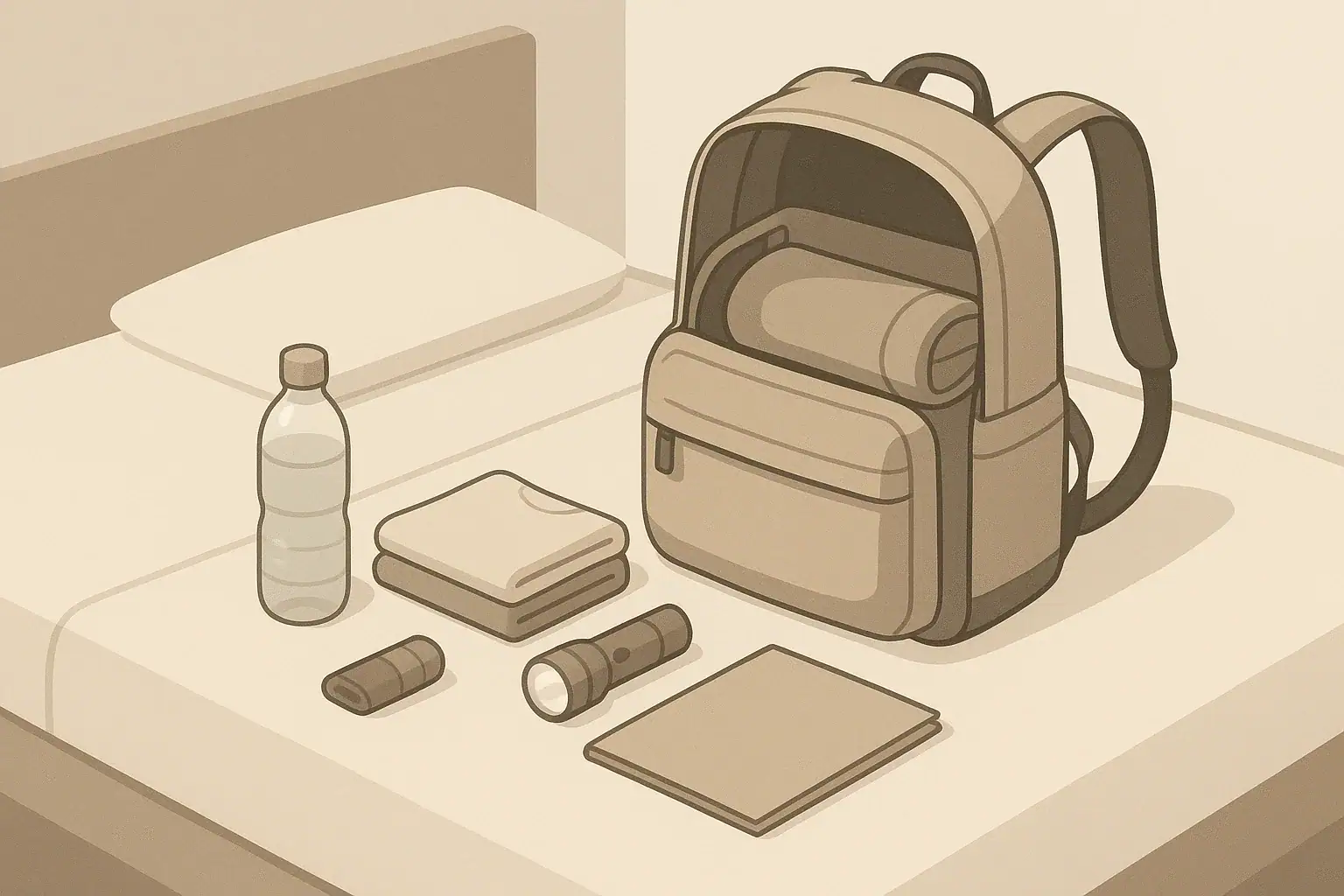
Most people do not need a full evacuation bag for everyday life, but almost everyone has days when they need to leave home quickly. A simple, repeatable 10-minute packing system helps you get out the door calmly for realistic situations, such as:
- Unexpected overnight at a friend’s or relative’s place during a power outage
- Last-minute trip to stay somewhere cooler during a heatwave
- Driving to a hotel during poor air quality or wildfire smoke
- Heading to a relative’s house during a winter storm or water disruption
- Urgent visits to a clinic, vet, or family member
Instead of packing from scratch every time, you build a small, standing system. That way, even in a rushed moment, you can cover the basics in minutes without overthinking. This article focuses on everyday people in typical U.S. homes, including apartments, renters, families with kids, and pet owners.
Why a 10-Minute Packing System Matters
Most people do not need a full evacuation bag for everyday life, but almost everyone has days when they need to leave home quickly. A simple, repeatable 10-minute packing system helps you get out the door calmly for realistic situations, such as:
- Unexpected overnight at a friend’s or relative’s place during a power outage
- Last-minute trip to stay somewhere cooler during a heatwave
- Driving to a hotel during poor air quality or wildfire smoke
- Heading to a relative’s house during a winter storm or water disruption
- Urgent visits to a clinic, vet, or family member
Instead of packing from scratch every time, you build a small, standing system. That way, even in a rushed moment, you can cover the basics in minutes without overthinking. This article focuses on everyday people in typical U.S. homes, including apartments, renters, families with kids, and pet owners.
The Core Idea: “Grab-Base + Add-Quick”
The fastest realistic approach is to split your packing into two parts:
- Grab-Base: A small, always-ready bag with non-perishable basics that rarely change.
- Add-Quick: A short checklist of personal and time-sensitive items you add in under 10 minutes.
This structure keeps your everyday space uncluttered while still letting you leave in a hurry. It also works whether you live alone, share a small apartment, or have kids and pets.
What Goes in Your Grab-Base
Your Grab-Base is not a full emergency kit. It is a compact set of practical items you can use in many short-notice situations, especially power loss, minor water issues, or short stays away from home. Aim for one backpack or small duffel that is easy to carry.
Common items include:
- Light and power: Small flashlight, basic battery-powered lantern or headlamp, and spare batteries in a simple pouch.
- Water basics: A clean, empty reusable bottle and a few single-use water treatment options if you use them (for example, tablets you already keep for travel).
- Simple food: Shelf-stable snacks that tolerate heat or cold reasonably well and do not require cooking.
- Hygiene basics: Travel-size soap, toothbrush and toothpaste, small pack of wipes, tissues, and a few resealable bags.
- Paper copies: Plain paper with key phone numbers and contacts (family, building manager, workplace, vet), and a simple list of any important account or utility phone numbers.
- Basic comfort: Thin scarf or lightweight layer, pair of basic socks, and earplugs if you use them.
- Cash: A small amount of cash in small bills, if that is comfortable for you.
Store this bag in a consistent, easy-to-reach place near your regular exit. If you share housing, agree on a visible spot, such as a hook or a specific closet shelf.
Your Add-Quick Items
Add-Quick items depend more on time, season, and who is leaving. They usually include:
- Phone, wallet, keys
- Everyday medications (in original containers) and glasses or contacts
- Weather-appropriate outerwear and footwear
- Chargers or a small power bank you already use daily
- One change of clothes and undergarments
- For kids: comfort item, small toy, or activity
- For pets: leash, small amount of food, collapsible or small bowl, any daily medications
- Any documents you prefer not to leave at home (stored together in a simple folder)
To keep this quick, you do not pre-pack these. Instead, you keep a short printed checklist with your Grab-Base and use it as a rapid guide.
Example values for illustration.
| Task | Why it matters | Notes |
|---|---|---|
| Grab phone, wallet, keys | Core ID, payment, and access | Keep them in a dish or hook near the door |
| Add daily medications | Prevents missed doses if you stay overnight | Store in one small pouch for easy grab |
| Pack one change of clothes | Comfort if plans change or conditions worsen | Focus on undergarments and layers |
| Include chargers or power bank | Keeps communication and alerts available | Use a small pouch you move between bags |
| Add weather layer (coat, hat, or rain gear) | Helps if you are outside or power is off | Store near door for fast access |
| Pack simple snacks | Reduces stress if stores are busy or closed | Rotate snacks with ones you usually eat |
| Add pet essentials (if needed) | Keeps pets calm and cared for | Keep leash, bowl, and spare food together |
Building a 10-Minute Routine in Different Homes
The same basic system works in many living situations. The details change based on space and who lives with you.
If You Live in a Small Apartment or Rent a Room
Space is tight, but movement is usually simple. Focus on keeping your essentials compact and centralized.
Helpful approaches include:
- One visible hook: Hang your Grab-Base bag on a sturdy hook close to your door.
- Small entry tray: Use a tiny tray or box for keys, wallet, transit card, and a compact flashlight.
- Shared housing coordination: If you have roommates, agree on a neutral place where you can all quickly set packed items if you plan to leave together.
- Minimal duplicates: Use travel-size hygiene items and a small multiuse cloth instead of full bottles or bulky towels.
If You Live in a Larger Home
Larger homes often mean more storage and more chances to misplace things. The key is to shorten your path between rooms when you are rushing.
Consider:
- Central staging spot: Choose one flat surface near your main exit (bench, small table, or shelf) as the only place where you “build the pile” before loading your bag.
- Floor map: Mentally map a loop: bedroom (clothes, meds) → bathroom (hygiene) → kitchen (snacks, water) → staging spot → door.
- One bag per person: If you have other adults or teens, give each a simple Grab-Base and checklist.
- Power and lighting: Keep a flashlight and simple lantern in both the bedroom and near the exit, in case packing happens in dim light during an outage.
Families with Kids
Kids add time and complexity, but a simple shared system can still stay under 10 minutes once practiced.
- Kid comfort kit: Keep a small pouch in your Grab-Base with a basic comfort item, such as a small toy, blank notebook, or coloring supplies.
- Size-flexible clothes: Store a simple outfit that can work across seasons with layers (for example, leggings, T-shirt, light sweater) and adjust with outerwear as needed.
- Clear roles: Give school-age kids simple tasks, such as putting shoes by the door or grabbing their jacket.
- Practice game: Once or twice a year, turn “10-minute packing” into a timed practice game so it feels familiar.
Including Pets in Your 10-Minute System
Pets rely entirely on your planning in a rush. A small, dedicated pet pouch near your Grab-Base can prevent last-minute scrambling.
- Core items: Leash, small waste bags, compact food scoop, and a small collapsible or nestable bowl.
- Food: A sealed portion of dry food or treats that you rotate from your regular supply.
- Records: A simple paper note with vet contact and microchip number if you have it.
- Carrier plan: For cats or small animals, decide where the carrier stays and keep a light blanket or towel ready nearby.
Timing Yourself: Making 10 Minutes Real
A 10-minute packing system works best if you test it once under calm conditions. This gives you a realistic sense of what you can actually do in that time.
Step-by-Step 10-Minute Practice Drill
You only need to run this drill occasionally, such as once or twice a year, and adjust based on what you learn.
- Set a timer for 10 minutes. Start in your usual living space, not already standing in front of your closet.
- Grab your base bag. Confirm it has your core items and is easy to lift.
- Follow your checklist. Move through your home in a simple loop. Try not to double back.
- Pack for one night away. Assume you will sleep somewhere else, have basic shelter, and want to be reasonably comfortable.
- Stop when the timer ends. Notice what you finished and what you missed.
- Adjust. If you consistently run out of time, shorten your list or pre-stage some items.
Adapting for Seasonal and Regional Risks
Different parts of the U.S. face different short-notice situations. Your 10-minute list should reflect the ones that are realistic for you, without becoming complicated.
- Winter storms: Add warm socks, hat, gloves, and possibly a compact blanket or extra layer.
- Hurricanes: If you live in a hurricane-prone area, keep important papers in a single folder and consider a small waterproof pouch for them.
- Heatwaves: Pack lightweight clothing, a hat, and a refillable bottle. Consider including a small, packable cloth you can dampen to cool down if needed.
- Wildfire smoke: If smoke is a concern in your region, keep any masks or simple eye protection you normally use for dusty tasks in a known spot and add them quickly if needed.
Coordinating with Communication and Plans
Packing fast is easier when everyone knows where they are going and how to reach each other. A simple communication plan keeps your 10-minute system from turning into confusion at the door.
Basic Contact and Meeting Plan
You do not need a complicated system. A few clear decisions, written down on paper, are usually enough:
- Main contact: Choose one person outside your household as your primary check-in contact.
- Backup contact: Name one additional person in case the first is unreachable.
- Local meet-up spot: Pick one location near your home where everyone would go if phones were not working and it was safe to be outside.
- Out-of-area spot: Decide on a general area where you would try to stay if you needed to leave your neighborhood during a longer disruption.
Write this information on the paper card in your Grab-Base. That way, if your phone battery is low or the network is busy, everyone still has the key details.
Integrating Power and Lighting
Many short-term disruptions involve loss of power, even if only for a few hours. Your 10-minute packing system should assume that some time may be spent in dim light or without reliable outlets.
- Lighting: Keep at least one small flashlight in your Grab-Base and a second one at your staging area or entryway.
- Recharge power: If you use a small power bank for daily life, make “charge and return to staging spot” part of your routine, so you are not searching for it.
- Phone battery: In a rush, plug your phone in as soon as you realize you may be leaving. Even 10–20 minutes of charging can help.
Planning Quick Water and Food Add-Ons
Your Grab-Base may hold a small amount of snacks and an empty bottle, but some situations call for adding a little more before you go, especially for families.
Water: What to Add in 10 Minutes
If your tap is working when you leave, fill your reusable bottle and, if practical, a second lightweight container. If water is disrupted or you are unsure about its quality, focus on any safe bottled or already-filtered water you have on hand.
When time allows, simple steps include:
- Filling a bottle for each person before walking out
- Adding a small container for pets, if you have them
- Using any treatment method you already own and know how to use, if needed
Food: Short-Notice, No-Cook Options
No-cook foods that store at room temperature work best. You do not need to overhaul your entire pantry. Instead, set a simple habit: as you restock normal groceries, maintain a small section of items that are easy to grab in a rush.
- Individual portions: Items that do not need refrigeration once opened are easiest.
- Mix of quick energy and comfort: Combine more filling foods with a familiar snack, especially for kids.
- Rotation: Eat and replace these items regularly so they stay within normal best-by dates.
Example values for illustration.
| Food type | Storage tip | Rotation interval idea | No-cook use |
|---|---|---|---|
| Nut or seed packs | Keep in a small bin on one shelf | Use and replace every 1–2 months | Grab a few packs per person |
| Crackers or dry snack mixes | Store in original boxes, clip after opening | Rotate as part of normal snacking | Portion into small bags as you leave |
| Dried fruit | Keep sealed until needed | Check dates every few months | Add to small containers for quick energy |
| Ready-to-eat canned items | Store with a manual opener nearby | Use in regular meals and replace | Pack one or two cans if weight allows |
| Instant oatmeal or similar packets | Keep in a small box together | Cycle through during normal breakfasts | Can be eaten with room-temperature water |
| Pet treats or dry food portions | Pre-portion into sealed bags | Use and refresh every few weeks | Grab one or two bags per pet |
Keeping the System Simple and Sustainable
A 10-minute packing system only works if it is easy to maintain during normal life. Aim for small, repeatable habits instead of big organizing projects.
- Reset after use: When you come back from an overnight or short trip, return borrowed items (chargers, clothing) to their usual home and restock your Grab-Base within a day or two.
- Review twice a year: Check snacks, medications, and clothing size or season at least when clocks change or as seasons shift significantly.
- Keep the list short: If your Add-Quick checklist grows longer than you can manage in 10 minutes, prioritize what you truly needed last time and trim the rest.
- Stay flexible: Your needs will change over time. Add or remove items as family size, health needs, or regional risks change.
Packing fast does not have to feel urgent or stressful. With a small, well-placed Grab-Base and a practical checklist, you can step out the door in about 10 minutes, ready for most everyday disruptions without adding clutter or worry to your home.
Authoritative sources
Safety recommendations can change. Confirm critical details with current official guidance and local authorities.
- US EPA: Emergency Disinfection of Drinking Water
- USDA FSIS: Keep Food Safe During Emergencies
- U.S. CPSC: Battery Safety
Frequently asked questions
How do I prioritize items when I truly only have 10 minutes?
Start by grabbing your Grab-Base, then work through a short Add-Quick sequence: phone, wallet, keys, everyday medications, and any child or pet essentials. After those, add weather-appropriate clothing, a water bottle per person, and a charger or small power bank if available. Prioritize items that are hard to replace or would cause the most immediate problems if left behind.
How often should I check and restock my Grab-Base?
Check and refresh your Grab-Base after every use and perform a light review at least twice a year, such as when seasons change. During each review, rotate snacks, inspect batteries, confirm medications are in date, and swap seasonal clothing as needed. Small, regular checks are easier than large overhaul sessions.
What’s the best way for families with young kids to keep packing under 10 minutes?
Keep a small kid’s comfort pouch in the Grab-Base, preselect a size-flexible outfit, and assign very simple roles to school-age children (shoes, jacket, favorite toy). Practice the routine as a short, timed drill once or twice a year so it becomes familiar. Clear roles and prepackaged child items save the most time in a real rush.
What should I pack for pets for short-notice departures?
Keep a dedicated pet pouch near your Grab-Base with a leash, a pre-portioned serving of dry food or treats, a collapsible bowl, any daily medications, and a note with vet contact and microchip information. For cats or small animals, decide where the carrier stays and keep a towel or light blanket nearby. Having pet items grouped together prevents last-minute scrambling.
How should I adapt the 10-minute packing system for regional risks like wildfire smoke or hurricanes?
Adjust a few items in your Grab-Base based on local risks: for wildfire smoke, add masks and simple eye protection in a known spot; for hurricanes, include important papers in a waterproof pouch and extra water. Also consider season-specific clothing and shelter items, and keep the checklist short so adaptations remain quick to implement. Tailor the system to realistic scenarios for your area without overcomplicating the list.
- Simple checklists and realistic planning
- Water, power, lighting, and pantry basics
- Family plans (kids, pets, seniors) and seasonal prep
Affiliate disclosure
As an Amazon Associate, we earn from qualifying purchases. Some links on this site may be affiliate links. If you buy through these links, we may earn a small commission at no extra cost to you. This helps support our content. Learn more.