- You stay home but lose some services (power, water, access to stores).
- You need to leave home quickly, at least for a short time.
- Stay-at-home kit (also called a shelter-in-place kit): supplies to keep you reasonably comfortable and safe if you remain in your home.
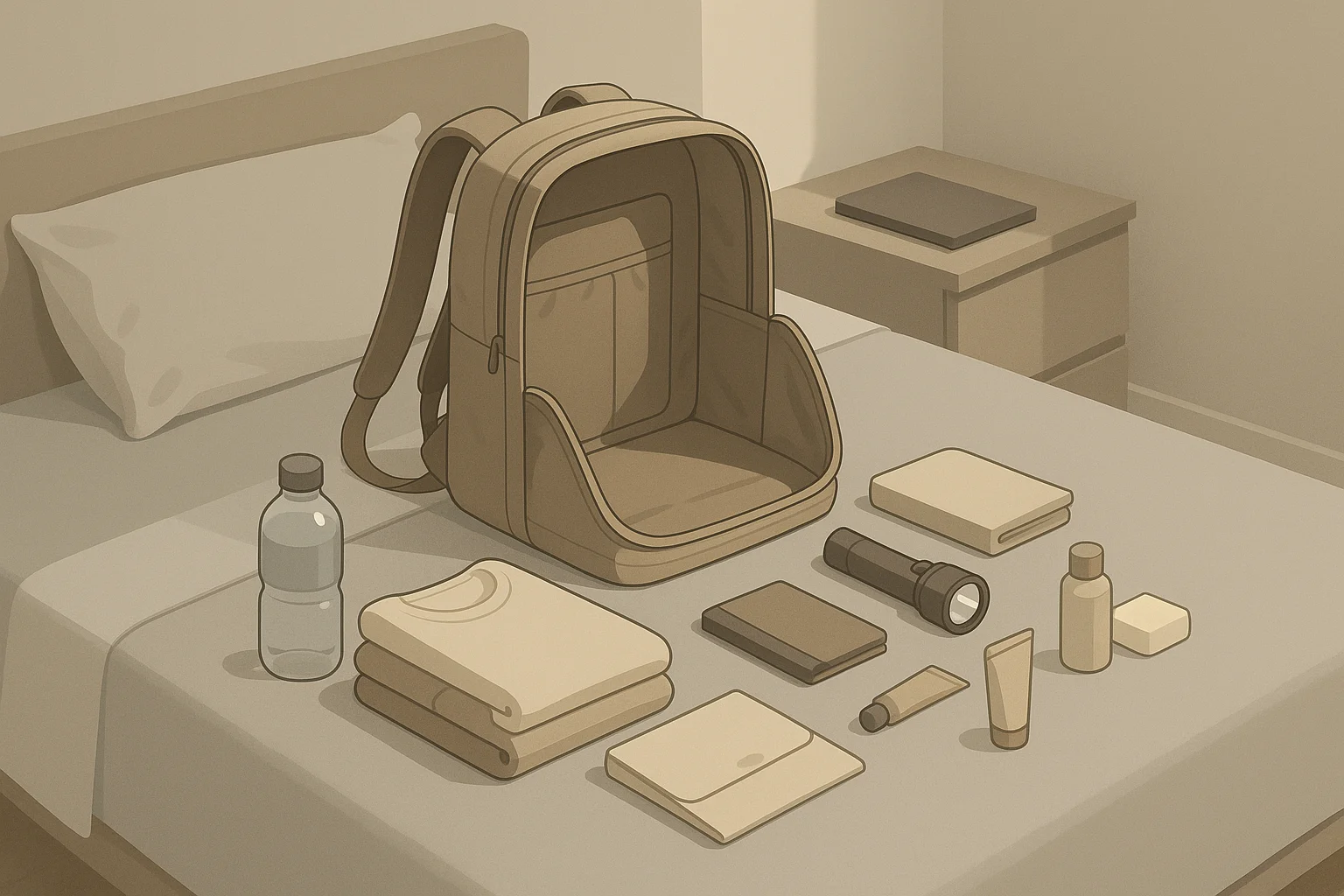
- Go-bag (also called a grab-and-go bag): a portable set of essentials you can carry if you need to evacuate or stay elsewhere.
Why Use a Two-Kit System?
Many people think of “an emergency kit” as one big box to cover every situation. In reality, everyday disruptions usually fall into two broad categories:- You stay home but lose some services (power, water, access to stores).
- You need to leave home quickly, at least for a short time.
- Stay-at-home kit (also called a shelter-in-place kit): supplies to keep you reasonably comfortable and safe if you remain in your home.
- Go-bag (also called a grab-and-go bag): a portable set of essentials you can carry if you need to evacuate or stay elsewhere.
Stay-at-Home Kit Basics
Your stay-at-home kit is built around one assumption: you are staying put. You might lose power, tap water, or access to stores, but your home itself is still safe to occupy.What a Stay-at-Home Kit Is For
Typical situations where a stay-at-home kit is useful include:- Short power outages from storms or grid issues.
- Water main breaks or temporary boil-water advisories.
- Road closures that make stores hard to reach.
- Winter storms or heatwaves that keep you indoors.
Core Components of a Stay-at-Home Kit
Think in terms of basic needs and comfort, not luxury. A simple framework:- Water readiness: stored drinking water; basic method to make questionable water safer if advised by local authorities.
- Food: shelf-stable items that match what you actually eat; options that need little or no cooking.
- Lighting: safe, non-flame options such as flashlights and battery-powered lanterns; extra batteries.
- Power: a modest backup power option for small devices, and a plan for keeping phones charged.
- Communication: ability to receive updates (e.g., weather or local alerts) and contact family.
- Temperature comfort: warm layers and blankets for winter; shade and airflow options for heat.
- Hygiene and sanitation: basic cleaning supplies, trash bags, hand hygiene products, and a backup toilet plan if needed.
- Documents and information: copies of key contacts and account information, stored safely.
Where to Keep a Stay-at-Home Kit
Since you are not carrying this kit, it can be slightly bulkier and split into zones:- Kitchen: water storage, pantry items, manual can opener.
- Living area: flashlights, lanterns, backup power, blankets.
- Bathroom: sanitation supplies, hygiene items.
- Closet or shelf: a labeled bin or tote with less frequently used items.
| Situation | Key Question | Use Primarily |
|---|---|---|
| Short power outage | Is the building safe and stable? | Stay-at-home kit |
| Water line break | Can I safely stay if I store water? | Stay-at-home kit |
| Wildfire smoke nearby | Are officials advising to stay indoors? | Stay-at-home kit |
| Evacuation order | Am I told to leave this area? | Go-bag |
| Rising floodwater | Is water threatening my living space? | Go-bag |
| Apartment fire on my floor | Is my unit unsafe or inaccessible? | Go-bag |
| Hazmat incident nearby | Do officials direct shelter-in-place or evacuation? | Depends on guidance |
Go-Bag Basics
A go-bag is a small, portable kit you can grab quickly if you need to leave home. Unlike the stay-at-home kit, everything in a go-bag must be:- Portable: you can reasonably carry it.
- Prioritized: it covers essentials, not every convenience.
- Organized: so you can find items quickly under stress.
What to Put in a Go-Bag
Focus on items that are hard to replace quickly and that support basic needs for at least a couple of days. A simple structure:- Water and snacks
- Small water bottles or a compact container.
- Non-perishable snacks that you actually eat.
- Identification and essentials
- Copies of IDs and key documents (stored securely, such as in a waterproof sleeve).
- List of medications and allergies.
- Basic local map and contact list on paper.
- Clothing and comfort
- Change of clothes suitable for your climate.
- Warm layer and socks, even in warmer regions.
- Basic toiletries like toothbrush, toothpaste, and small hygiene supplies.
- Lighting and power
- Compact flashlight or headlamp with extra batteries.
- Power bank and charging cable for your phone.
- Communication and information
- Way to receive emergency updates if phone coverage is limited.
- Printed plan for where to meet family members if separated.
- Small tools and supplies
- Simple multi-purpose tool or basic toolkit item.
- Small roll of tape, a few zip ties, and a notepad with pen.
- Whistle to signal for help if needed.
Choosing and Packing the Bag Itself
Use a sturdy backpack or small duffel that you can comfortably carry up and down stairs. For most people:- Backpack for mobility: easier for walking, public transit, and carrying while using your hands.
- Neutral appearance: does not attract unnecessary attention.
- Simple organization: a few interior pockets or pouches to separate categories (clothes, documents, hygiene, power).
How the Two-Kit System Works Together
The stay-at-home kit and go-bag share some themes but serve different purposes. Instead of duplicating everything, think in terms of core overlap plus specialization:- Overlap items: light sources, power banks, basic first-aid supplies, and some food can appear in both kits in different quantities.
- Stay-at-home focus: larger water containers, more food variety, bulk sanitation items, backup power options that are not portable.
- Go-bag focus: documents, compact clothing, small hygiene kit, a few high-value items you cannot easily replace.
Setting Priorities When Building Both Kits
If you are starting from scratch, consider this order:- Build a basic stay-at-home setup: stored water, simple pantry, safe lighting, and simple sanitation supplies.
- As you add items, set aside portable duplicates (spare flashlight, extra charging cable) to seed your go-bag.
- Once your home basics feel stable, finish your go-bag with documents, clothing, and personalized items.
Apartment vs House: Adjusting the Two-Kit System
Your housing situation shapes how you use the two-kit system.Apartment or Small Space
- Use slim bins under beds or on high shelves for your stay-at-home kit.
- Pick a single, obvious location for your go-bag, such as by the main door or closet.
- Expect that evacuations (fire alarms, building issues) may be more common; keep the go-bag easier to grab than less urgent gear.
House with Garage or Storage
- Spread your stay-at-home supplies across kitchen, garage, and utility areas.
- Consider one main go-bag location plus a backup spot, such as a bedroom closet, in case one area becomes inaccessible.
- If you own a vehicle, you might keep a small car kit with minimal extras, but the main go-bag should still be in the house.
Planning for Families, Kids, and Pets
The two-kit system becomes more important as household size grows. Each person does not need an identical setup, but everyone should have access to essentials that match their age and needs.Adults and Teens
- Each adult and older teen can usually manage their own personal go-bag with clothing, hygiene, and small comfort items.
- Heavier or shared items (water, some tools) can be distributed across capable carriers.
- Stay-at-home supplies can be more centralized, with everyone knowing where to find them.
Children
For younger kids:- Parents or caregivers typically carry most critical items in adult go-bags.
- A small child-sized backpack can hold:
- Change of clothes.
- Favorite comfort item such as a toy shape or blanket.
- Simple snacks they recognize.
- Keep expectations realistic about what a child can carry safely.
Older Adults and Mobility Limits
If someone in the household has mobility or health limitations:- Prioritize a lighter go-bag that they can manage, even if it carries fewer items.
- Store extra supplies for them in another household member’s bag.
- Coordinate with caregivers or nearby family on how evacuations would work in practice.
Pets
Pets rely entirely on you for their emergency needs. Consider a dedicated pet section within your stay-at-home kit and go-bag:- Stay-at-home kit for pets:
- Extra pet food and water.
- Waste bags, litter, or cleaning supplies.
- Copy of vaccination records stored safely.
- Go-bag supplies for pets:
- Travel-friendly food and a portable bowl.
- Leash, carrier, or harness as appropriate.
- A small comfort item or bedding piece.
Short-Term Power, Water, and Pantry Planning
Many disruptions involve power or water loss, or difficulty reaching stores. You can integrate these topics into your two-kit system without going to extremes.Backup Power Basics
Most households benefit from a simple backup power plan:- Keep small devices (phones, flashlights, small radios) charged.
- Use a modest backup power source for essentials only, not your entire home.
- Understand that runtime estimates are approximations and depend on how efficiently you use devices.
Water Storage and Treatment
A practical goal for many households is having several days of drinking and basic-use water on hand. You can reach this gradually using:- Refillable containers stored in a cool, dark area.
- Commercially bottled water rotated through normal use.
- A simple method to follow if local officials advise treating tap water.
Pantry Readiness and No-Cook Options
A ready pantry supports both kits. Look for shelf-stable food that you already like to eat, such as:- Canned items that can be eaten at room temperature if necessary.
- Dry snacks and nut butters.
- Instant foods that only need hot water if you have a safe way to heat it.
| People & Pets | Days Aimed For | Storage Approach | Rotation Cue |
|---|---|---|---|
| 1 adult | 3 days | Several small refillable containers | Check at each season change |
| 2 adults | 3–5 days | Mix of bottled water and jugs | Use and replace every few months |
| Family of 4 | 3–5 days | Stackable containers plus bottled water | Rotate during regular grocery trips |
| Apartment with limited space | 2–3 days | Smaller containers under beds or couches | Mark calendar twice a year to check |
| Pets included | Same timeframe | Add extra containers labeled for pets | Refresh when pet food is restocked |
| House with storage | 5–7 days | Larger jugs or stackable containers in cool area | Inspect when changing air filters or batteries |
Keeping Kits Updated Without the Stress
Once your two-kit system is in place, the main task is light upkeep. A simple schedule helps you stay ready without constantly thinking about it.Quick Seasonal Checkups
Pick two or four times per year that already stand out in your routine, such as the start of a new season, and do a short review:- Replace expired snacks and any items that were used.
- Swap clothing in go-bags for weather-appropriate options.
- Test flashlights and recharge power banks.
- Glance through stored water and pantry supplies to keep them in rotation.
Practice Using Your Kits
Using your kits in low-stakes situations helps you refine them:- Try a “lights-out evening” using only your backup lighting.
- Make a simple meal using only pantry items meant for disruptions.
- Have a brief household walk-through of where the go-bags and key supplies are stored.
Authoritative sources
Safety recommendations can change. Confirm critical details with current official guidance and local authorities.
- US EPA: Emergency Disinfection of Drinking Water
- USDA FSIS: Keep Food Safe During Emergencies
- U.S. CPSC: Battery Safety
Frequently asked questions
How do I decide which items belong in a stay-at-home kit vs a go-bag?
Start by deciding whether the item needs portability or bulk. Put bulky, high-volume items that are useful only when you stay put (larger water containers, extra sanitation supplies, bulk food) in the stay-at-home kit, and prioritize portable, irreplaceable, or short-term needs (documents, a change of clothes, small water bottles, phone charger) in the go-bag.How much water should I keep in a stay-at-home kit compared with a go-bag?
A common guideline for stay-at-home storage is about one gallon per person per day for drinking and basic use for several days, depending on space and needs. For a go-bag, carry lighter amounts sufficient for 24–72 hours (several small bottles) because portability and weight are primary constraints.Can I avoid duplicating items between the stay-at-home kit and the go-bag?
Some overlap is useful (e.g., a small flashlight and power bank in both), but avoid full duplication of bulk items. Think in terms of core overlap for mission-critical small items and specialization for the rest: bulk water and sanitation at home, compact documents and clothing in the go-bag.Where is the best place to store a go-bag in an apartment so it’s accessible during an emergency?
Store the go-bag in a single, obvious location near your main exit (by the door or in a hall closet) so it’s quick to grab during an evacuation. If your usual exit could be blocked, keep a clearly marked secondary bag in another easy-to-reach spot, such as a bedroom closet.How should families with young children and pets adapt the two-kit system?
Assign lightweight personal go-bags for older children and carry critical items for young kids in adult bags; include a small child-sized backpack for familiar comfort items and snacks. For pets, store travel food, a leash or carrier, and vaccination records in both the stay-at-home and go-bag sections so animal needs aren’t overlooked during evacuations.About
ReadyHomePlan
ReadyHomePlan publishes practical home readiness guides for outages and short-term emergencies—power, water, food basics, communication, and family planning—without hype.
- Simple checklists and realistic planning
- Water, power, lighting, and pantry basics
- Family plans (kids, pets, seniors) and seasonal prep
Affiliate disclosure
As an Amazon Associate, we earn from qualifying purchases. Some links on this site may be affiliate links. If you buy through these links, we may earn a small commission at no extra cost to you. This helps support our content. Learn more.