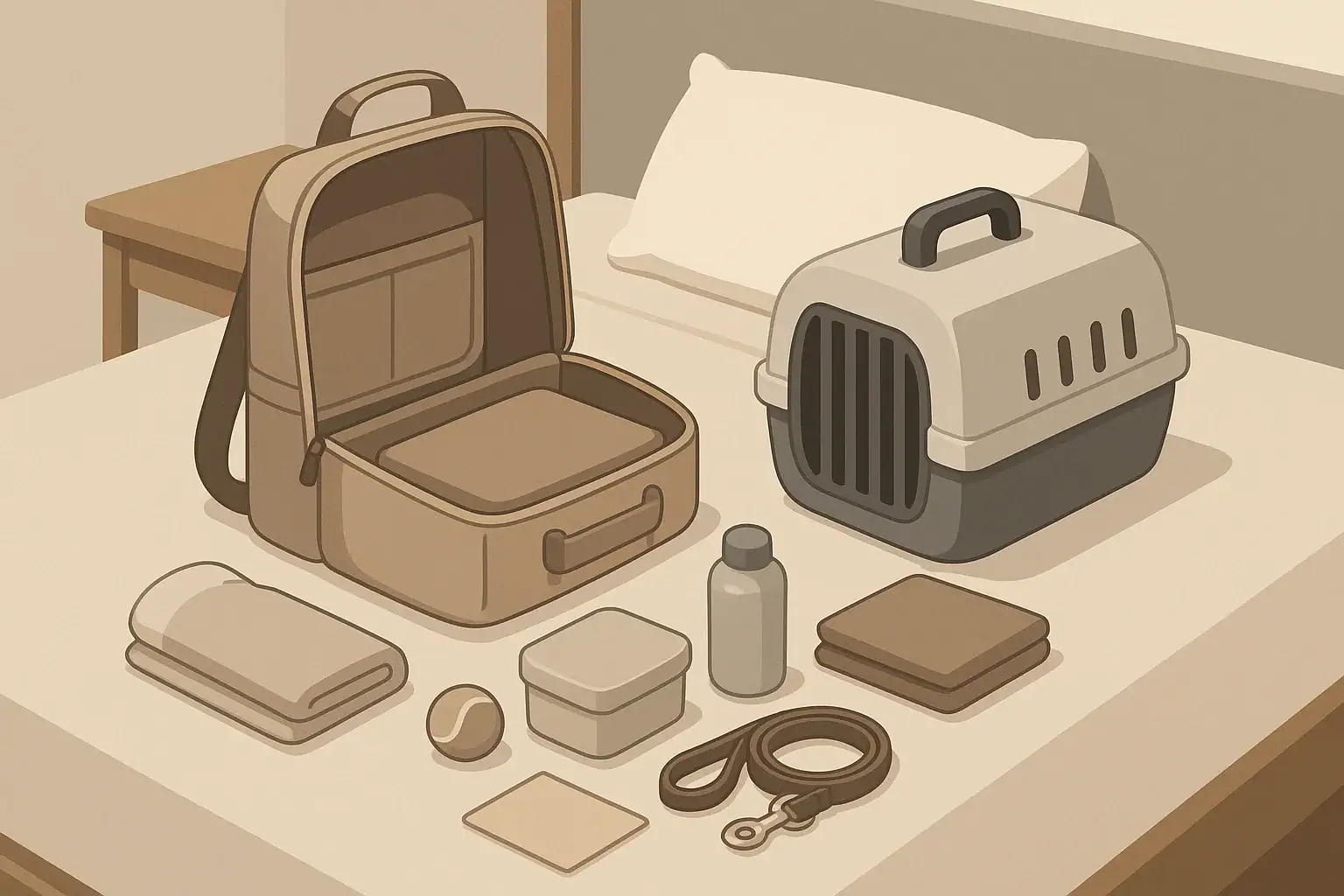
Why a Go-Bag for Pets Matters
When you need to leave home quickly for a short-term emergency, your pets depend on you to bring everything they need. A pet go-bag is a small, ready-to-grab kit that keeps basic supplies together so you are not scrambling at the last minute.
This type of kit is useful for many everyday situations, such as:
- Apartment evacuations due to small fires or building issues
- Short-notice weather evacuations, like local flooding or hurricanes
- Temporary stays with friends, family, or pet-friendly shelters
- Planned travel when conditions are uncertain
The goal is not to prepare for every possible disaster. Instead, focus on a realistic 2–3 days of basic care: safe transport, food and water, simple comfort items, and essential paperwork.
Choosing the Right Carrier and Bag Setup
Your go-bag for pets has two main parts: a secure way to transport your pet, and a bag or bin that holds their supplies. They can be separate or combined, depending on your pet and living space.
Safe Carriers for Different Types of Pets
The carrier is often the most important piece of your pet go-bag. It keeps your animal secure in a car, at a shelter, or in a friend’s home.
Consider these points when choosing a carrier:
- Size: Your pet should be able to stand up, turn around, and lie down comfortably.
- Ventilation: Multiple sides with openings or mesh for airflow.
- Secure closures: Latches or zippers that do not open easily if bumped.
- Sturdy handle or strap: Especially important for stairs or crowded areas.
- Easy to clean: Surfaces you can wipe down or rinse if there are accidents.
For small pets (cats, small dogs, rabbits, or other small mammals), a hard or soft-sided carrier often works well. For medium and large dogs, a harness clipped to a seat belt, along with a bed or crate if space allows, may be more practical.
Bag Types and Space-Saving Ideas
Pet go-bag supplies can live in:
- A backpack or duffel stored near the carrier
- A small plastic bin with a lid
- A soft-sided tote that can fit inside a larger go-bag for people
In small apartments, it can help to:
- Store lightweight items (leash, collapsible bowls, documents) inside the carrier in a pouch
- Use vacuum or compression bags for spare bedding or towels
- Attach a small labeled pouch to the outside of your own go-bag for shared items like medication lists
A simple rule of thumb: you should be able to grab the carrier and one bag in under a minute on your way out the door.
Example values for illustration.
| Task | Why it matters | Notes |
|---|---|---|
| Choose a carrier with room to turn around | Prevents stress and discomfort during travel | Test fit with your pet before storing |
| Confirm all latches and zippers close securely | Reduces risk of escape in busy areas | Check closures every few months |
| Add a washable towel or blanket inside | Improves comfort and absorbs minor accidents | Choose something that dries quickly |
| Designate one bag for pet supplies only | Makes it easy to grab without searching | Keep near your own go-bag if possible |
| Attach a spare leash to the carrier | Provides control when taking pets in and out | Include a backup clip or carabiner |
| Label carrier with your contact information | Helps reunite you with your pet if separated | Use a simple tag you can update |
| Practice short trips using the carrier | Helps your pet stay calmer during real events | Pair with treats and calm handling |
Food, Water, and Basic Supplies
During a short evacuation, familiar food and regular access to water can help keep your pet’s routine as steady as possible. Aim to store a small, dedicated emergency supply that you rotate into daily use before it expires.
How Much Food to Store
A practical target for many households is 2–3 days of pet food per animal stored in the go-bag, with additional food in your stay-at-home supplies if you have space.
To plan roughly:
- Estimate your pet’s usual daily portion (for example, cups of dry food or number of cans).
- Multiply by the number of days you want to cover.
- Package that amount in sealed portions, such as small bags or containers.
Store food in containers that are:
- Moisture-resistant and pest-resistant
- Clearly labeled with the type of food and a “use by” date you set as a reminder
- Small enough to stack easily inside your bag or bin
For wet food, consider small, easy-open containers. For dry food, use sturdy bags or reusable containers that close securely.
Planning for Water Needs
Pets also need reliable access to safe drinking water. A simple approach is to:
- Set aside a small dedicated water container for pets (for example, a few standard bottles).
- Keep lightweight, collapsible bowls in the go-bag.
- Use the same rotation schedule you use for your household emergency water.
Water needs vary by animal size, activity, and climate. Many people plan a bit of extra water beyond what they think they need, especially in hot weather or if you anticipate travel delays.
Everyday Care Items to Include
Along with food and water, certain small items make short-term care much easier.
Useful basics:
- Collapsible food and water bowls
- Can opener if you use canned food that does not have easy-open tops
- Measuring scoop or cup for consistent food portions
- Spare leash, harness, or collar
- Poo bags or small trash bags
- Absorbent pads or extra litter for cats and small animals
- Small hand towel or wipes to clean paws or minor messes
Keep these items in clear pouches or bags so you can find what you need quickly in low light or crowded spaces.
Paperwork and Identification for Pets
Paperwork may feel less urgent than food and water, but it can make the difference between being able to stay with your pet or being separated in some evacuation settings. Having key records ready can also speed up care if you need to board your pet or visit a veterinarian.
Core Documents to Gather
Make a small packet of copies and summaries that you keep in a waterproof sleeve or envelope inside your pet go-bag. Include:
- Basic pet profile: Name, species, breed or description, age, sex, and physical description.
- Your contact information: Phone numbers and an email you check regularly.
- Alternate contact: A friend or family member outside your immediate area, if possible.
- Vaccination record summary: Especially for common vaccines that shelters or boarding facilities often ask about.
- Medication list: Names, doses, and general schedules for any regular medications.
- Microchip information: The microchip number and the company where it is registered, if applicable.
You can also store digital copies in a secure cloud account or on your phone, but paper copies are useful when internet or power is limited.
Identification on Your Pet and Carrier
Clear identification increases the likelihood of a safe reunion if you are separated from your pet.
Simple steps include:
- A collar or harness with a tag that lists your phone number
- A label or tag on the carrier with your name and contact information
- Recent printed photos of your pet from different angles
Recent photos help you show others what your pet looks like and create flyers if needed. If your pet’s appearance changes (for example, seasonal haircuts or growth in young animals), replace the photos regularly.
Medications, Comfort Items, and Special Considerations
Beyond the basics, think about what makes your particular pet feel safe and stable. These small touches can lower stress for both you and your animal during an already disruptive time.
Medications and Special Care Notes
If your pet uses regular medications or has special care needs, plan for a small emergency supply where possible.
Consider including:
- A few days of essential medications, rotated regularly according to advice from your veterinary provider
- A simple, written schedule for when each medication is usually given
- Any known allergies to foods, medications, or materials
- Notes about mobility issues, vision or hearing loss, or other special needs
Store medications in clearly labeled containers and keep them in a part of the bag that stays cool and dry. Set a reminder to check dates and replace items before they expire.
Comfort and Familiarity
Familiar scents and items can help pets settle into a new environment more easily. A small amount of comfort-focused packing can go a long way.
Helpful comfort items include:
- A favorite small blanket or towel from home
- One or two durable toys that your pet regularly uses
- A spare shirt or cloth that smells like you
- A small portion of familiar treats in a sealed container
Try not to overpack soft items, especially if space is limited. Choose a few that are lightweight, easy to wash, and very familiar to your pet.
Different Pets, Different Needs
Not all pets use the same supplies. Adjust your go-bag based on the type of animal you have.
- Cats: Small litter pan or disposable trays, compact litter, scoop, and extra trash bags.
- Dogs: Extra leash, waste bags, and if needed, a muzzle your dog is already used to wearing.
- Small mammals: Safe bedding, secure travel cage, and a familiar hide or shelter.
- Birds: Travel cage, extra perch, sheet or light cover to reduce visual stress, and familiar food.
- Fish or aquatic animals: These can be more complex; focus on power and water stability at home when possible, and consider backup plans suitable for your specific setup.
Storing, Rotating, and Practicing with Your Pet Go-Bag
A pet go-bag works best if it is easy to reach, stays reasonably up to date, and feels familiar to your animal. A small amount of regular maintenance keeps it ready without becoming a major project.
Where to Store Your Pet Go-Bag
Choose a location that is:
- Near your main exit or where you would naturally leave the building
- Off the floor if possible, to avoid minor water leaks or pests
- Out of direct sunlight to protect food, water, and medications
Many people store carriers stacked in a closet by the front door and keep go-bag supplies on a nearby shelf. In smaller homes or apartments, hanging a sturdy hook for the bag and sliding the carrier under a bench can save space.
Creating a Simple Rotation Routine
To keep food, water, and medications fresh, build a basic rotation habit. Tie it to something you already do, such as checking smoke detectors or changing air filters.
A sample rotation idea:
- Every 3–6 months: Check food dates, swap into regular use, and replace with fresh supplies.
- Every 6 months: Refresh stored water and inspect containers for leaks.
- At each veterinary visit: Ask for a summary of vaccinations and update your paperwork packet.
- Once a year: Review your pet’s size, needs, and medications to see if the kit still fits.
Keep a simple checklist taped to the inside of a closet door or stored digitally so you can see at a glance what needs updating.
Practicing Calm Exits with Your Pet
Practicing with the carrier and go-bag can make real evacuations less stressful for everyone.
Ideas for low-stress practice:
- Place the carrier out regularly with the door open, bedding inside, and occasional treats.
- Do short “practice pickups” where you place your pet in the carrier, pick up the bag, and walk to the door.
- For dogs, practice loading into the car with the go-bag once in a while before everyday errands.
The goal is to make the carrier and bag feel routine, not alarming.
Example values for illustration.
| People and pets | Days to plan for | Storage approach | Rotation cue |
|---|---|---|---|
| 1 person + 1 small pet | 2–3 days | Several small bottles for easier carrying | Swap when checking smoke detectors |
| 2 people + 1 medium pet | 3 days | Mix of jugs at home and bottles in go-bags | Refresh at the start of each season |
| Family of 4 + 2 small pets | 3 days | Larger containers at home, small ones for travel | Check during school break transitions |
| Apartment household with limited space | 2–3 days | Stackable containers in a closet | Review at lease renewal time |
| Single person with large dog | 2–3 days | Portable containers that are easy to lift | Rotate around regular vet visits |
| Shared home with multiple pets | 3 days | Label bins by room or pet group | Update at household meetings |
Keeping Pet Go-Bags Practical and Manageable
A pet go-bag does not need to be complicated or expensive. Starting with a basic carrier, a few days of food and water, simple paperwork, and familiar comfort items is enough to make a meaningful difference in a short-term evacuation.
Build your kit in small steps if that feels easier: first the carrier, then a bag with food and water, then paperwork and comfort items. Review it once or twice a year, and adjust as your pets and living situation change.
The purpose is peace of mind and smoother transitions when life is already disrupted. With a modest amount of planning, you can leave home quickly knowing your animals have what they need for a few days away.
Authoritative sources
Safety recommendations can change. Confirm critical details with current official guidance and local authorities.
- US EPA: Emergency Disinfection of Drinking Water
- CDC: Guidelines for Cleaning Safely After a Disaster
- Ready.gov: Preparedness Tips for People with Disabilities
Frequently asked questions
How much water should I include in a go-bag for pets?
Water needs vary by species, size, activity level, and climate, so plan more conservatively for hot weather or travel delays. A practical approach is to set aside a small, dedicated amount of potable water for each pet as part of your household emergency water and rotate it on the same schedule. Keep collapsible bowls to reduce the amount you need to carry and replace stored bottles on your regular rotation cue.
Can I store my pet’s medications in a go-bag long-term?
Yes, but store only a short emergency supply and rotate it regularly to avoid expired drugs. Keep medications in labeled, moisture-resistant containers and in the coolest, driest part of the bag. Check with your veterinarian about any special storage requirements and how often to refresh prescriptions.
What paperwork and ID should be in a go-bag for pets?
Include a compact packet with a basic pet profile, your contact information, an alternate contact, vaccination summaries, a medication list, and microchip details if applicable. Keep these documents in a waterproof sleeve and also store digital copies where you can access them if power or internet is available. Recent printed photos of your pet are useful for identification if you are separated.
How can I fit a go-bag for pets in a small apartment?
Use space-saving strategies such as storing lightweight items inside the carrier, using a small plastic bin, or keeping a soft-sided tote inside your primary go-bag. Vacuum or compression bags work well for spare bedding, and small labeled pouches make frequently used items easy to find. Position the carrier and one bag near your main exit so you can grab both quickly.
How often should I practice using the carrier and go-bag with my pet?
Regular short practice sessions help reduce stress; place the carrier out with bedding and treats and do brief pickups or short walks to the door. Aim for occasional practice tied to other maintenance tasks (for example, monthly or a few times before fire-season) and increase frequency if your pet shows anxiety. The goal is for the carrier and bag to feel routine rather than alarming.
- Simple checklists and realistic planning
- Water, power, lighting, and pantry basics
- Family plans (kids, pets, seniors) and seasonal prep
Affiliate disclosure
As an Amazon Associate, we earn from qualifying purchases. Some links on this site may be affiliate links. If you buy through these links, we may earn a small commission at no extra cost to you. This helps support our content. Learn more.