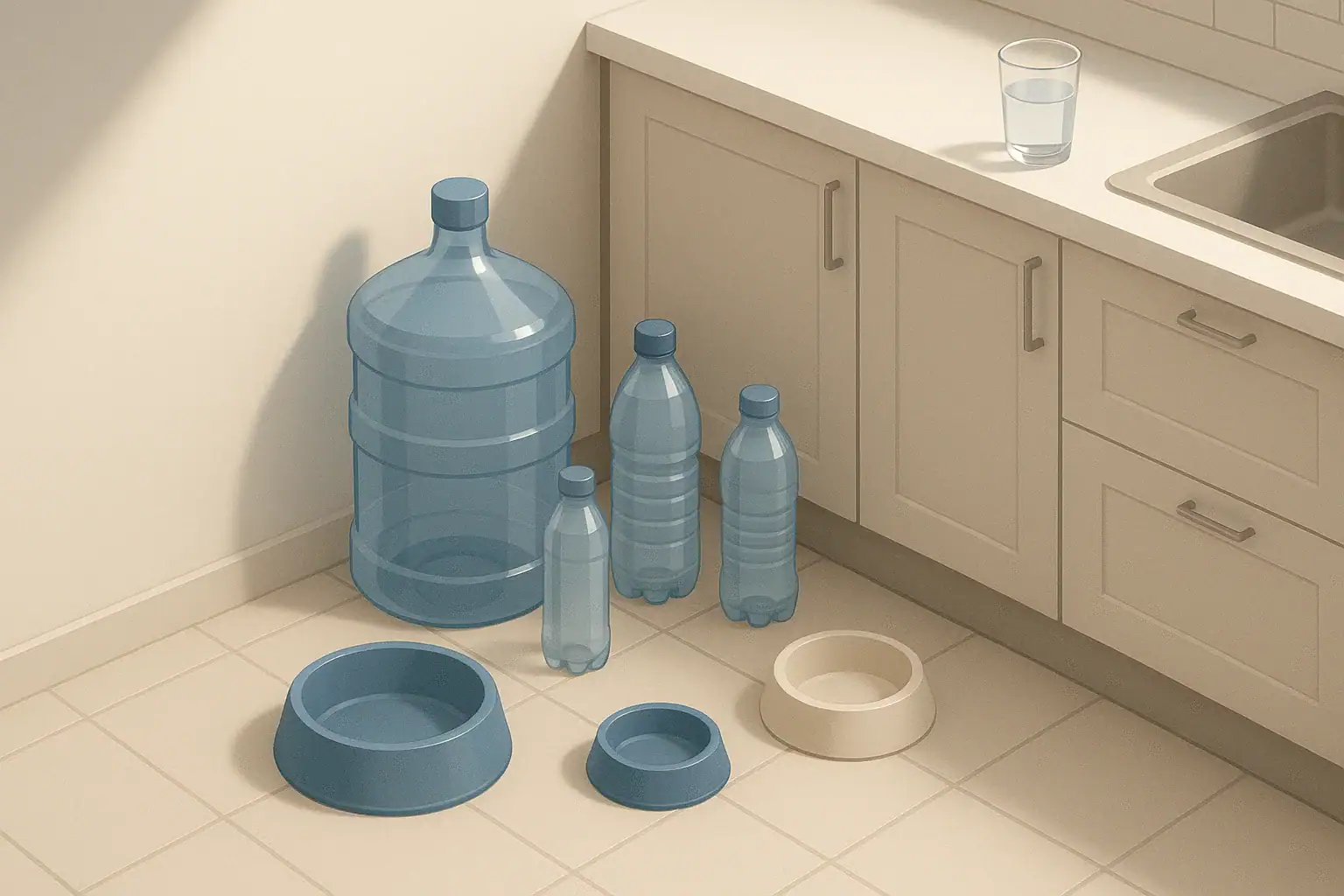
Water interruptions are one of the most common short-term emergencies. A water main break, short boil-water advisory, or storm-related outage can make tap water unsafe or unavailable for a day or two. Having a small, clearly labeled stash of water for pets helps you avoid last-minute stress and keeps routines steady.
Planning does not need to be extreme. Most people are preparing for a few days at home, not long-term crises. A simple, practical setup can fit in an apartment or small house and still cover everyone in the household, including animals.
This guide focuses on how much emergency water to store for pets, realistic storage options in small spaces, and easy ways to serve water safely when your normal tap is not an option.
Pets generally drink less water than adults, but their needs are still important. Most households can cover several days of pet water with just a few extra containers if they plan ahead.
Why Emergency Water for Pets Matters
Water interruptions are one of the most common short-term emergencies. A water main break, short boil-water advisory, or storm-related outage can make tap water unsafe or unavailable for a day or two. Having a small, clearly labeled stash of water for pets helps you avoid last-minute stress and keeps routines steady.
Planning does not need to be extreme. Most people are preparing for a few days at home, not long-term crises. A simple, practical setup can fit in an apartment or small house and still cover everyone in the household, including animals.
This guide focuses on how much emergency water to store for pets, realistic storage options in small spaces, and easy ways to serve water safely when your normal tap is not an option.
How Much Emergency Water to Store for Pets
Daily Water Planning by Pet Type
Water needs vary by size, species, activity level, and temperature. The amounts below are common planning examples, not medical guidance. If your veterinarian has given you specific fluid guidance, follow that instead.
- Small dogs (under about 25 lb): Plan roughly 0.25–0.5 gallons per day.
- Medium dogs (about 25–50 lb): Plan roughly 0.5–0.75 gallons per day.
- Large dogs (over about 50 lb): Plan roughly 0.75–1 gallon per day.
- Cats: Plan roughly 0.25 gallons per day per cat.
- Small mammals (rabbits, guinea pigs, etc.): Plan roughly 0.05–0.1 gallons per day per animal.
- Birds: Plan roughly 0.02–0.05 gallons per day per cage, depending on size and number of birds.
These amounts err on the generous side so you have a little cushion for hot weather, spilled bowls, or mild leaks. Leftover water can be used for rinsing dishes or basic hand cleaning if it is still clean.
How Many Days Should You Plan For?
For most homes, aiming for 3 days of pet water is a reasonable starting point. If you live in an area with frequent storms, older infrastructure, or regular boil-water advisories, you may want to stretch that to 5–7 days as space allows.
Think about:
- Local risks: Hurricanes, winter storms, or heatwaves can delay repairs.
- Transportation: If you rely on public transit, store a little extra in case shopping is delayed.
- Health and age: Senior pets or those on medications may benefit from a slightly larger cushion.
Quick Example: Estimating Your Pet Water
Here is one way to think about it:
- 1 medium dog → plan 0.5–0.75 gallons per day.
- 3-day outage → about 1.5–2.25 gallons total.
- Round up to the next easy container size so you are not measuring in tiny amounts.
Once you have a rough estimate, you can choose container sizes that fit your space and lifting ability.
Example values for illustration.
| Home situation | Typical goal (days of water) | Suggested container approach |
|---|---|---|
| Studio or small apartment, 1 cat | 3–5 days | Several small bottles or 1–2 small jugs that fit in a cupboard |
| Apartment, 1 medium dog | 3–5 days | One mid-size jug plus a few extra bottles for flexibility |
| Small house, 2 large dogs | 5–7 days | One larger main container plus backup bottles for travel or evacuation |
| Family with kids and multiple pets | 5–7 days | Mix of containers: some for daily use, some kept sealed as backup |
| Senior or mobility-limited owner | 3–7 days | More smaller containers to keep lifting weights manageable |
| Frequent boil-water advisories | 5–7 days | Dedicated sealed pet-water stash rotated regularly |
Choosing Safe Containers for Pet Emergency Water
Almost any clean, food-safe container can hold emergency water for pets. The key is to use sturdy containers that seal well, are easy to lift, and are stored where they will not be exposed to extreme temperatures or chemicals.
Types of Containers
Consider mixing container sizes so you have both bulk storage and easy-to-pour options.
- Small bottles: Easy to portion for daily use and travel; good if you cannot lift heavy jugs.
- Mid-size jugs: Good balance between volume and weight; fit in most kitchen or closet spaces.
- Larger containers: Useful if you have multiple animals and extra space; may be heavy when full, so think about where they will sit long-term.
Whatever you choose, use containers intended for food or beverage storage. Avoid reusing containers that held chemicals or products with strong odors.
Labeling Pet Water
Label containers that are reserved for pets so they are not accidentally used and forgotten. A permanent marker on the cap or side is usually enough. Include:
- “Pet water” or similar wording.
- The fill date.
- Rotation reminder (for example, “use by” month and year).
If you store pet and human water together, clear labels help you keep track of your minimum pet reserve so it is not used up for other tasks.
Where to Store Emergency Pet Water
For apartments and small homes, think vertically and use tucked-away corners:
- Bottom of a closet, under hanging clothes.
- Under a bed in sturdy, low-profile containers.
- On the floor of a pantry or utility cabinet.
- In a hallway linen closet alongside towels and linens.
Keep water away from direct sunlight, high heat, and strong chemicals (like cleaning products or fuel). A cool, dark location maintains taste and helps containers last longer.
How to Serve Emergency Water to Pets
In most short-term situations, your goal is to offer safe, familiar water in a way that feels normal to your pet. Routine helps keep animals calmer when other things around them are changing.
Use Familiar Bowls and Routines
Even if the water source changed, try to:
- Use your pet’s usual bowls.
- Offer water in the same spot they expect it.
- Refresh water on the same schedule you usually keep.
If you normally use a fountain or automatic waterer that needs power, have a backup bowl for outages. Store it near your emergency water so it is easy to find in the dark.
Keeping the Water Clean While Serving
During an outage or advisory, aim to keep bowls as clean as reasonably possible:
- Rinse bowls with a small amount of clean water before refilling when you can.
- Avoid topping off old water repeatedly; dump and refill instead when supplies allow.
- Use smaller pours more often instead of filling bowls to the rim and having them sit a long time.
If water is limited, prioritize giving pets enough to drink over rinsing bowls perfectly. A simple wipe with a clean cloth or paper towel between refills is better than nothing.
What If Your Pet Is Hesitant to Drink?
Changes in taste or smell can make some animals cautious. If you are using water that tastes different than your usual tap, try:
- Offering small amounts more frequently.
- Moving the bowl to a quieter, low-stress location.
- Offering from a different type of bowl (some pets prefer glass or ceramic over metal, or vice versa).
If your pet has a medical condition that affects their fluid intake, follow any care instructions you have been given and contact your veterinary clinic when practical.
Using Tap Water During Advisories or Outages
Not all water disruptions look the same. Sometimes water is off completely; other times it may be running but not considered safe to drink without treatment. Local officials usually communicate whether water should be boiled or avoided for drinking.
Boil-Water Advisories and Pets
If you are instructed to boil water before human consumption, treat your pet’s water the same way. Use stored emergency water or boiled-and-cooled tap water for filling bowls. Follow local guidance about how long to boil and how long the advisory is expected to last.
If boiling is not possible due to a power outage, prioritize stored water for drinking and minimal food preparation. Avoid using untreated tap water for pets until authorities say it is safe again.
Using Water Treatment Products
Some households keep general-purpose water treatment products on hand. These can be helpful in some situations, but always read and follow the product’s directions very carefully, especially if you plan to use treated water for animals. If pet use is not addressed, use dedicated stored water instead when possible.
Rotating and Maintaining Your Pet Water Supply
Emergency water does not last forever, but it is easy to keep it fresh with a simple rotation habit.
Rotation Basics
A practical approach is to rotate pet water every few months, or at least a couple of times per year. You can:
- Use older containers for everyday tasks (like washing dishes or watering plants) before they get too old.
- Refill and relabel containers on a set schedule, such as at the start of each season or when clocks change.
- Check for leaks, bulging, or off smells before refilling.
If you purchase prepackaged drinking water, follow the date information on the packaging and rotate using the oldest containers first.
Simple Checklist for Upkeep
To keep things low effort, tie water checks to routines you already have:
- When changing air filters or smoke alarm batteries, glance at your stored water.
- Before stormy seasons, confirm you have enough for both people and pets.
- After using part of your stash, put “replace water” on a short to-do list.
Example values for illustration.
| People and pets | Days to cover (example) | Storage approach | Rotation cue idea |
|---|---|---|---|
| 1 adult, 1 cat | 3 days | Several small bottles plus one mid-size jug | Check with monthly rent or bill payments |
| 2 adults, 1 medium dog | 5 days | Mix of jugs and bottles stored under a bed | Review before each major weather season |
| Family of 4, 2 cats | 5–7 days | Dedicated shelf in closet with labeled containers | Rotate when school year starts and ends |
| 1 adult, 2 large dogs | 5 days | One larger container plus smaller bottles for daily use | Check when changing smoke alarm batteries |
| 2 adults, assorted small pets | 3–5 days | Small containers in pantry, labeled for pets | Review on the first weekend of each quarter |
| Multigenerational home, multiple pets | 7 days | Combination of containers stored in two locations | Check during a yearly household safety walkthrough |
Evacuation and On-the-Go Pet Water
Most of this guide focuses on staying at home, but having a small amount of portable pet water is also useful for quick evacuations or daytime disruptions.
Go-Bag Water for Pets
If you maintain a go-bag or quick-grab kit, consider adding:
- At least a day’s worth of water per pet, in containers you can carry.
- A collapsible or lightweight bowl.
- A note with your pet’s usual daily water estimate.
Rotate this water more frequently, since it may be exposed to more temperature changes.
Short Trips During Local Disruptions
For brief trips to a friend’s home, a pet-friendly shelter, or a hotel, even a single small bottle per pet can make the first few hours more comfortable. It also avoids any adjustment to unfamiliar water sources until everyone is settled.
Keeping Pet Water Planning Simple
Emergency water for pets does not have to be complicated or expensive. A few labeled containers, a basic estimate of daily needs, and a simple rotation habit are usually enough to carry your pets through common short-term disruptions. By treating pet water as part of your overall home readiness, you can handle most outages and advisories calmly and focus on keeping everyone in the household as comfortable as possible.
Authoritative sources
Safety recommendations can change. Confirm critical details with current official guidance and local authorities.
- US EPA: Emergency Disinfection of Drinking Water
- USDA FSIS: Keep Food Safe During Emergencies
- U.S. CPSC: Battery Safety
Frequently asked questions
How do I calculate the total emergency water my pets need?
Estimate each pet’s daily need based on size and species (for example, 0.25–0.5 gallons for a small dog, 0.25 gallons for a cat) and multiply by the number of days you want to cover. A 3-day supply is a common starting point; increase to 5–7 days if you face frequent disruptions or extreme weather. Round up to container sizes that are easy to handle so you don’t have to measure precisely during an emergency.
Can I give my pet boiled tap water during a boil-water advisory?
Yes—boiled and cooled tap water is safe for pets when local authorities advise boiling. Follow the advisory guidance on boiling time and allow the water to cool before offering it to animals. If boiling isn’t possible, use stored bottled or jerrycan water instead.
How often should I rotate and replace stored pet water?
Rotate stored pet water every few months or at least twice a year to keep it fresh and to check container condition. Tie rotation to a regular household task like a seasonal change or battery replacement so it becomes routine. Always inspect containers for leaks, bulging, or off smells before refilling.
Are common water treatment tablets or drops safe for pets?
Some water treatment products can make water microbiologically safe, but you must read and follow product instructions carefully and verify pet use is appropriate. If the product does not mention animals, it’s safer to rely on stored water or boiled-and-cooled water for pets. When in doubt, consult a veterinarian for animals with special health needs.
What’s the best way to carry pet water if I need to evacuate quickly?
Include at least one day’s worth of water per pet in your go-bag using lightweight or collapsible containers and a small folding bowl. Prefer smaller bottles that are easy to carry and keep the evacuation stash separate so it’s ready to grab. Rotate that stash more frequently since it will be exposed to changing temperatures.
- Simple checklists and realistic planning
- Water, power, lighting, and pantry basics
- Family plans (kids, pets, seniors) and seasonal prep
Affiliate disclosure
As an Amazon Associate, we earn from qualifying purchases. Some links on this site may be affiliate links. If you buy through these links, we may earn a small commission at no extra cost to you. This helps support our content. Learn more.