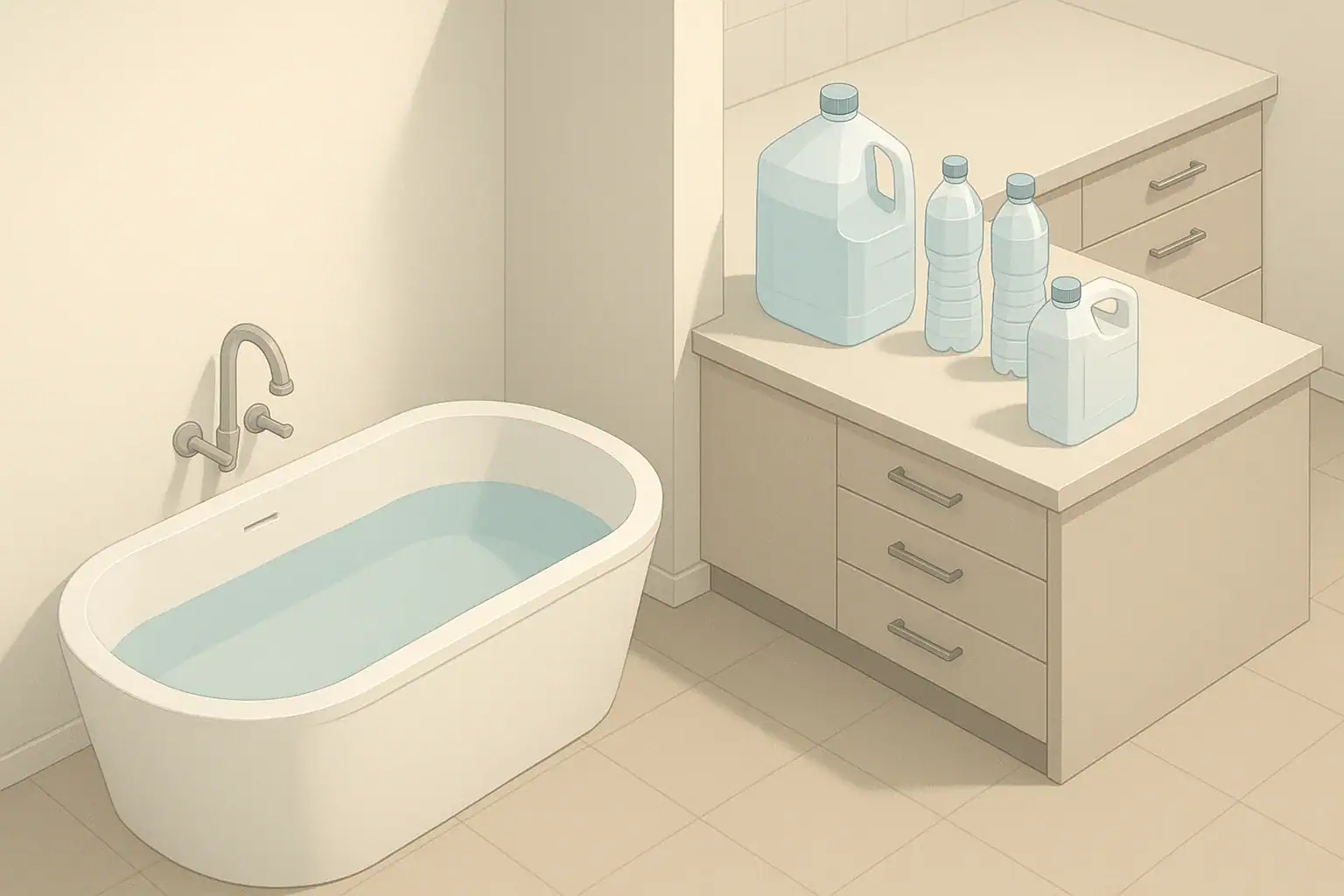
Why People Use Bathtub Water Storage
Storing water in a bathtub is a common last-minute step when a storm, water main break, or short-term emergency is expected. It uses the space you already have and does not require buying new containers.
Bathtub water storage is mainly helpful for:
- Short-term disruptions where tap water might be unavailable or turned off
- Flushing toilets and basic cleaning when normal supply is interrupted
- Extra buffer on top of bottled or container-stored water you already keep
Bathwater is easy to access, but it is not the same as long-term, sealed drinking water storage. A tub is open to dust, hair, soap residue, and anything that might fall in, so it is better thought of as backup water that may need treatment before drinking.
When Filling the Bathtub Makes Sense
Bathtub water storage is not useful in every situation. Knowing when it helps can keep your planning simple and realistic.
Good times to fill the tub
- Advance warning of a storm or hurricane: Local authorities may suggest filling containers and bathtubs before high winds or flooding that could affect water systems.
- Planned water shutoffs: If your building posts a notice about repairs or maintenance, a full tub can cover flushing and some basic washing.
- Winter storm warnings: Heavy snow or ice can cause power issues that may affect pumps or treatment plants.
- Living in multi-story buildings where booster pumps may stop during power outages.
Situations where a full tub may not help
- Sudden, unannounced breaks: If the water stops unexpectedly, you may not have time to fill a tub.
- Contaminated tap water: If authorities warn that water is unsafe to use, do not fill your tub until guidance changes.
- Bathtubs in poor condition: Cracked or very dirty tubs, or tubs with peeling finishes, are not good places to store water.
- Homes with young children or vulnerable adults: An unattended full tub can be a drowning risk.
For most households, a bathtub is one piece of a water readiness plan, not the only one. It is especially useful to stretch your supply of water for flushing and cleaning while you reserve sealed water for drinking and cooking needs first.
Example values for illustration.
| If… | Then consider… | Notes |
|---|---|---|
| You have clear warning of a storm or shutoff | Filling the tub fully | Use for flushing and cleaning first |
| Tap water is currently safe but may stop soon | Filling tub plus smaller containers | Keep sealed containers for drinking |
| Authorities say water is contaminated | Not filling the tub | Use existing stored or purchased water |
| You have toddlers or non-swimmers at home | Extra safety steps or skipping tub storage | Empty tub quickly after use if filled |
| Bathtub is cracked or heavily stained | Using dedicated water containers instead | More hygienic and easier to cover |
| You rent and space is limited | Relying more on jugs and smaller containers | Use tub as optional backup only |
How Much Water a Bathtub Can Provide
A full-size bathtub can hold a large amount of water, but the actual useful amount is usually less than the total capacity.
Typical bathtub capacities
Many standard residential tubs hold somewhere around 30 to 50 gallons when filled close to the overflow drain. Large soaking tubs may hold more. In practice, most people fill partway to avoid splashing and to stay below the overflow opening.
As a simple example, if a tub holds about 40 gallons when comfortably full, and you plan on 1 gallon of drinking and cooking water per person per day, that same volume of water could instead cover:
- Several days of toilet flushing for a family, or
- Basic washing of hands and dishes plus some toilet flushing.
Because tub water is exposed, it is reasonable to prioritize it for non-drinking uses and rely on cleaner, sealed water containers to meet drinking and cooking needs first.
Drinking vs Non-Drinking Uses
It is important to be realistic about how you use bathtub water. Tubs are usually not sterile, even after cleaning. The faucet, drain, and surfaces can introduce contaminants.
Best uses for bathtub water
- Toilet flushing: Pour water into the bowl to trigger a flush, or into the tank if you understand how your toilet works.
- Cleaning and washing: Rinsing mops, washing floors, and wiping surfaces.
- Basic personal hygiene: Sponge baths or quick rinses when needed.
- Rinsing dishes: After washing dishes with soap, tub water can be used for an initial rinse if you do not have other sources.
Using bathtub water for drinking in a pinch
If you must use bathtub water for drinking or cooking because no other source is available, it is sensible to make it safer first. General approaches include:
- Letting sediment settle and carefully pouring clearer water off the top.
- Filtering through a household water filter device or clean cloth as an initial step to remove particles.
- Following official guidance in your area about boiling or disinfecting tap water during emergencies.
These steps do not guarantee safety, but they can reduce some common risks when options are limited. Whenever possible, plan ahead with sealed containers so bathtub water remains a secondary source.
Preparing the Bathtub Before You Fill It
A few minutes of preparation can improve the quality of stored tub water and make it easier to use later.
Clean the tub
- Rinse away loose debris like hair, dust, or leftover bath products.
- Use a mild cleaner to scrub visible soap scum or residue.
- Rinse thoroughly so that strong cleaner scents and visible suds are gone before you fill.
If your tub has heavy staining, chipped surfaces, or rusted drains, treat it mainly as non-drinking storage even after cleaning.
Check the drain and fixtures
- Verify the drain plug seals well by running a small amount of water and watching for slow loss.
- Clear hair from the drain so water can be used and emptied more easily later.
- Inspect the faucet for visible buildup that you can wipe away.
Covering the water
Once the tub is full, covering the surface helps keep out dust, hair, and accidental drops, and may reduce evaporation.
Simple options include:
- Clean plastic sheeting or a shower curtain liner laid gently over the water
- Clean, flat boards or trays across the top edges (if stable and safe)
- A clean fitted cover designed for bathtubs, if you already own one
A cover is especially important in homes with pets, children, or open windows that might allow dirt or insects into the tub.
Apartment vs House: Different Constraints
Where you live changes how helpful bathtub water storage can be and how you should plan around it.
Apartment considerations
- Shared plumbing: Water interruptions can affect entire buildings, so filling a tub when given notice may be useful.
- Space limits: A tub may be one of your largest temporary water reservoirs, but it is still wise to keep a few sealed containers or bottles.
- Elevator and pump reliance: Higher floors may lose water if building pumps stop during a power outage.
- Neighbors: Be mindful of noise and water use if everyone is preparing at the same time.
Single-family home considerations
- Multiple bathrooms: You may have more than one tub; consider which is easiest to access and cover.
- Well water and pumps: Homes on wells rely on electric pumps that stop during power outages.
- Additional storage options: You might have room for larger containers, barrels, or stacked jugs; bathtub water can then be strictly for flushing and cleaning.
- Outdoor options: Some homes can also collect rainwater in clean containers for non-drinking uses, depending on local rules.
Safety Issues: Children, Pets, and Slips
Keeping safety in mind is essential when your bathtub is filled and left that way for hours or days.
Drowning risks
Even a few inches of standing water can be a risk for young children, some older adults, and pets. If you choose to store water in a tub:
- Keep the bathroom door closed and latched when not in use.
- Supervise children closely any time they are near the bathroom.
- Explain clearly to older kids that the tub is not for play when filled for storage.
- Empty the tub as soon as you no longer need the stored water.
Slipping and falling
Water on the bathroom floor makes slips more likely, especially for seniors or anyone with mobility challenges.
- Use non-slip mats outside the tub.
- Wipe up splashes quickly with towels or a mop.
- Keep pathways clear so there is room to carry buckets or pitchers safely.
Pets and bathtub water
Pets may jump into the tub or try to drink from it. While tap water is usually fine for animals, standing water can collect dust and debris.
- Cover the tub to discourage pets from drinking or climbing in.
- Provide a separate bowl with fresher water for pets.
- Watch for scratching or chewing if you use a soft liner or cover.
How Long Bathtub Water Stays Useful
Bathtub water is not meant for long-term storage. It is open to the air and typically not sealed from household dust and microorganisms.
Time frame for best use
In many short-term emergencies, tub water is most useful within the first several days. The longer it sits, the more likely it is to pick up odors or visible particles.
As a general, practical approach:
- Use tub water first for non-drinking needs while it is relatively fresh.
- Rotate tasks so you do not rely on very old standing water.
- Empty and clean the tub once regular water service is back and you no longer need the stored supply.
Signs the water should be discarded
You may decide to stop using tub water if you notice:
- Strong or unusual odors
- Visible mold, slime, or film on the surface
- Discoloration that was not present at first
- Foreign objects that are difficult to remove
At that point, drain the tub and rinse it thoroughly to return it to normal bathroom use.
Simple Ways to Draw and Use Tub Water
Planning ahead for how you will actually move water from the tub makes daily tasks easier during a disruption.
Tools for drawing water
- Small buckets: Easy to fill and carry for toilet flushing or cleaning.
- Pitchers or large measuring cups: Good for smaller sinks or more controlled pouring.
- Clean plastic bottles: Can be dipped and capped, then carried to another room.
Choose containers that are sturdy when wet and not too heavy when full, especially for children or anyone with limited strength.
Using tub water for toilet flushing
There are two main ways people use stored water to flush toilets:
- Pour into the bowl: A quick pour into the bowl from about waist height can trigger a gravity flush in many toilets.
- Pour into the tank: Opening the tank lid and refilling to the usual water line allows the handle to work normally.
Observe how your toilet works during normal times so you understand which method is appropriate and how much water is usually needed.
Bathtub Water vs Other Storage Options
Relying only on your bathtub for water storage is not ideal. Combining it with other simple methods gives more flexibility during power outages or water disruptions.
Pros and cons of bathtub storage
- Pros:
- Uses existing space
- Can hold a large volume quickly
- No special equipment required
- Cons:
- Not sealed or long-term
- Less suitable for drinking
- Can be a safety hazard if left unattended
Supplementing with containers
To make your water readiness more robust, consider:
- Reusable jugs or bottles filled and rotated from tap water periodically.
- Store-bought bottled water for straightforward drinking and cooking use.
- Smaller containers for people in apartments where floor space and bathtubs are limited or not well suited to storage.
For many households, a reasonable plan is to keep a basic supply of sealed drinking water for at least a few days and treat bathtub water as extra capacity for hygiene and sanitation.
Example values for illustration.
| Household size | Days to plan for | Storage approach | Rotation cue idea |
|---|---|---|---|
| 1 adult in studio apartment | 3 days | Small jugs plus option to fill tub | Refill jugs every few months |
| 2 adults in one-bedroom | 5 days | Several gallon containers, tub for flushing | Check dates at each season change |
| Family of 4 with pets | 5–7 days | Stacked containers, separate pet water, tub backup | Rotate during school breaks |
| Multi-generational household | 7 days | Larger containers plus at least one full tub | Review at holiday gatherings |
| Senior living alone | 3–5 days | Lightweight bottles, minimal lifting, optional tub | Combine with medication refill dates |
| Roommates sharing a house | 3–5 days | Each person keeps some water; choose one tub for backup | Rotate at start of each semester or lease year |
Authoritative sources
Safety recommendations can change. Confirm critical details with current official guidance and local authorities.
- US EPA: Emergency Disinfection of Drinking Water
- CDC: Guidelines for Cleaning Safely After a Disaster
- Ready.gov: Preparedness Tips for People with Disabilities
Frequently asked questions
How long can I expect bathtub water to remain useful for non-drinking tasks?
Bathtub water is most useful within the first several days after filling for non-drinking tasks like flushing toilets and cleaning. Over time it can pick up odors, visible particles, or surface films, and you should discard and clean the tub if you notice these signs.
Is bathtub water safe to use for drinking or cooking in an emergency?
Bathtub water is not considered sealed drinking water and should be a last-resort source only. If no other options exist, let sediment settle, filter through a clean cloth or household filter, and follow local guidance to boil or disinfect the water before drinking, understanding these steps do not guarantee safety.
What’s the safest way to draw water from the tub for toilet flushing?
Use a sturdy bucket or pitcher to transfer water; you can pour directly into the toilet bowl from waist height to trigger a gravity flush or open the tank and refill to the normal water line. Practice during normal conditions so you know how much water your toilet needs.
How should I prepare the bathtub before filling it for storage?
Rinse away loose debris and scrub visible soap scum with a mild cleaner, then rinse thoroughly to remove cleaner residue before filling. Check that the drain plug seals well and clear any hair from the drain, and plan to cover the water to keep out dust and pets.
Can I leave a filled bathtub when I have children or pets at home?
A filled bathtub can present a drowning hazard even with just a few inches of water, and pets may drink or jump in. Keep the bathroom door closed and latched when not supervised, cover the tub, and empty it as soon as you no longer need the stored water.
Keeping Bathtub Water in Perspective
Bathtub water storage is a practical, low-cost option when you have some warning that water service might be interrupted. It is best used alongside other simple steps, such as maintaining a modest supply of sealed drinking water and knowing how to handle short power or water outages calmly.
By understanding what your tub can and cannot do, cleaning it before filling, covering the water, and using it mainly for flushing and cleaning, you can make your home more comfortable during brief disruptions without complicated gear or drastic changes to daily life.
- Simple checklists and realistic planning
- Water, power, lighting, and pantry basics
- Family plans (kids, pets, seniors) and seasonal prep
Affiliate disclosure
As an Amazon Associate, we earn from qualifying purchases. Some links on this site may be affiliate links. If you buy through these links, we may earn a small commission at no extra cost to you. This helps support our content. Learn more.