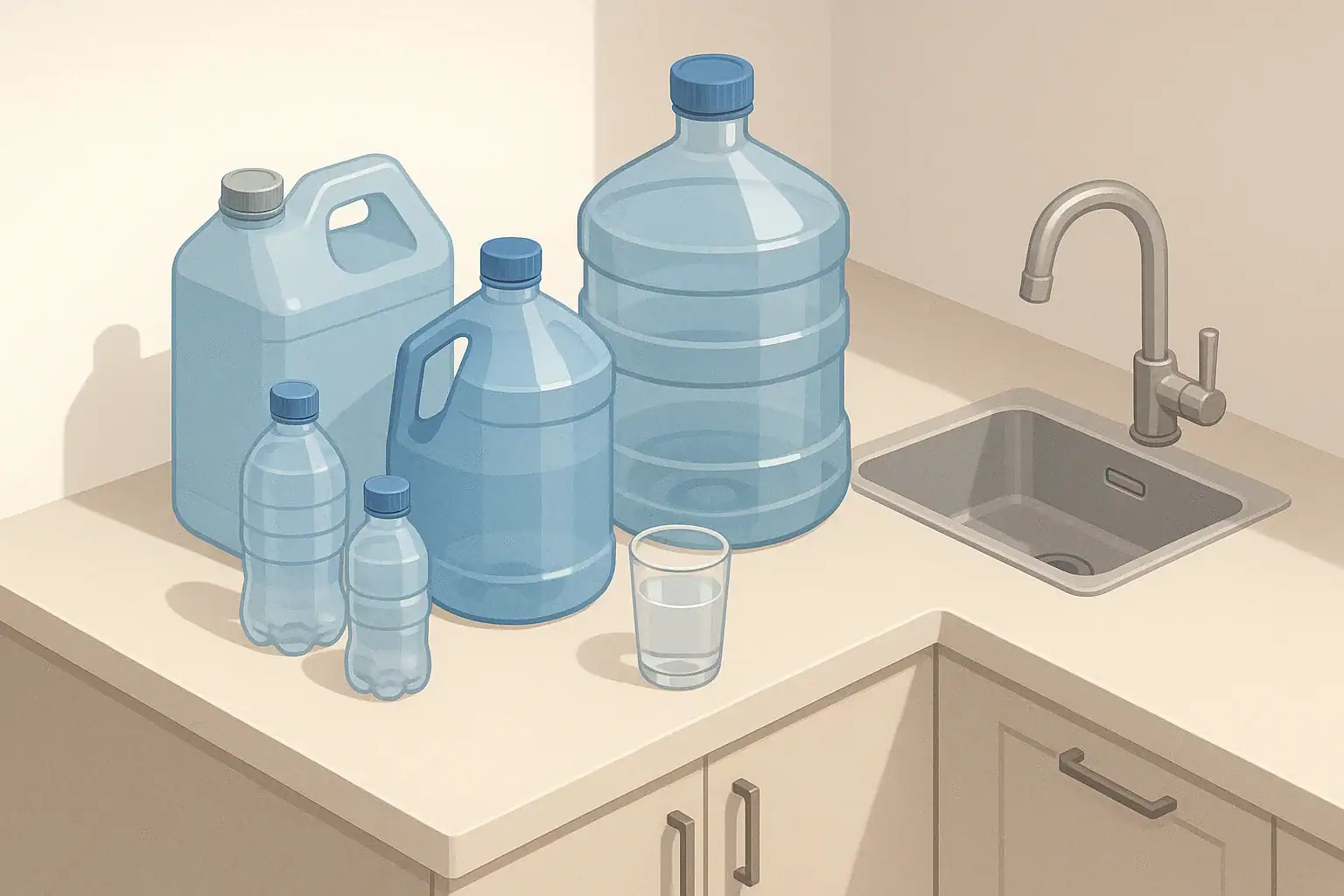
Why Emergency Water Planning Matters at Home
Most people can manage a brief power outage with flashlights and blankets, but losing normal tap water often causes more stress. Even short-term disruptions from water main breaks, winter freezes, boil-water advisories, or storms can make everyday tasks difficult.
Emergency water planning is less about stockpiling and more about knowing:
- Which household water sources are safe to use as-is
- Which may be usable after treatment
- Which should be avoided completely
- How much water you realistically need for a few days
This guide focuses on practical, common-sense steps for apartments, houses, renters, and families, so you can make calm decisions if your normal water supply is interrupted.
Example values for illustration.
| Water source | Usually safe as-is? | Often usable with treatment? | Generally avoid for drinking? | Typical use in an emergency |
|---|---|---|---|---|
| Stored tap water in clean containers | Yes, if recently filled and sealed | Sometimes, if older or questionable | No | Primary drinking and cooking source |
| Water heater tank (not tankless) | Often, if system is intact | Yes, if supply quality is uncertain | No | Backup drinking and hygiene water |
| Ice cubes and frozen water bottles | Yes, if made from safe water | Sometimes, if unsure how old | No | Supplemental drinking water |
| Toilet tank (not the bowl) | No | Possibly, with careful treatment | Often | Last-resort non-drinking uses |
| Bathtub filled before outage | Not recommended for drinking | Yes, with filtration and disinfection | Often | Flushing and basic washing |
| Rainwater from clean containers | No | Yes, with proper treatment | Sometimes | Supplemental hygiene and, if treated, drinking |
| Streams, ponds, or puddles | No | Sometimes, with advanced treatment | Often | Last-resort, usually for non-drinking |
| Water from radiators or boilers | No | No | Yes | Do not use for personal consumption |
How Much Water Do You Really Need?
Knowing roughly how much water to plan for helps you judge which household sources are worth using. Exact needs vary, but for short-term emergencies many households plan around:
- Drinking and basic beverages: about 1 gallon per person per day is a common planning number
- Hygiene and minimal cleaning: another 1 gallon per person per day is often enough for short periods if you are careful
- Pets: usually a fraction of a gallon per day depending on size (small pets need much less than large dogs)
These are planning figures, not strict rules. Children, people who are pregnant, those who are very active, and hot weather may increase needs. Storing some water ahead of time is ideal, but understanding emergency household sources can help cover gaps.
Example values for illustration.
| People & pets | Days to cover | Storage approach | Rotation cue idea |
|---|---|---|---|
| 1 adult in studio | 3 days | Several small containers under sink and bed | Refresh when you change smoke alarm batteries |
| 2 adults in apartment | 5 days | Stackable containers in closet + frozen bottles | Rotate at start of each season |
| 2 adults, 2 kids, 1 pet | 3 days | Mixed sizes in pantry and garage; label pet share | Use oldest containers during routine cooking monthly |
| Multi-generational home | 7 days | Larger containers in cool basement + bottled reserve | Review and top up before peak storm season |
| Rural home on well | 3 days | Stored water plus access to water heater tank | Check levels during regular well or pump service |
| Pet-focused household | 5 days | Separate labeled containers just for animals | Rotate with regular pet food purchases |
Safe Indoor Water Sources You May Already Have
Before thinking about outdoor or questionable sources, look for safe water that is already in your home system.
Stored Tap Water in Containers
If you have space, keeping some tap water stored ahead of time is the simplest option. Many people fill clean, food-safe containers and label them with the date.
Basic practices include:
- Use containers intended for storing food or beverages
- Wash containers with soap and clean water before filling
- Fill from cold tap water, not hot
- Keep containers sealed and stored in a cool, dark area
Some households choose to rotate stored water occasionally so it stays fresh. If you are unsure how long water has been stored, clear water can often be made safer through filtration and disinfection methods.
Water Heater Tank (Traditional Tank Style)
A standard tank-style water heater can hold a significant volume of water that is part of your home’s plumbing system. Tankless heaters usually do not store much usable water, but traditional tanks often do.
If local authorities have not warned of contamination in the main supply and your plumbing is intact, water from the heater may be similar in quality to your regular tap water. If the safety of the supply is uncertain, treating this water is a cautious step.
Important points:
- Turn off electricity or gas to the heater before draining to avoid damage
- Let water cool before handling
- Use the drain valve at the bottom, running water through a clean container
- Do not use if you suspect contamination from damaged plumbing or floodwater entering the system
Ice Cubes and Frozen Water Bottles
Ice made from safe tap or bottled water is another hidden source. In an outage, ice and frozen bottles slowly melt, providing drinking water and keeping food colder for longer.
Uses include:
- Melting ice cubes in a clean container for drinking
- Using frozen bottles in the refrigerator or cooler, then drinking the melted water
- Portioning melted water for pets
If you do not remember when the ice was made or if there was a previous advisory, you can treat the melted water before drinking as an added precaution.
Canned or Bottled Beverages
Most households have some shelf-stable drinks on hand. While these are not a replacement for plain water, they can reduce how much emergency water you need to drink.
In a short-term disruption:
- Use shelf-stable drinks to supplement plain water intake
- Prioritize plain or low-sugar drinks for hydration
- Save high-sugar or caffeinated drinks for occasional use
Household Sources That May Be Usable With Treatment
Some indoor water sources are not ideal but may be helpful if you can filter and disinfect them. These are usually better for hygiene and flushing but can sometimes be upgraded for drinking when you have no better options.
Toilet Tank (Not the Bowl)
The water in the toilet tank (the back compartment) usually comes from the same supply as your tap, but the tank itself is not designed as a clean container. It may contain residues from internal parts or cleaners.
As a result:
- Do not drink toilet tank water without thorough treatment
- Avoid it completely if drop-in cleaning tablets or colored cleaners have ever been used
- It can be useful for flushing toilets manually by pouring into the bowl
If the tank is free of cleaners and you have no safer source, some people choose to treat this water using multi-step methods: straining out particles, then disinfecting. This is typically considered a last resort for drinking.
Bathtub or Sinks Filled Before the Outage
If you have advance warning of a possible outage or storm, filling a bathtub or large sink can give you a useful reserve. Because tubs and sinks are not sterile, that water is best for non-drinking uses such as:
- Flushing toilets
- Basic sponge baths or handwashing
- Rinsing dishes before a final wipe
If you need to use this water for drinking or cooking in an emergency, run it through a reliable filtration method and then disinfect it. Many people prefer to save higher-quality stored water for direct drinking and use tub water mainly for hygiene and sanitation.
Rainwater Collected in Clean Containers
Rainwater can supplement your emergency supply, especially in regions that receive frequent showers. However, rain can pick up particles from the air and from any surface it runs across, such as roofs or gutters.
General guidance:
- Collect rainwater directly into clean, dedicated containers whenever possible
- Avoid using water that has run off roofs, gutters, or balconies for drinking unless you have strong treatment options
- Treat all rainwater intended for drinking with both filtration and disinfection
Rainwater is often well-suited for non-drinking uses such as washing or flushing, especially if supplies are tight.
Outdoor and Non-Traditional Sources: Proceed Carefully
Outdoor water can appear abundant but often carries more unknowns, including runoff, animal waste, and chemicals. These sources require extra caution.
Surface Water: Lakes, Ponds, Streams, and Puddles
Surface water is often the least predictable option. Even clear, fast-moving streams can contain microorganisms or pollutants not visible to the eye.
If you must use surface water:
- Choose the clearest water you can find, away from obvious pollution
- Avoid water with oil sheen, strong odors, or visible algae blooms
- Use multiple treatment steps (such as settling, filtering, and disinfection)
- Reserve it for non-drinking uses if any safer option is available
Pool and Hot Tub Water
Residential pool and hot tub water often contains chemicals intended for sanitation, but that does not make it suitable as drinking water.
Considerations include:
- Chemical levels can be too high for safe drinking
- Water may contain residual body products, debris, or environmental contaminants
- Disinfection methods designed for pools differ from drinking water treatment
Pool or hot tub water is typically more appropriate for cleaning or flushing toilets in a short-term emergency, not for drinking, even with home treatment methods.
Water From Radiators, Boilers, and Industrial Equipment
Water in home heating systems, such as radiators, boilers, or some fire suppression systems, may contain additives like rust inhibitors, antifreeze, or other chemicals.
Because of this, it is generally not suitable for drinking, cooking, or hygiene. Instead, focus on safer containers and household plumbing sources.
Water Sources to Avoid for Personal Use
In nearly all situations, some water is better left untouched for personal consumption, even during an emergency. Using these sources can introduce avoidable risks.
Toilet Bowl Water
Water in the toilet bowl has direct contact with waste and surfaces that harbor microorganisms. It is not appropriate for drinking or food preparation under any circumstance.
Even with aggressive home treatment, toilet bowl water remains unsuited to personal use. If you are extremely short on water, look instead to less contaminated sources such as tap-based storage, water heater tanks, or rainwater with thorough treatment.
Water With Fuel, Oils, or Strong Chemical Smells
Any water that smells strongly of fuel, solvents, or other chemicals should not be used for drinking, cooking, or hygiene.
Examples include:
- Puddles near driveways or garages with oil sheen
- Water stored in containers that once held chemicals or cleaners
- Water exposed to pesticide or fertilizer runoff
Home treatment methods that work for microorganisms are not designed to remove many chemical contaminants.
Unknown Industrial or Commercial Sources
Water from industrial systems, certain fire suppression supplies, or unknown outdoor tanks should be avoided for home use. Contents and treatment history are often unclear, and contamination can be complex.
Simple Ways to Make Questionable Water Safer
When using any emergency household water source, the goal is to move from “uncertain” to “as safe as reasonably possible” with the tools you have. Common approaches include filtration, disinfection, or both.
Basic Filtration Steps
Filtration helps remove particles, sediment, and some organisms. At home, options might include:
- Letting cloudy water sit so particles settle, then pouring off the clearer top layer
- Pouring water through a clean cloth into another container to remove visible debris
- Using a household water filter device according to its directions
Filtration alone does not reliably remove all microorganisms or chemicals, but it prepares the water for further disinfection.
Heat-Based Disinfection
Heating water can reduce many types of microorganisms. This is often done by bringing water to a rolling boil and keeping it there for a period of time. Because heat uses fuel and power, many households reserve this method for smaller amounts of water meant for drinking or preparing food.
When fuel is limited:
- Treat only what you need for drinking and food
- Keep treated water in clean, covered containers
- Label containers so you know which have been heated
Chemical Disinfection Options
Some households keep plain, unscented liquid bleach or other treatment products specifically for emergency disinfection. When used correctly and in the right concentrations, these can help reduce microorganisms in clear water.
Key practices:
- Use products that are appropriate for water treatment and follow official instructions
- Treat only clear water; cloudy water should be settled or filtered first
- Allow enough contact time before drinking
Because directions vary by product and concentration, it is wise to review official guidance in advance and keep a written reference with your emergency supplies.
Safe Storage After Treatment
Treating water is only part of the process. Once water is safer to drink, you want to keep it that way.
- Use clean, food-safe containers with lids
- Avoid dipping hands or unclean objects into containers; pour instead
- Store treated water in a cool, shaded place
- Label containers with the treatment method and date
Planning Ahead: Matching Sources to Everyday Scenarios
Short-term emergencies look different for each household. A renter in a small apartment will likely plan differently than a family in a single-family home. Thinking through common scenarios helps you decide which sources and methods matter most for you.
Apartments and Small Spaces
Space is limited, so flexibility is important.
- Favor stackable or under-bed water containers
- Use frozen water bottles in the freezer as both cooling and backup water
- Consider collapsible containers that can be filled if you have advance warning
- Know how to safely access your unit’s water heater if allowed by building rules
Single-Family Homes
Homes often have more options, including:
- Larger stored water capacity in basements, closets, or garages
- Standard water heaters that hold a useful reserve
- Potential for rainwater catchment systems or outdoor storage
Because homes may also rely on private wells or local pumps, it is helpful to know whether your water system needs electricity to function and to plan for outages accordingly.
Families With Children, Seniors, and Pets
Some household members may be more sensitive to changes in water taste or quality, or more susceptible to dehydration.
- Plan extra drinking water for children and seniors
- Include plain water specifically for mixing infant formula if needed
- Measure how much your pets typically drink in a day and plan for at least that amount
- Keep a small supply of familiar-tasting water on hand for picky drinkers
Regional and Seasonal Considerations
Your local climate and risks influence which emergency household water sources are most useful.
- Winter storms: Pipes may freeze, but indoor storage stays stable. Melting clean snow can sometimes supplement water if treated.
- Hurricanes and heavy rain: Storms may contaminate surface water. Filling tubs and containers before a storm is especially important.
- Heatwaves: Drinking needs increase, so stored water becomes more critical. Frozen water bottles help with both cooling and hydration.
- Wildfire smoke events: Indoor water sources remain important; keeping containers closed helps prevent airborne particles from settling into open water.
Keeping Water Planning Simple and Calm
Emergency household water planning does not need to be complicated or extreme. By understanding which sources in and around your home are safest, which can be upgraded with treatment, and which to avoid, you can respond more calmly to short-term disruptions.
Small habits—like storing a modest amount of tap water, keeping a way to treat questionable water, and knowing where your water heater is—go a long way. The goal is practical readiness: enough clean water for drinking, basic hygiene, and comfort until normal service returns.
Authoritative sources
Safety recommendations can change. Confirm critical details with current official guidance and local authorities.
- US EPA: Emergency Disinfection of Drinking Water
- USDA FSIS: Keep Food Safe During Emergencies
- U.S. CPSC: Battery Safety
Frequently asked questions
Is water from my water heater safe to drink during an outage?
Water from a traditional tank-style water heater can be similar in quality to tap water if the plumbing system is intact and there are no contamination advisories. Turn off power or gas before draining any water and let it cool before handling to avoid damage or injury. If supply safety is uncertain, treat the water before drinking.
Can I use the water in my toilet tank for drinking or cooking?
Toilet tank water is not designed as a potable storage and may contain residues from internal parts or cleaners, so it is generally not recommended for drinking. In an extreme last-resort situation, only use tank water that has never had drop-in cleaners and after straining and disinfecting it thoroughly. Whenever possible, prioritize safer sources like stored tap water or treated rainwater.
How should I treat rainwater or collected surface water to make it safe?
Collect rainwater in clean containers and avoid water that has run off roofs or gutters if possible. Treat rainwater intended for drinking with filtration followed by disinfection (for example, boiling or proper chemical treatment) and reserve untreated rainwater for non-drinking uses. If you are unsure about contamination, use multiple treatment steps and err on the side of caution.
Is pool or hot tub water usable for drinking after treatment?
Pool and hot tub water often contains sanitizing chemicals and contaminants that make it unsuitable for drinking. It can be acceptable for toilet flushing or cleaning in a short-term emergency, but home treatment methods do not reliably remove chemical additives to drinking-safe levels. Avoid using it for cooking or drinking whenever possible.
How much water should I store per person for short-term emergencies?
A common planning guideline is about 1 gallon per person per day for drinking and another 1 gallon per person per day for basic hygiene and minimal cleaning. Adjust amounts for children, pregnant people, those who are very active, hot weather, and pets. Storing some water ahead of time and rotating it periodically helps bridge short outages.
What’s the simplest reliable way to disinfect water at home if I have no filter?
Boiling is the most reliable household method: bring water to a rolling boil for at least one minute (and longer at high elevations) and let it cool before storing in clean containers. If boiling isn’t possible, clear water can be disinfected with appropriate chemical treatments according to product instructions after removing sediment through settling or cloth filtration. Using a certified microbiological filter provides additional protection when available.
- Simple checklists and realistic planning
- Water, power, lighting, and pantry basics
- Family plans (kids, pets, seniors) and seasonal prep
Affiliate disclosure
As an Amazon Associate, we earn from qualifying purchases. Some links on this site may be affiliate links. If you buy through these links, we may earn a small commission at no extra cost to you. This helps support our content. Learn more.