Why Water Belongs at the Top of Your 72-Hour List
For short, everyday emergencies like a water main break, winter storm, or boil-water notice, having a small supply of safe drinking water at home makes life much easier. A 72-hour kit is simply a three-day buffer so you are not scrambling if taps slow to a trickle or utilities ask you to conserve.
Water matters because you use it for more than drinking. Cooking, brushing teeth, quick hand rinses, and mixing baby or pet food all draw from the same supply. A little planning turns water from a stress point into something you barely have to think about when something goes wrong.
This guide focuses on practical, low-drama water planning for a 72-hour kit, whether you live in a small apartment or a larger home, with or without kids and pets.
How Much Water to Store for 72 Hours
Most people use far more water in a normal day than they realize, but you do not need to match everyday comfort during a short disruption. Instead, think in terms of a basic, temporary level of comfort and hygiene.
Simple daily water estimate
A commonly used planning number is to aim for about 1 gallon of water per person per day for short emergencies. This is not a strict rule, just a simple starting point.
- Minimum planning target: about 1 gallon per person per day
- Three days: about 3 gallons per person for 72 hours
This amount usually covers drinking and some very basic hygiene and food prep (like rehydrating foods). If you live in a hot climate, are pregnant, have certain medical needs, or expect to exert yourself (for example, cleaning up after a storm), you may want to plan for more.
Adjusting for pets and babies
Pets and babies do not use as much as adults, but they do need their own share.
- Pets: Many households plan roughly a half to one cup of drinking water per 10 pounds of pet weight per day, then round up to be safe. For simple planning, add about a half to 1 gallon per day to your total for most small pets combined.
- Babies: If you use powdered formula, include extra water for mixing and for rinsing bottles. Set aside an extra half gallon per day if you rely on formula or expect to wash bottles by hand.
These are planning estimates, not medical or veterinary guidance. If you have specific questions about your situation, a healthcare or veterinary professional can offer more personalized advice.
| Task | Why it matters | Notes |
|---|---|---|
| Count people and pets in your home | Avoid underestimating total water needs | Include frequent visitors who may be with you |
| Multiply by about 1 gallon per person per day | Provides a simple starting point | Adjust up if in hot climate or high activity |
| Add extra for babies and formula users | Formula mixing and rinsing uses more water | Consider an extra half gallon per day total |
| Add a small buffer for pets | Prevents having to share your own drinking water | Round up by about a half to 1 gallon per day |
| Decide how much is “drink only” vs. “utility” | Makes it easier to stretch supplies | Label containers if helpful |
| Write your 3-day total on a note | Keeps your target visible when shopping | Update when household size changes |
Choosing Water Containers: Home, Car, and Grab-and-Go
You do not need fancy gear to store water for 72 hours. Most people mix a few options depending on space, budget, and where they might be when something happens.
At-home storage: larger, stable containers
For staying put during a storm or short disruption, it is usually easiest to store most of your water in larger, refillable containers.
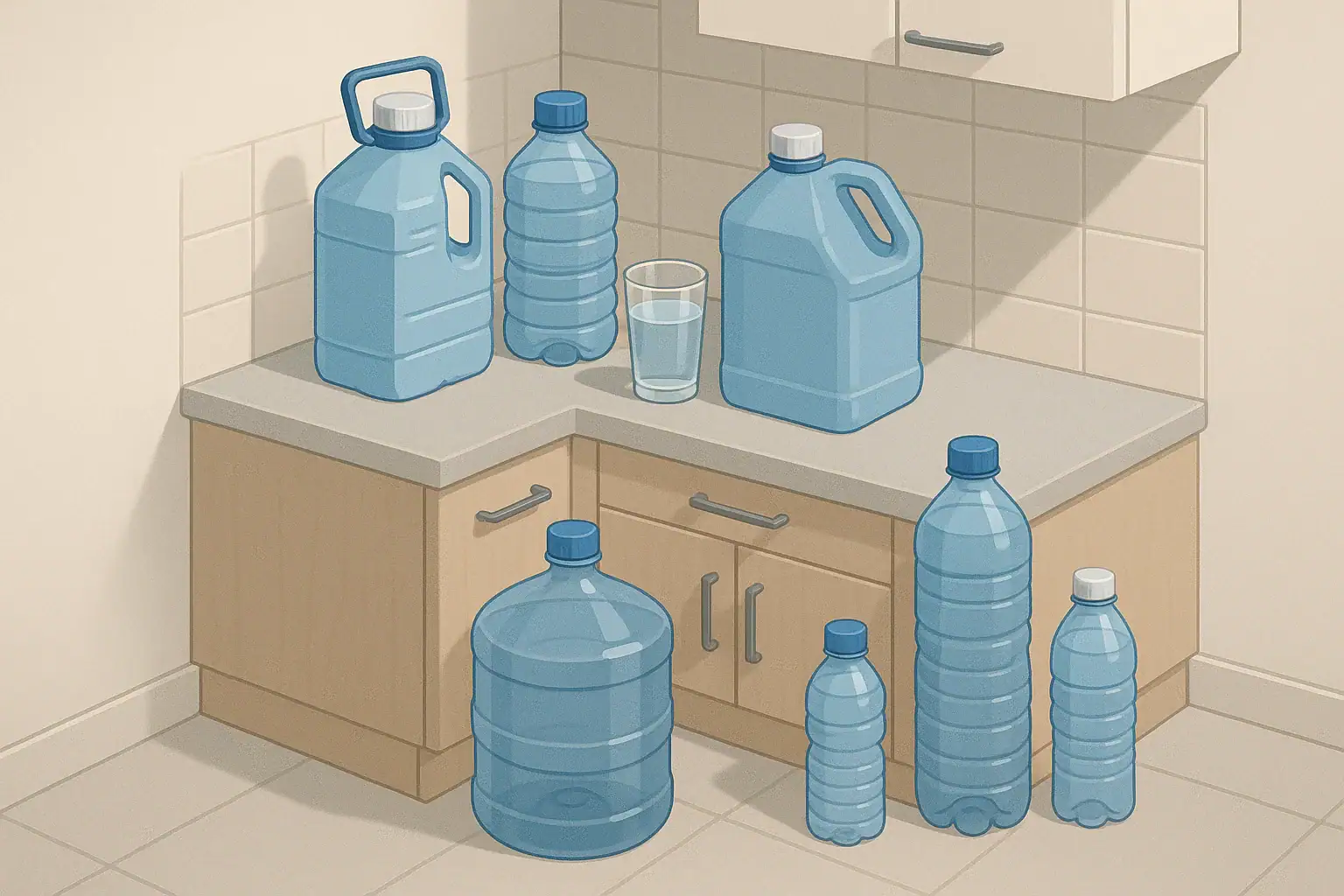
- Reusable jugs: Containers in the 1–5 gallon range are manageable to carry but hold a useful amount. Make sure they are intended for drinking water and have tight-sealing caps.
- Smaller bottles: Individual bottles are convenient for kids, guests, or placing next to beds at night. They can also be simpler for people with limited strength or mobility.
- Under-bed or closet containers: Low-profile, food-safe containers can slide under beds in apartments or small homes, keeping water out of the way.
Whatever you choose, think about whether everyone in the household can lift and pour from the container safely.
Car and work: portable water options
If you drive regularly or have a long commute, a small amount of water in your vehicle can be useful for delays or traffic closures. For work, a basic supply at your desk or locker covers unexpected overnights or building issues.
- Vehicle: A few small bottles or a compact container stored out of direct sunlight can provide short-term drinking water. Be aware that heat and cold can affect container integrity over time.
- Workplace: A reusable bottle plus a small backup (like a spare bottle in a drawer) can help if tap access is temporarily limited.
For vehicles in very hot or very cold climates, many people treat stored water as a backup and rotate it more often because temperature swings can be hard on containers.
Go-bags and evacuation kits
Carrying days of water on your back is not realistic for most people. A go-bag usually includes a modest amount of water and a way to refill if safe sources are available.
- Lightweight containers: One or two bottles or a collapsible container are easier to carry than large jugs.
- Refill supplies: If you have a way to make questionable water safer, keep it with your bag. Just remember that treatment options have limits and require careful use.
- Plan to top up: In many short emergencies, tap water still works. Filling containers before leaving home, if you have time, can be more important than how much you keep pre-packed.
Small-Space Strategies: Apartments, Renters, and Shared Housing
Limited space does not mean you cannot store useful water. It just means you need to think vertically and use overlooked spots.
Use hidden and vertical spaces
Look for areas where containers can live without being in the way:
- Under beds, sofas, or low shelving
- Bottom of closets behind shoes or coats
- Laundry area corners or under folding tables
- High shelves, if you can safely reach them
In many apartments, a few 1-gallon jugs scattered in these spots add up to a solid 72-hour supply without taking over your living space.
Smaller containers instead of one large one
If you have trouble lifting 5-gallon containers, or simply have odd-shaped storage spaces, smaller units may be easier.
- Multiple 1-gallon jugs arranged in a row are easier to tuck into narrow spaces.
- Quart or liter bottles can fit on the back of a deep shelf or in unused cabinet corners.
- Divide storage between rooms so you have water if one area is blocked or cluttered during an emergency.
Shared housing considerations
If you share space with roommates or extended family:
- Label containers with a simple marker so everyone knows they are for emergency use.
- Agree on a basic rule, such as “only open these if the tap is off or we are asked to limit use.”
- Store at least part of your personal quota in your own room or area so you know you have some set aside.
Storing Water Safely at Home
Safe storage is mostly about cleanliness and keeping containers in a reasonable environment. You do not need to overcomplicate it.
Choosing and preparing containers
Containers that are intended for drinking water are the easiest choice. They are designed to hold water without breaking down or adding unwanted tastes.
- Before filling: Clean containers with dish soap and water, rinse well, and allow any soap residue to drain away.
- Fill from a safe tap source: Use cold tap water that is normally considered safe to drink in your area.
- Seal tightly: Close caps firmly to limit dust and accidental spills.
If you are considering reusing containers, such as some food-grade jugs, make sure they did not hold anything that leaves strong residues or odors.
Where to keep stored water
Stable, moderate conditions help containers last longer and keep water more pleasant to drink.
- Avoid direct sunlight: Keep water in shaded areas or opaque bins.
- Aim for moderate temperature: Avoid areas that get extremely hot, like closed car interiors in summer or attics in warm regions.
- Protect from damage: Do not place containers where they are likely to be punctured, knocked over, or crushed.
- Keep off bare concrete if possible: Place containers on cardboard, wood, or a shelf to stay clean and dry.
Labeling and dating containers
Even if your tap water is treated, it is helpful to know when you filled your containers.
- Use a marker or piece of tape to write the fill date.
- Optionally, keep a simple list on your fridge or in a notes app with “water fill dates.”
- Rotate if water looks, smells, or tastes off, or if containers show damage.
Rotation: Keeping 72-Hour Water Fresh with Minimal Effort
For most households, rotating water is simpler than it sounds. A calendar reminder and a quick pour-and-refill session a couple of times a year are usually enough.
Easy rotation habits
Many people choose to refresh stored water every 6–12 months as a practical habit, especially if it sits in warmer areas or in plastic containers.
- Set reminders: Use two predictable dates per year, such as the start of spring and fall, to check containers.
- Use, do not waste: Pour older stored water into plants, cleaning buckets, or for other non-drinking uses, then refill containers from the tap.
- Check containers: Look for cracks, bulges, or leaks and replace if needed.
If you live in an area with a history of frequent boil-water notices or disruptions, you might check your water more frequently because you are likely to use and replace it more often.
When to replace sooner
Refresh your stored water ahead of schedule if:
- Containers were exposed to very high heat or freezing.
- You notice changes in smell, clarity, or taste.
- Containers sat open or caps were loose.
- Pets or pests had access to stored water.
When in doubt, use suspect water for cleaning or flushing rather than drinking, and refill your drinking supply from a safe source.
Using Stored Water Wisely During an Emergency
When you do reach for your 72-hour water, using it thoughtfully helps you stay comfortable without running out too quickly.
Prioritize drinking and basic hygiene
In a short disruption, focus your stored water on needs that are hard to replace.
- First priority: Drinking water for everyone, including pets.
- Second priority: Basic hygiene like brushing teeth, hand rinses before handling food, and minimal dish rinsing.
- Optional uses: Cooking that requires water, like rehydrating dried foods, if your water supply allows.
It often helps to portion out a daily amount for each person so you can see how quickly your supply is going.
Reduce water use where possible
Simple changes stretch your supply without making life miserable.
- Serve low-water meals from your pantry, such as foods that are ready-to-eat or only need brief heating.
- Use disposable plates or line dishes with clean wrap to reduce washing during a short disruption.
- Set up a small “hand rinse” station with a basin so you can reuse a small amount of water for multiple quick washes.
Special situations: seniors, kids, and hot weather
Some people are more sensitive to having too little to drink, especially in warm conditions.
- Seniors and infants: Offer water regularly and keep their share easily reachable.
- Hot or humid weather: Stay in cooler areas of the home, close curtains on sun-facing windows, and limit heavy activity to make your water supply go further.
- Kids: Give each child their own bottle to encourage steady sipping rather than gulping and wasting.
Quick Water Planning for Different Home Types
Your living situation shapes how you store and use emergency water. A few example setups can help you picture what might work for you.
Apartment without much storage
- Target: 3 gallons per adult for 72 hours, plus a little extra if you have pets.
- Store: Several 1-gallon jugs under the bed and a few smaller bottles in a closet.
- Rotation: Refresh when you do seasonal clothing swaps or at daylight saving time changes.
Suburban home with garage or basement
- Target: At least 3 gallons per person, with extra for cooking and basic cleaning.
- Store: A few larger containers on a low shelf in the garage or basement, plus smaller bottles inside the house.
- Rotation: Tie checkups to other home maintenance tasks, such as changing smoke detector batteries.
Households with limited mobility
- Use smaller, lighter containers that are easier to move and pour.
- Keep a day’s worth of water in the main living area or bedroom to avoid frequent trips.
- Ask visiting family or friends to help refill and rotate containers a couple of times a year.
| People / pets | Days | Storage approach | Rotation cue |
|---|---|---|---|
| 1 adult in studio apartment | 3 days | Three 1-gallon jugs under bed; a few small bottles in kitchen | Check at start of spring and fall |
| 2 adults + 1 child + small pet | 3 days | Six 1-gallon jugs in closet; separate small bottle labeled for pet | Rotate during closet cleanouts |
| Family of 4 in house | 3 days | Two mid-size containers in garage; individual bottles for each person indoors | Align with smoke detector battery changes |
| Senior living alone | 3 days | Multiple half-gallon jugs near main chair and bed | Ask family to help rotate twice a year |
| Roommates sharing apartment | 3 days | Labeled 1-gallon jugs for each person stored in shared closet | Review when a roommate moves in or out |
| Person with long daily commute | Overnight away from home | Small bottles in vehicle and work drawer; main water at home | Rotate during routine car cleaning |
Example values for illustration.
Making Water Planning a Normal Part of Home Readiness
A 72-hour water supply is less about stocking up all at once and more about building a simple, sustainable habit. Start with a few containers, place them where they fit, and set one reminder to check them later in the year.
Over time, you can refine how much you store, where you keep it, and how you rotate it so that water becomes just another quiet piece of your everyday home readiness plan.
Authoritative sources
Safety recommendations can change. Confirm critical details with current official guidance and local authorities.
- US EPA: Emergency Disinfection of Drinking Water
- USDA FSIS: Keep Food Safe During Emergencies
- U.S. CPSC: Battery Safety
Frequently asked questions
How much water should I pack per person for a 72-hour kit?
A commonly recommended starting point is about 1 gallon per person per day, so plan for roughly 3 gallons per person for 72 hours. Increase that amount if you live in a hot climate, are pregnant, have medical needs, or expect heavy physical activity.
What type of containers are best for storing water in a 72-hour kit?
Use food-grade, BPA-free containers with tight-sealing caps, such as purpose-made water jugs or clean reusable bottles intended for drinking water. Avoid containers that previously held chemicals or strongly flavored products, and store them out of direct sunlight and extreme temperatures.
How often should I rotate or replace the water in a 72-hour kit?
For most households, refreshing stored drinking water every 6–12 months is a practical routine, with more frequent checks if containers sit in hot or cold conditions. Replace water sooner if it develops an off smell, taste, cloudiness, or if the container shows damage or loose caps.
Is it safe to keep emergency water in my car as part of a 72-hour kit?
Keeping a small supply of water in your vehicle can be useful, but temperature extremes inside cars can degrade plastic and affect water quality, so rotate this water more frequently. Store bottles out of direct sunlight and check them regularly for leaks or distortion.
How should I account for pets and babies when planning water for a 72-hour kit?
Plan to add about a half to 1 gallon per day total for most small pets combined and set aside an extra half gallon per day if you use powdered infant formula or need to wash bottles. Tailor these amounts based on pet size, number of infants, and any specific medical or dietary needs.
- Simple checklists and realistic planning
- Water, power, lighting, and pantry basics
- Family plans (kids, pets, seniors) and seasonal prep
Affiliate disclosure
As an Amazon Associate, we earn from qualifying purchases. Some links on this site may be affiliate links. If you buy through these links, we may earn a small commission at no extra cost to you. This helps support our content. Learn more.