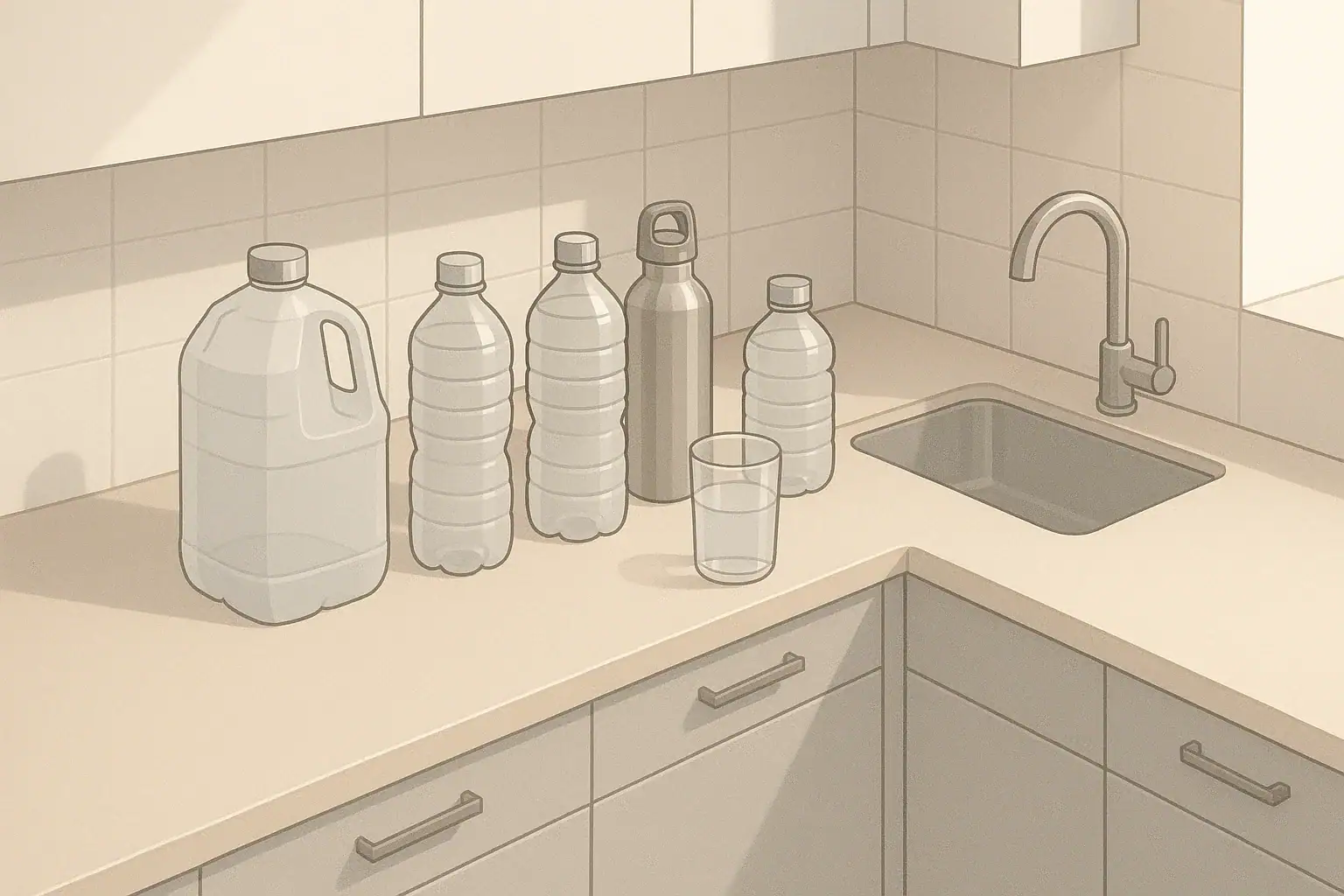
Having extra water at home is one of the simplest ways to be ready for short-term emergencies, like a water main break, a winter storm, or a short power outage that affects pumping or treatment. The challenge is keeping that stored water reasonably fresh without turning it into a complicated project.
A water rotation schedule gives you a predictable way to use older water first and replace it with new water. In other words, it helps you practice FIFO: first in, first out. This concept is common in grocery stores and warehouses, and it works just as well for home water storage.
For most households, a rotation schedule is less about exact dates and more about building a simple routine that fits your home. The goal is not perfection, but having water that you feel comfortable using if the tap stops working for a few days.
Why a Water Rotation Schedule Matters
Having extra water at home is one of the simplest ways to be ready for short-term emergencies, like a water main break, a winter storm, or a short power outage that affects pumping or treatment. The challenge is keeping that stored water reasonably fresh without turning it into a complicated project.
A water rotation schedule gives you a predictable way to use older water first and replace it with new water. In other words, it helps you practice FIFO: first in, first out. This concept is common in grocery stores and warehouses, and it works just as well for home water storage.
For most households, a rotation schedule is less about exact dates and more about building a simple routine that fits your home. The goal is not perfection, but having water that you feel comfortable using if the tap stops working for a few days.
How Much Water to Store Before You Plan Rotation
Before setting up a rotation schedule, it helps to decide how much water you want to keep on hand. That amount will guide how often you rotate and what kind of containers make sense for your space.
Common guidance suggests planning for at least several days of water per person and pet. Some people store more if they have the space or live in areas where disruptions are more common, such as places with frequent hurricanes, wildfires, or winter storms.
Factors that affect how much water you might store include:
- Household size: More people and pets means more water.
- Housing type: Apartments and small homes may need smaller, stackable containers instead of large barrels.
- Climate: Hotter regions may need more water for comfort and basic hygiene.
- Mobility needs: Seniors or anyone with limited mobility may benefit from smaller, lighter containers.
You can build up your storage gradually, adding a few containers at a time as your budget and space allow. Once you know your target, you can match your rotation schedule to the number of containers you keep.
| Task | Why it matters | Notes for your home |
|---|---|---|
| Count people and pets | Helps estimate how much water you need | Include frequent visitors or caregivers |
| Measure available storage space | Prevents buying containers that do not fit | Check closets, under beds, and low shelves |
| Choose container sizes you can lift | Reduces risk of spills or strain | Smaller jugs are often better for seniors |
| Decide a storage location | Keeps water out of direct sunlight and heat | Aim for cool, dark, and easy to reach |
| Set a simple label system | Makes rotation easier to remember | Use month/year written clearly |
| Align with your budget | Avoids large, one-time expenses | Add containers slowly over several months |
| Consider special needs | Supports infants, medical devices, or pets | Plan extra water for cleaning and mixing |
Understanding FIFO for Home Water Storage
FIFO, or first in, first out, means you use the oldest items before the newer ones. When applied to water storage, you always drink or cook with the containers that have been sitting the longest, then refill or replace them with new water.
This approach offers several benefits:
- Less waste: You use stored water in normal life instead of forgetting about it.
- Fewer surprises: You notice problems like leaks or off tastes during regular use, not during an emergency.
- Simple tracking: You only need to know which containers are oldest, not the exact age of every single jug.
For most households, FIFO is easier than setting strict replacement deadlines. Instead of throwing out water on a fixed date, you build it into your routine, such as swapping a couple of containers into your daily use every month.
FIFO for Store-Bought Bottled Water
Many people start with store-bought water because it is convenient and sealed at the source. A FIFO system with bottled water is straightforward:
- Place newer cases or bottles behind older ones on the shelf.
- Always grab bottles from the front or top first.
- When you buy more, slide existing bottles forward and put new ones in the back.
If you live in an apartment with limited space, you might keep a small stack of cases under a bed or at the bottom of a closet. As you drink from the front case, you move the others forward and restock the back when you can.
FIFO for Tap-Filled Storage Containers
For larger or reusable containers that you fill from the tap, FIFO focuses on labeling and a simple swapping routine:
- Label each container with the fill month and year.
- Group containers by date, with the oldest ones easiest to reach.
- When you need water for cooking, cleaning, or plants, use the oldest container first.
- After you empty a container, clean it as recommended and refill with fresh tap water, then label it with the new date and place it in the “newest” spot.
This cycle keeps your stored water moving, similar to how you might cycle pantry items. Even if you only rotate one or two containers a month, the overall supply turns over regularly.
Designing a Water Rotation Schedule That Fits Your Life
A good water rotation schedule is one you can actually follow. It does not need to be perfect or complicated. Instead, it should connect to routines you already have, like paying monthly bills, changing HVAC filters, or doing deep cleaning.
Step 1: Map Your Current Water Storage
Start by making a quick list of what you already have:
- How many gallons or liters of water are stored.
- Which containers are sealed store-bought bottles.
- Which containers are reusable, tap-filled, or bulk storage.
- Where each group is located (closet, garage, under bed, etc.).
You do not need exact measurements for everything. Rough estimates help you see which parts of your storage can be rotated often and which will move more slowly.
Step 2: Choose a Rotation Interval
Next, decide how often you want to cycle through your stored water. Many households pick one of these patterns:
- Monthly: Works well if you have a moderate amount of storage and want steady rotation.
- Every 3 months: A good option if you have limited space or do not go through much bottled water.
- Twice a year: Can work for larger containers in cool, stable conditions, especially when combined with smaller supplies you use more often.
You can also stagger these intervals. For example, you might rotate small bottles monthly while refreshing large, rarely used containers once or twice a year.
Step 3: Link Rotation to Existing Habits
To avoid forgetting your rotation schedule, tie it to something that already happens regularly in your life:
- When you pay rent or a mortgage.
- When you change air filters or test smoke alarms.
- At the start of a new season.
- On a family “reset” day when you also review emergency contacts or check flashlights.
The more your rotation fits naturally into your life, the more likely you are to keep it going without stress.
Step 4: Decide How Much to Rotate Each Time
You do not have to rotate your entire supply at once. In fact, smaller, steady changes are easier:
- Use and replace one case of bottled water per month.
- Empty, clean, and refill one or two large containers every month or quarter.
- Refresh any small bottles kept in go-bags or car kits on the same schedule.
If you keep a written note on the shelf or a simple checklist on your fridge, you can track which containers you rotated last and which are next in line.
Simple Labeling and Tracking Methods
Clear labeling is the backbone of a FIFO water rotation schedule. You should be able to glance at a container and know when it was filled or purchased and whether it is “oldest” or “newest.”
Labeling Ideas for Any Home
You can label containers in whatever way is easiest for your household. Options include:
- Marker on the lid or cap: Write the month and year large and simple.
- Color-coded tape: Each color can represent a season or year.
- Masking tape labels: Easy to remove and replace when you refill.
For example, you might write “6/2026” on the top of each container filled in June 2026. When you refill it later, you remove or cross out the old date and write the new one.
Low-Tech Schedule Tracking
Many people do fine with a simple, low-tech system. You might:
- Keep a small note on the inside of a cabinet door listing your containers and last rotation month.
- Use a paper calendar and write reminders like “rotate 2 water jugs” once a month.
- Create a brief checklist you look at during monthly or seasonal home maintenance.
Households with kids can make this a shared task, letting older children help check dates or move newer bottles to the back of the shelf under adult supervision.
Digital Reminders and Shared Plans
If you prefer digital tools, you can use calendar reminders or shared notes:
- Set recurring reminders on your phone for specific tasks, such as “Rotate bottled water under bed.”
- Create a shared note with a partner or roommate listing water locations and last rotation dates.
- Use simple checkboxes that you reset after each cycle.
The goal is not a perfect tracking system, but a light structure that helps you remember to move water through your home a little at a time.
Adapting FIFO Water Rotation to Different Living Situations
Homes look different, and so do water storage options. A studio apartment, a shared rental, and a single-family house will each handle water rotation in their own way. The same FIFO principles apply; the details just change slightly.
Small Apartments and Limited Storage
If you live in a small apartment, you may not have space for large barrels or bulky containers. Instead, you can focus on smaller units that are easier to tuck away:
- Store a few cases of bottled water under beds, sofas, or low shelves.
- Use stackable, mid-sized jugs that fit in closets or on sturdy shelves.
- Limit quantities to what you can reasonably rotate within your chosen schedule.
With limited space, your rotation might revolve around your regular grocery routine. Each time you shop, you can buy one small case of water, place it in the back of the stack, and move older cases forward for daily use.
Renters and Shared Spaces
Renters and people who share space with roommates may need to coordinate water storage and rotation:
- Agree on a shared storage area, like a hallway closet or pantry corner.
- Label containers clearly so everyone knows which water is for rotation and which is current drinking water.
- Use shared notes or a simple chart to reduce confusion about who last rotated which containers.
In some rentals, storage areas like garages, basements, or outdoor closets may experience temperature swings. In those situations, choosing slightly more frequent rotation can help keep water cycling through the home.
Families with Kids
Families can build water rotation into existing routines by:
- Letting kids help move older bottles to the front during a monthly “family reset” day.
- Using stored water during cooking nights and explaining why you are rotating it.
- Keeping a small amount of water reserved for baby formula or child-specific needs, with separate labels.
Involving children (at appropriate ages) can make preparedness feel normal and calm instead of stressful.
Seniors and People with Limited Mobility
For seniors or anyone who finds heavy lifting difficult, the rotation schedule should prioritize safety and access:
- Favor smaller, lighter containers over very large ones.
- Store water on waist-high shelves rather than floors or high cupboards where reaching is hard.
- Rotate containers in pairs, so only a small amount of moving and lifting is needed at each interval.
Family members, neighbors, or home aides can help with occasional deep rotations, such as refreshing heavier containers a couple of times a year.
Using Stored Water in Everyday Life
A FIFO water rotation schedule works best when you routinely use the stored water in your normal day-to-day life. This keeps water moving, avoids waste, and keeps your habits fresh.
Practical Ways to Use Older Water
Depending on your comfort level and the condition of your containers, you might use older stored water for:
- Boiling for pasta, rice, or other cooked foods.
- Making hot drinks that will be boiled.
- Hand washing small loads of dishes when needed.
- Watering indoor or outdoor plants if you decide not to drink it.
Using water this way allows you to rotate without feeling pressure to drink only stored water. When you have extra, you can often find non-critical uses that still keep the FIFO system moving.
Seasonal Check-Ins
Season changes are natural times to review your water rotation:
- Before winter storms: Confirm that containers are accessible even if you cannot go outside easily.
- Before hurricane season: Top off supplies and ensure older containers are either used or clearly marked for first use.
- Before summer heat waves: Make sure you have enough drinking water in places that stay relatively cool.
These seasonal check-ins can be combined with other readiness tasks, like checking flashlights, charging backup power sources, and reviewing communication plans.
Quick Water Rotation Planner
To pull everything together, it can help to view your water rotation as a simple planner: how many people and pets you have, how many days you are planning for, and what storage and rotation cues work best.
| People and pets | Days you are planning for | Storage approach | Rotation cue |
|---|---|---|---|
| 1 person, no pets | 3–5 days (example) | Small bottled water under bed or in closet | Rotate one case with monthly grocery trip |
| 2 adults, 1 small pet | 5–7 days (example) | Mix of bottled water and mid-sized jugs | Use oldest bottles first each month, refill one jug |
| Family of 4 | 7 days (example) | Several stackable containers in cool closet | Rotate two containers during monthly family reset |
| Household with seniors | 5–7 days (example) | Smaller, easy-to-lift jugs on low shelves | Rotate a few jugs each season with helper |
| Apartment with roommates | 3–5 days (example) | Shared bottled water stack in hallway closet | Rotate front case whenever rent is paid |
| Home with frequent outages | 7–10 days (example) | Combination of bottled water and larger storage | Monthly check of all containers, partial rotation |
Keeping Water Rotation Calm and Manageable
A water rotation schedule does not need to be strict or stressful. When you use a simple FIFO approach, connect it to routines you already follow, and adapt it to your living situation, it becomes just another quiet part of caring for your home.
Over time, rotating water can feel as ordinary as restocking the pantry or replacing batteries. With a small amount of planning, you can keep your stored water reasonably fresh and ready to use whenever everyday life is interrupted for a little while.
Authoritative sources
Safety recommendations can change. Confirm critical details with current official guidance and local authorities.
- US EPA: Emergency Disinfection of Drinking Water
- USDA FSIS: Keep Food Safe During Emergencies
- U.S. CPSC: Battery Safety
Frequently asked questions
How often should I rotate stored tap water?
Frequency depends on container type, storage conditions, and how much water you keep. Many households find rotating small bottles monthly or refilling one or two larger containers every 1–3 months practical, while large, sealed containers stored in cool, stable places may be refreshed twice a year. The important part is practicing FIFO so older water is used first and containers are cleaned before refilling.
What is the safest way to store and label water for a FIFO system?
Use clean, food-grade containers and keep them sealed in a cool, dark place away from chemicals and heat sources. Label each container with the month and year it was filled, place older containers where they are easiest to reach, and move newer containers to the back so you use the oldest first.
Can I drink water that has been stored for several months?
Sealed, store-bought bottled water is generally safe beyond a printed date if the seal remains intact, although taste can change over time. For tap-filled reusable containers, safety depends on cleanliness and storage conditions—clean and refill containers regularly as part of your rotation and discard water that looks cloudy or smells off.
How can I manage a water rotation schedule in a small apartment?
Limit quantities to what you can comfortably rotate and choose stackable or small jugs that fit under beds, sofas, or in closets. Tie rotation to a routine like grocery shopping or paying rent: buy one case at a time, place new cases in the back, and use the front case first to maintain FIFO without extra work.
Do I need to add bleach or other chemicals to stored water?
You generally do not need chemical additives if you store clean tap water in food-grade containers, keep them sealed, and rotate the supply regularly. If you plan long-term storage or have concerns about source water quality, consult local public health guidance before treating water and follow official instructions for any disinfectant use.
- Simple checklists and realistic planning
- Water, power, lighting, and pantry basics
- Family plans (kids, pets, seniors) and seasonal prep
Affiliate disclosure
As an Amazon Associate, we earn from qualifying purchases. Some links on this site may be affiliate links. If you buy through these links, we may earn a small commission at no extra cost to you. This helps support our content. Learn more.