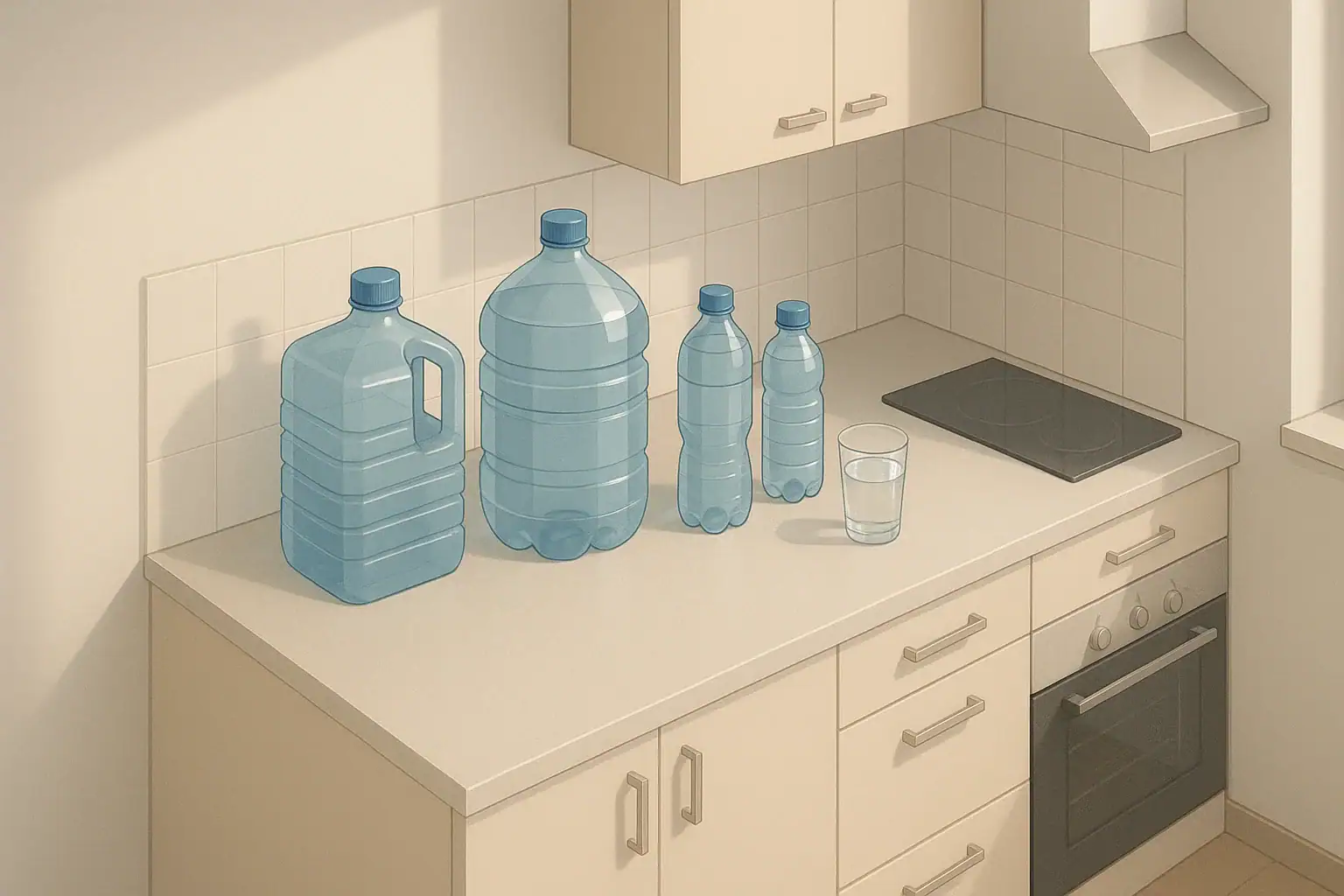
Why Every Apartment Needs a Simple Water Outage Plan
Water outages in apartments are usually short and localized, but they are disruptive. A broken main, planned maintenance, winter pipe breaks, or a nearby construction accident can leave your faucets dry with little notice. In high-rise buildings, pump failures or power outages can also interrupt water to upper floors even when the rest of the neighborhood still has water.
An apartment water outage plan does not need to be complicated or expensive. It focuses on three essentials:
- Safe drinking and cooking water
- Toilet use and basic sanitation
- Handwashing and simple hygiene
This guide is written for renters and small-space households in the U.S., including families, older adults, and pet owners. The goal is calm, practical readiness for outages lasting from a few hours up to several days.
How Much Water to Plan For in an Apartment
Planning starts with estimating how much water you want to have on hand. In a small space, the goal is to store enough for a realistic short disruption, not to stockpile for months.
General planning targets
Common preparedness guidance suggests planning around a few gallons of water per person per day. In a compact apartment, many people aim for a smaller, manageable buffer first and build from there. For example, you might start by planning enough for 2–3 days, then increase if space allows.
Think in terms of three groups:
- Drinking and cooking: Your top priority. This is the portion you keep as clean and protected as possible.
- Hygiene: Handwashing, sponge baths, brushing teeth, and cleaning dishes with minimal water use.
- Toilet flushing: Optional in very short outages if building plumbing is affected, but useful when drains are working and you have extra water.
Factors that increase water needs
Consider increasing your buffer if any of these apply:
- Hot climate or summer heat waves
- Infants who need formula mixed with water
- Older adults or people who are sensitive to heat
- Pets that stay indoors and rely entirely on you for water
- Medications or daily routines that require extra water (such as cleaning medical devices)
Space-aware storage ideas
If your apartment is small, distribute stored water where it is safe and out of the way:
- On lower pantry or closet shelves (sturdy and close to the floor)
- Under beds in low, stackable containers
- In an entryway closet or coat closet corner
Ensure water is stored in clean, food-safe containers with tight-fitting lids. Keep containers away from direct sunlight and sources of heat.
Example values for illustration.
| Task | Why it matters | Notes |
|---|---|---|
| Decide on a 2–3 day water goal | Gives you a realistic target for small spaces | Adjust later if you have more room |
| Count people and pets in the home | Prevents underestimating total water needs | Include regular visitors if they stay often |
| Choose storage locations | Reduces clutter and tripping hazards | Use low shelves, closets, and under-bed space |
| Set aside a “drink only” stash | Protects your safest water for consumption | Label caps or keep in a separate spot |
| Gather basic hygiene supplies | Makes low-water handwashing easier | Soap, hand sanitizer, washcloths |
| Plan toilet backup options | Avoids scrambling when plumbing is affected | Review building rules and local guidance |
| Write a simple outage checklist | Helps everyone in the household know what to do | Keep it with your emergency supplies |
Drinking and Cooking Water During an Outage
Safe drinking water is your top priority. In most apartment outages, the main concern is availability, not contamination. However, water quality can sometimes be uncertain during repairs, so having a plan is helpful.
Before an outage: build a small buffer
When building your at-home water buffer, focus on containers you can manage and store easily:
- Use clean, food-grade containers with tight lids.
- Fill and date containers, and rotate them on a regular schedule, such as every few months.
- Keep a portion in smaller bottles or jugs that are easy to grab during an evacuation.
Label some containers mentally or physically as “for drinking and cooking.” Use other containers for hygiene and toilet flushing if needed.
When you get a warning about an outage
If your building or water utility announces planned work:
- Fill pitchers, pots, and clean containers with tap water.
- Fill the refrigerator with a few extra containers of water to keep some cool.
- Cook foods that require more water before the outage and save leftovers safely.
Avoid overfilling fragile shelves or placing heavy water containers where they could fall.
Using stored water wisely
During the outage:
- Prioritize plain drinking water first, then cooking, then hygiene.
- Use low-water recipes: foods that need little or no added water and minimal dishwashing.
- Use disposable or easy-to-wipe dishes if you have them, to reduce washing needs.
If water quality is in doubt
Occasionally, outages may be followed by advisories to avoid drinking tap water or to boil before use. Follow local instructions if they are issued for your area.
You can also keep basic home treatment supplies on hand such as:
- Simple filtration devices intended for household or camping use
- Household bleach for disinfecting water if recommended by guidance you trust
Always follow product directions and local public health advice for any treatment method. Do not rely on improvised methods without clear, trustworthy instructions.
Toilets and Waste in an Apartment Without Running Water
Managing toilet use in an apartment during a water outage is mainly about safety, odor control, and respecting building plumbing limits. Your approach depends on whether your building’s sewer lines and venting are still functioning normally.
Check what is safe to flush
In many outages, toilets can still be used with manual flushing if sewer service is intact. However, if the problem involves sewer backups, flooding, or serious building damage, flushing may be discouraged or unsafe. Pay attention to:
- Messages from building management or maintenance
- Local emergency updates if an area-wide issue is happening
If the building has power but water service is interrupted, the main issue is often just refilling the toilet tank.
Manual “bucket flush” method
When drains are working but there is no running water, some households use a bucket flush approach:
- Pour several quarts of water quickly into the toilet bowl (not the tank).
- The sudden flow usually triggers a gravity flush.
Use this sparingly to conserve water. Reserve flushes for solid waste when possible. Do not use water that might contain harsh cleaning products or debris that could damage plumbing.
If flushing is not recommended
If you are told not to flush, or you suspect sewer lines are not working properly, treat your toilet as a sealed container instead of a working fixture:
- Line the toilet bowl or a dedicated container with a strong trash bag.
- After each use, add some absorbent material (such as a small amount of kitty litter or another dry material) if available.
- Seal the bag securely and store it temporarily in a designated bin or location, following local trash guidance once regular collection resumes.
Check your building rules and local waste guidelines ahead of time, if possible, so you know what is allowed.
Odor and cleanliness tips
In a small apartment, odor control matters for comfort:
- Keep a supply of trash bags rated for higher weight.
- Store a small amount of absorbent material if you have pets that use litter.
- Use mild cleaners or disinfectant wipes for regular wipe-downs of high-touch surfaces.
Wash or sanitize your hands thoroughly after handling any waste bags, even if you used gloves.
Low-Water Hygiene and Handwashing
Hygiene during a water outage is about keeping hands, faces, and key surfaces reasonably clean without using your entire stored water supply.
Hand hygiene without running water
Handwashing is especially important before preparing food, before eating, and after using the toilet.
- Store soap and hand sanitizer in your kit.
- If you have limited water, create a small “handwashing station” using a pitcher or container that pours in a thin stream.
- Wet hands, turn off the flow, lather thoroughly, then use a small amount of water to rinse.
Use sanitizer on visibly clean hands when soap and water are not available, following label directions.
Quick body cleaning
For short outages, sponge baths are usually enough:
- Use a small basin with a modest amount of warm water if you can heat it safely.
- Wash priority areas with a washcloth and soap, then use a second cloth to rinse with minimal water.
- Use wipes if you keep them on hand, following disposal instructions and avoiding flushing.
Focus on staying reasonably comfortable rather than completely replicating a normal shower routine.
Dishes and kitchen cleanup
Kitchen hygiene helps avoid odors and pests:
- Scrape dishes thoroughly before washing so you need less water.
- Wash in a small basin with soapy water, then rinse quickly in a second basin.
- Air-dry dishes rather than towel-drying.
If water is extremely limited, consider using fewer dishes, shared containers, or disposable items you already own.
Special Considerations: Kids, Older Adults, and Pets
Different household members may need special planning for comfort and safety during a water outage.
Planning for children
For children, especially younger ones:
- Set aside extra drinking water to allow for spills.
- Keep simple, low-water snacks on hand that do not need cooking.
- Explain the outage in simple, reassuring terms and involve them in easy tasks like handing you a washcloth or counting stored bottles.
If your child uses formula, be sure you have an adequate supply of both formula and safe water stored for mixing, plus a way to clean bottles with minimal water.
Planning for older adults or mobility challenges
Older adults or anyone with limited mobility may need:
- Water stored in smaller containers that are easy to lift and pour.
- A stable chair or surface near the sink or “handwashing station.”
- A simple plan for getting help if the outage lasts longer than expected, such as calling a relative or neighbor.
Consider keeping frequently used hygiene items (toothbrushes, wipes, washcloths) at a reachable height and in one basket during an outage.
Planning for pets
Pets depend on you for all their water needs:
- Store a dedicated amount of water for each pet.
- Keep pet bowls clean to avoid attracting insects or causing odors.
- Plan a simple way to clean litter boxes or pet waste areas with minimal water.
For small animals that need water bottles or specific enclosures, consider having a backup bottle and a small supply of cleaning supplies ready.
Example values for illustration.
| People and pets | Days to plan for | Storage approach | Rotation cue |
|---|---|---|---|
| 1 adult | 2–3 days | Several small bottles in a closet | Check at the start of each season |
| 2 adults | 3 days | Medium jugs under bed and in pantry | Rotate when you test smoke alarms |
| Family of 3–4 | 3 days | Mix of jugs plus smaller grab-and-go bottles | Review during school breaks or holidays |
| Household with pets | 3 days | Separate container labeled for pets only | Refill when restocking pet food |
| Apartment with limited space | 2 days | Flat, stackable containers under furniture | Rotate on a calendar reminder |
| Roommates | 3 days | Each person keeps a small personal stash | Review at lease renewal or move-in dates |
Putting Your Apartment Water Outage Plan in Writing
A short written plan helps you and anyone you live with act quickly and calmly when the water stops flowing. It also makes it easier to maintain your supplies over time.
What to include in your plan
Keep your plan to one page or less so it is easy to follow. Include:
- Who lives here: Number of adults, children, and pets.
- Where water is stored: List locations like “under bed” or “hall closet.”
- Outage checklist: Simple steps such as filling extra containers, switching to low-water meals, and checking toilet guidance from building management.
- Contact list: Building office number, maintenance, and a couple of trusted family or friends nearby.
Store this plan with your emergency supplies or on the inside of a cabinet door where all household members can find it.
Practice and review
Once or twice a year, do a brief review:
- Check that stored water containers are intact and not leaking.
- Rotate water according to the schedule you chose.
- Update contact information and add any new medications, pets, or household members to your notes.
This light maintenance keeps your apartment water outage plan realistic, comfortable, and ready for the kinds of short-term disruptions that are most likely to affect everyday renters.
Related guides: No-Running-Water Morning Routine: Hygiene, Coffee, and Cleanup · Low Water Pressure After an Outage: What to Check Before Using Stored Water.
Authoritative sources
Safety recommendations can change. Confirm critical details with current official guidance and local authorities.
- US EPA: Emergency Disinfection of Drinking Water
- USDA FSIS: Keep Food Safe During Emergencies
- CDC: Guidelines for Cleaning Safely After a Disaster
Frequently asked questions
How much drinking water should I store per person for an apartment water outage plan?
Emergency guidance commonly recommends about 1 gallon per person per day for drinking and basic cooking. For a compact apartment buffer, plan for 2–3 days (2–3 gallons per person) and increase that amount if you have infants, pets, hot weather, or medical needs.
Where is the safest place to store emergency water in a small apartment?
Store water in clean, food-grade containers with tight lids and keep them on low, sturdy shelves, under beds, or in closets away from direct sunlight and heat. Distribute containers so you avoid heavy loads on fragile shelving and make bottles easy to reach in an evacuation.
Can I still flush toilets during a water outage and how does a manual flush work?
If the building sewer and drains are functioning, you can often perform a manual bucket flush by pouring several quarts of water quickly into the toilet bowl to trigger a gravity flush; use this sparingly to conserve water. If management or local officials warn of sewer backups or advise not to flush, follow their guidance and use lined bags or a dedicated sealed container for waste until normal service resumes.
What practical hygiene methods work when water is limited?
Keep hand sanitizer and soap available, set up a pitcher-style handwashing station that pours a thin stream for efficient rinsing, and use sponge baths or disposable wipes for quick body cleaning. Prioritize handwashing before food preparation and after using the toilet to reduce infection risk while conserving water.
How often should I rotate stored water and review my apartment water outage plan?
Check containers visually and rotate drinking water every 6–12 months or according to the container manufacturer’s guidance. Review your written plan, contacts, and supplies once or twice a year and after changes such as adding a pet, a household member, or new medications.
- Simple checklists and realistic planning
- Water, power, lighting, and pantry basics
- Family plans (kids, pets, seniors) and seasonal prep
Affiliate disclosure
As an Amazon Associate, we earn from qualifying purchases. Some links on this site may be affiliate links. If you buy through these links, we may earn a small commission at no extra cost to you. This helps support our content. Learn more.