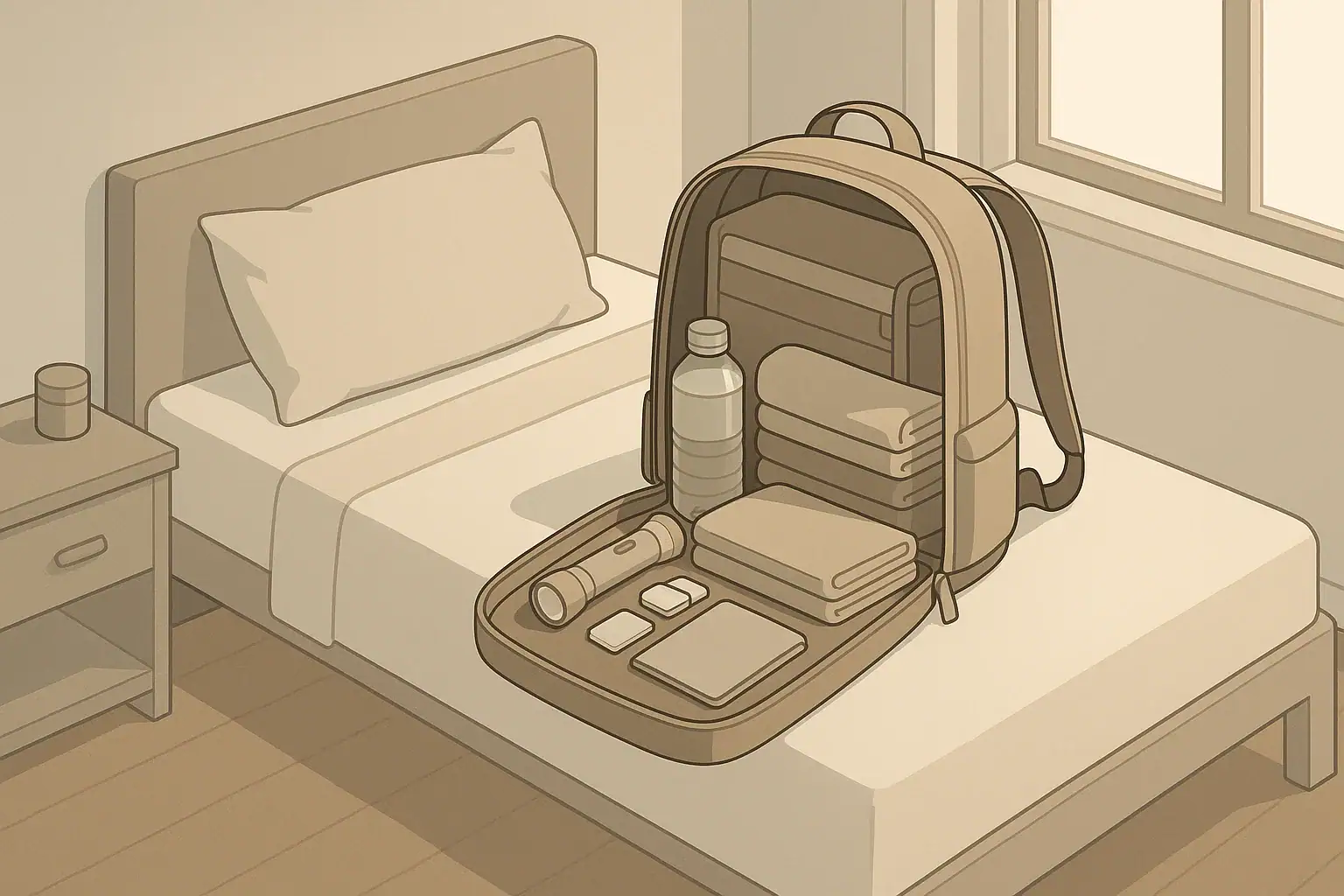
Why a Minimalist Go-Bag Matters in a Small Space
A go-bag is a small, grab-and-go kit that covers your basic needs for a short evacuation or disruption, usually for about one to three days. For people living in apartments, shared housing, or tiny homes, the challenge is fitting useful gear into very little storage space.
A minimalist go-bag focuses on compact, multi-use items that help you handle realistic situations, such as:
- Leaving quickly during an apartment fire or building issue
- Spending a night elsewhere after a power or water disruption
- Reaching a friend’s or family member’s home during a storm or outage
The goal is not to prepare for every scenario, but to make it easier and safer to leave home on short notice without overpacking. In a small space, a lean, well-planned kit is more useful than a large, cluttered one you can’t easily store or carry.
Choosing the Right Bag for Tight Living Quarters
Before deciding what to pack, choose a bag that suits your body, your home, and your likely transportation options. In small spaces, the bag itself should be compact and easy to stash.
Bag types that work well in apartments
- Small backpack (daypack size): Easy to carry on foot or public transit, keeps hands free, and fits in closets or under beds.
- Convertible duffel-backpack: Good if you may carry heavier items occasionally; can slide under furniture.
- Compact rolling bag: Useful if you have limited ability to carry weight, though less ideal on stairs or broken sidewalks.
Key features to look for
- Comfortable straps and handles: You may walk farther than planned; padding and fit matter.
- Simple internal organization: A few pockets or pouches help you find essentials quickly.
- Neutral color: Attracts less attention and looks ordinary in public spaces.
- Compact size: Aim for something closer to a school backpack than a large hiking pack to keep weight under control.
If you share a small space, consider one modest go-bag per adult instead of a single oversized family bag. Each person can then carry their own essentials while keeping total bulk manageable.
Example values for illustration.
| If this is you… | Then consider… | Why it may fit |
|---|---|---|
| Upper-floor apartment, frequent stairs | Small backpack | Easier to carry on stairs and in crowded hallways |
| Limited back/shoulder strength | Compact rolling bag | Reduces strain if sidewalks and elevators are available |
| Use public transit regularly | Daypack with slim profile | Less bulky on buses and trains, fits under seats |
| Share a studio with partner | Two smaller backpacks | Spreads weight, easier shared carrying |
| Caregiver for a child | Adult backpack plus small child bag | Separates adult essentials from kid comfort items |
| Need quick, discreet storage | Plain, neutral-colored bag | Blends in, stores easily in closets or under beds |
Minimalist Packing Order: What to Add First
In a small space, it helps to pack in order of importance. Start with the smallest, highest-impact items, then add bulkier gear only if you still have room and can comfortably carry the weight.
Tier 1: Identification, basics, and information
These items take up very little room but are critical in most situations.
- Copies of key documents: Keep paper copies in a waterproof sleeve and secure digital copies on a password-protected device or storage. Focus on IDs, insurance details, and any essential contact information.
- Small amount of cash: A modest mix of small bills can help if electronic payments are unavailable.
- Written contact list: Phone numbers and addresses of close contacts and an out-of-area contact, in case phones or cloud access are limited.
- Compact notepad and pencil: Useful for messages, directions, or tracking basic information.
Tier 2: Water and simple snacks
Water and calories matter, but storage space and weight are limited in small homes. Think of your go-bag as a short bridge to safer, more stable conditions.
- Refillable water bottle: A sturdy, reusable bottle you can carry empty in daily life and fill when needed saves space compared with stocking many disposable bottles.
- Compact water treatment option: For example, water treatment tablets or a small, simple filter. These are light and can be helpful if clean water access is uncertain.
- Lightweight, non-perishable snacks: Items like simple bars, nuts, or dry snacks that tolerate temperature changes. Choose foods you normally eat to simplify rotation.
Tier 3: Light, communication, and basic power
Power outages and poor lighting are common parts of many short emergencies. Compact items are often enough.
- Small flashlight or headlamp: Prefer something lightweight with a simple on/off switch.
- Spare batteries: Store in their original packaging or a small case to protect from short circuits.
- Portable power bank: Helps keep a phone charged for maps, messages, and information. Charge it periodically.
- Whistle: A simple signaling option takes almost no space.
Tier 4: Clothing layers for comfort and safety
Clothing can quickly fill a bag. Focus on layers and items that dry quickly and pack small.
- One full change of clothes: Lightweight, season-appropriate base layer (top, bottom, underwear, socks).
- Compact extra socks: Dry feet can prevent discomfort when walking longer distances.
- Packable outer layer: A thin jacket, rain layer, or sweater that compresses into a small space.
- Simple hat or beanie (seasonal): Helps regulate temperature with very little bulk.
Tier 5: Minimal hygiene and sanitation items
Hygiene supplies do not need to be large. A few basics can make a big difference in comfort and cleanliness.
- Travel-size soap or wipes: For quick cleaning when water access is limited.
- Small hand sanitizer: Choose a leak-resistant container; place in a resealable bag.
- Toothbrush and travel-size toothpaste: Or dry toothpaste tablets to reduce leak risk.
- Compact toilet tissue or tissues: Flattened roll or small packs in a waterproof bag.
- Menstrual supplies (if needed): Pack what you typically use, in a separate pouch.
Tier 6: Simple first-aid basics
A minimalist first-aid setup focuses on minor cuts, blisters, and discomfort. For serious medical concerns, follow your healthcare provider’s guidance and local emergency instructions.
- Assorted adhesive bandages: A few sizes for small cuts and blisters.
- Small roll of gauze or sterile pads: For slightly larger wounds.
- Antiseptic wipes: For cleaning minor cuts and scrapes.
- Non-latex gloves: A pair or two for basic protection when helping others.
- Personal medications: A small, labeled supply of regularly used prescription medications, if possible, with guidance from your healthcare provider.
Tier 7: Comfort and personal needs
Once the essentials are in place, add a few items that make evacuation less stressful, especially for children, older adults, or anyone with specific needs.
- Simple comfort item: Such as a small toy, photo, or other familiar object if packing for a child.
- Earplugs and eye mask: Useful in shelters or shared spaces.
- Basic face coverings: Can help with dust or crowded indoor settings.
- Spare glasses or contact lens supplies: If you rely on them.
Adapting a Go-Bag for Apartments, Families, and Pets
Preparedness looks different in a studio apartment than in a large house. The same is true for families with children, roommates, or pets. The key is to adjust your minimalist go-bag to your actual living situation without adding unnecessary bulk.
For apartment and condo living
In multi-unit buildings, evacuations can happen quickly because of fire alarms, plumbing issues, or structural concerns. Consider:
- Key access: Include a spare key, access card, or code reminder for your building, if appropriate.
- Stair-friendly packing: Keep the bag light enough to carry comfortably down several flights of stairs.
- Noise and crowd planning: Earplugs or a simple audio distraction for kids may help in busy hallways or shelters.
For roommates and shared households
If you share your home, it may be unrealistic to create a complete go-bag for every person right away. Instead:
- Assign roles: For example, one person focuses on documents and information, another on shared hygiene items, another on lighting and small tools.
- Mark grab items: Use a small list near the door with a few things to grab if time allows (such as laptops or a small lockbox).
- Store bags together: Keep go-bags in the same area so everyone can locate and grab them quickly.
For children and older adults
For family members who may not be able to carry much weight, prioritize comfort and personal essentials.
- Lightweight child bag: Include a small water bottle, snack, and a familiar comfort item.
- Adult-managed essentials: An adult carries most of the shared gear, including documents and extra water.
- Mobility aids: If a cane, walker, or other device is used daily, plan how it would be transported during an evacuation.
For pets in small spaces
Pets are part of the household and need their own small set of essentials. In tight quarters, aim for a separate, very small pet kit that can clip onto or sit inside your main bag.
- Collar and leash: Keep an extra set with ID information.
- Compact pet food portion: A small, sealed bag or container with a short-term supply.
- Collapsible bowl: Takes very little space and works for water and food.
- Waste bags or litter solution: A few waste bags for dogs, or a small disposable setup for cats if space allows.
Storing, Rotating, and Practicing with Your Go-Bag
A minimalist go-bag only helps if you can reach it quickly and its contents still work when you need them. In a small home, you’re balancing access with keeping clutter under control.
Smart storage in small homes
Choose a spot that is easy to explain to every household member and reachable even in the dark.
- Near the main exit: A low shelf in a closet near the door, or under a bench by the entryway.
- Under-bed storage: Works well in studios; attach a visible tag or strap to pull it out quickly.
- On a closet hook: Hanging a backpack keeps floors clear and places the bag at eye level.
Rotation and simple maintenance
Many go-bag items last a long time, but food, batteries, and some hygiene products need periodic checks. Keep this simple and regular.
- Set a calendar reminder: Every six or twelve months, review your bag.
- Swap snacks and any expiring items: Eat or use items before they expire and replace them with fresh ones you already buy.
- Recharge power banks: Top them up during your review so they are ready when needed.
- Check clothing size and season: Adjust children’s clothing and swap seasonal layers as needed.
Practice carrying and using your bag
Even a small go-bag can feel heavy after several blocks. Practicing with it helps you fine-tune what you carry.
- Short test walk: Take a brief walk around your building or block with the packed bag. Remove or adjust items if it feels too heavy or awkward.
- Quick access drill: Practice finding your flashlight or documents in low light so you know where everything is.
- Family walk-through: Show household members where the bag is stored and what it looks like so anyone can grab it if needed.
Example values for illustration.
| Food type | Storage tip | Rotation interval idea | No-cook use |
|---|---|---|---|
| Granola or energy bars | Store in a small, labeled pouch in the bag | Check every 3–6 months | Eat directly as a quick snack |
| Unsalted nuts or seeds | Keep in sealed single-serve bags | Rotate every 3–6 months | Eat by handful for calories and protein |
| Dried fruit | Use small resealable bags to prevent sticking | Check every 3–6 months | Eat alone or mix with nuts |
| Crackers | Choose sturdy types, store in hard-sided container | Rotate every 2–4 months | Eat plain or with shelf-stable spreads |
| Nut or seed butter packets | Keep in an inner pouch to avoid mess | Check every 6–12 months | Squeeze onto crackers or eat directly |
| Instant oatmeal packets | Store in a waterproof bag | Rotate every 6–12 months | Can soak in cool water if hot water unavailable |
Keeping a Minimalist Mindset Over Time
A minimalist go-bag for small spaces is an ongoing, low-pressure project. Instead of buying everything at once, build it gradually with items you already use, adding a piece or two as your budget and space allow.
Review your bag when seasons change or after any event where you needed to leave home unexpectedly. Notice what you used, what you wished you had, and what never left the bag. Adjust your packing list so your go-bag stays lean, realistic, and easy to carry.
With a thoughtful, compact kit in place, you increase your options during short-term disruptions without giving over your home to storage. The result is quiet confidence: you know where your essentials are and can move quickly when you need to, even in the smallest apartment.
Authoritative sources
Safety recommendations can change. Confirm critical details with current official guidance and local authorities.
- US EPA: Emergency Disinfection of Drinking Water
- USDA FSIS: Keep Food Safe During Emergencies
- U.S. CPSC: Battery Safety
Frequently asked questions
How much water should I include in a minimalist go-bag for small spaces?
For short evacuations, include at least one liter per person as a minimum; if space allows, carry two liters for added flexibility. Because water is bulky, a compact water-treatment option (tablets or a small filter) lets you refill from available sources safely. Rotate stored water and test treatment options periodically.
Where is the best place to store a go-bag in a tiny apartment so it’s accessible but not in the way?
Store the bag near your main exit—on a low closet shelf by the door, under a bench in the entryway, or hung on a closet hook for visibility. Attach a visible tag or strap if it’s under bed storage so you can pull it quickly in the dark. Make sure all household members know the location.
Can I rely solely on my smartphone instead of packing items like a power bank or flashlight?
Relying only on a smartphone is risky because batteries drain and networks can be overloaded. A small power bank and a simple flashlight or headlamp are compact, inexpensive backups that significantly increase your options. Also consider spare batteries for dedicated lights if your flashlight requires them.
How can I include pet essentials without adding too much bulk to a small-space go-bag?
Create a tiny pet kit that clips onto or nests inside your main bag containing an extra collar with ID, a short sealed portion of food, a collapsible bowl, and a few waste bags. Keep the pet kit lightweight and refillable so you can replace items from your regular pantry when you rotate supplies. This approach keeps pet needs separate but easy to grab.
How often should I check and rotate items in a minimalist go-bag for small spaces?
Set a simple schedule to review your bag every six to twelve months: check food expiration dates, medication supplies, battery condition, and power-bank charge. Also inspect seasonal clothing and swap sizes for children as needed. Review after any use or household change to keep the kit practical and tidy.
- Simple checklists and realistic planning
- Water, power, lighting, and pantry basics
- Family plans (kids, pets, seniors) and seasonal prep
Affiliate disclosure
As an Amazon Associate, we earn from qualifying purchases. Some links on this site may be affiliate links. If you buy through these links, we may earn a small commission at no extra cost to you. This helps support our content. Learn more.