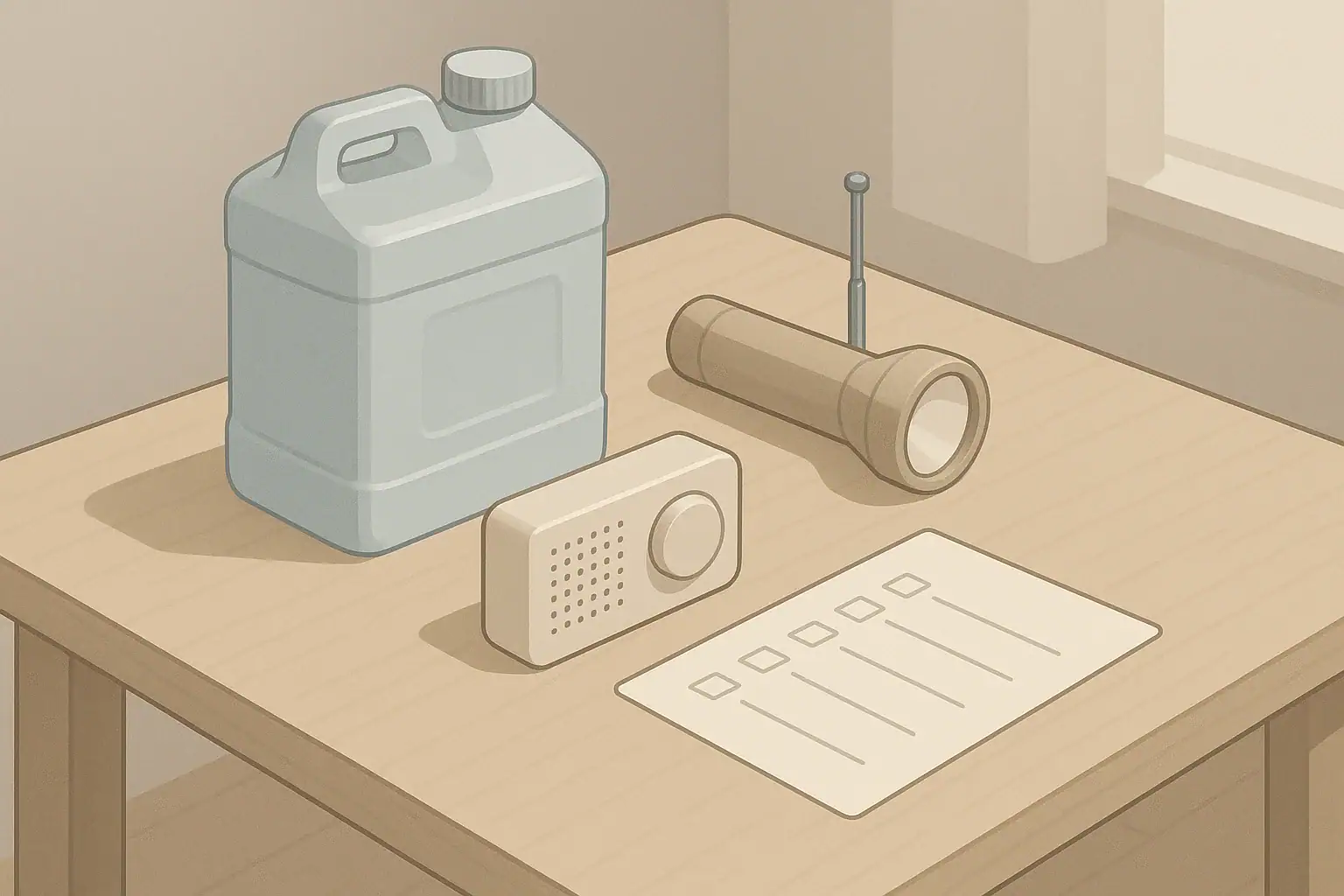
Why Emergency Preparedness Matters in Small Spaces
Principles of Small-Space Emergency Storage
Before choosing containers or rearranging closets, it helps to set some simple rules for what you store and how.Prioritize by Timeframe: 72 Hours First
A realistic goal for small homes is to first plan for about three days of disruption, such as:- Local power outages
- Short-term water service issues or boil notices
- Storms that make it hard to go out safely
- Smoke or poor air quality keeping you indoors
Choose Compact, Multiuse Items
In small spaces, every item should earn its place. Look for items that:- Serve more than one purpose (for example, a blanket that works for warmth and as a privacy curtain)
- Stack, nest, or collapse (folding basins, nesting containers, compact lanterns)
- Fit inside other items (kits inside bins, tools in pouches attached to bags)
Think Vertical, Hidden, and Mobile
When floor area is limited, storage planning becomes three-dimensional:- Vertical: Use shelves, the space above cabinets, and behind-door organizers.
- Hidden: Under-bed bins, the back of closets, and inside furniture with storage.
- Mobile: Rolling carts or bins that can move out of the way during daily life.
| If this sounds like you… | Prioritize this first | Why it helps in small spaces |
|---|---|---|
| Studio or shared room with very limited storage | Compact go-bag and small water plan | Essentials stay portable and do not overwhelm your room. |
| Apartment with one closet and under-bed access | Under-bed bins for food and water | Uses hidden, unused space while staying reachable. |
| High-rise building with frequent short power outages | Lighting and phone charging kit | Maintains communication and navigation in dark hallways. |
| Ground-floor unit in storm or flood-prone area | Elevated storage and quick-grab bag | Keeps essentials off the floor and easy to carry. |
| Household with kids or older adults | Labeled, simple kits by need | Makes it easier for everyone to find what they need quickly. |
| Pet owners in pet-restricted shelters area | Compact pet kit near carrier | Helps you leave quickly with basic pet supplies together. |
Storing Water When You Do Not Have a Garage
Water storage is one of the hardest parts of preparedness in a small home, but some water is better than none. Aim first for a modest, realistic amount you can actually store and maintain.Compact Water Storage Ideas
Instead of large barrels, consider smaller containers you can spread around your space:- Stackable containers: Store in a closet corner, along a wall, or behind a couch.
- Under-bed containers: Low, flat containers can hold sealed bottles or jugs.
- Cabinet space: Reserve part of a kitchen or hallway cabinet for stored water.
Supplement with Treatment Options
Because you may not be able to store large volumes of water, consider simple treatment methods as a backup if safe water sources are available:- Basic home water filters suitable for everyday use
- Treatment tablets or drops stored in a small, labeled pouch
- Boiling water on a safe heat source if you have one and it is advised
Where to Put Water in a Small Home
Spread water storage so it stays accessible and does not dominate any one area:- Under the bed for heavier containers
- Bottom shelves of a hallway or bedroom closet
- A small tote near the door reserved for quick-grab bottles
Food and Pantry Readiness Without a Dedicated Pantry
Apartment kitchens and shared housing often lack large pantries, but you can still keep a modest emergency food supply. The key is to choose familiar foods your household already eats and rotate them into regular meals.Choose Shelf-Stable, No- or Low-Cook Foods
Focus on items that are:- Non-perishable and stable at room temperature
- Easy to eat straight from the package or with minimal heating
- Simple to open with basic tools
- Canned beans, vegetables, fruit, and simple proteins
- Nut butters and shelf-stable spreads
- Dry snacks like crackers, oats, or granola
- Shelf-stable milk or milk alternatives
Use Micro-Pantries Throughout the Home
Instead of one large pantry, create small “micro-pantries” in several spots:- Kitchen: A single cabinet shelf with emergency food that you rotate.
- Living area: A lidded bin used as a side table, storing extra dry goods.
- Bedroom: Under-bed tote with snacks and meal basics, especially if you share a kitchen.
Rotate Food Without Extra Work
To avoid waste:- Place newer items behind older ones so you use the oldest first.
- Write a simple reminder to check your emergency food every few months.
- Include some foods that do not require cooking in case you cannot safely use a stove.
Lighting and Safe Power Options in Tight Quarters
In a small space, safe lighting and simple backup power options can make short outages much easier to handle. The priority is safe, stable lighting and a way to keep essential devices charged.Compact Lighting Storage
Consider keeping several small light sources instead of one large one:- A lantern stored in a hallway or main living area
- A small light in each bedroom, such as on a nightstand or in a drawer
- One extra light in your go-bag or quick-grab kit
Backup Power Planning for Small Homes
Not all homes can use larger generators or fuel-based devices, especially in multi-unit buildings. For many small-space residents, options may include:- Portable battery packs for charging phones and small electronics
- Small, indoor-safe power stations where building rules allow
- Simple solar charging panels that can be placed safely near windows if appropriate
Where to Store Power Items
Keep backup power supplies:- Off the floor, in a dry, ventilated area
- Near your main living space where you can reach them in the dark
- Partially charged according to manufacturer guidance, and check them periodically
Go-Bags and Quick-Grab Kits for Apartments
In some situations, staying home is safest. In others, you may need to leave temporarily. A go-bag helps you leave quickly with basics, while a quick-grab kit stored at home supports short disruptions when you stay in place.Design One Bag per Person
Each person’s bag should be sized so they can reasonably carry it. In small homes, bags often double as everyday backpacks stored near the entry, under a coat rack, or in a closet. Common items to consider include:- Copies of key documents stored safely and securely
- Basic clothing layers and socks
- Small hygiene items such as toothbrush, soap, and tissues
- A compact flashlight and batteries or a small rechargeable light
- Snacks and a small amount of water
Quick-Grab Shelf or Bin
Besides go-bags, a small quick-grab area near the main exit can save time. Use a basket, shelf, or shallow bin for items such as:- Keys and basic contact information
- Pet leash and carrier
- Small first-aid supplies
- Face coverings or simple dust masks
Kids and Pets in Small-Space Kits
For households with kids:- Include a comfort item such as a small toy or game.
- Pack simple snacks they already like.
- Involve them in checking their bags occasionally so they know where items are.
- Store food in sealed containers in a small bin or bag.
- Keep a spare leash, collar, and waste bags with your quick-grab area.
- Know where your pet’s carrier is and keep it accessible, not buried in a closet.
Using Hidden and Multiuse Storage Spots
Many small homes have more storage potential than first appears. The key is to use overlooked spaces and combine functions so preparedness supplies do not dominate everyday living areas.Under-Bed and Furniture Storage
Under-bed space is valuable for bulky but light items:- Store water in low, sturdy bins or cases.
- Keep extra blankets, layers, and seasonal clothing in vacuum or compression bags.
- Place rarely accessed items toward the center, with more frequently checked kits along the edges.
Behind Doors and On Walls
Vertical space can hold a surprising amount:- Over-the-door organizers: Use for small items like batteries, hygiene supplies, and basic tools.
- Wall shelves: Place higher up in hallways or closets for light, infrequently accessed items.
- Hooks and pegboards: Keep go-bags, jackets, and small kits off the floor.
Shared Storage in Roommate Situations
If you share a home:- Agree on one common shelf or cabinet for shared emergency items.
- Label bins so everyone knows what belongs to the household versus individual bags.
- Keep a simple written inventory taped inside the cabinet or bin lid.
| Food type | Storage tip | Rotation interval idea | No-cook use example |
|---|---|---|---|
| Canned beans | Store upright in a shallow bin under a shelf. | Use and replace every few months. | Rinse and mix with seasoning for a quick salad. |
| Canned fruit | Keep together in one small crate in a cabinet. | Swap into regular breakfasts a few times per year. | Eat directly from the can with a utensil. |
| Crackers or dry snacks | Seal in airtight bags inside a lidded box. | Rotate by using older packages on movie nights. | Pair with nut butter or spreads for simple meals. |
| Nut butter | Store at the back of a cool cabinet shelf. | Replace during normal grocery trips when opened. | Eat with crackers or fruit for quick calories. |
| Oats or instant cereals | Use containers that fit upright on narrow shelves. | Cycle through during colder months. | Soak in clean water or milk alternative if heating is limited. |
| Shelf-stable milk alternatives | Stand cartons in a single row in a cool spot. | Use oldest cartons in smoothies or baking. | Drink alone or with cereal without heating. |
Simple Maintenance Routines for Lasting Preparedness
Preparedness is not a one-time project. In small spaces, light, regular maintenance keeps supplies useful without constant effort.Monthly and Seasonal Check-Ins
Consider adding small tasks to existing routines, such as:- Once a month: glance at water and food storage, and confirm nothing has leaked or spoiled.
- At time changes or season changes: test flashlights, charge power banks, and check batteries.
- Before storm seasons in your region: review go-bag contents and adjust clothing layers.
Keep a Simple Inventory
A short list, either on paper or in a note on your phone, can track:- Where key items are stored (for example, water under bed, lights in hallway bin)
- Approximate quantities of water, food, and batteries
- Dates to rotate or replace certain items
Adjust as Your Life Changes
Your storage plan should change as your life does. New roommates, pets, or family members may shift what you store and where. Treat your small-space emergency setup as a flexible system that you adjust over time rather than something that must be perfect on day one. With thoughtful choices and a focus on compact, multiuse items, even the smallest homes can support practical, calm readiness for everyday emergencies.Related guides: 10 Common Preparedness Mistakes (and Easy Fixes) · Moving Into a New Apartment: Emergency Setup Checklist.
Authoritative sources
Safety recommendations can change. Confirm critical details with current official guidance and local authorities.
- CDC: Carbon Monoxide Poisoning Basics
- US EPA: Emergency Disinfection of Drinking Water
- USDA FSIS: Keep Food Safe During Emergencies
Frequently asked questions
How much water should I realistically store for emergency preparedness for small spaces?
As a practical baseline, plan about 1 gallon (3.8 liters) per person per day for drinking and basic hygiene, so a 72-hour kit is roughly 3 gallons per person. In a very small space, store a realistic portion you can maintain and supplement with treatment options like filters or tablets. Prioritize drinking water and label containers with fill dates so you can rotate them.What are the best compact food choices for emergency preparedness in small apartments?
Choose calorie-dense, shelf-stable items that require no or minimal cooking, such as canned proteins, ready-to-eat meals, energy bars, nut butters, and shelf-stable milk alternatives. Pack familiar foods your household already eats so you’ll rotate them into regular use and avoid waste. Store items in small micro-pantries or sealed bins to save space and extend shelf life.Where is the safest place to store batteries and power banks in a small home?
Keep batteries and power banks in a cool, dry, ventilated spot off the floor and away from heat sources or direct sunlight. Store batteries in original packaging or secure holders to prevent short circuits, and follow manufacturer guidance about charge levels for long-term storage. Keep at least one charged power bank accessible near your main living area or go-bag.How can I include pets in a compact emergency preparedness plan?
Maintain a pet kit with a few days’ worth of food in sealed containers, a spare leash or harness, any medications, and copies of vaccination or ID information. Keep the kit near your quick-grab area or carrier so you can leave quickly if needed, and rotate pet food during normal grocery trips to avoid expiry. Also store waste bags and basic comfort items to reduce stress during an evacuation.Can I use a fuel-powered generator or heater inside an apartment?
No—never operate fuel-burning generators, grills, or heaters inside an apartment or other enclosed spaces because they can produce carbon monoxide and pose serious fire risks. Check building rules before using any fuel-based device, and prefer indoor-safe alternatives like battery power stations, portable battery packs, or solar chargers where allowed. If a generator must be used, place it outdoors away from windows and vents and follow all manufacturer and safety instructions.About
ReadyHomePlan
ReadyHomePlan publishes practical home readiness guides for outages and short-term emergencies—power, water, food basics, communication, and family planning—without hype.
- Simple checklists and realistic planning
- Water, power, lighting, and pantry basics
- Family plans (kids, pets, seniors) and seasonal prep
Affiliate disclosure
As an Amazon Associate, we earn from qualifying purchases. Some links on this site may be affiliate links. If you buy through these links, we may earn a small commission at no extra cost to you. This helps support our content. Learn more.