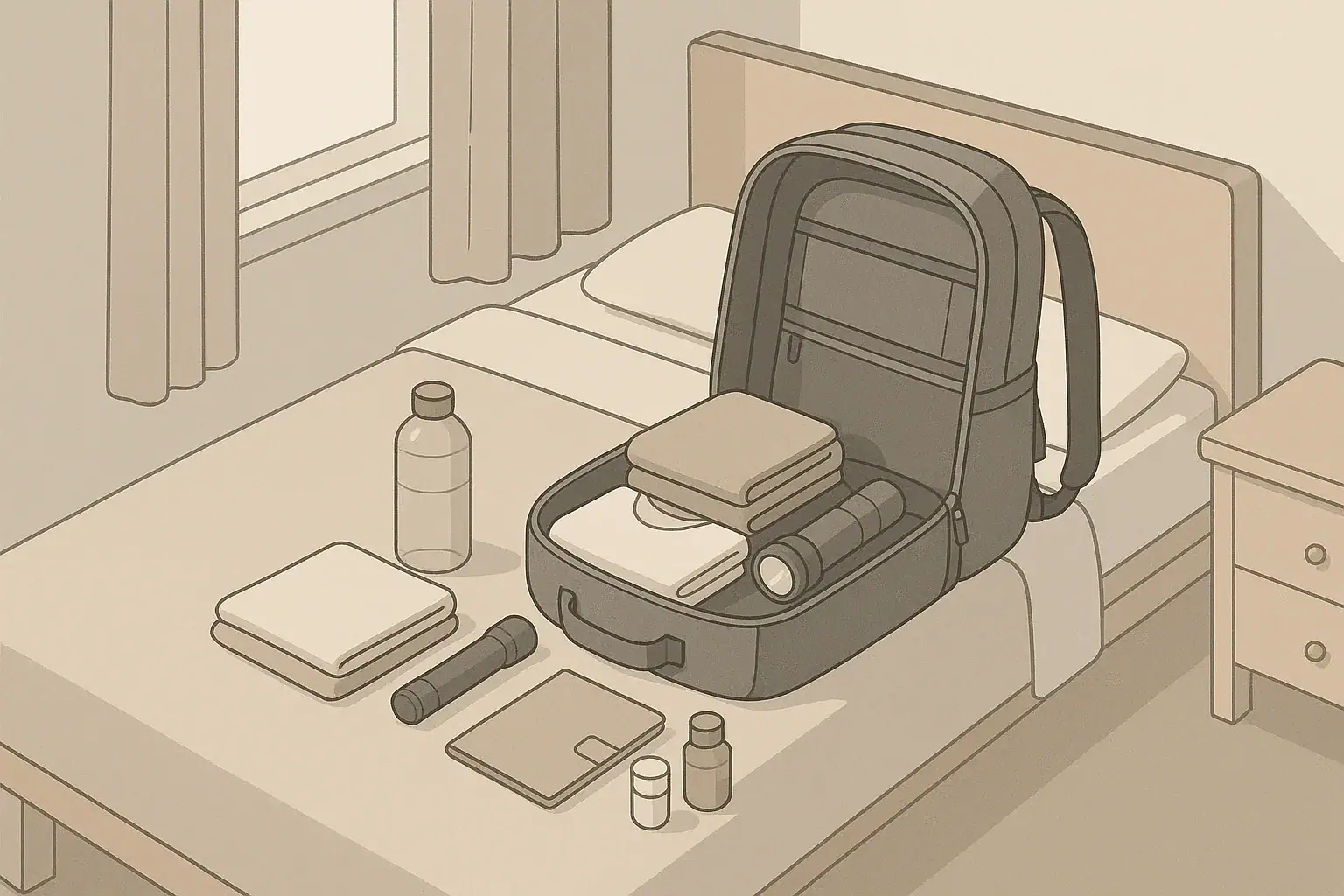
Why Every Household Needs an Evacuation Checklist
Evacuations are most common during events like wildfires, hurricanes, chemical spills, or nearby structure fires. In many cases you have some warning, but not always. A written evacuation checklist helps you move quickly and calmly, even if you feel stressed, tired, or scared.
This guide focuses on typical US households and short-term evacuations: leaving for hours to a few days, possibly longer if conditions worsen. It covers what to shut off, what to secure, and what to pack so you can leave safely and return more easily.
Adjust these lists to your situation, including whether you live in a single-family house, townhome, or small multi-unit building, and whether you rent or own.
What to Shut Off Before You Leave
Shutting off the right things can reduce fire risk, water damage, and food spoilage. In a true life-threatening emergency, your safety comes first. If officials say to leave immediately, do not delay to complete every step. Use this list when time and conditions allow.
Electricity: When to Turn It Off
Power shutoff decisions depend on the type of emergency and official guidance.
- If wildfire or major storm is approaching: Unplug nonessential electronics (TVs, computers, gaming systems, small appliances). This reduces damage from power surges and makes the home safer if debris breaks windows or water enters.
- If flooding is possible: If it is safe and dry to reach, you may switch off individual circuits in areas likely to flood. Do not stand in water to reach your electrical panel.
- If instructed by authorities: If officials or utility providers tell residents to shut off the main breaker, follow their directions carefully.
Many short-notice evacuations do not require you to cut power at the main breaker. Focus first on quickly unplugging nearby devices and turning off obvious heat sources.
Gas: Follow Local Safety Guidance
Gas shutoff rules vary by region and building type. In many areas, gas utilities recommend that residents only shut off gas at the main valve when instructed to do so by officials, or if you smell gas, hear hissing, or see obvious damage to gas lines.
If you have been trained and it is safe to do so, you might:
- Turn off gas appliances (stoves, ovens, fireplaces) at their controls.
- Leave the main gas valve alone unless you have clear instructions to shut it off or you suspect a leak.
Once gas is turned off at the main, a professional often must restore service and relight appliances. This can add delays when you return, so it is usually done only when clearly needed.
Water: Prevent Leaks and Freezing Issues
Water shutoff is most helpful when you may be away for days and there is risk of pipe damage or leaks.
- Short evacuation (hours to a day): Turn off washing machines and dishwashers, and confirm faucets are fully closed.
- Longer evacuation (days or more): If you know where it is and can access it safely, you may shut off the main water valve to the house. This helps prevent leaks from broken pipes, especially in winter storms or after earthquakes.
- If temperatures may drop below freezing in an unheated home: Shutting off water and opening a few faucets slightly can help relieve pressure in pipes. Local building professionals or utility providers often have region-specific guidance.
Appliances and Heat Sources
Before you leave, do a quick walk-through to turn off anything that generates heat or could start a fire.
- Turn off and unplug space heaters.
- Switch off stovetops and ovens; confirm all burners are fully off.
- Unplug small appliances like irons, toasters, coffee makers, and hair tools.
- Blow out candles and extinguish fireplaces or wood stoves according to manufacturer or local fire guidance.
If you have a central heating or cooling system, you can usually leave it on its regular schedule unless advised otherwise. In wildfire smoke or poor air quality events, closing windows and setting the system to recirculate indoor air can help keep outdoor smoke from entering while you are gone.
Example values for illustration.
| Task | Why It Matters | Notes |
|---|---|---|
| Unplug nonessential electronics | Reduces surge damage and fire risk | Focus on TVs, computers, small appliances |
| Turn off stove and oven | Prevents cooking fires while you are away | Visually check all burners are off |
| Switch off space heaters | Lowers fire risk from tipped or overheating units | Unplug portable heaters if time allows |
| Close and lock windows and doors | Improves security and weather protection | Also helps limit smoke or dust entry |
| Shut off water at main (if needed) | Helps avoid leaks during long evacuations | Use mainly for multi-day absences or freeze risk |
| Check for gas smells or hissing | Identifies possible leaks early | If detected, leave and contact gas utility safely |
| Secure garage door | Protects belongings and home access | Disengage automatic opener only if recommended |
What to Secure Before You Go
Securing your home is about safety, weather protection, and making your return smoother. In many emergencies, damage comes from broken windows, blowing debris, or opportunistic theft in areas without power.
Doors, Windows, and Entry Points
Do a quick loop around your home, inside and out, if time and conditions allow.
- Lock all exterior doors, including side and back doors.
- Close and lock ground-floor windows and any that wind-driven rain could reach.
- Close blinds or curtains to keep the interior out of view and help protect from shattered glass.
- In hurricane- or storm-prone areas, install shutters or pre-cut plywood if you have time and it is part of your plan.
- Secure the garage door; if you have a manual lock or slide bolt, consider using it.
Valuables and Important Documents
You do not need to empty your house to evacuate safely. Focus on items that are hard or impossible to replace.
- Place important documents (IDs, insurance information, property records) in a folder that can go directly into your go-bag.
- Store small valuables you are not taking with you out of direct sight, preferably in a non-obvious place.
- Consider taking portable hard drives or small devices that contain irreplaceable photos or files.
Pets and Livestock
Animals should evacuate with you whenever possible. Leaving pets behind can be dangerous for them and may put responders at risk later.
- Secure pets in carriers or on leashes before opening doors or loading the car.
- Leave a note near the main entrance only if advised by local agencies and if it is safe to do so, indicating that pets have been evacuated.
- For backyard animals or small livestock, follow local extension or animal welfare guidance about temporary sheltering or transport.
Indoor Environment
Small steps can protect your home’s interior while you are away.
- Move easily damaged items (electronics, rugs, low furniture) away from windows prone to breaking in wind or from areas likely to leak.
- Clear sinks of dishes and food scraps that might attract pests if power fails.
- Empty kitchen and bathroom trash cans if there is time.
What to Pack in a Home Evacuation Go-Bag
A go-bag is a small, portable kit you can grab quickly. Many households keep one per adult, plus shared items in a bin or duffel. Aim for basics you would need for 24–72 hours away from home, possibly in a shelter, hotel, or with friends or family.
Essential Documents and Information
Keep photocopies or digital copies where appropriate, and store originals safely.
- Identification for each person (such as driver’s license or other ID).
- Basic list of emergency contacts, printed and saved on your phone.
- Key insurance details and policy numbers.
- List of critical account numbers (bank, utilities) without full sensitive details.
- Recent photos of family members and pets in case you are separated.
Water and Simple Food
Evacuations often involve delays, lines, or traffic. Carrying some water and snacks keeps you more comfortable and reduces stress.
- Portable water containers or bottles filled before you leave.
- Simple, non-perishable snacks that do not require cooking, such as plain bars, crackers, or nuts.
- Basic utensils or a small multi-use tool if appropriate.
You may have access to shelters, stores, or aid stations, but having a small supply of your own helps you bridge gaps.
Clothing and Personal Items
Pack light but practical. Think layers and comfort rather than full outfits for each day.
- Change of underwear and socks for each person.
- Comfortable, season-appropriate clothing that can be layered.
- Sturdy shoes or closed-toe footwear.
- Basic toiletries: toothbrush, toothpaste, soap or wipes, simple hairbrush or comb.
- Glasses or contact lenses and supplies, if needed.
Medications and Special Needs
Medication planning is especially important for seniors, children, and anyone with ongoing conditions. Work with healthcare professionals in advance to understand safe storage and backup options.
- Small supply of regularly used medications where possible, following legal and safety guidance.
- List of medications for each person, including doses and prescriber information.
- Simple medical items you routinely use (for example, bandages, basic over-the-counter pain relief if appropriate, or other supplies suggested by your clinician).
- Items for mobility or daily living: spare cane tips, basic repair items for hearing aids or mobility devices.
Light, Power, and Communication Basics
Power and communication may be disrupted during the kind of events that trigger evacuations. A few basic tools make it easier to stay informed.
- Small flashlight or headlamp with spare batteries.
- Portable battery bank for charging phones.
- Car charger for phones and small devices.
- Printed list of emergency contacts in case your phone battery dies or networks are down.
Comfort Items for Kids and Pets
Children and pets often feel stress more intensely in new environments.
- Simple comfort item for each child, such as a small toy or blanket.
- Quiet activities like a small notebook and pencils or a deck of cards.
- Pet food, a collapsible bowl, waste bags, and any regular pet medications.
- Photo of each pet and their description stored both digitally and in print.
Room-by-Room Evacuation Sweep
When time permits, a quick, organized sweep of your home can catch issues you might otherwise miss. Start at one end of the house and move systematically so you do not double back or forget a room.
Kitchen
- Turn off stove, oven, and small appliances.
- Remove trash that may smell or attract pests if power is out.
- Close windows and check locks on doors that open from the kitchen.
- Grab ready-to-eat food and water you set aside for the car.
Bedrooms
- Collect go-bags that may be stored under beds or in closets.
- Grab eyeglasses, hearing aids, or daily-use devices from nightstands.
- Check under beds and in closets for hiding pets, especially cats or small animals.
- Close windows and curtains; confirm doors are shut.
Living Areas
- Unplug entertainment systems and visible electronics if time allows.
- Move fragile items away from windows if strong winds are expected.
- Collect chargers and portable battery packs.
Bathrooms and Laundry Areas
- Turn off running water, including showers or laundry machines.
- Check floors for standing water or leaks; if seen, avoid electrical switches nearby.
- Grab hygiene items you keep in your go-bag, such as wipes or soap.
Garage, Storage, and Vehicles
- Unplug power tools and nonessential equipment.
- Ensure fuel containers are closed and stored upright.
- Place go-bags and bins directly into the car.
- Locate car keys and a spare set kept in a consistent place.
Planning for Different Evacuation Scenarios
Not all evacuations look the same. Planning for a few realistic scenarios helps you adapt quickly.
Sudden vs. Planned Evacuations
Sudden evacuations might follow a fast-moving wildfire, gas leak, or nearby structure fire. You may have minutes, not hours. In these cases, you may only be able to:
- Grab pre-packed go-bags and pets.
- Turn off obvious heat sources if they are right in front of you.
- Lock doors behind you as you leave.
Planned evacuations often occur with approaching storms, slow-moving wildfires, or scheduled utility work. You may have hours or a day or two to prepare. Use that time to:
- Top off fuel in vehicles, if available.
- Refill essential prescriptions following healthcare guidance.
- Freeze or refrigerate perishable foods and move some ice packs to the refrigerator to keep it cool longer.
- Charge power banks and devices.
- Complete more of the shutoff and securing steps described earlier.
Seasonal and Regional Considerations
Adjust your checklist for the most likely events in your area.
- Winter storms: Focus on shutting off water for longer trips, packing warm layers and blankets, and keeping sand or other traction aids in the car.
- Hurricanes and coastal storms: Secure outdoor items that can become windborne, board windows if part of your plan, and plan extra time for traffic.
- Heatwaves: Pack lightweight clothing, sun protection, and extra water, and plan for cooling centers or air-conditioned locations.
- Wildfire smoke: Close windows, consider simple mask options if recommended by local guidance, and be prepared for poor visibility and air quality along routes.
Renters, Apartments, and Shared Buildings
If you rent or live in a multi-unit building, some steps are different.
- Know building policies about evacuations and shutoffs. You may not control gas or main water valves.
- Focus on packing, unplugging, and locking your unit, and following building exit routes.
- Confirm you know where stairwells are; do not rely solely on elevators, especially during fires or power disruptions.
- Coordinate with neighbors who may need extra time or assistance, such as older adults or people with mobility challenges.
Example values for illustration.
| Food Type | Storage Tip | Rotation Interval Idea | No-Cook Use |
|---|---|---|---|
| Canned beans | Store in a cool, dry cabinet | Use and replace every several months | Drain and eat with simple seasonings |
| Nut butter | Keep tightly sealed after opening | Use within a few months of opening | Spread on crackers for quick energy |
| Crackers or plain biscuits | Seal in airtight container once opened | Rotate every couple of months | Pair with canned foods or spreads |
| Shelf-stable milk or milk alternative | Store unopened cartons on pantry shelf | Use before printed date and replace | Drink as-is or with cereal |
| Dried fruit | Keep in sealed bags or jars | Rotate every few months | Eat as a quick snack |
| Instant oatmeal packets | Protect from moisture in sealed bin | Use regularly and restock | Eat with warm water if available |
Making the Checklist Work for Your Household
A written checklist is most helpful when you keep it simple and visible. Consider printing two copies: one near the front door and one with your go-bags. Walk through the list with everyone in your home so they know what their role would be.
You can also break tasks into “must-do” and “nice-to-do if time allows.” For example, grabbing go-bags, keys, and pets and locking the front door would be must-do items. Unplugging electronics and shutting off water could be additional steps when you have more warning.
Review and update your evacuation checklist once or twice a year, such as at the start of a new season or when you change homes. Over time, these steps become familiar, helping you act more calmly and efficiently if you ever need to leave in a hurry.
Authoritative sources
Safety recommendations can change. Confirm critical details with current official guidance and local authorities.
- CDC: Carbon Monoxide Poisoning Basics
- US EPA: Emergency Disinfection of Drinking Water
- USDA FSIS: Keep Food Safe During Emergencies
Frequently asked questions
When should I shut off the main gas valve before evacuating?
You should only shut off the main gas valve if local authorities or your gas utility instruct you to do so, or if you smell gas, hear hissing, or see visible damage to lines. Turning off appliance controls (stove, oven, fireplace) is a good first step if you can do so safely. Keep in mind a professional often must restore service and relight appliances, which can delay return.
Do I need to turn off the main electrical breaker before leaving?
For most short-notice evacuations it’s enough to unplug nonessential electronics and turn off obvious heat sources; cutting power at the main breaker is usually unnecessary. Consider shutting off the main breaker only when authorities advise it or if flooding makes electrical risk likely and you can access the panel safely. Never stand in water to reach an electrical panel.
How much water and food should I pack in an evacuation go-bag?
Aim to carry supplies for at least 24–72 hours per person, with a minimum guideline of about 1 liter of water per person per day and easy-to-eat, non-perishable snacks. Include items that require no cooking and account for any special dietary needs or medications. Shelters or aid stations may provide additional supplies, but a small personal reserve helps bridge delays.
What should renters prioritize if they can’t shut off main utilities?
Renters should prioritize portable, personal items they can control: go-bags, IDs and important documents, medications, chargers, small valuables, and pets. Unplug electronics, lock doors and windows, and follow building evacuation procedures and exit routes. Coordinate with building management about policies and know stairwell locations in case elevators are unavailable.
How can I protect pets and livestock during an evacuation?
Evacuate pets with carriers or leashes and bring pet food, medications, vaccination records, a recent photo, and a collapsible water bowl. For livestock or backyard animals, follow local extension or animal welfare guidance for transport and temporary sheltering and plan trailers or safe locations in advance. Avoid leaving animals behind unless authorities explicitly advise that it’s safe to do so.
- Simple checklists and realistic planning
- Water, power, lighting, and pantry basics
- Family plans (kids, pets, seniors) and seasonal prep
Affiliate disclosure
As an Amazon Associate, we earn from qualifying purchases. Some links on this site may be affiliate links. If you buy through these links, we may earn a small commission at no extra cost to you. This helps support our content. Learn more.