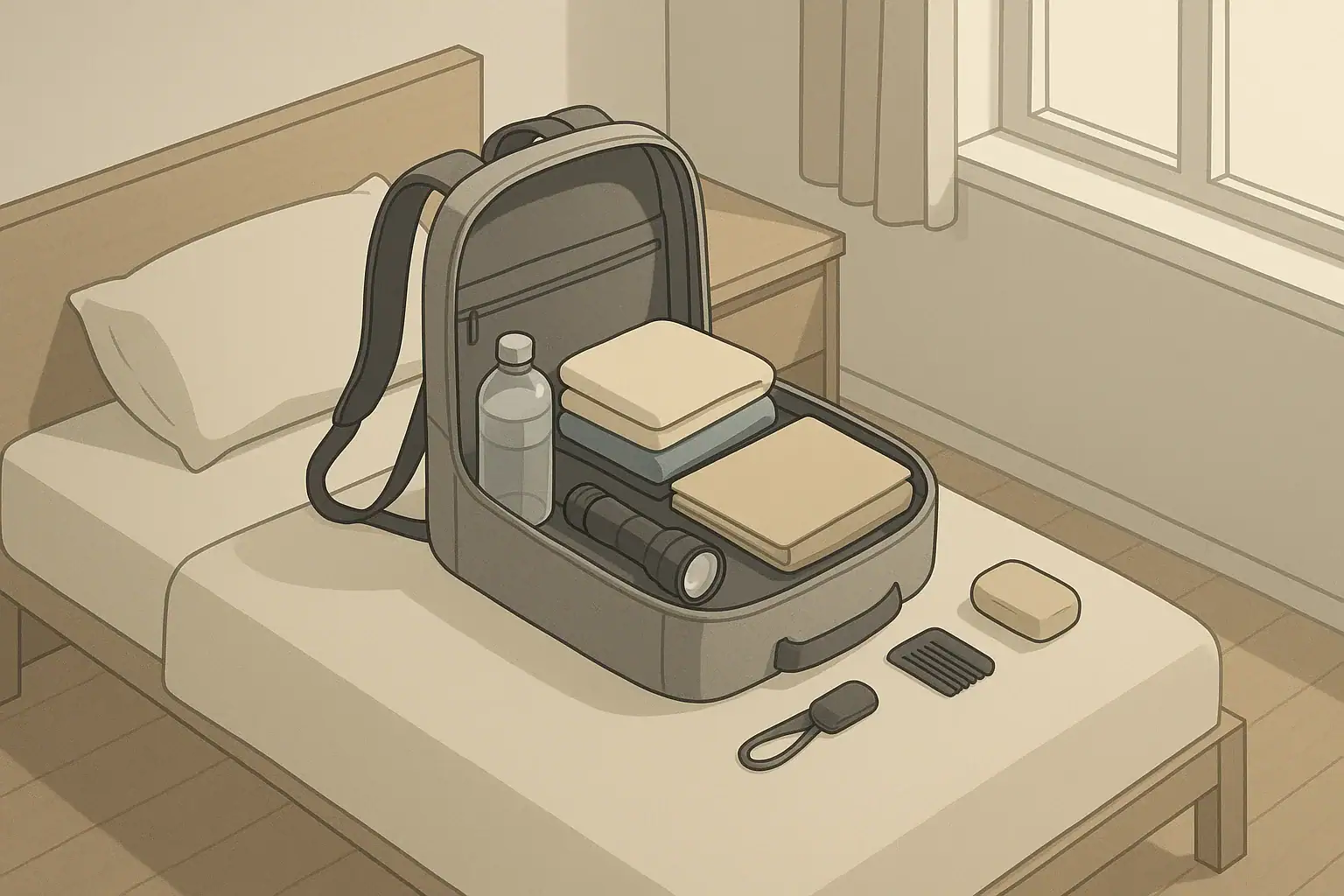
Why Apartment Evacuation Planning Matters
Evacuations from apartments usually happen with little warning and limited time. Common triggers include small building fires, nearby gas leaks, severe weather, or short-term power and water disruptions. Most people are able to return home within hours or a few days, so planning for a short, uncomfortable disruption is usually the most realistic goal.
Good planning for apartment residents is about being quick, light, and organized. You may need to carry everything down stairs, use crowded hallways, or navigate a packed parking lot. Elevators may be unavailable, and you might have children, pets, or older family members to help. A simple checklist and a ready-to-go bag can make leaving safer and less stressful.
This guide focuses on what to pack in an evacuation bag and what to secure in your apartment before you step out the door, with an emphasis on everyday emergencies rather than extreme scenarios.
Core Evacuation Bag: What to Pack for Apartment Residents
A basic evacuation bag (often called a go-bag) should be light enough to carry down stairs and across a parking lot, yet complete enough to keep you reasonably comfortable for one to three days away from home.
Documents and Essentials You Cannot Easily Replace
Keep original documents in a safe place and carry copies or digital backups you can access if you are away from home.
- Identification copies (driver’s license, state ID, passport)
- Basic medical and insurance information (names of providers, policy numbers)
- List of important phone numbers (family, building management, workplace, school)
- Proof of address (copy of lease or a recent bill)
- Backup of key digital logins (password manager access method or hint system you can remember)
Store paper copies in a simple waterproof sleeve or plastic bag and consider having a secure cloud backup for digital files.
Water, Snacks, and Simple Food
For short-term evacuations, aim to have enough water and easy food to avoid relying immediately on crowded stores or vending machines.
- Small water bottles or a compact refillable bottle
- Non-perishable snacks that do not require cooking (granola-type bars, dry crackers, nuts if appropriate)
- Simple items for children that they are likely to eat without fuss
In multi-story buildings, heavy water storage is better left at home for shelter-in-place situations. Your evacuation bag should focus on portable amounts.
Clothing and Basic Comfort Items
Choose clothing with layers that pack tightly and work for a range of indoor temperatures, such as shelters or friends’ homes.
- One change of clothes per person (shirt, pants, socks, underwear)
- Lightweight sweater or sweatshirt
- Compact rain layer or poncho
- Sturdy, closed-toe shoes kept near the bag
A small scarf, hat, or gloves can be useful in colder climates, especially if you may spend time outside waiting for instructions.
Medication, Hygiene, and Personal Needs
Think about what you would need for a long weekend away from home, with an emphasis on items that are hard to replace quickly.
- Several days’ worth of essential medications in their original containers, if possible
- Simple toiletry kit: toothbrush, toothpaste, soap, deodorant, travel-sized tissues
- Menstrual products and any specific hygiene items your household uses regularly
- Spare eyeglasses or contact lens supplies
- Small pack of wipes or a washcloth in a plastic bag
If someone in your home uses medical devices that require power, note how long they can run on internal batteries and what backup options you have if power is not available at your destination.
Light, Power, and Simple Communication Tools
In many evacuations, power and cell service stay on. However, crowded networks and building outages are common, so small backups help.
- Compact flashlight or headlamp with extra batteries
- Small battery bank and charging cable for your phone
- List of key contacts on paper if your phone battery dies
Keep batteries stored outside of devices when not in use to reduce the chance of leaks.
Cash, Keys, and Everyday Items
Include a few everyday essentials that are surprisingly easy to forget in a rush.
- House keys and vehicle keys, ideally spare sets kept in or near the bag
- Small amount of cash in small bills for basic purchases
- Basic folding bag or tote for carrying extra items if needed
- Simple notepad and pen for sharing information or leaving notes
Consider assigning each adult their own small kit and having a shared family bag for joint supplies.
| Item | Why it matters | Notes |
|---|---|---|
| Copies of IDs and lease | Helps prove identity and residence if needed | Store in a waterproof sleeve |
| Water bottle | Ensures you have water while moving or waiting | Refill whenever you pass a safe source |
| One change of clothes | Improves comfort if you get wet or dirty | Choose neutral, easy-to-layer pieces |
| Essential medications | Prevents missed doses during disruption | Rotate stock before expiration dates |
| Flashlight and batteries | Helps in dark stairwells or shelters | Store batteries separately when not in use |
| Phone charger and battery bank | Keeps communication options available | Recharge battery bank periodically |
| Small cash reserve | Useful if card systems are down | Focus on small denominations |
What to Secure in Your Apartment Before You Leave
When there is time and it is safe to do so, securing your apartment helps reduce damage to your home and neighboring units. In some emergencies, such as a fire in your own unit, immediate evacuation without delay is more important than securing belongings. When the situation allows, focus on a few quick steps.
Utilities: Gas, Electricity, and Water
Follow instructions from building management or emergency responders about utilities. In many cases, they will handle shutoffs. However, you can take small, safe actions inside your unit.
- Turn off stove burners and oven knobs
- Unplug non-essential electronics and small appliances
- Close interior doors to help slow fire and smoke spread, if relevant
Avoid touching building-wide utility panels unless you are specifically instructed and know how to do so safely.
Windows, Doors, and Indoor Items
For weather-related evacuations, especially in areas with strong winds or heavy rain, take a moment to secure openings and loose items.
- Close and lock all windows and sliding doors
- Close curtains or blinds to reduce glass scatter if windows break
- Move lightweight items away from windows, especially on balconies
- Check that your main door is fully closed and locked once everyone is out
If you have time, elevate items that could be damaged by minor indoor water intrusion, such as small electronics on low shelves.
Fridge, Freezer, and Perishables
Short-term evacuations may involve power disruptions. Taking a few quick steps can help reduce food loss and mess.
- Ensure fridge and freezer doors are fully closed
- Consider placing a towel in a shallow tray in front of the freezer in case of thawing leaks
- Dispose of any open, highly perishable items that are already close to spoiling
For longer planned evacuations, you may choose to reduce the number of perishables you keep on hand in the days leading up to a possible event.
Small Backup Power Devices
If you own small backup power banks or compact power stations, decide what travels with you and what stays behind.
- Take portable battery banks you can easily carry
- Disconnect and store larger devices that will remain in the apartment in a dry, elevated spot
- Avoid leaving devices actively charging if you expect power fluctuations
Planning ahead for how you will use limited power (for example, phone charging first, lights second) can stretch your resources.
Special Considerations: Kids, Seniors, and Pets
Household members with additional needs often require small adjustments to your evacuation checklist. Think about comfort, mobility, and familiarity.
Evacuating with Children
Children handle evacuations better when they have something familiar and feel part of a simple plan.
- Pack a comfort item such as a small toy or blanket
- Include snacks and a simple drink they already like
- Keep a change of clothes and basic diapers or wipes if needed
- Write your phone number and a backup contact on a small card placed in a pocket or pinned inside clothing
Consider involving older children in packing their own small bag with light items, so they know where things are.
Evacuating with Older Adults or Those with Mobility Challenges
Stairs, crowded exits, and long walks to temporary shelters can be challenging for older adults or anyone with mobility or medical needs.
- Review the building’s accessible exits in advance and know which ones avoid stairs if possible
- Plan extra time for leaving, especially if elevators are not available
- Prepare a list of medications, dosages, and key medical information
- Include basic mobility aids (cane, walker accessories, spare wheelchair parts) in or near the evacuation area
If your building offers a voluntary list for people needing extra assistance during emergencies, consider enrolling.
Evacuating with Pets from an Apartment
Many shelters and hotels have specific rules for pets. Planning ahead helps you avoid leaving animals behind or making rushed decisions.
- Keep a pet carrier or leash near your evacuation bag
- Pack a small supply of pet food and a collapsible bowl
- Include pet waste bags or a small litter solution for cats
- Have a photo of you with your pet stored on your phone to help prove ownership if needed
Check your lease and local options ahead of time to understand where pets are usually accepted during short-term evacuations.
Communication and Meeting Plans for Apartment Evacuations
In a multi-unit building, hallways and outdoor areas can become crowded. A simple communication and meeting plan prevents confusion if you are separated.
Household Meeting Spots
Choose two basic meeting points:
- Near your building: A safe spot such as a specific tree, corner, or parking area away from emergency vehicles
- Farther away: A familiar public place in your neighborhood in case the immediate area is off-limits
Make sure every household member who is old enough can describe these locations in simple terms.
Contacting Family and Friends
Cell networks can slow down when many people are calling at once. Text messages or simple app messages often get through more reliably.
- Choose an out-of-area contact person everyone can text or call with updates
- Decide on a simple phrase to confirm you are safe (for example, “At meeting spot, safe”)
- Keep a written list of key phone numbers in your evacuation bag
Practice sending short, clear messages that include who you are, where you are, and what you plan to do next.
Building Notifications and Management
Know how your building communicates during emergencies.
- Ask management how they will share updates if the building is temporarily closed
- Keep a written copy of the management office phone number and email
- Understand where official notices are usually posted once it is safe to return
Rely on instructions from local authorities and building staff for re-entry timing and safety information.
| Who to contact | Primary method | Fallback | Meeting point note |
|---|---|---|---|
| Household members | Text message | Written note at agreed spot | Meet at building’s outdoor gathering point |
| Out-of-area relative | Short phone call | Text message with status | Share current location and next check-in time |
| Building management | Phone call when safe | Email or online portal | Ask where to find re-entry updates |
| Child’s school or caregiver | Phone call | Text or voicemail | Confirm pickup location and time |
| Neighbor you trust | Text message | Note on their door if time allows | Optional backup meeting spot nearby |
| Workplace contact | Email or message | Phone call | Let them know if you will be delayed |
Keeping Your Apartment Evacuation Plan Simple and Up to Date
An evacuation checklist works best when it is short, visible, and practiced occasionally. Apartment life often changes quickly with new roommates, jobs, or schedules, so review your plan a few times a year.
- Label your evacuation bags and store them near your exit if possible
- Walk through your exit routes and meeting spots with everyone in your home
- Update documents, medications, and contact lists when something changes
- Adjust your kit seasonally with small additions like warmer layers or sun protection
A calm, realistic evacuation plan does not require extensive gear or large budgets. Focus on what you truly need to leave quickly, stay reachable, and manage a few days away from home with less disruption.
Related guide: Go-Bags.
Authoritative sources
Safety recommendations can change. Confirm critical details with current official guidance and local authorities.
- US EPA: Emergency Disinfection of Drinking Water
- USDA FSIS: Keep Food Safe During Emergencies
- U.S. CPSC: Battery Safety
Frequently asked questions
How long should an evacuation bag for an apartment be prepared to support me?
For most apartment evacuations, assemble your go-bag to cover one to three days away from home. This timeframe balances portability with having enough supplies to manage basic needs while you await return or short-term sheltering.
What specific documents are most important to include in an evacuation checklist for apartments?
Prioritize copies of photo ID, proof of residence (lease or recent bill), basic medical and insurance details, and a list of key contacts. Keep paper copies in a waterproof sleeve and maintain encrypted or secure cloud backups of essential digital files.
Should I turn off utilities before I evacuate my apartment?
Follow building management or emergency responder instructions first; they may handle major shutoffs. If you have time and it is safe, turn off stove burners and unplug non-essential electronics, but avoid operating building-wide panels unless instructed and trained to do so.
What are the most important items to pack when evacuating with pets from an apartment?
Keep a carrier or leash near your bag, pack a small supply of pet food, a collapsible water bowl, and waste bags, and store a photo of you with your pet on your phone. Also check ahead for local shelter or hotel rules so you have a plan for where your pet can stay during a short evacuation.
How can I quickly reduce damage to perishables and electronics before a short evacuation?
Ensure fridge and freezer doors are fully closed and place a towel or shallow tray to catch minor thaw leaks; discard highly perishable open items if time allows. Unplug and elevate small electronics where possible and take portable battery banks with you while storing larger devices in a dry, elevated spot.
- Simple checklists and realistic planning
- Water, power, lighting, and pantry basics
- Family plans (kids, pets, seniors) and seasonal prep
Affiliate disclosure
As an Amazon Associate, we earn from qualifying purchases. Some links on this site may be affiliate links. If you buy through these links, we may earn a small commission at no extra cost to you. This helps support our content. Learn more.