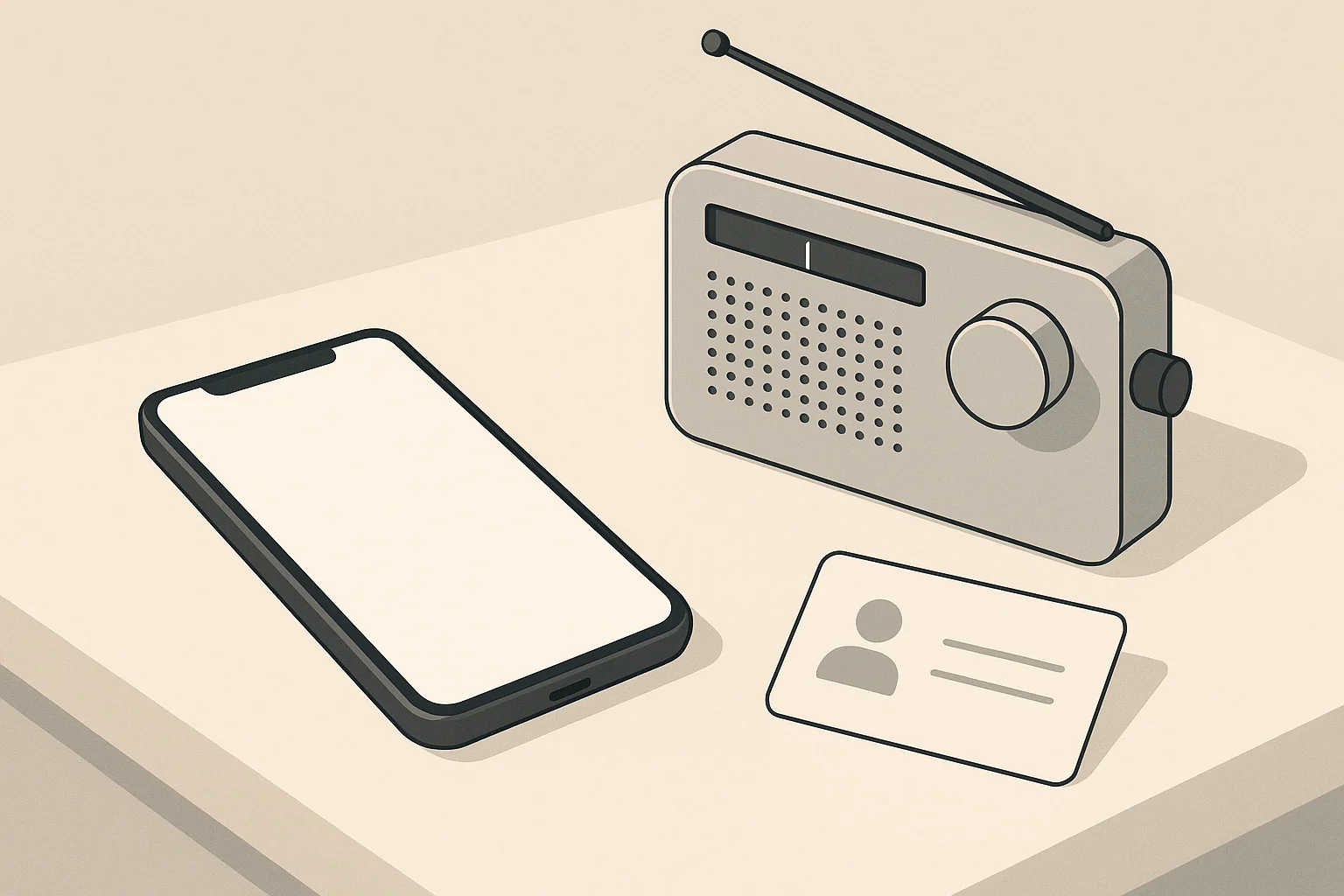
Why a Family Communication Plan Matters
A family communication plan is a simple written guide that explains how you and your household will stay in touch during disruptions, from short power outages and winter storms to local evacuations. It does not need to be complicated or scary. The goal is to make decisions now, while things are calm, so you are not trying to figure everything out in the middle of a stressful situation.
Phones, internet, and power are usually reliable, but even short interruptions can make it hard to reach family members, especially if everyone is in different places at school, work, or running errands. A basic plan helps you:
- Know who to call first and in what order
- Have backup options if calls and texts do not go through
- Decide on safe meeting points if you cannot stay home
- Keep kids, seniors, and caregivers on the same page
- Reduce confusion and repeated “Are you okay?” messages
This kind of planning is useful whether you live in an apartment or house, rent or own, and whether you are dealing with a snowstorm, hurricane warning, heatwave power cut, or smoky air from distant wildfires.
Core Pieces of a Family Communication Plan
A practical family communication plan usually covers three main areas: key contacts, meeting points, and check-in routines. You can keep everything on a single page, stored in a few places: on the fridge, in wallets, in backpacks, and as a note or screenshot on phones.
Key Contacts
Start by making a short, clear contact list that everyone can understand and use. Focus on the people and numbers that matter most if your usual communication channels fail.
At minimum, include:
- Household contacts: Each person’s full name, mobile number, and any work or school numbers.
- Emergency contact outside your area: A relative or trusted friend who lives in another city or region, who can act as a central check-in point if local lines are busy.
- Local support numbers: School office, child care, workplace main line, building manager or landlord, and any regular caregiver.
- Pet-related contacts: Regular boarding, neighbor who can help with pets, or building staff who can access your unit if needed.
Write these contacts in at least two forms:
- Digital: Saved in your phone and shared in a family group chat or shared note.
- Paper: Printed or written on a card in wallets, school backpacks, and go-bags.
Meeting Points
Meeting points are pre-agreed places where your household will try to reunite if you cannot stay at home or if you get separated. Choose locations that fit your daily life and likely local hazards.
Most families benefit from defining three types of meeting places:
- Near-home spot: A safe place right outside your residence, such as a specific corner of the parking lot, a tree across the street, or a neighbor’s front step. This is useful for quick evacuations like a fire alarm.
- Neighborhood spot: A place in your immediate area, such as a library, community center, or park where you could meet if you cannot get back into your building.
- Out-of-neighborhood spot: A location in another part of town where your household could regroup if a larger area is affected, such as a relative’s home or a trusted friend’s place.
Write down the exact descriptions of these locations: building names, cross streets, and any clear landmarks. Make sure kids know how to describe them to another adult if they need help getting there.
Check-In Routines
Check-in routines are simple rules about how and when your household will communicate during a disruption. Setting expectations ahead of time helps reduce anxiety and unnecessary calls.
Examples of check-in rules include:
- Who contacts whom first: For example, everyone sends a text to the same outside contact, who then relays updates.
- Preferred method: Start with text messages, then try calls, then a messaging app, depending on what is working.
- Timing: Agree on a time window to check in (for example, every hour during an active situation, or morning and evening during a longer outage).
- Short message format: Keep it simple, such as “I am safe / my location / my plan until next check-in.”
These routines are especially helpful in situations like winter storms or heatwaves when family members may be stuck in different locations for a while but are not in immediate danger.
| Task | Why it matters | Notes |
|---|---|---|
| List one out-of-area contact | Provides a central check-in if local lines are busy | Choose someone unlikely to be affected by local outages |
| Write down all mobile numbers | Covers lost, dead, or damaged phones | Keep copies in wallets and kids’ backpacks |
| Pick a near-home meeting spot | Helps everyone regroup after a quick evacuation | Make sure it is away from traffic and hazards |
| Pick a neighborhood meeting spot | Provides a backup if you cannot re-enter your home | Libraries and community centers work well |
| Decide on a default text message format | Saves time and reduces confusion during check-ins | Include status, location, and next steps |
| Review plan with kids and caregivers | Ensures everyone understands what to do | Practice once or twice a year |
Example values for illustration.
Planning for Different Living Situations
Your communication plan should fit the way you live. The needs of someone in a small apartment are different from a large household in a single-family home. The plan can stay simple while still accounting for these differences.
Apartments and Condos
If you live in a multi-unit building, you may need to think about stairwells, elevators, and shared spaces. Fire alarms, water shutoffs, and building-wide power outages are common scenarios.
Consider:
- Meeting point outside the building: Choose a spot far enough away to avoid congestion at the entrance but close enough for kids and seniors.
- Building contacts: Add the front desk, building manager, or maintenance number to your contact list.
- Neighbors: Identify at least one neighbor you could check in with or who could help if someone in your household has mobility challenges.
Houses and Townhomes
For single-family homes, common events include local power outages, severe storms, and temporary evacuations for things like gas leaks or neighborhood emergencies.
Think about:
- Driveway or street corner meeting point: Pick a consistent, visible location for everyone to gather after leaving the house.
- Alternate parking-area meeting spot: If you have multiple drivers, agree on one place to leave cars or meet up if roads are blocked in parts of the neighborhood.
- Pet plan: Decide who is responsible for leashes, carriers, and pet transport in a quick evacuation.
Renters
Renters may have less control over the building system but typically have clear contacts for maintenance and management. Include these in your plan so you know whom to call for issues like water shutoffs, broken entry doors, or common-area outages.
Also:
- Keep a copy of your lease or key contact information where you can access it even if you cannot get back into your apartment.
- Ask management how they communicate during outages (email, text alerts, door notices) and add that information to your plan.
Including Kids, Seniors, and Caregivers
A communication plan works best when every person who regularly spends time with your family understands the basics, including kids, older relatives, and caregivers such as babysitters and home health aides.
Helping Kids Understand the Plan
For children, the goal is to keep the message calm, simple, and age-appropriate. Focus on who they should look for, where they should go, and how they can ask adults for help.
Helpful steps include:
- Teach them their full name, your full name, and at least one phone number.
- Show them a picture or simple map of meeting points.
- Practice what they would say to a trusted adult if they need help calling you.
- Explain that if they cannot reach you, they can contact the designated out-of-area person.
Consider keeping a small card in your child’s backpack with key contacts and meeting points written in clear, simple language.
Supporting Older Adults
If you live with or assist older adults, your communication plan should reflect any mobility, hearing, or memory limitations. Focus on clarity and redundancy.
Ideas to consider:
- Keep a large-print contact list near their favorite chair and near the phone.
- Store important numbers under easy names in their phone.
- Review check-in routines and meeting points periodically, and walk through them in person.
- Coordinate with any paid caregivers so they know who to contact and how to update you.
Coordinating with Caregivers and Schools
Caregivers, schools, and after-school programs are crucial parts of many families’ daily routines. Include them in your plan so communication remains smooth if there is a disruption during school or work hours.
Helpful actions include:
- Confirm that school and child care have up-to-date contact numbers and authorized pickup lists.
- Ask how they notify families during closures or emergencies and note that in your plan.
- Share the basics of your family meeting points with regular caregivers so they know where you are likely to go.
Choosing Communication Methods and Backups
Your plan should reflect how communication tools tend to behave during disruptions. Sometimes voice calls do not go through, but text messages do. Other times, mobile data is slow, but basic calls work. Having a sequence of methods to try increases your chances of connecting.
Text, Call, and App Messaging
Text messages often use less bandwidth than voice calls and may get through even when networks are busy. In many short-term emergencies, texting is an efficient first option.
A simple routine might be:
- Try a short text to your main contact: “Safe / at home / will check in at 6 pm.”
- If texts fail, attempt a brief voice call.
- If mobile networks are overloaded, try a messaging app or Wi‑Fi calling if you have a stable internet connection.
Using an Out-of-Area Contact
Sometimes it is easier to call out of the affected region than to call across town. In those cases, your designated out-of-area contact can serve as an information hub.
Agree that:
- Each family member checks in with that person when they can.
- The out-of-area contact keeps a simple log of who has checked in and passes updates along when possible.
Backup Tools During Power Outages
Power outages can affect landline phones, Wi‑Fi, and the ability to charge mobile devices. A small set of backup tools can help keep communication going during short outages, winter storms, or local grid issues.
Consider keeping:
- Portable battery packs to recharge phones.
- Charging cables stored with your emergency kit.
- A basic battery-powered or hand-crank radio for local updates.
Add “keep backup power charged” to your seasonal home readiness checklist, such as before winter storm season or summer heatwaves when outages are more likely.
Meeting Points for Common Scenarios
Meeting points work best when they match likely scenarios in your region. A family in a wildfire-prone area may think about evacuation routes, while a family in a city apartment might focus more on building evacuations and local shelter-in-place guidance.
Near-Home Emergencies
These are situations where you leave your home quickly but expect to stay nearby, such as building fire alarms, small gas leaks, or a broken water pipe. Your primary goal is to move everyone to a safe location just outside the building and then regroup.
Tips for near-home meeting points:
- Choose a spot visible from your building entrance but not blocking first responders.
- Make sure it is safe from traffic and falling debris.
- Practice going there from different rooms in your home.
Neighborhood-Level Disruptions
Events like neighborhood power outages, local water main breaks, or short-term shelter-in-place guidance might make it harder to stay comfortable at home but may not require you to leave your area entirely.
In these situations, a neighborhood meeting point could be:
- A friend or relative’s home on higher ground.
- A community center known to stay open during storms.
- A public building your family already knows well.
Wider-Area Events and Evacuations
Occasionally, evacuation guidance may extend beyond your immediate neighborhood, such as for larger wildfires, river flooding, or major coastal storms. In those cases, your out-of-neighborhood meeting point becomes especially important.
When choosing this point:
- Pick a host who understands your plan and has agreed to be your backup location.
- Consider public transit options and major routes you would use to get there.
- Identify a nearby gas station or rest area as a backup spot if roads are congested.
Check-In Schedules and Status Messages
Even a short, planned check-in schedule can reduce worry and limit network congestion. Instead of constant calling, you agree on when and how you will update each other.
Short-Term Events (Hours to a Day)
For brief events like a several-hour power outage or a snowstorm while everyone is at work or school, you might keep it very simple.
Example approach:
- Everyone sends a text when they safely reach home or their planned location.
- Designate one family member to monitor local news or official updates and share summaries.
- Set a single check-in time in the evening to confirm everyone’s status.
Multi-Day Disruptions
During multi-day disruptions, like extended power outages after a storm or long-lasting air quality issues from wildfire smoke, it is helpful to balance staying informed with preserving battery power and avoiding unnecessary stress.
Consider:
- Morning and evening check-ins with your household and out-of-area contact.
- Brief, consistent message formats, such as: “Safe / at home / power off / plan to stay / next check-in 8 am.”
- Rotating who sends detailed updates to reduce repeated messages.
Simple Status Message Templates
Creating a basic format for status messages saves time when you might be distracted or tired. Families often use something like:
- “I am safe.”
- “My location is <place>.”
- “My plan until <time> is <short description>.”
You can pre-write this format on your paper plan so each family member has a guide if connection is limited.
| Who to contact | Method | Fallback | Meeting point note |
|---|---|---|---|
| Out-of-area relative | Text first | Short voice call | Confirms where the family plans to meet |
| Parent or guardian A | Family group text | Individual texts if group fails | Coordinates near-home meeting spot |
| Parent or guardian B | Check-in via messaging app | Call through workplace if needed | Coordinates neighborhood backup location |
| Older child | Text “safe/location/plan” message | Ask trusted adult to call for them | Goes to school’s designated release area |
| Neighbor or friend | Quick text when leaving home | Note on door if safe to do so | Possible temporary meeting or staging spot |
| Caregiver | Direct call from parent | Text with clear instructions | Brings child to agreed neighborhood spot |
Example values for illustration.
Keeping Your Plan Current and Accessible
A family communication plan is most useful when it is up to date and easy to find. Build light maintenance into your normal routines so that it stays accurate without much effort.
Where to Store Your Plan
Use both physical and digital copies so you are not dependent on a single format.
Common options include:
- A printed copy on the refrigerator or inside a cabinet door.
- Smaller cards in wallets, purses, and kids’ backpacks.
- A shared digital note or document that everyone can access from their phones.
- A copy in your home emergency kit or go-bag.
When to Review and Update
Contact information, workplaces, and schools change over time. A quick review a few times a year keeps your plan accurate.
Useful times to review include:
- At the start of a new school year.
- When someone changes jobs or phone numbers.
- Before seasons when storms or outages are more common in your area.
During a review, verify all numbers, confirm meeting points, and remind everyone of the basic check-in routine. A short conversation can keep the plan fresh in everyone’s mind without adding stress.
Related guides: ICE Contacts on Your Phone: What to Add and How to Back It Up · Family Pickup Password: A Simple Safety Rule for Kids and Caregivers.
Authoritative sources
Safety recommendations can change. Confirm critical details with current official guidance and local authorities.
- USDA FSIS: Keep Food Safe During Emergencies
- U.S. CPSC: Battery Safety
- CDC: Guidelines for Cleaning Safely After a Disaster
Frequently asked questions
How do I choose an out-of-area contact and what should they do?
Choose someone who lives in a different city or region and is unlikely to be affected by the same local disruption. Ask them to act as a central check-in point, keep a simple log of who has contacted them, and relay updates to family members when local lines are busy. Make sure everyone in the household knows who the person is and how to contact them.
What information should be on a child’s emergency card?
A child’s emergency card should include the child’s full name, a primary caregiver’s phone number, an out-of-area contact number, and the family’s nearest meeting points. Keep the language simple and add any important medical notes or allergy information. Store a card in the child’s backpack and a copy with caregivers or at school.
How often should we review and practice our family communication plan?
Review the plan a few times a year and after major life changes such as new phone numbers, a change in school or job, or seasonal hazards. Practice key elements like meeting points and simple check-in messages at least once a year so everyone remembers the routine. Short, regular reviews keep the plan current without creating stress.
What are effective backup communication methods during power outages?
Keep portable battery packs and charging cables in your emergency kit to maintain phone power, and consider a battery-powered or hand-crank radio for local updates. Use low-bandwidth methods first, such as short text messages, and try messaging apps over Wi‑Fi if cellular networks are congested. Physical copies of contacts and meeting points provide a reliable fallback when electronic options are unavailable.
How do we set meeting points if family members live in different neighborhoods?
Define three levels of meeting points: a near-home spot for quick evacuations, a neighborhood spot for local disruptions, and an out-of-neighborhood location to regroup during wider-area events. Choose specific, easy-to-describe landmarks or addresses and confirm that hosts or locations are willing and able to receive your family. Share maps and practice routes so each person knows how to get to the agreed spots.
- Simple checklists and realistic planning
- Water, power, lighting, and pantry basics
- Family plans (kids, pets, seniors) and seasonal prep
Affiliate disclosure
As an Amazon Associate, we earn from qualifying purchases. Some links on this site may be affiliate links. If you buy through these links, we may earn a small commission at no extra cost to you. This helps support our content. Learn more.