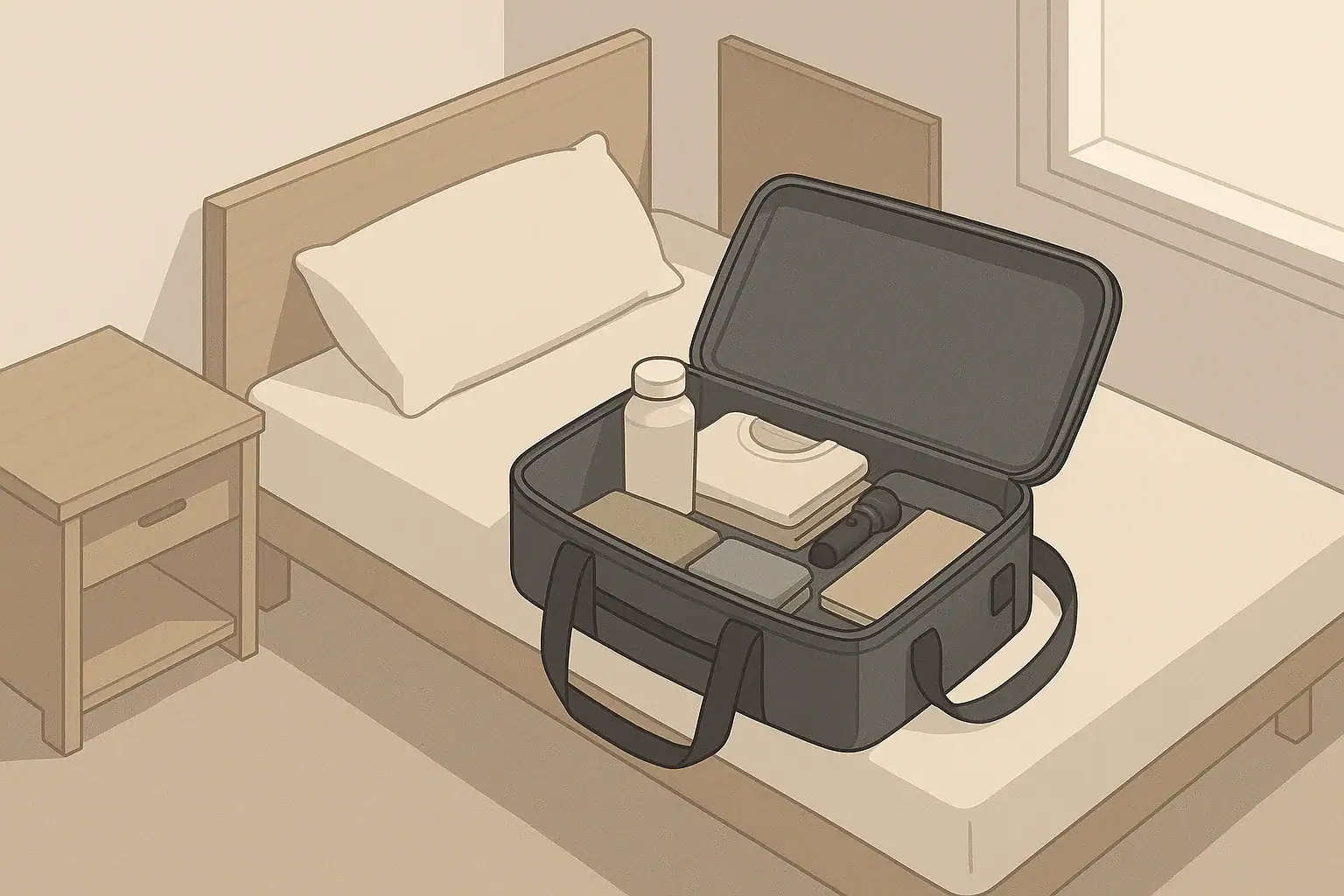
When people think about home readiness, they often focus on flashlights, food, and water. Important papers are just as critical. In a power outage, evacuation, or short-term disruption, having key documents ready can make it easier to access care, pay for lodging, verify identity, and file claims.
This is not about panic or worst-case scenarios. It is about making everyday disruptions less stressful. A burst pipe, apartment fire in your building, regional storm, or short hospital stay can all go more smoothly if you have your identification, insurance information, and basic records close at hand.
For most households, a simple, organized document kit plus well-chosen digital copies is enough. The goal is to know what you have, where it is, and how to reach it quickly if you need to leave home for a few days on short notice.
Why Documents Belong in Every Emergency Plan
When people think about home readiness, they often focus on flashlights, food, and water. Important papers are just as critical. In a power outage, evacuation, or short-term disruption, having key documents ready can make it easier to access care, pay for lodging, verify identity, and file claims.
This is not about panic or worst-case scenarios. It is about making everyday disruptions less stressful. A burst pipe, apartment fire in your building, regional storm, or short hospital stay can all go more smoothly if you have your identification, insurance information, and basic records close at hand.
For most households, a simple, organized document kit plus well-chosen digital copies is enough. The goal is to know what you have, where it is, and how to reach it quickly if you need to leave home for a few days on short notice.
Core Identification Documents to Include
Start by gathering the documents that prove who you are and your legal relationships. Focus on what is realistic for your situation: renters, homeowners, families, seniors, and students may all keep slightly different sets.
Personal IDs for Adults
Each adult should have at least one primary photo ID and details for backups. For most households, this includes:
- Driver’s license or state ID (original, kept in your wallet; copies in your kit)
- Passport or passport card, if you have one
- Work ID, school ID, or other photo ID used regularly
Keep physical IDs where you already carry them daily, but store paper or digital copies in your emergency kit. If you temporarily misplace your wallet during an evacuation, a copy can help when dealing with authorities, hotels, or service providers.
Identification for Children and Seniors
Children and older adults may not always carry photo ID, especially in everyday home life. Consider including:
- Copies of school IDs or transit cards
- Copies of passports, if available
- Photocopies of birth certificates (originals stored securely at home)
- Recent printed photos of each person (head-and-shoulders and full-length)
Printed photos can be useful if you are separated in crowded shelters or transit hubs. Store them in a waterproof sleeve with names written on the back.
Household Relationship and Status Documents
In some situations, you may need to verify family relationships or legal status, especially for children, blended families, or caregivers. Common documents to copy include:
- Birth certificates (copies for go-bag; originals in a home safe or safe deposit box)
- Adoption or guardianship papers
- Custody agreements or court orders
- Marriage certificate or domestic partnership documents
- Power of attorney or similar authorization documents
You likely will not need most of these for a short power outage, but in an evacuation or relocation, they can help clarify who can make decisions and access services for children or dependent adults.
Example values for illustration.
| Document | Who Usually Needs It | How to Store |
|---|---|---|
| Driver’s license / state ID copy | Each adult | Paper copy in kit, digital scan |
| Passport copy | Adults and kids with passports | Paper copy; original in safe spot |
| Birth certificate copy | All household members | Copy in kit; original secured at home |
| Guardianship / custody records | Families with shared custody or caregivers | Labeled folder in document pouch |
| Power of attorney papers | Seniors, adults with designated agents | Copy in kit; share with trusted person |
| Recent printed photos | All household members | Small waterproof sleeve in go-bag |
| Student or work ID copy | Students, employees | Paper copy with other IDs |
Insurance and Financial Records
Insurance and basic financial information help you arrange temporary housing, transportation, and repairs after storms, fires, or water damage. Even for small incidents, having numbers and policy details ready can save time.
Health Insurance Information
Health coverage details are useful if you need to visit an urgent care clinic, pharmacy, or out-of-town provider. Consider including:
- Copies of health insurance cards for each family member
- Plan or member numbers written clearly on a single reference sheet
- Contact numbers for your main doctor’s office and insurance customer service
If you care for older relatives or children who live elsewhere part-time, ask their primary caregivers which health documents would be helpful for your kit.
Home, Renters, and Auto Insurance
Storms, broken pipes, apartment fires elsewhere in your building, and fallen trees are all common reasons people need property coverage information. Gather:
- Homeowners or renters insurance policy numbers
- Auto insurance policy information
- Insurance agent or company contact numbers
- Basic inventory list of major items (appliances, electronics, furniture)
A simple written inventory or photos of each room can help you remember what you own if you need to file a claim later. Store images and lists digitally, with a short printed summary in your document kit.
Everyday Financial Access
In a short disruption, you may still use ATMs and cards normally. However, it is useful to keep a compact snapshot of your financial details in case you lose your wallet or need to contact your bank from a different phone or location. Consider:
- A list of bank names (no full account numbers if you prefer not; partial numbers or nicknames can be enough to identify accounts)
- Customer service numbers for your main bank and credit card companies
- Contact information for your payroll or benefits office
- Small amount of emergency cash in small bills, stored discreetly
A basic list can help you quickly freeze cards, update addresses, or resolve billing questions even if you temporarily lack internet access.
Home, Housing, and Work Documents
Housing and work documents confirm where you live, what you are responsible for, and where you are employed. These come up after building issues, neighborhood evacuations, or when applying for temporary programs.
For Renters
Renters often face different challenges from homeowners, especially in apartments and small spaces. Consider including:
- Copy of your lease or rental agreement
- Landlord or property management contact information
- Photos or inventory list of your unit’s condition and major belongings (stored digitally)
- Parking or storage space agreements, if relevant
Even if you cannot pack bulky items, having your lease and contact details handy helps when you need to clarify responsibilities for repairs or temporary relocation after building issues.
For Homeowners
Homeowners may need to coordinate with insurance, contractors, and local services. Useful documents include:
- Home deed or closing statement (copy only; original secured at home or in safe deposit box)
- Mortgage loan servicer contact information
- Property tax statements or assessor information
- Homeowners association rules and contact information, if applicable
Scanning long documents and carrying only key pages or summaries in your go-bag can keep weight low while preserving access to details.
Employment and Income Records
Short-term emergencies can affect work schedules, direct deposits, and benefits. A small set of work-related documents can help you navigate changes:
- Employer name and main HR or supervisor contact information
- Recent pay stub copy (for proof of income if needed)
- Documentation of any remote work or flexible arrangements
- For self-employed people: simple list of main clients and accountant contact
In a disruption that affects local businesses, proof of income or employment can support applications for assistance or short-term arrangements.
Digital Copies: What to Scan and How to Store Them
Digital copies are an important backup when paper is lost, damaged, or hard to reach. The aim is not to digitize everything perfectly, but to capture the most important pages you might need away from home.
What to Scan or Photograph
Use a phone camera or scanner app to capture clear images of:
- Front and back of IDs and insurance cards
- Key pages of leases, insurance policies, and important agreements
- Basic home inventory photos: each room, plus close-ups of higher-value items
- Contact sheets with doctors, schools, landlords, and employers
Give each file a simple, clear name such as “Lease-2024-unit3B” or “Health-card-child1” so you can find them quickly in low-stress moments.
Choosing Safe, Practical Storage
Most households do well with a combination of local and cloud storage:
- Local: Encrypted folder on a personal device or small USB drive stored with your document kit.
- Cloud: Secure online storage where you can log in from another device if yours is lost or damaged.
Use strong passwords and, where available, multi-factor authentication to protect personal information. Share access details only with trusted adults who would need them in an emergency.
Balancing Privacy and Accessibility
It is reasonable to keep some highly sensitive details (such as full account numbers) off portable drives if you prefer. You can still store:
- Partial account numbers plus the financial institution name
- Policy numbers and the insurer name
- Names and contact details for key professionals (doctors, insurance agents, property managers)
This balance lets you act quickly to reach services and verify your identity while keeping the most sensitive data tightly controlled.
Paper Storage: At Home, In Your Go-Bag, and Away from Home
Once you know which documents matter for your household, decide how to split them between a safe place at home, your go-bag, and an off-site backup. The right approach depends on your space, mobility, and local risks.
At-Home Storage Options
For documents that rarely leave the house, many people use:
- A small, fire-resistant, water-resistant home safe
- A sturdy, clearly labeled document folder in a low, dry cabinet
- A binder with plastic sleeves, stored away from plumbing fixtures
Focus on protecting original documents such as birth certificates, passports, and property records. Keep them in one general location so a household member can find them quickly if you need to leave home but still have a few minutes to gather items.
Documents in Your Go-Bag or Evacuation Kit
Your go-bag is for what you might need if you must leave with little notice. Suitable items include:
- Copies of key IDs and insurance cards
- Compact emergency contacts list
- Basic medical information sheet for each person (allergies, key conditions, regular providers)
- Small USB drive or memory card with encrypted digital copies
Pack papers in a waterproof pouch or resealable bag to protect them from rain and spills. If your household has multiple go-bags (one per adult or per floor of a building), place at least a minimal set of documents in more than one kit.
Off-Site and Trusted Person Backups
Off-site backups can help in situations where your home becomes temporarily inaccessible. Options include:
- Safe deposit box for original high-value documents
- Copies stored with a trusted relative or friend in another part of town or region
- Cloud-based digital copies, accessible with login credentials you remember
If you choose to store documents with another person, talk through which items they hold, when you might ask for them, and how to keep them private.
Example values for illustration.
| Food Type | Storage Tip | Rotation Interval Idea | No-Cook Use |
|---|---|---|---|
| Canned beans | Store in a cool, dry cabinet | Use and replace every few months | Eat straight from can with seasoning |
| Canned vegetables | Group by type and date | Rotate into weekly meals | Drain lightly and eat as side dish |
| Nut butter | Keep tightly sealed after opening | Check date at each grocery trip | Spread on crackers or bread |
| Ready-to-eat soups | Stack labels facing forward | Use oldest cans first | Can be eaten at room temperature |
| Granola or protein bars | Store in labeled box or bin | Rotate monthly as snacks | Quick energy without heating |
| Shelf-stable milk or alternatives | Do not freeze; keep in pantry | Use in place of fresh milk sometimes | Drink chilled if refrigeration available |
Keeping Your Document Plan Up to Date
A document kit is not a one-time project. Over time, addresses change, policies renew, and children move schools. A simple maintenance routine keeps your information useful when you need it most.
Simple Review Schedule
Consider picking one or two dates each year to check your documents, such as the start of a new school year and the beginning of a new calendar year. During each review:
- Confirm addresses, phone numbers, and emails are current.
- Replace expired ID and insurance card copies with updated versions.
- Update your emergency contacts list if jobs, phones, or caregiving roles have changed.
- Add any new household members and remove documents for those who have moved out.
Making It Manageable for Different Households
Each living situation has its own constraints. Some examples:
- Small apartments: Use a single document pouch stored in an easily reached drawer near your main exit.
- Families with kids: Keep a short printed contact sheet in children’s backpacks or school folders, following school policies.
- Households with pets: Add vaccination records, license information, and a recent photo of each animal.
- Seniors or those with limited mobility: Store documents in a reachable, clearly labeled location and share its description with a trusted person.
The specific documents you pack will vary, but the underlying goal is the same: in a power outage, sudden move, or short evacuation, you can prove who you are, reach the right people, and restart everyday life with fewer obstacles.
Authoritative sources
Safety recommendations can change. Confirm critical details with current official guidance and local authorities.
- USDA FSIS: Keep Food Safe During Emergencies
- U.S. CPSC: Battery Safety
- Ready.gov: Preparedness Tips for People with Disabilities
Frequently asked questions
What documents should I include in a go-bag for a short evacuation?
Include copies of primary photo IDs, insurance cards, a compact contact sheet with doctors and insurers, a basic medical information sheet for each person, and recent printed photos of household members. Add a small encrypted USB or cloud-accessible scans and a modest amount of emergency cash. Store papers in a waterproof pouch to protect them during transit.
How can I keep digital copies secure but accessible during an emergency?
Use a combination of encrypted local storage (such as a password-protected device or encrypted USB) and a secure cloud service protected by strong unique passwords and multi-factor authentication. Share access only with trusted adults and keep clear, simple filenames so you can find files quickly. Regularly test that you can log in from another device before relying on the system.
Should I carry original documents or are copies sufficient?
For most short evacuations, high-quality copies and digital backups are sufficient and reduce the risk of losing irreplaceable originals. Keep originals like passports, birth certificates, and property deeds in a fire-resistant home safe or safe deposit box unless you anticipate needing them immediately. Originals are best carried only when absolutely necessary.
How often should I review and update my emergency document kit?
Review your kit at least once a year and after major life events such as a move, a new child, changes in insurance, or renewed IDs. During each check, replace expired cards, confirm contact numbers, and add or remove household members as needed. Small, regular updates are easier than a large last-minute overhaul.
What extra documents should I pack for children, seniors, or pets?
For children and seniors include birth certificates, custody or guardianship papers if relevant, recent photos, and medication/allergy summaries. For pets add vaccination records, license information, and a recent photo. These items help with reunification, medical care, and temporary shelter or boarding arrangements.
- Simple checklists and realistic planning
- Water, power, lighting, and pantry basics
- Family plans (kids, pets, seniors) and seasonal prep
Affiliate disclosure
As an Amazon Associate, we earn from qualifying purchases. Some links on this site may be affiliate links. If you buy through these links, we may earn a small commission at no extra cost to you. This helps support our content. Learn more.