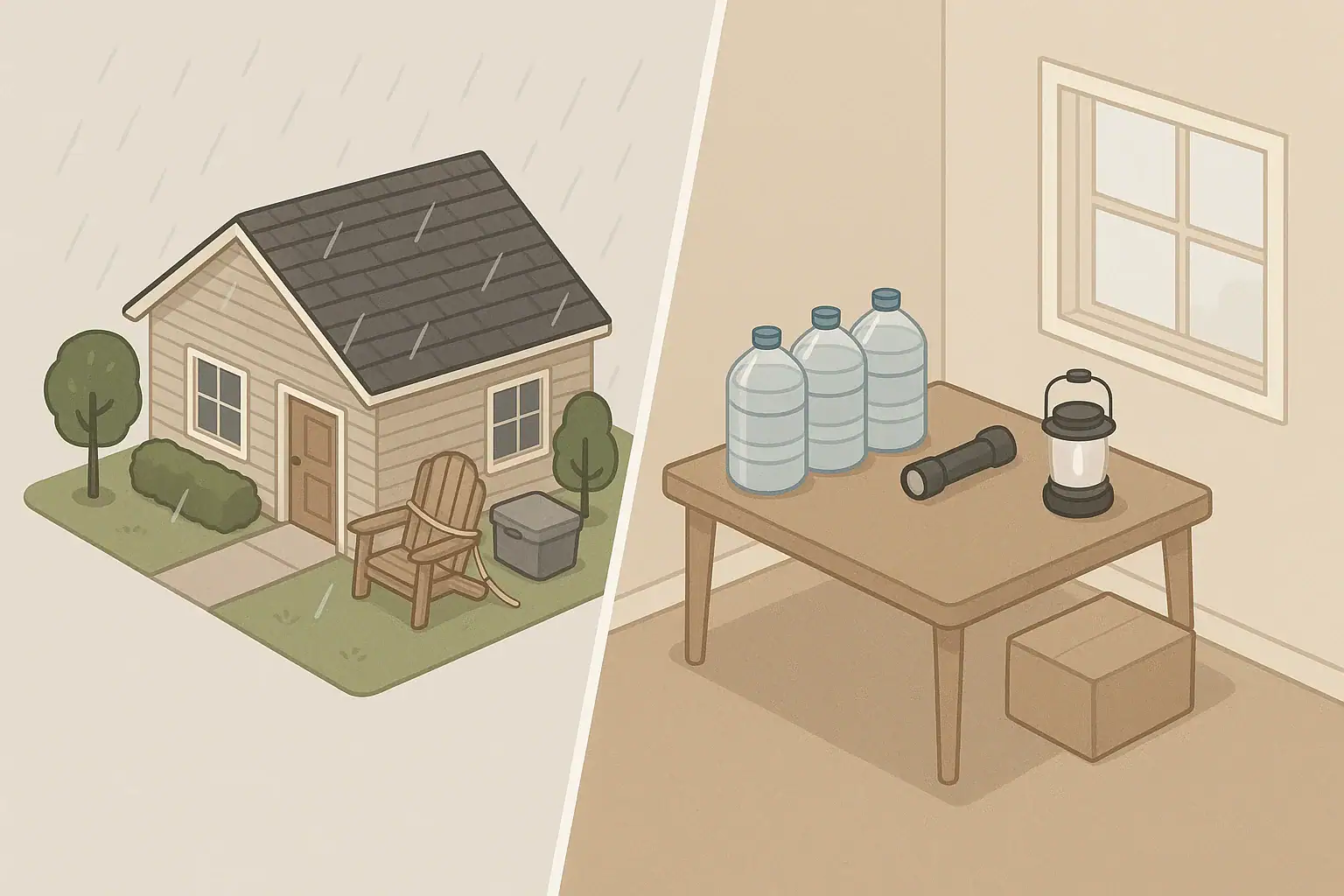
Hurricanes bring a mix of strong winds, heavy rain, and short-term power and water disruptions. For most households, especially in the United States along the Gulf and Atlantic coasts, practical readiness means planning for a few days without normal services rather than extreme, long-term scenarios.
If you live in a house, you may have advantages such as outdoor storage, a yard, and more space for supplies. You also have added responsibilities: securing loose items, protecting windows and doors, and planning for possible flooding or wind damage.
Keep your planning simple and focused on likely conditions where you live. Local emergency management agencies often publish hurricane timelines and evacuation maps; use those to guide your personal plan.
Understanding Hurricane Risk for Houses
Hurricanes bring a mix of strong winds, heavy rain, and short-term power and water disruptions. For most households, especially in the United States along the Gulf and Atlantic coasts, practical readiness means planning for a few days without normal services rather than extreme, long-term scenarios.
If you live in a house, you may have advantages such as outdoor storage, a yard, and more space for supplies. You also have added responsibilities: securing loose items, protecting windows and doors, and planning for possible flooding or wind damage.
Keep your planning simple and focused on likely conditions where you live. Local emergency management agencies often publish hurricane timelines and evacuation maps; use those to guide your personal plan.
Outdoor Preparation Around Your Home
Outdoor preparation reduces the chance that wind and debris will damage your home or neighboring properties. The goal is to remove or secure anything that can become a projectile and to help rainwater move away from the house.
Yard and Exterior Checklist
Well before hurricane season, walk around your property and note anything that might move or clog drains during high wind and heavy rain.
- Trees and branches: Trim dead or weak branches, especially those overhanging the roof, driveway, or power lines. Seek a professional for large or risky trees.
- Gutters and downspouts: Clean leaves and debris, and make sure downspouts direct water away from the foundation.
- Fences and sheds: Check for loose panels, hinges, or roofs on small outbuildings and repair them before storm season.
- Loose materials: Secure or store lumber, building supplies, and gardening tools.
- Drainage paths: Keep ditches, swales, and yard drains clear so water can flow freely.
Securing Outdoor Furniture and Equipment
In the days or hours before a hurricane is expected, focus on reducing windborne hazards. Think about what the wind could pick up or push over.
- Patio furniture: Bring lightweight chairs, tables, and cushions indoors if possible. If not, stack and tie them together in a sheltered corner.
- Grills and smokers: Close lids, disconnect fuel tanks according to manufacturer guidance, and move units to a protected spot. Do not use them indoors.
- Trash and recycling bins: Empty and store in a garage or secure area. If they must stay outside, fill partly with water or weight to reduce movement.
- Garden items: Store potted plants, décor, and tools in a shed or garage. Lay heavy planters close to the ground against a wall.
- Play equipment: Anchor swing sets and slides if possible; bring small items like toys inside.
Protecting Windows, Doors, and Garage
Wind pressure and flying debris can damage windows and doors. Some homes in hurricane-prone areas have built-in protection; others rely on temporary measures.
- Permanent shutters or impact protection: Know how to close and lock any existing storm shutters well before a storm is near.
- Temporary window coverings: If you use panels, have them pre-cut and labeled by window; store hardware together so installation is quick.
- Doors: Check weatherstripping and thresholds to reduce wind-driven rain intrusion. Secure double doors with top and bottom bolts.
- Garage doors: If your garage door has a bracing system, review how to engage it. Avoid opening the garage door once strong winds begin.
Planning for Vehicles and Outdoor Fuel
Your car can be both an asset and a liability during a hurricane. Plan how to protect it and use it safely.
- Parking location: Park in a garage if available. Otherwise, choose a spot away from large trees and power lines.
- Fuel level: Aim to keep vehicles at least half full during hurricane season so you can evacuate or run short errand trips after the storm.
- Portable fuel storage: If you store fuel for tools or generators, use proper containers, keep them upright in a cool, well-ventilated area away from ignition sources, and never bring them inside living spaces.
Example values for illustration.
| Task | Why it matters | When to do it |
|---|---|---|
| Trim dead or weak branches | Reduces falling limb and roof damage risk | Weeks to months before hurricane season |
| Clean gutters and downspouts | Helps move heavy rain away from the house | At season start and before major storms |
| Secure fences and sheds | Prevents panels and roofs from becoming debris | During routine home maintenance |
| Plan storage for furniture and grills | Saves time when a storm watch is issued | Before hurricane season |
| Check garage door bracing | Helps the largest opening resist wind pressure | At least once per year |
| Confirm safe fuel storage area | Lowers fire risk and fumes in living spaces | Any time fuel is stored on-site |
Backup Power Basics for Hurricanes
Power outages are common during and after hurricanes. You may lose electricity for hours or days if power lines are damaged or if local utilities shut down parts of the grid for safety. A realistic backup power plan focuses on a few essentials rather than powering your entire house.
Deciding What You Really Need to Power
Start by listing what truly matters during a short outage. Think in terms of safety, communication, and comfort.
- Critical items: Refrigerator or a small cooler with ice, basic lighting, phone charging, weather alerts, and any medically necessary devices as advised by a professional.
- Nice-to-have items: Fan, small appliance for simple cooking, or a small entertainment device.
- Nonessential items: Most large appliances, central air conditioning, and high-power tools are not practical to run on small backup setups.
Once you know your priorities, you can choose a backup option that fits your budget, space, and comfort level with operating equipment.
Types of Backup Power for Houses
Homeowners have several common backup power approaches, ranging from very simple to more advanced. Each has trade-offs in cost, complexity, and noise.
- Battery banks and small power stations: Quiet and easy to use, suitable for phones, lights, and a few low-watt devices. Can sometimes be recharged from solar panels or a vehicle.
- Portable fuel-powered generators: Provide more power and can run refrigerators and some appliances, but require fuel, outdoor-only operation, and careful safety practices.
- Whole-house backup systems: Permanently installed with automatic transfer switches. These are more complex and typically planned with licensed professionals.
Safe Use and Placement of Backup Power
Improper generator use can be extremely dangerous. Follow safety basics every time:
- Never run fuel-powered generators indoors: Use them outside, far from windows, doors, and vents to reduce carbon monoxide buildup.
- Use proper cords and connections: Heavy-duty outdoor-rated extension cords are typically used to power a few plug-in devices directly. Whole-house connections should be professionally installed.
- Protect from rain: Generators and battery equipment should be kept dry under a canopy or other well-ventilated shelter, never where water can pool.
- Fuel handling: Store only as much fuel as you can safely keep in approved containers, and allow generators to cool before refueling.
Planning Runtime and Recharging
You can stretch limited backup power further with simple habits:
- Open refrigerators and freezers as little as possible to help them stay cold longer.
- Run higher-draw devices in short bursts instead of continuously when safe for food storage.
- Charge phones and small electronics during generator runs, then switch to battery-only time.
- Use low-power lighting options, such as LED lanterns, to reduce overall consumption.
Water Readiness for Hurricanes
During hurricanes, water systems may be affected by power loss, flooding, or damage to infrastructure. Even if water still flows from your tap, it may not always be safe to drink without local guidance. Households can prepare by storing clean water and knowing basic treatment options.
How Much Water to Plan For
A widely used planning guideline is to store several gallons of water per person per day for a few days, allowing for drinking, limited food preparation, and basic hygiene. Pets also need their own supply, scaled to their size and needs.
For example, a family of four plus a medium-sized pet planning for three days might aim for a water supply measured in tens of gallons. You can mix larger containers for home use with smaller bottles or jugs that are easier to carry if evacuation becomes necessary.
Simple Ways to Store Water at Home
You do not need specialized equipment to improve your water readiness, although some containers are more convenient and durable than others.
- Pre-packaged water: Store-bought sealed containers are convenient and portable. Check packaging for general shelf-life guidelines.
- Reusable containers: Clean, food-safe jugs or containers can be filled from the tap before a storm. Label and date them.
- Large storage for staying home: If you have space, consider a few larger, food-safe containers that you keep filled or can quickly fill when a storm watch is issued.
- Household sources: Before a storm, filling bathtubs and sinks (using appropriate stoppers and clean surfaces) can provide extra water for non-drinking uses such as flushing toilets.
Protecting Water Quality
Keeping stored water clean is largely about good containers and handling.
- Wash and rinse containers before filling, following common food-safe cleaning practices.
- Use tap water following local guidance; if unsure, follow simple home-safe treatment steps from trusted public sources.
- Store containers off the floor in a cool, shaded area away from chemicals or strong odors.
- Rotate stored water periodically, such as every few months, using it for non-drinking tasks if you wish, and refilling with fresh tap water.
Basic Water Treatment Options
If tap water safety is uncertain, local authorities may issue boil water notices or other instructions. For home planning, it helps to understand several simple treatment methods you may use when recommended by public guidance:
- Boiling: Often recommended for killing many microorganisms when done at a rolling boil for a locally specified time.
- Household-safe disinfectants: Certain products can be used in small amounts to disinfect clear water when instructions from reliable public sources are followed closely.
- Filters: Some portable filters can remove particles and improve taste. Their abilities vary by design, so follow manufacturer information and do not assume they remove all contaminants.
Indoor Readiness: Lighting, Food, and Comfort
Indoor readiness makes it easier to stay calm and comfortable if you need to shelter at home. Focus on safe lighting, simple meals, and a setup that works for children, older adults, and pets if they live with you.
Safe Lighting Options During Hurricanes
Lighting is one of the simplest and most important parts of hurricane readiness. Aim for safe, non-flame sources.
- Battery-powered lanterns: Provide area light for a whole room with no open flame.
- Flashlights and headlamps: Useful for moving around safely and doing tasks in dark spaces.
- String lights or small lamps on backup power: Low-power LED lights can run a long time from batteries or small power stations.
Keep extra batteries in a dry, easy-to-reach spot. Check them yearly and rotate as needed.
Food That Works Without Full Power
You do not need a large emergency pantry for hurricane readiness, but a modest store of shelf-stable foods can make a big difference.
- No-cook items: Nut butters, crackers, canned or packaged fruits, and ready-to-eat meals that do not require heating.
- Easy-heat items: Soups, beans, or rice pouches that can be warmed over a small camp-style stove or similar equipment used outdoors and according to safety rules.
- Staples for kids and picky eaters: Familiar snacks and simple options that do not depend on refrigeration.
Label foods with purchase dates and use them in regular meals occasionally, replacing with fresh items to keep your small emergency pantry current.
Staying Comfortable and Informed
Comfort during a hurricane is as much about organization as it is about supplies.
- Create a central supplies spot: Keep flashlights, a weather radio, spare batteries, and key documents in one known place.
- Assign tasks: In multi-person households, decide who handles outdoor checks, who gathers indoor supplies, and who keeps track of pets.
- Plan for heat and humidity: Light clothing, battery-powered fans, and open interior doors can help air move when the power is out.
- Information sources: Keep at least one non-Internet way to receive local updates, such as a battery or hand-powered radio.
Evacuation vs. Staying Home
Some hurricanes mainly cause short outages and minor wind damage. Others call for evacuation, especially in coastal or flood-prone areas. Deciding whether to leave or stay is usually guided by local evacuation orders and your specific location and needs.
Following Local Guidance
Local emergency management offices and weather services issue watches, warnings, and evacuation zones for a reason. For households in houses near coasts, rivers, or low-lying areas, mandatory evacuation orders should be taken seriously.
- Know your evacuation zone and main routes before hurricane season.
- Keep your vehicle ready with fuel and a small car kit including water and snacks.
- Plan pet-friendly evacuation options in advance, including crates, leashes, and records.
Stay-at-Home Kits vs. Go-Bags
It helps to think in terms of two types of kits that work together rather than choosing one or the other.
- Stay-at-home kit: Supplies you use if you remain in your house—water storage, pantry food, lighting, sanitation aids, and basic tools.
- Go-bags: Smaller, portable bags for each person (and one for pets) with clothing, simple food, water, and key documents in case you need to leave quickly.
Review kits once a year. Adjust for children’s changing sizes, new medications or equipment, and pet needs.
Example values for illustration.
| Household | Days to plan for | Storage approach | Rotation cue idea |
|---|---|---|---|
| 1–2 adults | 3 days (example) | Mix of small bottles and 1–2 medium jugs | Check at start of hurricane season |
| Family of 4 | 3–5 days (example) | A few larger containers plus portable bottles | Rotate every few months |
| Adults with infant | 3 days (example) | Extra portion stored for formula and washing items | Align with pediatric checkups |
| Household with small pets | 3 days (example) | Separate clearly marked pet water container | Refresh at each vet visit |
| Shared housemates | 2–3 days (example) | Each person responsible for own labeled container | Review at start of each season |
| Adults caring for senior | 3–5 days (example) | Extra allowance for hygiene and cleaning needs | Check when refilling other household supplies |
Keeping Perspective and Updating Your Plan
Hurricane readiness for houses does not have to be overwhelming. Many steps, like trimming trees, checking gutters, and organizing basic supplies, overlap with ordinary home maintenance. By breaking tasks into outdoor preparation, backup power basics, and water and indoor comfort, you can build a calm, practical plan that fits your household.
After each hurricane season or after any storm that affects your area, take a few minutes to note what worked well and what you wish you had on hand. Adjust your plan gradually, keeping it realistic for your budget, storage space, and daily life. Over time, your home will become more resilient to the wind, rain, and short-term disruptions that hurricanes can bring.
Related guides: Hurricane Readiness for Apartments: Checklist and Evacuation Prep · Emergency Lunchbox Ideas for Kids When School or Power Is Disrupted.
Authoritative sources
Safety recommendations can change. Confirm critical details with current official guidance and local authorities.
- CDC: Carbon Monoxide Poisoning Basics
- US EPA: Emergency Disinfection of Drinking Water
- USDA FSIS: Keep Food Safe During Emergencies
Frequently asked questions
How far in advance should I secure outdoor furniture and grills before a hurricane?
Secure lightweight furniture and loose items as soon as a storm watch or advisory indicates potential landfall, and ideally have heavier items stored or anchored before hurricane season begins. If you have only hours before the storm, bring small items indoors, stack and tie larger furniture in a sheltered spot, and move grills to a protected area while disconnecting fuel tanks per safety guidance.
Can a portable fuel generator safely power my refrigerator and a few appliances during an outage?
A properly sized portable generator can run a refrigerator and select appliances for short periods, but it must be operated outdoors well away from windows, doors, and vents to avoid carbon monoxide hazards. Use heavy-duty outdoor-rated cords for individual devices and never connect a portable generator directly to home wiring without a professionally installed transfer switch.
How much water should a family of four store for hurricane readiness for houses?
A common planning guideline is about one gallon per person per day for drinking and basic hygiene; for a family of four planning three days, that equals roughly 12 gallons, plus extra for pets and cooking. Consider adding more if you expect longer outages or need water for cleaning, medications, or infant formula.
What are practical temporary options to protect windows if I don’t have permanent shutters?
Pre-cut, labeled plywood panels sized to each window are a widely used temporary solution and offer reliable debris protection when installed before high winds arrive. Other options such as storm panels or impact-rated coverings may work where appropriate, but avoid relying on tape alone and store installation hardware together for quick deployment.
Should I evacuate from a house with a basement during a hurricane-related flood risk?
Decisions about evacuation should follow local emergency orders and your specific flood risk; basements can become unsafe if floodwaters rise because they may trap occupants and allow rapid water entry. If authorities recommend evacuation or you are in a coastal, riverine, or low-lying evacuation zone, leave promptly and follow official routes and guidance.
- Simple checklists and realistic planning
- Water, power, lighting, and pantry basics
- Family plans (kids, pets, seniors) and seasonal prep
Affiliate disclosure
As an Amazon Associate, we earn from qualifying purchases. Some links on this site may be affiliate links. If you buy through these links, we may earn a small commission at no extra cost to you. This helps support our content. Learn more.