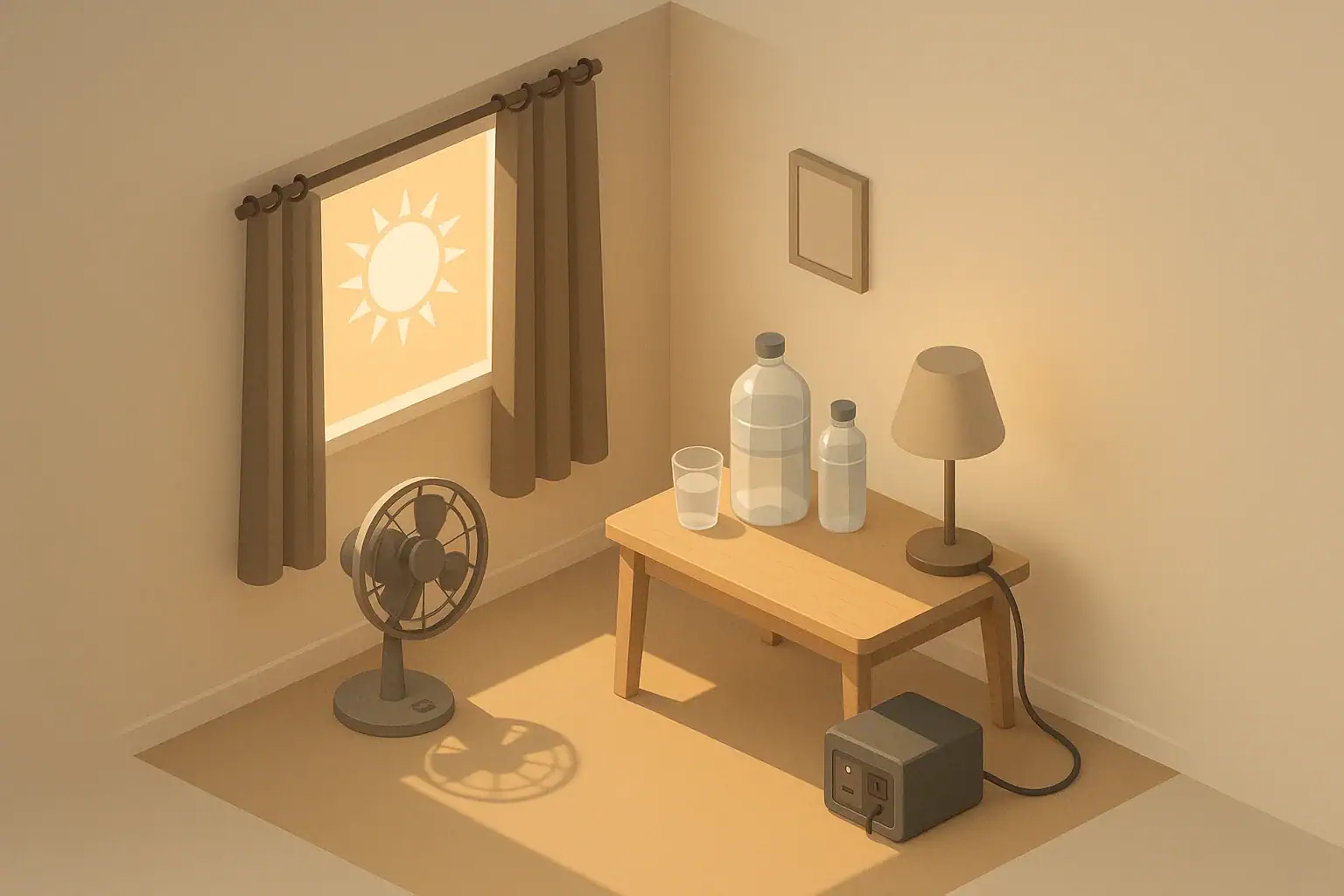
Why Heatwave Readiness Matters at Home
Heatwaves are becoming more frequent in many parts of the United States, and they can strain power grids, make indoor spaces uncomfortable, and increase the importance of staying hydrated. Preparing your home for hot weather does not require extreme measures. Simple steps can make your space cooler, keep you comfortable, and help you manage if the power goes out for a short time.
This guide focuses on practical, low-stress heatwave readiness for everyday households, including renters, apartment dwellers, families with kids, people living with older adults, and pet owners. The goal is to reduce discomfort and risk using realistic tools and habits you can maintain over time.
Cooling Your Home During a Heatwave
You may not be able to control the outdoor temperature, but you can influence how your home reacts to heat. Combining shading, ventilation, and smart use of appliances can significantly reduce indoor temperatures, especially during peak afternoon hours.
Shading and Blocking Heat
Sunlight streaming through windows can quickly heat up rooms. Reducing direct sun is one of the most effective and affordable ways to keep indoor spaces cooler.
- Close curtains and blinds on sun-facing windows, especially by late morning.
- Use light-colored window coverings if possible, as they reflect more heat than dark fabrics.
- Cover gaps around windows with simple draft stoppers or rolled towels to limit hot air leaks.
- Close doors to rooms you are not using to limit heat movement.
Smart Use of Fans and Air Conditioning
Air conditioners cool air, while fans move air over your skin to help you feel cooler. They work best when used thoughtfully rather than running constantly on high.
- Ceiling fans: Set them to run counterclockwise in summer so they push air downward.
- Room fans: Point fans toward people, not empty rooms. In the evening, you can face a fan toward an open window to draw cooler air in.
- Air conditioning: Choose a reasonable temperature setpoint instead of the lowest setting. This helps keep the unit from cycling too hard and eases demand on the power grid.
- Close windows and doors while AC is running so you are not cooling the outdoors.
If you do not have air conditioning, focus on shading, evening ventilation, and fans directed toward where you spend time. In very hot conditions, consider visiting cooler public spaces for part of the day, such as libraries or community centers, when that is an option.
Nighttime and Early-Morning Cooling
When outside temperatures drop overnight, you can “reset” your home’s heat buildup.
- Open windows safely in the late evening and early morning to let cooler air circulate.
- Use window fans to pull cool air in and push warm air out, if available and safe to use.
- Close windows, curtains, and blinds again before the sun rises high and temperatures climb.
Reducing Indoor Heat Sources
Every appliance that generates heat adds to your indoor burden. During a heatwave, small decisions can noticeably affect how hot rooms feel.
- Limit oven and stove use during the hottest hours; choose no-cook or microwave meals.
- Run heat-generating appliances (dishwashers, dryers) in the evening or early morning if possible.
- Turn off unnecessary lights, especially older bulbs that run hot.
- Unplug idle electronics that produce heat, such as unused game consoles or equipment.
Example values for illustration.
| Task | Why it matters | Notes |
|---|---|---|
| Close blinds on sunny windows by late morning | Reduces direct solar heat entering rooms | Prioritize south and west-facing windows |
| Run fans only in occupied rooms | Saves energy while keeping people comfortable | Fans cool people, not the air itself |
| Shift cooking to early morning or evening | Prevents extra heat during peak temperature hours | Use microwave, slow cooker, or no-cook meals |
| Open windows at night when safe | Brings in cooler air to reset indoor temperature | Close again before mid-morning heat builds |
| Close doors to unused rooms | Concentrates cooling where you spend time | Helps AC and fans work more efficiently |
| Use light bedding and breathable fabrics | Supports comfortable sleep during hot nights | Layer thin blankets instead of one heavy one |
Hydration and Heat-Friendly Food Planning
Staying hydrated and having easy, cool meals ready can significantly improve comfort during a heatwave. When the power goes out or cooking is difficult, simple water and food planning helps you avoid added stress.
Everyday Hydration Habits
In hot weather, people typically need more fluids than usual, but exact needs vary from person to person and by activity level. Focus on regular, steady drinking rather than large amounts all at once.
- Keep water visible and within reach for everyone in the household, including older adults.
- Offer drinks regularly to children, who may be too busy or distracted to ask.
- Limit very sugary drinks, which can be less refreshing for some people.
- Have a refillable bottle for each person so you can track intake more easily.
Use your own judgment and any guidance from your health care provider about how much and how often to drink, especially if you have conditions that affect fluid balance.
Simple Water Readiness for Short Heatwaves
For short-term events, it is useful to have some extra water stored in case of service interruptions or power loss affecting pumps. You do not need specialized containers to start.
- Reuse clean bottles and jugs to store tap water, labeled with the date they were filled.
- Store water in a cool, dark place away from cleaning chemicals.
- Plan extra water for pets, as they may drink more when it is hot.
- Rotate stored water periodically by using it for plants or cleaning and refilling.
If water quality is a concern in your area during outages, keep basic treatment supplies on hand, such as a household water filter or simple disinfection methods recommended by local authorities.
No-Cook and Low-Heat Meals
Cooking over a hot stove can make your home feel even warmer. Planning no-cook or low-heat meals ahead of a heatwave can keep your kitchen cooler and reduce your workload during the hottest hours.
- No-cook options: canned beans, nut butters, canned fish, ready-to-eat vegetables and fruits, shelf-stable milk, whole-grain crackers.
- Low-heat cooking: microwave meals, electric pressure cookers, or countertop appliances that run briefly and produce less heat than an oven.
- Pre-cook in the morning: boil eggs, cook grains, or prepare pasta salads early, then chill them for later.
- Plan for power outages: choose some items that are safe at room temperature until opened, and can be eaten without reheating.
Supporting Kids, Seniors, and Pets
Some household members may be more sensitive to heat and less able to manage hydration on their own.
- Older adults: Keep water and light snacks near favorite seats; check in regularly about how they feel.
- Kids: Offer fluids frequently and build “water breaks” into playtime or screen breaks.
- Pets: Provide multiple water bowls, keep them out of direct sun, and avoid hot pavement for walks when possible.
When in doubt about heat-related symptoms for yourself or others, seek guidance from a health professional or local health resources.
Power Outages During Heatwaves
High demand during heatwaves can stress power systems, sometimes leading to short outages or planned rolling blackouts. A basic plan helps you stay comfortable and make good use of any backup power you have.
Preparing Your Home Before an Outage
Before a heatwave or when outages are forecast, small steps can reduce the impact if the power does go out.
- Cool down the home early: Run AC in the morning to bring indoor temperatures down before peak hours.
- Pre-chill the refrigerator and freezer by keeping doors closed as much as possible.
- Charge devices fully, including phones, power banks, and any rechargeable fans or lights.
- Gather low-tech lighting, such as flashlights and battery-powered lanterns.
Staying Cooler Without Power
If the power goes out, you will likely lose access to air conditioning and some fans. Focus on maintaining shade, airflow, and hydration.
- Keep curtains and blinds closed on sunny sides of the home.
- Open windows when outdoor air is cooler than indoors and it is safe to do so.
- Use battery-powered fans sparingly to extend battery life.
- Move to the coolest part of the home, often lower floors or interior rooms away from direct sun.
Damp washcloths or cool showers (if water is available) can also help you feel more comfortable, but use common sense and any medical guidance you have received.
Managing Refrigerators and Food Safety
During shorter outages, the goal is to keep cold air trapped inside refrigerators and freezers.
- Keep doors closed as much as possible to hold in the cold.
- Group needed items together before opening, so you can grab them quickly.
- Use coolers with ice for frequently accessed drinks or snacks to protect main fridge temperature.
Follow local food safety guidance about what to keep or discard after longer outages or if you are unsure about temperatures.
Basic Backup Power Ideas
You do not need a whole-house generator to improve comfort during short heat-related outages. Even small backup options can help you power essentials like phones, small fans, or a light.
- Power banks: Handy for keeping phones and small devices running for calls and updates.
- Rechargeable fans and lights: Some can run for several hours on a single charge.
- Small portable power stations: These can sometimes run a fan, modem, or a few low-wattage devices for limited periods.
- Solar panels: Compact panels can recharge small devices or power stations over several hours of sun.
When planning backup power, list what you most want to keep running (for example, one fan and phone charging) and match your battery or power station capacity to those needs. Focus on low-power devices that provide the biggest comfort or communication benefit.
Apartment, House, and Small-Space Strategies
Your best heatwave strategies will vary based on your living situation. Renters and apartment dwellers may have different options than people in single-family homes.
Apartment and Renter Considerations
If you rent or live in a building with shared systems, you may not be able to install large equipment, but you still have useful options.
- Use removable window coverings like curtains or temporary reflective panels that do not damage frames.
- Coordinate with neighbors about shared spaces that may be cooler, such as shaded courtyards or north-facing hallways, if permitted.
- Know building rules around portable AC units or window units before purchasing or installing anything.
- Ask management about cooling centers or common areas that remain powered during planned outages.
Single-Family Homes
Detached homes sometimes have more roof and wall exposure to sun but also more control over shading and insulation.
- Add exterior shade if possible, such as temporary shade sails or planting long-term trees and shrubs.
- Check insulation and weather-stripping to reduce heat transfer through the building envelope.
- Identify the coolest area of the house (often a basement or north-facing room) as a heatwave retreat space.
- Consider whole-house fans where appropriate and safe, to exhaust hot air during cooler evenings.
Shared Rooms and Small Spaces
In studios, dorms, or small apartments, you may not have much flexibility, but you can still prioritize comfort.
- Zone your space by creating a shaded “cool corner” with the best airflow.
- Use compact, multi-purpose items such as a small fan that can clip to furniture.
- Store water and supplies vertically on shelves to keep walkways open.
- Keep windows unobstructed so you can open them easily during cooler hours.
Family and Household Heatwave Plan
A simple household plan ensures everyone knows what to do before and during a heatwave or related outage. This is especially important for families with kids, older adults, and pets.
Setting Household Expectations
Discussing heatwave plans ahead of time makes it easier to respond calmly when temperatures rise or power flickers.
- Agree on “cool rooms” where people will gather during the hottest part of the day.
- Decide on daytime activities that do not rely on power, such as board games or quiet reading.
- Create a simple communication plan in case phones lose power or service is disrupted.
- Note special needs for household members who rely on powered medical devices and ask their providers about backup options.
Simple Comfort Kit for Heatwaves
You can assemble a basic “heatwave comfort kit” using items you likely already own. Keep it in an easy-to-reach place.
- Battery-powered or rechargeable fan.
- Flashlights or lanterns with extra batteries.
- Reusable water bottles for each person.
- Lightweight blankets or sheets for flexible layering.
- No-cook snacks that keep well.
- Backup charging for phones and small devices.
Checking on Neighbors and Relatives
Heatwaves can be especially hard on people who live alone, particularly older adults or those with limited mobility.
- Identify nearby relatives or neighbors who may need a check-in during hot days.
- Agree on a simple contact schedule, such as a call or message at certain times.
- Share information about local cooling centers or community resources.
Example values for illustration.
| Device type | Typical power range (watts, example only) | Planning notes |
|---|---|---|
| Small USB fan | 5–10 W (example) | Prioritize for one room where people gather |
| LED lantern or light | 1–5 W (example) | Very efficient; one light can serve a shared space |
| Smartphone charging | 5–15 W while charging (example) | Charge fully, then unplug to save backup capacity |
| Portable radio | 1–3 W (example) | Uses little power; good for receiving updates |
| Wi-Fi router | 5–15 W (example) | Decide if internet is a priority over extra fan time |
| Small laptop | 30–60 W while in use (example) | Use sparingly; screens and processors add heat |
Keeping Perspective and Adjusting Over Time
Heatwave readiness is not about perfection or collecting specialized gear. It is about small, practical steps that make your home more comfortable and flexible when temperatures climb. Start with shading, basic hydration habits, and a short checklist for outages. Over time, you can add or adjust items based on what works best in your climate, home type, and household.
By approaching heatwaves with a calm, prepared mindset, you can reduce stress, stay more comfortable, and focus on the routines and people that matter most in your daily life.
Authoritative sources
Safety recommendations can change. Confirm critical details with current official guidance and local authorities.
- CDC: Carbon Monoxide Poisoning Basics
- US EPA: Emergency Disinfection of Drinking Water
- USDA FSIS: Keep Food Safe During Emergencies
Frequently asked questions
How can I keep my home cooler during peak afternoon hours without running air conditioning?
Reduce solar gain by closing curtains or blinds on sun-facing windows and using light-colored coverings when possible. Limit use of heat-generating appliances during peak heat, run fans in occupied rooms, and pre-cool the house in the morning so interior temperatures start lower before the hottest part of the day.
How much extra water should I store for short heatwave-related outages?
For short events, a practical guideline is to store at least one gallon per person per day for drinking and basic needs, and extra for pets. Keep water in clean, sealed containers in a cool, dark place and rotate supplies periodically to maintain freshness.
What should I do with refrigerated food if the power goes out during a heatwave?
Keep refrigerator and freezer doors closed as much as possible to retain cold air; a refrigerator can generally keep food safe for up to about four hours if unopened, while a full freezer can remain safe for up to 48 hours. Use a food thermometer if available and discard perishable items that have been above 40°F (4°C) for more than two hours.
Which low-power backup options give the best benefit for heatwave readiness at home?
Prioritize small, efficient options such as power banks for phones, rechargeable or battery-powered fans, and LED lanterns; a modest portable power station can also run a fan and charge devices for limited periods. Match the capacity of batteries or stations to the devices you most need (for example one fan and phone charging) to optimize comfort during outages.
What cooling improvements can renters make without permanent changes?
Renters can use removable window coverings, temporary reflective panels, and insulating film that do not damage frames, and place blackout curtains on sunny windows. They can also coordinate with neighbors about shared cooler spaces and check building management for rules on portable cooling devices or available common-area cooling.
- Simple checklists and realistic planning
- Water, power, lighting, and pantry basics
- Family plans (kids, pets, seniors) and seasonal prep
Affiliate disclosure
As an Amazon Associate, we earn from qualifying purchases. Some links on this site may be affiliate links. If you buy through these links, we may earn a small commission at no extra cost to you. This helps support our content. Learn more.