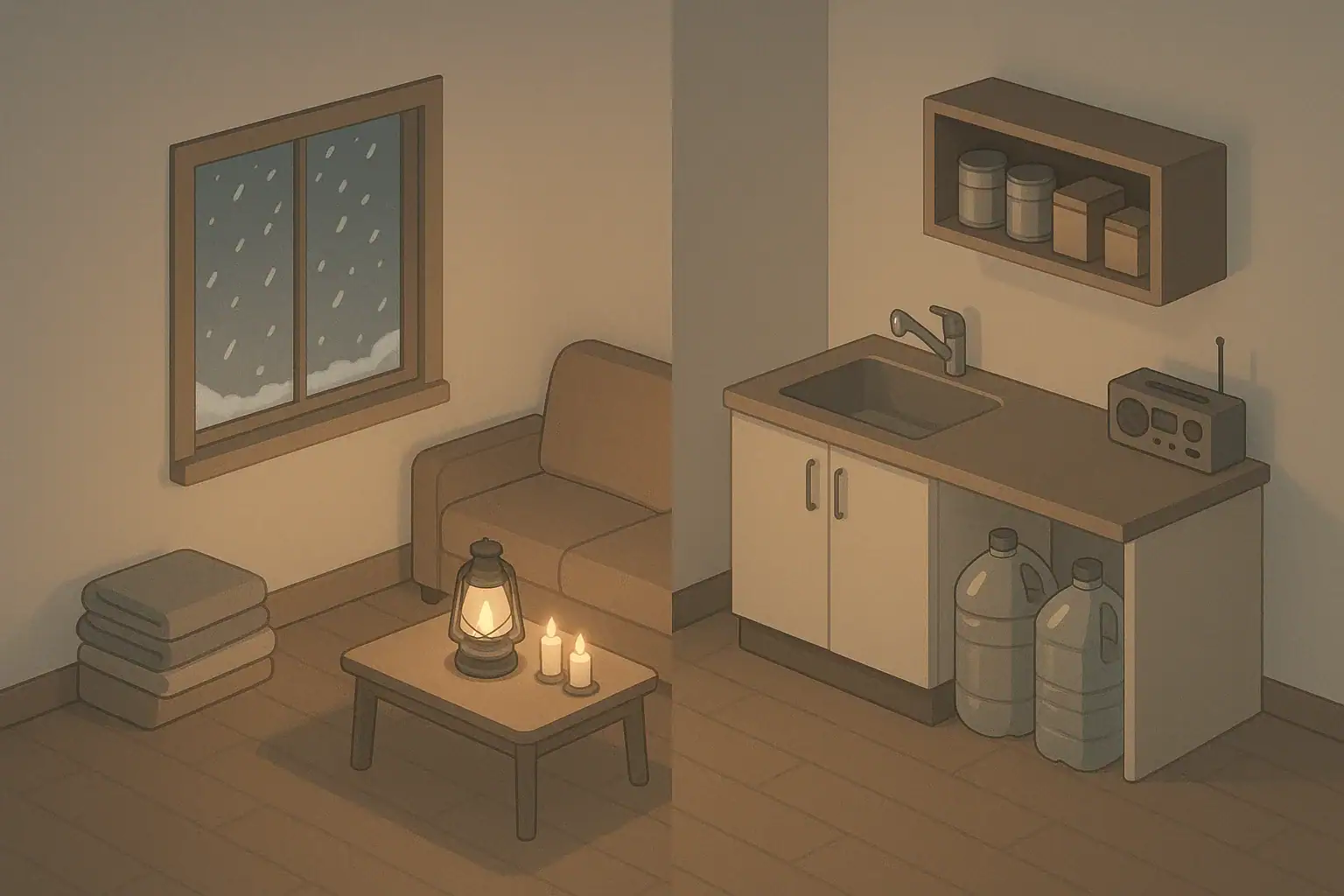
Why Winter Storm Readiness Matters in Apartments
Winter storms in the U.S. can bring heavy snow, ice, and extreme cold. Even in cities and large apartment buildings, storms can cause short-term power outages, water interruptions, and difficulty getting outside for supplies. Preparing in advance does not mean expecting the worst. It simply means having a basic plan so your household stays warm enough, hydrated, and safe for a few days if services are disrupted. Apartment living has both advantages and limits in winter storms. Shared walls can help retain heat, but you may not control the heating system or building maintenance. Space for storage is tighter, and many backup power and heating options used in houses are not safe or allowed indoors. A focused, apartment-friendly plan helps you cover the essentials without clutter or stress. This guide focuses on three areas: keeping safe and as warm as possible, managing water, and organizing simple safety steps that work in small spaces for renters, families, kids, seniors, and pets.Step 1: Heat and Warmth in a Winter Apartment Outage
In an apartment, you usually cannot use generators, fuel heaters, or other outdoor-only equipment. That makes passive warmth and safe, low-power options especially important. The goal is not luxury comfort but avoiding dangerous indoor temperatures if the heat goes off for a short period.Before the Storm: Reduce Heat Loss
Small changes ahead of time can slow heat loss and make an outage more manageable:- Seal drafts: Use draft stoppers, towels, or rolled blankets at the base of exterior doors and leaky windows.
- Layer window coverings: Close blinds and curtains at night; add a blanket or sheet over the curtain rod for extra insulation if needed.
- Close off unused rooms: Keep interior doors closed during an outage so body heat and any safe heat source stay in a smaller area.
- Locate interior room options: Identify an inner room or hallway with few windows as your primary “warm room” during a power loss.
Clothing and Bedding Layers
Layering is one of the simplest ways to stay warm without power:- Base layer: Thin, long-sleeve shirts and leggings help trap warmth close to the skin.
- Middle layer: Sweaters, sweatshirts, or light jackets for insulation.
- Outer layer: A coat, robe, or heavier layer if temperatures fall further.
- Extremities: Warm socks, slippers, hats, and light gloves or mittens for indoors.
- Bedding: Extra blankets or comforters stored together where you can grab them quickly.
Safe Heat and Power Options for Apartments
Most apartments limit what you can use indoors. Always follow building rules and safety instructions, and avoid any device that burns fuel inside without proper venting. For many renters, the focus will be on low-power and no-power options:- Electric blankets or heating pads (for when power is on): These can make cool rooms feel comfortable without turning up the thermostat.
- Small backup power stations: Can run low-watt devices like phones, a small fan, or a task light for limited hours. Plan based on your most important items, not to power the whole home.
- Hot water bottles: If water and some form of heating are available, warm (not scalding) water in a sealed bottle wrapped in cloth can add comfort in bed.
| Task | Why it matters | Notes |
|---|---|---|
| Identify your warmest interior room | Concentrates body heat and supplies | Prefer a room with few or no windows |
| Gather extra blankets and bedding | Helps maintain warmth overnight | Aim for at least one extra layer per person |
| Prepare draft stoppers for doors | Reduces cold air leaks | Rolled towels can work in a pinch |
| Set aside layered indoor clothing | Makes it easy to dress warmly fast | Include hats, socks, and light gloves |
| Check smoke and CO alarms | Essential if any fuel appliances are used | Test batteries at the start of winter |
| Clarify building heating policies | Know what to expect in an outage | Ask management about backup heat plans |
Step 2: Water Readiness in a Winter Storm
In many winter storms, tap water continues to work. But frozen pipes, pump failures, or short-term water main issues can happen, especially during extended outages or severe cold snaps. In an apartment, you may not have space for large barrels, so the focus is on compact, manageable storage and simple treatment options.How Much Water to Store in an Apartment
A commonly suggested planning target is around a few gallons of water per person per day for basic drinking and hygiene needs. In a small space, you may not be able to store that full amount for many days, but even a partial supply gives you more options. Consider:- People in the household: Adults, kids, and seniors.
- Pets: Dogs, cats, or others may need extra water.
- Space limits: Under-bed storage, closet floors, or bottom cabinets are often the best spots.
Storage Containers and Space-Saving Ideas
Use containers that are food-safe and seal well. Options include:- Store-bought sealed water: Convenient for small apartments; easy to rotate by using and replacing.
- Refillable containers: Sturdy jugs or stackable containers that fit under beds or in closets.
- Collapsible containers: Can be stored flat when not filled and topped off when a storm is forecast.
Basic Water Treatment Options
In most short winter events, municipal water remains safe. Still, a simple treatment backup is useful if advisories are issued or if you must collect water from alternate sources inside the building.- Boiling: If you have a working stove or electric kettle and power, boiling water for several minutes is a common household method to improve safety.
- Household water filters: Gravity or pitcher-style filters can improve taste and clarity; follow their instructions.
- Water treatment tablets or drops: Compact and easy to store; always follow the product directions and wait times.
Step 3: Food and Simple Meal Planning
With icy roads or store closures, quick grocery runs may not be possible for a few days. A compact pantry plan keeps you from needing to go out during the worst conditions, without turning your apartment into a storage locker.Apartment-Friendly Pantry Basics
Choose shelf-stable foods that you already like and eat. Focus on items that are easy to prepare with minimal equipment:- Canned beans, vegetables, fruits, and soups.
- Dry grains like rice, oats, and pasta.
- Nut butters, shelf-stable milk alternatives, and crackers.
- Foods that can be eaten cold if necessary, such as some canned items and ready-to-eat snacks.
Cooking When Power Is Limited or Out
Plan for at least a few meals that require no cooking:- Ready-to-eat canned foods that do not require heating.
- Granola bars, nuts, and dried fruit.
- Instant foods that can be made with hot tap water if available.
Step 4: Safe Lighting and Backup Power
Winter storms often bring short outages as lines are repaired. In an apartment, you do not need to power everything; focus on light, communication, and maybe one or two small comfort items.Lighting for Small Spaces
Keep a mix of portable lights where you can find them in the dark:- Battery-powered lanterns: Provide ambient light for a room without open flames.
- Flashlights or headlamps: Useful for walking stairwells, hallways, and taking care of kids or pets.
- Limited candle use: If you choose to use candles, place them in sturdy holders, keep them away from curtains and bedding, and never leave them unattended or near children or pets.
Small Backup Power Planning
Set simple priorities for any backup power you have, such as a power bank or small power station:- Charging phones for emergency calls and information.
- Powering a small light or radio.
- Occasional use of a laptop or tablet for communication or work, if capacity allows.
Step 5: Safety Checks, Communication, and Building Coordination
Apartment winter readiness is not just about supplies. Knowing who to contact and how your building handles storms reduces stress when conditions actually hit.Home Safety Basics
Use the start of winter as a reminder to review core safety items:- Smoke alarms: Test monthly and replace batteries on a regular schedule.
- Carbon monoxide alarms: Especially important if your building uses gas or other fuel-burning systems.
- Fire extinguisher: Know where it is and how to use it according to directions.
- Flashlight-only stair plans: Practice how you would navigate your building if hallway lights were off.
Communication Plans for Households and Neighbors
Winter storms can disrupt cell service temporarily, and family members may be in different places when a storm begins.- Emergency contacts: Write down key numbers in case phones lose power or data.
- Out-of-area contact: Choose one person outside your region each family member can check in with if local networks are busy.
- Neighbor check-ins: Consider exchanging contact information with at least one trusted neighbor, especially if anyone nearby is elderly or has mobility challenges.
Pets, Kids, and Seniors in Apartments
Adjust your plan to the people and animals in your home:- Pets: Keep extra pet food, a spare leash, waste bags or litter, and a blanket or bed in your warm room.
- Kids: Set aside quiet activities that do not need power, such as books, puzzles, or simple toys.
- Seniors or those with mobility needs: Place key supplies within easy reach, and plan for any devices that rely on power (such as mobility aids that recharge). Talk with healthcare providers ahead of the season about backup options if needed.
Step 6: Simple Hygiene and Sanitation During a Storm
Short winter outages usually do not cause major sanitation issues, but planning for basic hygiene keeps your apartment comfortable and reduces stress if water or power is limited for a couple of days.Bathroom and Trash Management
If water is interrupted:- Use stored water to manually flush toilets by pouring into the bowl, if your plumbing allows.
- Keep a small supply of heavy-duty trash bags for diapers, pet waste, or other items that may need to be sealed.
- Use disinfecting wipes or simple cleaning solutions for high-touch surfaces.
No- or Low-Water Hygiene Options
Set aside a small kit for staying clean without long showers:- Hand sanitizer for when soap and water are not convenient.
- Baby wipes or washcloths for quick cleaning.
- Toothbrushes and toothpaste stored in a waterproof bag within your main kit.
| Need | Simple supplies | Safe use note | Disposal idea |
|---|---|---|---|
| Hand cleaning | Soap, water, hand sanitizer | Use sanitizer on visibly clean hands only | Regular trash if local rules allow |
| Body wipes | Baby wipes or damp cloths | Avoid flushing wipes to protect plumbing | Seal in small trash bag before discarding |
| Toilet flushing | Stored water in buckets | Pour into bowl slowly to avoid splashing | Use normal toilet plumbing when available |
| Pet waste | Litter, waste bags | Keep away from food areas | Double-bag if pickup is delayed |
| Surface cleaning | Disinfecting wipes or spray | Ventilate room when possible | Dispose of used wipes in lined trash |
| Trash buildup | Extra trash bags, ties | Keep bags sealed to reduce odors | Store in a cool corner until collection |
Putting Your Apartment Winter Plan Together
A winter storm readiness plan for apartments does not need to be complicated. Focus on what you can control: keeping one room warm, having several days of water and easy food, maintaining safe lighting and simple power backups, and knowing how your building responds in an outage. Once a year, preferably before the coldest months, review your supplies and use what you have in everyday life so nothing goes to waste. Make small adjustments as your household changes—new pets, growing kids, or new roommates. With a calm, practical plan in place, your apartment can stay habitable and comfortable enough through most typical winter storms.Related guides: Summer Blackouts: Keeping Water Cold and Food Safe · Printed Neighborhood Contact Sheet: Who to Call When Phones Are Busy.
Authoritative sources
Safety recommendations can change. Confirm critical details with current official guidance and local authorities.
- CDC: Carbon Monoxide Poisoning Basics
- US EPA: Emergency Disinfection of Drinking Water
- USDA FSIS: Keep Food Safe During Emergencies
Frequently asked questions
How much water should I realistically store in an apartment for a winter storm?
A common guideline is about 1 gallon per person per day for drinking and basic hygiene, and aiming for at least three days is prudent when possible. In small apartments, prioritize storing drinking water and add extra for pets; use sealed bottles, jugs, or collapsible containers that fit under beds or in closets. If a storm is forecast and water is still running, temporarily filling a bathtub or sinks gives extra usable water for flushing and cleaning.Are small battery backup power stations safe to use in apartments?
Small battery power stations are generally safe indoors when used according to the manufacturer’s instructions because they do not produce combustion gases. They are best for charging phones, powering lights, and running low-watt devices, not for heating or high-draw appliances. Always follow building rules and keep units dry and on stable surfaces.What heating options are safe to use inside an apartment during a power outage?
Focus on passive measures like sealing drafts, concentrating in an interior warm room, wearing layered clothing, and using extra bedding or hot water bottles. Electric heating devices should only be used while the building has power and per device instructions; fuel-burning heaters, grills, and gas ovens must not be used for indoor heat due to fire and carbon monoxide risks. Check your lease and building policies before using any supplemental heat source.How can I reduce the risk of frozen pipes in an apartment?
Keep your thermostat at a consistent minimum when temperatures drop and, if safe, let a small trickle of water run from faucets to keep water moving in pipes. Open cabinet doors to allow warmer air to reach plumbing and seal drafts around exterior walls and windows near pipe runs. Notify building management immediately if you lose heat or suspect a frozen pipe so they can take building-level measures.How should I plan for pets, children, or seniors during a winter storm in an apartment?
Maintain a compact kit with extra pet food and water, medications, mobility device chargers, and comfort items, and keep it in your designated warm room for easy access. Include quiet, power-free activities for children and ensure seniors have reachable supplies and a way to charge communication devices. Exchange contact info with trusted neighbors and inform building management if someone needs special assistance during outages.About
ReadyHomePlan
ReadyHomePlan publishes practical home readiness guides for outages and short-term emergencies—power, water, food basics, communication, and family planning—without hype.
- Simple checklists and realistic planning
- Water, power, lighting, and pantry basics
- Family plans (kids, pets, seniors) and seasonal prep
Affiliate disclosure
As an Amazon Associate, we earn from qualifying purchases. Some links on this site may be affiliate links. If you buy through these links, we may earn a small commission at no extra cost to you. This helps support our content. Learn more.