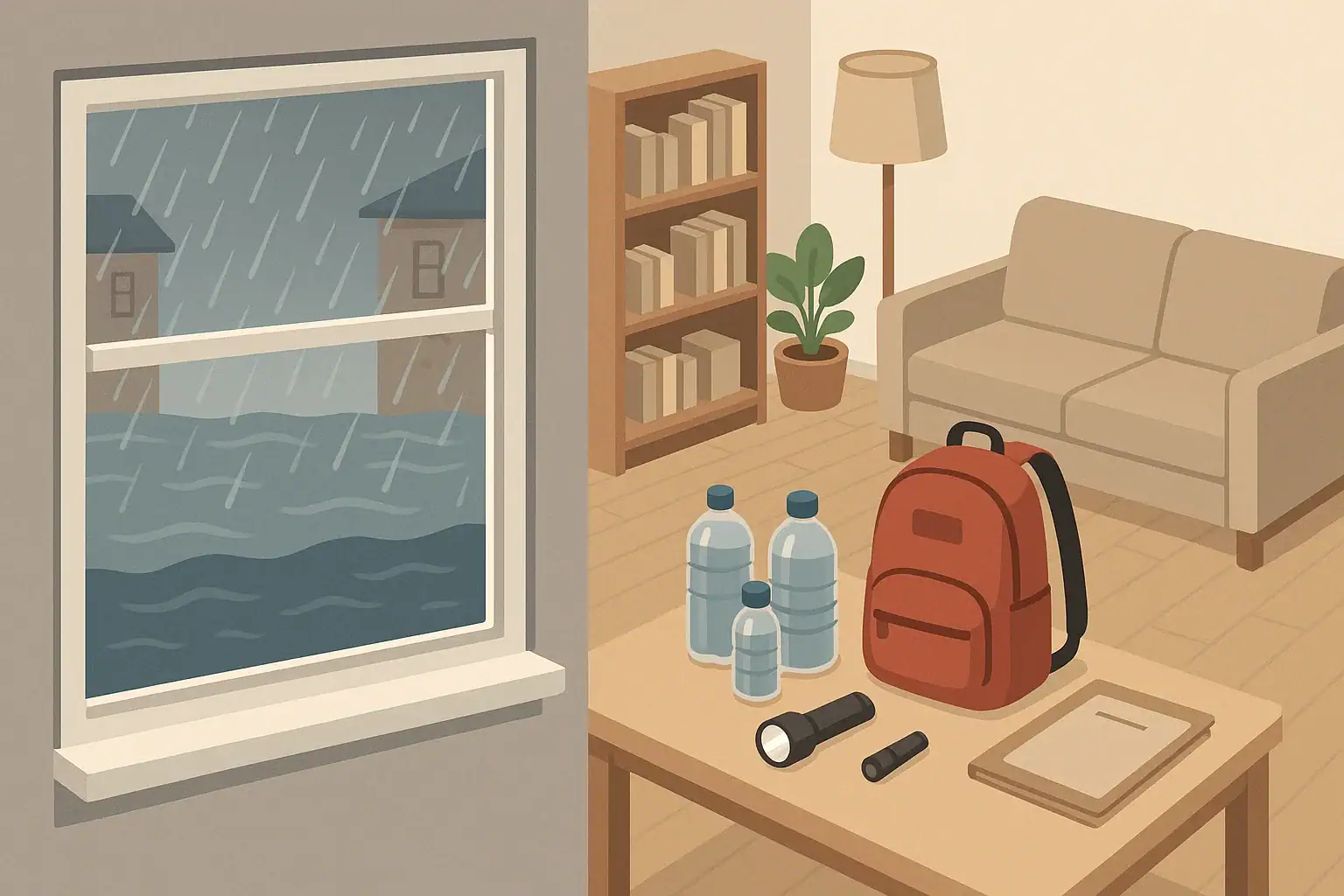
Understanding Basic Flood Risk at Home
Flooding can happen almost anywhere, not just in coastal areas or near large rivers. Heavy rain, clogged drains, snowmelt, or water main breaks can all cause water to enter homes and apartments. You do not need to know every technical detail to be reasonably prepared. A few simple decisions made ahead of time can make leaving safer and coming back easier.
This guide focuses on three practical questions:
- What should you move to safer locations before water rises?
- What should you pack if you might need to leave quickly?
- What should you document now so insurance and recovery are less stressful later?
The goal is readiness without panic. You can build these habits gradually, whether you live in a house, townhouse, or apartment, and whether you rent or own.
What to Move to Higher Ground
When flooding is possible, the first priority inside your home is getting important and hard-to-replace items above likely water levels. Even a few inches of water can ruin electronics, furniture bases, and paper records.
Start with safety-sensitive items
Some items can be hazardous if they get wet or if they move around in flowing water inside your home. If there is time and it is safe to do so, move these first:
- Small electrical items on the floor such as power strips, space heaters, and low surge protectors.
- Battery boxes or loose batteries stored on low shelves.
- Cleaning chemicals and paints that could spill and mix.
- Small propane cylinders or fuel containers kept in basements or low storage areas (move to a higher, well-ventilated area or outdoors if recommended locally).
Protect what is hard or slow to replace
After safety items, focus on belongings that are difficult to replace or that would cause major disruption if lost.
- Important documents such as IDs, insurance papers, leases, home deeds, and financial records.
- Essential electronics including laptops, tablets, and backup drives.
- Sentimental items such as photo prints, keepsakes, and memory books.
- Work tools and materials you rely on for income.
Place these on higher shelves, upper floors, or inside sturdy containers that are less likely to be tipped over. Even moving things from the floor to a table or from a low shelf to a high one can make a difference in shallow flooding.
Special considerations by living situation
Your exact steps will depend on where and how you live.
- Ground-floor apartments: Focus on moving items onto beds, counters, or tall bookshelves. Ask building management where flood water has reached in the past.
- Basements: Avoid storing anything critical directly on the floor. Use raised shelving or pallets, and keep cardboard boxes to a minimum. Plan ahead for quickly lifting items to higher shelves.
- Houses with multiple stories: Move the most important items to upper floors if there is time. If not, pick the highest stable furniture you have.
- Renters: You may not control the building structure, but you can control what sits on the floor and how easily you can lift or slide containers.
If local officials issue an evacuation order, follow that guidance. Do not delay leaving to save belongings if it reduces your safe travel time.
Example values for illustration.
| Item or area | Why it matters | Notes |
|---|---|---|
| Power strips on floor | Reduce shock and fire risk | Unplug and place on table or higher shelf |
| Important documents | Needed for insurance and services | Store in one folder that can go in a go-bag |
| Laptops and small electronics | Costly and disruptive to replace | Keep off floor, near your exit route |
| Medication containers | Essential for daily routines | Move to high, visible location near door |
| Pet supplies on low shelves | Supports safe care of animals | Raise food, carriers, and leashes |
| Photo albums and keepsakes | Sentimental and often irreplaceable | Store in lidded bins on higher shelves |
| Cleaning chemicals | Limit spills and mixing in floodwater | Place on middle to upper shelves |
What to Pack: Simple Flood Go-Bag Basics
A go-bag is a small kit you can carry if you need to leave quickly for a night or two. For flood risk, think about what lets you be reasonably comfortable if you cannot return home right away, or if utilities are disrupted.
Core items for most households
Pack these in a backpack or small duffel bag that is easy to grab and carry:
- Copies of key documents in a sealed plastic bag (paper and/or digital copies on a device you use regularly).
- Basic clothing for 1–3 days, including socks and undergarments.
- Lightweight outerwear and a simple rain layer if space allows.
- Hygiene basics such as toothbrush, toothpaste, soap, tissues, and a small towel or washcloth.
- Simple first-aid items like bandages, antiseptic wipes, and any non-prescription basics you use regularly.
- Flashlight or small lantern plus extra batteries or a built-in rechargeable option.
- Portable power bank and charging cables for essential devices.
- Non-perishable snacks such as energy bars, nuts, or crackers.
- Water bottles that you can refill when safe water is available.
Medications and personal needs
Every household has different medical and personal requirements. Consider:
- Prescription medications in their original containers when possible.
- Spare glasses or contact lenses and supplies if needed.
- Assistive devices such as hearing aid supplies, mobility supports, or other daily-use items.
- Sanitary supplies and incontinence products, if needed.
Try to keep a small reserve of critical items that can stay in or near your go-bag. If that is not possible, keep a clearly written list in the bag of what you must grab from daily-use locations.
Families, kids, seniors, and pets
Flood evacuations often involve multiple people and animals leaving at the same time. Planning for everyone ahead of time keeps last-minute decisions simpler.
- Children: Pack a small comfort item, simple activity (like a small toy or blank notebook and pencil), and appropriately sized clothing.
- Seniors: Consider mobility supports, spare clothing that is easy to put on, and any written care information.
- Pets: Prepare a small kit with a collapsible bowl, leash, basic food supply, and copies of vaccination or ownership records if available.
Store go-bags close to your primary exit. If you have a vehicle, you can keep a small portion of supplies in the trunk, but avoid storing medications in hot or freezing conditions unless guidance says it is acceptable.
What to Document Before and After a Flood
Documentation helps with insurance, rental claims, and planning repairs. Doing a little of this in advance saves time when stress is higher.
Home inventory basics
A simple home inventory does not need special software. You can:
- Walk through each room and take clear photos or short videos of furniture, appliances, and key items.
- Open closets and cabinets and record the contents briefly.
- Note serial numbers for major electronics and appliances where they are easy to see.
- Save basic purchase info for high-value items if you have it.
Store copies of your inventory in at least two places, such as on a phone you use regularly and a separate storage device kept in your go-bag or at another safe location.
Documents to keep safe and backed up
For floods, think about documents in two groups: what you must have with you and what can be backed up elsewhere.
- Carry with you (or have quick access to):
- Identification documents.
- Lease, mortgage, or deed information.
- Insurance policy details for home, renters, and vehicles.
- Contact information for employers, schools, and property managers.
- Back up securely:
- Photos of each room and valuable items.
- Scans or images of key documents.
- Lists of account numbers, without passwords.
Documenting damage safely after water recedes
When authorities say it is safe to return, documenting flood impacts can help with claims and planning. Prioritize safety first. Follow any local instructions about protective gear and hazards before entering a previously flooded space.
Once it is safe inside:
- Take wide photos of each room before moving items, showing water lines on walls and furniture.
- Photograph close-ups of damaged items, especially anything you may discard later.
- Note approximate water depth inside and outside if you can safely do so.
- Keep a simple log of dates, who you spoke with (for example, building management or insurance representatives), and any instructions you received.
Store these records in more than one place. If using a phone, consider backing up photos when you have a reliable connection.
Flood Readiness in Different Home Types
The same basic principles apply everywhere: move important items up, pack a small kit you can carry, and document your space. How you do that will look different depending on your home.
Apartments and multifamily buildings
In shared buildings, your main controls are inside your own unit and your personal schedule.
- Know your building exits: Identify at least two ways out if possible, including stairs if elevators are not available.
- Ask management about past flooding: Learn which areas flood first (basement garage, lobby, storage units) and plan storage accordingly.
- Keep storage off the ground: In basement or ground-level storage units, use raised shelving and plastic bins with lids where allowed.
- Coordinate with neighbors: If you or someone in your household has mobility limitations, talk with trusted neighbors about simple support, such as carrying a bag down stairs.
Single-family homes and townhouses
For houses, you may have more control over storage and minor home adjustments.
- Identify lower-risk storage areas: Use higher shelves, attic storage (if safe and dry), or upper floors for high-value items.
- Protect utilities where possible: Ask qualified professionals about raising equipment or protecting critical components if you are in a high-risk area.
- Plan vehicle parking: If higher ground parking is available nearby during storms, consider using it when safe and permitted.
- Know where water tends to collect: Observe where yard or street water pools during heavy rain and avoid storing critical items nearby.
Shared considerations for renters and owners
Renters and owners both benefit from basic flood readiness, though responsibilities may differ.
- Understand your coverage: Know what your renter or homeowner policy does and does not cover related to water.
- Keep management and insurance contacts handy: Store contact numbers and policy details in your go-bag.
- Report issues early: Standing water, leaks, or clogged drains can sometimes be addressed before weather worsens.
Example values for illustration.
| Food type | Storage tip | Rotation interval idea | No-cook or low-cook use |
|---|---|---|---|
| Canned beans | Store in a cool, dark cabinet | Check dates every few months | Rinse and eat with spices or simple toppings |
| Canned vegetables | Group by type on one shelf | Use oldest cans first | Eat straight from can or lightly warmed |
| Nut butters | Keep tightly closed after each use | Replace when opened containers run low | Spread on crackers or bread |
| Crackers and dry breads | Seal in airtight bags or containers | Rotate every couple of months | Pair with canned items or spreads |
| Ready-to-eat soups | Stack labels facing forward for easy checks | Use and replace a few cans each season | Can be eaten at room temperature if needed |
| Granola or energy bars | Store in a small bin within reach | Rotate as part of normal snacks | Quick no-cook calories during evacuations |
Keeping Flood Preparedness Manageable Over Time
Flood readiness does not have to be completed all at once. You can spread tasks over weeks or months:
- First, choose a safe place to keep your most important documents and start a basic photo inventory.
- Next, assemble a small go-bag with clothing, hygiene items, a flashlight, and simple snacks.
- Then, adjust your everyday storage so fewer critical items sit directly on the floor.
- Finally, once or twice a year, review your plan, check your supplies, and update photos and contact lists.
By treating flood preparedness as a routine home task, like seasonal cleaning or checking smoke alarms, you build habits that support calm, practical decisions when water levels start to rise.
Authoritative sources
Safety recommendations can change. Confirm critical details with current official guidance and local authorities.
- CDC: Carbon Monoxide Poisoning Basics
- USDA FSIS: Keep Food Safe During Emergencies
- U.S. CPSC: Battery Safety
Frequently asked questions
How high should I move items to protect them from typical floodwater?
Move items above the expected water level when possible, ideally to an upper floor or high, stable shelving. Even a few inches of water can damage electronics, furniture, and paper records, so prioritize removing things from the floor. If you know historical local flood heights, try to exceed those; otherwise assume water can reach several inches to feet during severe events.
What documents should I include in a flood go-bag?
Include photo ID, insurance policy information and emergency contact numbers, lease or deed paperwork, recent prescription details, and copies of key financial documents. Keep paper copies in a waterproof bag and maintain digital backups on your phone or an encrypted storage device. Consider adding pet vaccination records and recent photos of valuable items for insurance claims.
How do I safely document damage after floodwaters recede?
Only enter a flooded property when authorities say it is safe and follow any guidance about protective equipment and hazards. Before removing items, take wide photos of each room showing water lines, then close-ups of damaged items and serial numbers. Keep a dated log of communications with officials and insurers, and back up your photos to multiple locations.
Can I store medications in my vehicle or trunk during a flood evacuation?
Avoid leaving temperature-sensitive medications in a hot or freezing vehicle for long periods because effectiveness can degrade. If you must transport medicines by car temporarily, keep them in an insulated bag and try to keep them with you rather than in the trunk. For refrigerated or critical medications, consult your pharmacist about safe short-term storage options.
What specific steps should renters take that differ from homeowners?
Renters should focus on what they control: move personal belongings off the ground, keep a go-bag and important documents on higher levels, and photograph the unit’s preexisting condition. Contact building management about known flood areas and report maintenance concerns early. Check renter’s insurance for water-related coverage and keep landlord and policy contacts accessible.
- Simple checklists and realistic planning
- Water, power, lighting, and pantry basics
- Family plans (kids, pets, seniors) and seasonal prep
Affiliate disclosure
As an Amazon Associate, we earn from qualifying purchases. Some links on this site may be affiliate links. If you buy through these links, we may earn a small commission at no extra cost to you. This helps support our content. Learn more.