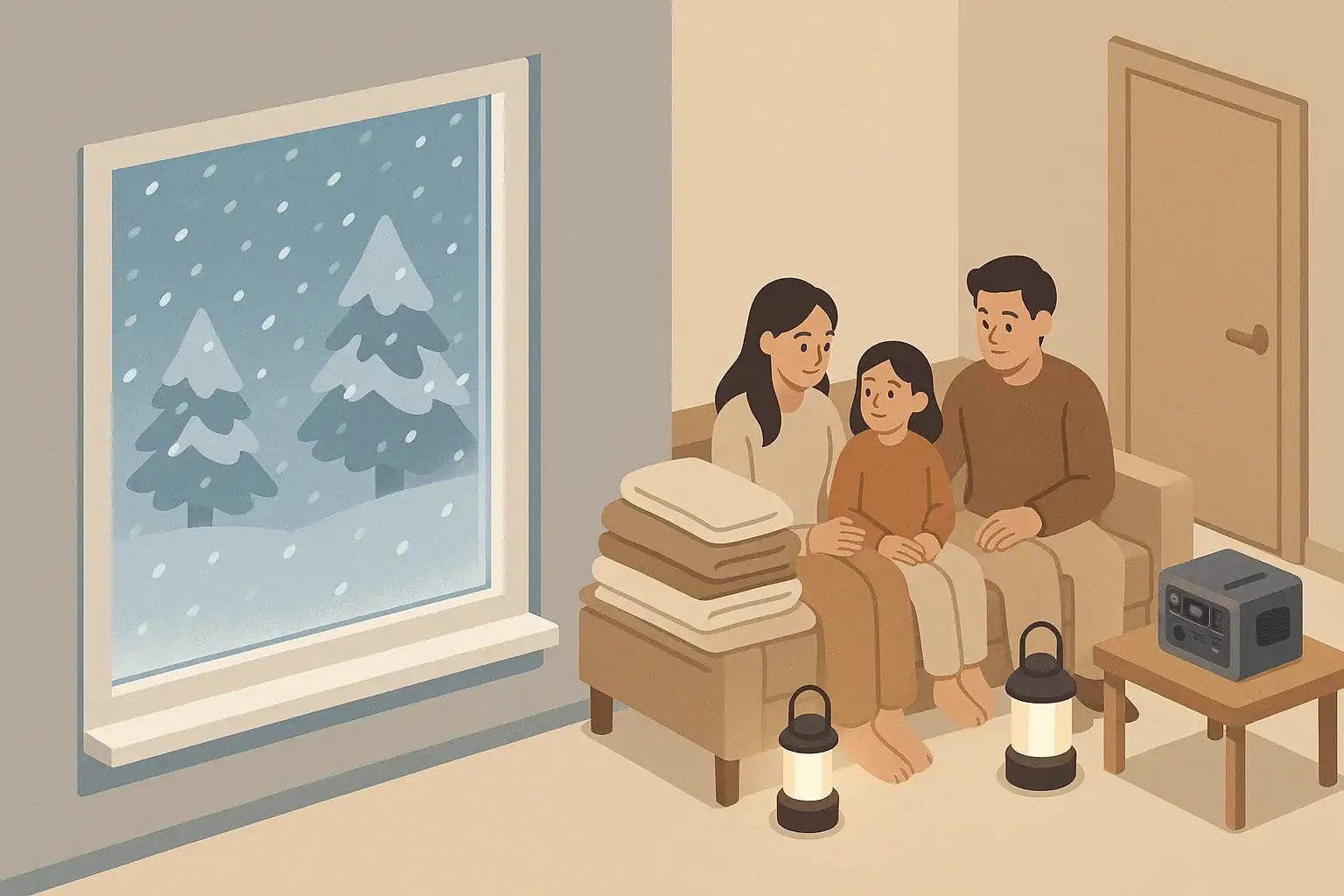
Winter power outages are usually short, but losing heat when it is cold outside can become uncomfortable and stressful very quickly. Having a simple plan ahead of time makes it easier to stay warm, keep everyone calm, and avoid risky last-minute decisions.
This guide focuses on practical, low-stress steps for typical homes in the United States, including apartments and houses, renters and owners, and households with kids, pets, or older adults. The goal is not to turn your home into a survival bunker, but to prepare for a long evening or a couple of days without power in winter.
Instead of trying to heat your entire home, you will prioritize a few key actions:
- Slow the loss of heat you already have
- Focus on warming people, not empty rooms
- Use only safe, indoor-appropriate backup heat sources
- Match any backup power you have to the most important needs
Why Winter Power Outages Need a Heating Plan
Winter power outages are usually short, but losing heat when it is cold outside can become uncomfortable and stressful very quickly. Having a simple plan ahead of time makes it easier to stay warm, keep everyone calm, and avoid risky last-minute decisions.
This guide focuses on practical, low-stress steps for typical homes in the United States, including apartments and houses, renters and owners, and households with kids, pets, or older adults. The goal is not to turn your home into a survival bunker, but to prepare for a long evening or a couple of days without power in winter.
Instead of trying to heat your entire home, you will prioritize a few key actions:
- Slow the loss of heat you already have
- Focus on warming people, not empty rooms
- Use only safe, indoor-appropriate backup heat sources
- Match any backup power you have to the most important needs
First Priorities When the Heat Goes Out
When the power cuts off in cold weather, you do not need to fix everything at once. Start with simple steps that can make a big difference in comfort and safety, especially in the first few hours.
Step 1: Check everyone and do a quick house walk
Before adjusting your space, make sure people and pets are okay.
- Make sure children, older adults, and anyone who has trouble moving around know what is happening and where you will gather.
- Bring pets inside and keep them away from any emergency equipment or candles you may use later.
- Locate flashlights or battery lanterns so you are not moving around in the dark.
Step 2: Choose and prepare a “warm zone” room
Heating an entire home without central heat is unrealistic. Instead, concentrate on one main room that will be your “warm zone.”
Good candidates for a warm zone:
- A smaller room with a door that closes
- A room without many large windows, or with thick curtains
- A room with soft furnishings (rugs, couches, beds) instead of bare floors
In interior rooms, an interior room away from exterior walls may stay warmer longer. In houses, a bedroom or den can work better than a large open living area.
Step 3: Slow heat loss with simple actions
Even without adding any new heat, you can stretch the warmth that is already in your home.
- Close exterior doors and windows tightly.
- Shut doors to unused rooms so you are not trying to warm the whole house.
- Close curtains or blinds; hang blankets over large windows if it is very cold.
- Place a rolled towel at the base of doors to reduce drafts.
- Put down extra rugs, blankets, or towels on bare floors in the warm zone.
These steps are especially important for renters and apartment dwellers who may not control the building’s insulation or central heating system.
Example values for illustration.
| Home situation | Better warm zone choice | Why it helps |
|---|---|---|
| Small apartment, few doors | Bedroom away from exterior wall if possible | Usually smaller space, easier to keep warm with people and blankets |
| Open-plan living room and kitchen | Small bedroom with a door | Reduces the volume of air that needs to stay warm |
| Two-story house | Upstairs bedroom | Warm air tends to rise, upper floors may stay warmer longer |
| House with fireplace | Room with fireplace, if safely usable | Gives you a built-in backup heat source if properly maintained |
| Family with small children | Child’s bedroom or shared bedroom | Keeps kids in a familiar, contained space for sleep and supervision |
| Older adult with limited mobility | Their usual bedroom or nearby room | Avoids difficult transfers and long walks in cold hallways |
Warming People First: Clothing, Bedding, and Movement
In cold conditions, it is often easier to keep people warm than to raise the air temperature in a room. Clothing, bedding, and gentle movement all help your body hold onto the warmth it creates.
Layered clothing basics
Dress in layers you can adjust as conditions change.
- Base layer: A light, long-sleeve shirt and long pants that are comfortable against the skin.
- Middle layer: A sweater, fleece, or sweatshirt that traps warm air.
- Outer layer: A looser, thicker layer such as a jacket or robe if it gets very cold.
Do not forget extremities, which lose heat quickly:
- Warm socks and house shoes or slippers
- A light hat or beanie, especially during sleep
- Fingerless gloves or thin gloves for people who feel cold easily
Bedding and shared warmth
When it is noticeably cold indoors, sleeping arrangements can make a big difference.
- Move mattresses, sleeping pads, or bedding into the warm zone.
- Use multiple thinner blankets rather than one thick one so you can adjust if someone gets too warm.
- Consider shared sleeping setups for families or children, while still allowing enough space for comfort and safety.
- Keep a dry blanket or towel between people and cold floors, especially for kids who sleep low to the ground.
For older adults, make sure bedding is easy to get in and out of and that paths to the bathroom are clear and well lit with a flashlight or night light connected to backup power.
Gentle movement and warm drinks
Light movement can help warm you up, as long as it is safe and appropriate for your health and abilities.
- Short walks around the room or simple stretches during waking hours.
- Board games or activities that encourage small movements instead of sitting completely still.
Warm drinks can provide comfort. If you have a gas stove that can be used safely without electric ignition, or a small camping stove designed for outdoor use in a thoroughly ventilated, allowed location, you may be able to warm water. Always follow safety instructions for any fuel-burning device, and never use them as room heaters.
Safe and Unsafe Backup Heat Sources
During a winter outage, many hazards come from improvised heating. Some devices are designed for indoor use; others are not. When in doubt, avoid putting any fuel-burning device inside your living space.
Space heaters and generators: key safety points
If you own any backup heating device, read its manual before you ever need it. Pay attention to where it can be used and how it should be ventilated.
- Electric space heaters: Can sometimes be powered by a sufficiently large backup battery or generator, but they draw a lot of power. Use only on stable surfaces, away from bedding and curtains, and never leave unattended.
- Fuel-burning space heaters: Only use models that are clearly rated for indoor use, and use them exactly as directed. Provide ventilation as required. Keep them away from children and pets and from anything that can burn.
- Portable generators: Operate them only outdoors, far from doors, windows, vents, or garages, to avoid carbon monoxide buildup. Never run them inside the home, on balconies, or in attached garages, even with doors open.
Carbon monoxide is colorless and odorless. For overall home safety in winter, consider having battery-powered carbon monoxide alarms, especially if your home uses fuel-burning appliances.
What not to use for heat
Certain common items should never be used for indoor heating.
- Outdoor grills or camp stoves (charcoal or gas) inside any part of the home.
- Kitchen ovens or stovetops left open or running as space heaters.
- Unvented fuel-burning devices not labeled for indoor use.
- Open flames in crowded spaces, especially near bedding, curtains, or decorations.
These methods can create serious fire risks and dangerous indoor air, even if they feel warm in the short term.
Fire safety during blackout heating
Any time you introduce flames or extra electrical loads, adjust your routine to reduce risk.
- Keep candles, if used at all, in sturdy holders away from anything that can burn.
- Never leave open flames or fuel heaters unattended, especially around kids or pets.
- Have a small, easy-to-reach way to put out accidental fires, such as water for minor incidents or a suitable household fire extinguisher if you are trained to use it.
- Keep escape routes clear in case you need to leave quickly.
Backup Power: What to Run and For How Long
Many households now own some type of backup power, from simple power banks to larger portable power stations or generators. In winter outages, the main priority is often heat, but backup power is usually better used to support comfort around heat rather than trying to power whole-house heating systems.
Prioritizing devices during a winter outage
If you have limited backup power, focus on what has the most impact on safety and well-being.
- Communication: phones, basic internet equipment if needed, and a battery or crank radio.
- Lighting: efficient LED lamps or lanterns in the warm zone.
- Medical and mobility devices: anything essential that has batteries or chargers.
- Low-power comfort items: small fans for air movement around safe indoor heaters, or heating pads and electric blankets used cautiously if power allows.
Most central furnaces and large baseboard heaters use more power than typical home backup systems can provide. Instead of trying to run full heating systems, concentrate on smaller electric devices or non-electric heat sources that are designed for your space.
Matching backup power to heating-related needs
Here are ways to use backup power to support warmth without directly running big heaters:
- Run a low-wattage heated blanket or pad for short periods, rotating among people as needed.
- Power a small circulating fan to move warm air from a safe heater through the warm zone.
- Keep phone and radio batteries topped up so you can receive weather updates and restoration estimates.
- Use a small electric kettle briefly, if your system can handle it, to make warm drinks and minimize time spent over open flames or fuel stoves.
Always check the power draw of each device and understand your backup power system’s limits. Overloading a system can cause it to shut down or be damaged.
Apartment vs House: Adjusting Your Plan
Your heating strategy during a winter outage will look a little different depending on where you live and what you can control.
Considerations for apartments and renters
Apartment dwellers and renters may have less say in insulation, windows, or heating systems, but there is still a lot you can do.
- Focus on interior rooms or shared walls with neighbors, which may stay warmer.
- Use temporary window coverings like thick curtains or blankets that can be removed later without damage.
- Store compact, portable items such as extra blankets, a foldable sleeping pad, and a small power bank.
- Know your building’s rules about generators or fuel heaters; many do not allow them on balconies or indoors.
Because apartments are often smaller, body heat from people and pets can make a noticeable difference in your warm zone, especially if you seal drafts and reduce unused space.
Considerations for houses
In a detached house, you may have more space and options, but also more volume to keep warm.
- Close off unused levels, such as basements or spare rooms, and focus on one floor.
- If you have a wood or pellet stove, maintain it well before winter and follow all safety guidance.
- Consider where a portable generator could run safely outdoors with proper distance from doors and windows.
- Store extra insulation items like weatherstripping and window film before winter storms.
Houses with well-sealed windows and good insulation often cool down more slowly, giving you more time to adjust and make decisions.
Families, kids, pets, and older adults
Different household members may experience cold differently or need extra support.
- Kids: Keep a few favorite toys, books, or games in the warm zone. Children may feel more insecure in the dark and cold, so routines and comfort items help.
- Pets: Provide extra bedding in the warm zone and adjust where their food and water are placed so they do not need to move through colder parts of the home.
- Older adults: Plan seating and bedding that are easy to get into and out of. Keep paths clear of cords and gear to reduce fall risks in low light.
Simple Winter Heating Readiness Checklist
A bit of preparation before winter can make a power outage much easier to handle. You do not need everything at once; you can build a small kit over time.
Key items to gather before cold weather
- Extra blankets and throws stored in one easily reached location.
- Layered clothing options for all household members, including warm socks and hats.
- Battery-powered or crank lights for your main rooms.
- At least one charged power bank for phones.
- Draft stoppers or rolled towels ready for door bottoms.
- Thick curtains or temporary window coverings for the main warm zone.
- Printed emergency contacts and a simple household plan for where to gather.
Practice your warm zone setup
On a normal evening, take five or ten minutes to walk through what you would do during a winter outage.
- Choose the room and picture where people would sit or sleep.
- Identify which doors and vents you would close.
- Locate where backup lights and power would go.
- Decide where kids’ and pets’ items would be placed.
This quick mental rehearsal makes it easier to act calmly if the lights go out for real.
Example values for illustration.
| Task | Why it matters | Notes |
|---|---|---|
| Pick your warm zone room | Reduces decisions during an outage | Choose a smaller room with a door if possible |
| Store extra blankets together | Makes setting up shared sleeping space faster | Keep in a bin or closet near the warm zone |
| Check and label flashlights | Speeds up safe movement in the dark | Keep one in the warm zone and one near the front door |
| Charge power banks | Helps maintain communication and updates | Top off before any forecast winter storm |
| Inspect curtains and drafts | Reduces heat loss and cold spots | Note which windows may need extra covering |
| Review heater and generator manuals | Prevents unsafe use under stress | Highlight indoor vs outdoor-only instructions |
| Write a short household plan | Keeps everyone aligned when power fails | Include where to gather and who checks which rooms |
Staying Calm and Comfortable Until Power Returns
Most winter power outages are measured in hours, not days. By focusing on a warm zone, dressing in layers, using backup power wisely, and avoiding risky heating methods, you can make those hours much more manageable.
Check weather forecasts regularly in winter, top off batteries and backup power before storms, and keep your simple heating plan somewhere easy to find. With a little preparation, your home can stay a safe, calm place even when the temperature drops and the lights go out.
Authoritative sources
Safety recommendations can change. Confirm critical details with current official guidance and local authorities.
- CDC: Carbon Monoxide Poisoning Basics
- U.S. CPSC: Battery Safety
- CDC: Guidelines for Cleaning Safely After a Disaster
Frequently asked questions
How do I pick the best “warm zone” room during a winter power outage?
Choose a smaller interior room with a door that closes, few large windows, and soft furnishings like rugs or couches. Close doors to unused areas, seal drafts with towels, and gather bedding and lights in that single room to concentrate warmth and body heat.
Can I safely run an electric space heater from a portable generator or power station?
Only if the generator or power station can supply the heater’s continuous wattage; many small backup systems cannot handle a 1,000–1,500 W space heater. Always check both the heater’s power draw and your backup system’s rated output, and avoid overloading the unit to prevent shutdowns or damage.
Is it safe to use my oven, stovetop, or outdoor grill to heat my home?
No. Using kitchen ovens or outdoor grills as space heaters creates serious fire and carbon monoxide risks and should never be done indoors. Only use appliances for their intended purposes and follow the safety guidance in this article for alternative heating methods.
What is the best way to use backup power to support heating needs?
Prioritize low-wattage, high-impact uses: lighting for the warm zone, charging phones and medical devices, and briefly running small heated pads or kettles if the system can handle the draw. Avoid trying to power central heating; instead use backup power to make your concentrated warm area more comfortable and safe.
What carbon monoxide precautions should I take during a winter outage?
Install battery-powered carbon monoxide alarms and never run generators, grills, or unvented fuel heaters inside or in attached spaces. Operate generators outdoors away from doors and vents, follow ventilation instructions for indoor-rated fuel heaters, and seek fresh air and medical help if someone shows CO poisoning symptoms.
- Simple checklists and realistic planning
- Water, power, lighting, and pantry basics
- Family plans (kids, pets, seniors) and seasonal prep
Affiliate disclosure
As an Amazon Associate, we earn from qualifying purchases. Some links on this site may be affiliate links. If you buy through these links, we may earn a small commission at no extra cost to you. This helps support our content. Learn more.