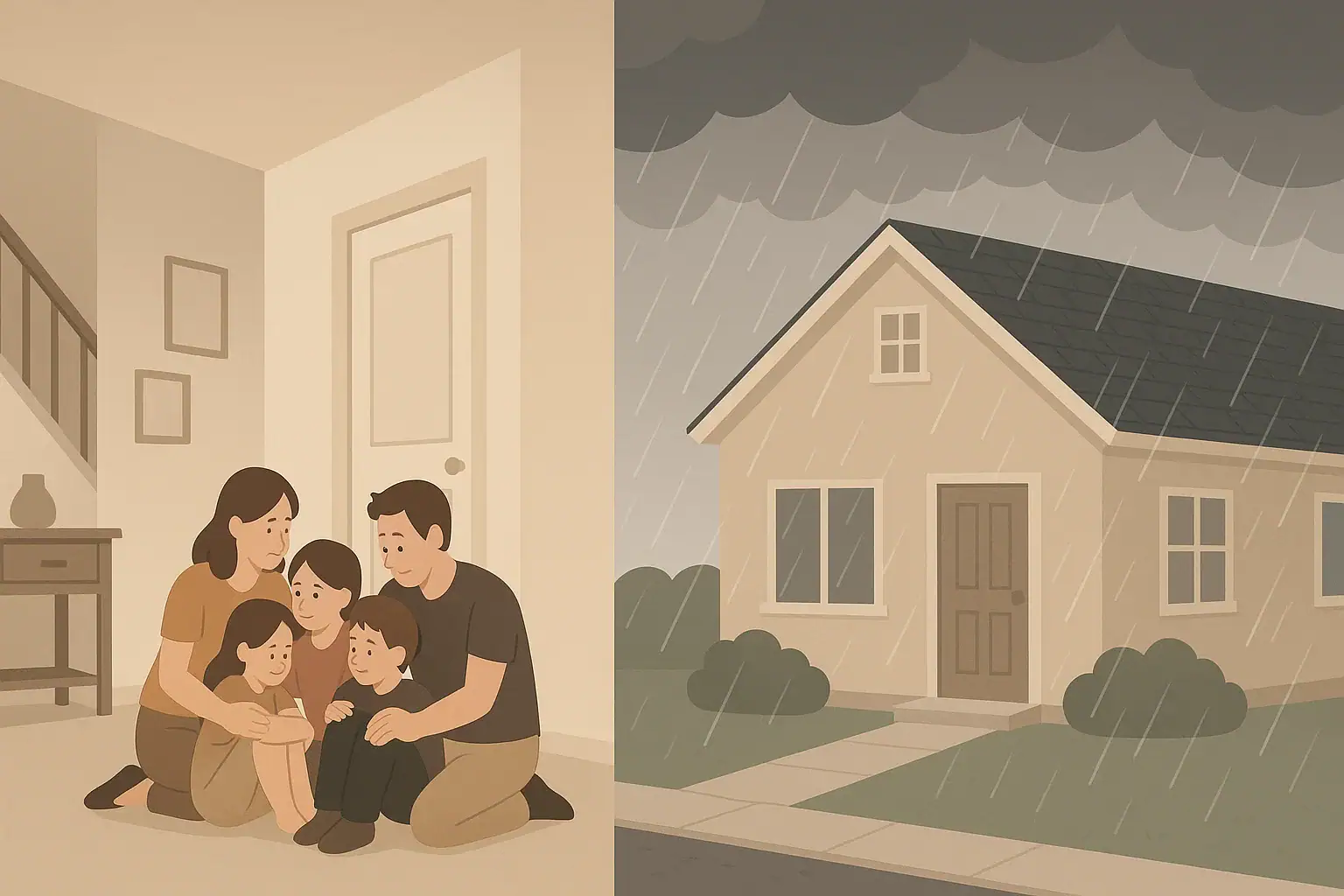
When a tornado warning is issued, you may have only minutes to act. Having a clear, practiced tornado safe place checklist helps you move quickly instead of debating what to do in the moment.
This guide focuses on practical, low-stress planning for a typical home or apartment in the United States. It is not about building a bunker. It is about choosing the safest available spot in your current home, gathering a few useful items, and practicing how to get there.
Tornadoes vary widely in strength and impact. No plan can remove all risk, but a well-chosen interior shelter area and some simple habits can reduce common hazards such as flying glass, falling debris, and confusion during warnings.
Why a Tornado Safe Place Matters
When a tornado warning is issued, you may have only minutes to act. Having a clear, practiced tornado safe place checklist helps you move quickly instead of debating what to do in the moment.
This guide focuses on practical, low-stress planning for a typical home or apartment in the United States. It is not about building a bunker. It is about choosing the safest available spot in your current home, gathering a few useful items, and practicing how to get there.
Tornadoes vary widely in strength and impact. No plan can remove all risk, but a well-chosen interior shelter area and some simple habits can reduce common hazards such as flying glass, falling debris, and confusion during warnings.
Step 1: Choose the Best Interior Safe Place
The safest place for tornado sheltering is usually a small, windowless, interior space on the lowest level of a sturdy building. From there, you adjust for your home type, mobility needs, pets, and space limits.
General priorities for any home
When comparing options inside your home, use these priorities:
- Lowest level: Basement if available, otherwise the lowest floor.
- Interior location: As close to the center of the building as possible.
- No or few windows: To reduce risk from broken glass and wind-driven debris.
- Small, enclosed spaces: Bathrooms, closets, hallways, and under-stair areas often hold up better than large open rooms.
- Sturdy surroundings: Places with plumbing and built-in framing (like bathrooms) can offer extra protection from falling debris.
If you have a basement
A basement is often the best tornado shelter option, but details still matter.
- Choose a corner or space away from windows and exterior doors.
- Stay under a sturdy part of the house, such as beneath a hallway or load-bearing wall, not directly under large windows or heavy furniture upstairs.
- If the basement has windows, shelter on the opposite side or behind a solid object like a sturdy table.
If you do not have a basement
If you live in a one- or two-story home without a basement, focus on the lowest interior areas.
- Look for a small interior room on the lowest floor: a bathroom, hallway, laundry room, or interior closet.
- Avoid rooms with exterior walls if you have a solid interior option.
- If all rooms have windows, pick the space with the fewest and smallest windows and consider how you might shield yourself from glass (mattress, cushions, helmets).
Apartment and townhouse considerations
In multi-unit buildings, your choices may be more limited, but you can still improve your safety.
- If you are on an upper floor and cannot move safely to a lower level, choose an interior bathroom or closet without windows.
- If the building has a common interior hallway on a lower level that is safe and accessible, ask management if it is an approved shelter area.
- Avoid balconies, exterior corridors, and areas with large windows or glass doors.
- Keep your tornado safe place checklist focused on what you can control in your unit, such as helmets, shoes, flashlights, and a small comfort kit.
Manufactured homes and mobile homes
Manufactured homes and mobile homes are especially vulnerable to tornado winds. The safest option is usually to move to a sturdier building if a warning is issued and you can do so quickly and safely.
- Know in advance where you would go: a nearby community building, a neighbor’s house, or a designated shelter if available.
- If you cannot leave in time, move to an interior room away from windows, put on shoes and helmets if available, and protect your head with cushions or a mattress.
- Discuss options with park management or building owners during calm weather, not during a warning.
Special situations: mobility, kids, and pets
- Limited mobility: Choose a shelter area that is easy to reach quickly, even if it is not absolutely ideal in every way. A slightly less central room you can reliably reach may be safer than a perfect room you cannot access fast.
- Small children: Select a space where you can physically shield them if needed and store quiet activities or comfort items.
- Pets: Decide whether they will shelter in carriers or on leashes and store those items near your safe place.
Example values for illustration.
| Home situation | First-choice location | If that is not available | Notes |
|---|---|---|---|
| House with basement | Interior basement corner away from windows | Under sturdy table in basement | Avoid areas under large upstairs windows |
| One-story house, no basement | Interior bathroom on lowest level | Interior hallway or closet | Prefer rooms with no exterior walls |
| Two-story house, no basement | Interior room on first floor | Under stairs in enclosed space | Avoid sheltering on upper floor if possible |
| Upper-floor apartment | Interior bathroom or closet | Interior hallway away from windows | Ask management about any approved common areas |
| Ground-floor apartment | Interior bathroom or closet | Interior hallway on ground floor | Stay clear of exterior doors and large windows |
| Manufactured or mobile home | Pre-arranged sturdy building nearby | Interior room with cushions and helmets | Plan where to go before storm season |
Step 2: Interior Room Setup and Simple Improvements
Once you choose your safe place, small changes can make it more practical and comfortable during a warning. Focus on visibility, head protection, and staying put until the danger passes.
Clear the path and space
You do not need a dedicated empty room. You do need to reach it quickly and fit everyone inside.
- Keep the pathway clear of clutter you might trip over in low light.
- Make sure there is enough room for everyone who lives in your home, including pets and mobility aids.
- Store bulky seasonal items in a different spot so your shelter room is not packed to the ceiling.
Reduce glass and loose objects nearby
Flying glass and sharp objects are common hazards during strong winds.
- If your safe place has a small window, consider closing curtains or blinds during severe weather to help contain broken glass.
- Keep heavy or sharp items (glass vases, loose tools, heavy decor) out of high places near your shelter area.
- Do not rely on breakable objects for head protection. Use helmets, cushions, or mattresses instead.
Head and body protection
Simple items you already own can provide extra protection from falling or flying debris.
- Helmets: Bike helmets, sports helmets, or other sturdy headgear for each person, especially kids and anyone helping others.
- Sturdy shoes: Closed-toe shoes or boots stored in or near the safe room to protect feet from broken glass or debris afterward.
- Cushions and mattresses: Pillows, couch cushions, or a mattress can be pulled over you if time allows, particularly if you do not have a basement.
Lighting and basic comfort
Severe storms can knock out power. A dark, noisy, unfamiliar space is harder to manage, especially with children.
- Flashlights or lanterns: Keep at least one simple light source in the shelter area; check batteries a few times per year.
- Small blanket or layer: Storms sometimes come with cooler temperatures; a light blanket or extra sweater can help.
- Quiet activities: A deck of cards, small toy, or other screen-free items can calm kids during longer warnings.
Accessibility and special needs
Plan around specific needs in your household.
- Store backup glasses, hearing aid batteries, or mobility aids within reach.
- If someone uses a wheelchair or walker, test whether it fits easily into the shelter area and adjust the layout if needed.
- For infants, consider where a portable crib, car seat, or baby carrier would fit in the room.
Step 3: Tornado Supplies to Keep in Your Safe Place
Your tornado safe place checklist does not need to be complicated. Focus on items that help you get alerts, stay put safely for a short period, and handle minor issues without leaving the room during the storm.
Core tornado safe place checklist
Consider keeping these items in a small bin, bag, or drawer in or near your shelter area:
- Weather and communication tools
- Battery-powered or hand-crank radio to follow local updates
- Charged phone and simple backup power source if available
- Printed list of key phone numbers in case devices are not available
- Lighting
- Flashlights or small lanterns with extra batteries
- Simple clip light or headlamp if you have one, useful for hands-free tasks
- Basic safety items
- Helmets for people who will shelter there
- Closed-toe shoes for each person
- Work gloves to handle debris after the storm if needed
- Comfort and simple care
- Small first-aid basics (bandages, antiseptic wipes, tape)
- Tissues, wipes, and a small trash bag
- Light blanket or extra layer of clothing
- Basic snacks and a bottle of water, especially for kids
- Documents and keys
- Copies of important documents stored in a waterproof pouch nearby
- Spare house and car keys in case of damage or blocked doors
Considerations for renters and small spaces
If you rent or live in a very small apartment, you may not have room for large emergency kits. You can still keep a compact tornado-focused kit.
- Use a small backpack or soft bag that stays in your safe place and doubles as a quick-grab bag for other emergencies.
- Focus on multi-use items, like a flashlight that works for both storms and everyday power outages.
- If space is tight, keep bulkier water and food storage elsewhere, and use the tornado kit for first hour necessities only.
Family, kids, and pets
- For kids: Add a small comfort item, such as a familiar toy or blanket, and simple snacks that do not require preparation.
- For babies: Keep extra diapers, wipes, and a small changing pad or towel in the kit.
- For pets: Store a leash, harness, small bag of pet food, collapsible bowl, and any medications nearby. If your pet uses a carrier, plan where it will fit in the shelter area.
Step 4: Practice Simple Tornado Drills
A tornado safe place checklist works best when everyone in the household knows it well. Brief, low-pressure practice helps people react automatically when time is short.
How to run a basic home tornado drill
You can keep drills simple and short. Aim for a few minutes of practice a couple of times per year, or at the start of your local storm season.
- Pick a time: Choose a calm day when everyone who lives with you can participate.
- Review the plan: Point out where you will go, how you will get alerts, and what to bring with you (helmets, shoes, flashlight).
- Simulate a warning: Say “tornado warning” and have everyone move to the safe place using the normal route.
- Check timing: Notice how long it takes to gather people, pets, and essential items. Aim to make it smoother, not perfect.
- Adjust and repeat: If doorways were crowded or you forgot something important, tweak the plan and try again briefly.
Practice for kids
For children, focus on routine and reassurance rather than fear.
- Use simple phrases like, “When there is a strong storm, we all go to our safe room together.”
- Let them help carry a small item, such as a flashlight or stuffed toy, during drills.
- Practice the position of covering their head and neck with their arms or a pillow while sitting or kneeling.
Including pets in drills
Pets may hide when storms are loud. Practicing can make the process less stressful.
- Decide who is responsible for each pet during a warning.
- Practice calmly guiding pets to the safe room using treats, leashes, or carriers.
- Store pet carriers where they are easy to reach quickly, not buried in a closet.
Planning for when you are away from home
Storms do not always wait until you are home. Talk through basic options:
- At work or school, follow the building’s severe weather plan and ask where the designated shelter areas are located.
- In a store or public place, look for interior hallways or restrooms away from windows and large open spaces.
- If you are driving and a tornado is imminent very close by, official guidance often discourages staying in a vehicle when a safer building is available. Know typical options along your commute, such as sturdy public buildings where you could seek shelter if needed.
Step 5: Water and Pantry Readiness for Short Tornado Impacts
Tornadoes can be fast-moving, but the damage they cause may affect power, water, and local stores for a short time. You do not need to overhaul your home to prepare. A few basic supplies can help you stay comfortable at home for a couple of days if services are disrupted.
Water basics after severe storms
Heavy storms can sometimes affect water quality or availability in a community. Having some stored water at home gives you flexibility while local utilities inspect and repair systems.
- Aim for a modest supply of drinking water for each person and pet for a few days. This could be stored in clean containers you fill from the tap before severe weather seasons or in purchased containers.
- Rotate stored tap water periodically by using it for regular household tasks and refilling the containers.
- Keep a simple way to improve the taste and appearance of water if needed, such as a basic household filter pitcher, if you already use one for everyday life.
Easy, low-cook pantry options
If power is out after a storm, simple foods that do not require cooking or refrigeration can be useful.
- Keep a mix of shelf-stable foods you already enjoy: canned items, nut butters, crackers, dried fruit, or other ready-to-eat options.
- Include staples that can be eaten straight from the package if needed.
- Use and replace these items regularly so your emergency pantry matches your normal eating habits.
Coordinating your tornado kit with broader home readiness
Your tornado safe place checklist can connect to your overall home readiness plan without becoming overwhelming.
- Store your tornado kit in the safe room and your larger home kit in another accessible location.
- Use the same flashlights, batteries, and multi-purpose tools in multiple situations such as power outages, winter storms, or heatwaves.
- Review and update all supplies at the start of your local severe weather season and again before winter, so nothing expires unnoticed.
Example values for illustration.
| People and pets | Days you want to cover | Storage approach idea | Rotation reminder idea |
|---|---|---|---|
| 1 adult | 2–3 days | Several medium containers filled from tap | Use and refill every few months |
| 2 adults | 3 days | Mix of refillable jugs and purchased containers | Mark lids with the fill date |
| Family of 4 | 2–3 days | Dedicated shelf with multiple stacked containers | Rotate during spring and fall cleanups |
| Household with pets | Same as people | Extra small containers labeled for pets only | Refill when you open a new pet food bag |
| Apartment, limited space | 1–2 days | Flat containers stored under beds or in closets | Rotate when checking smoke detector batteries |
| Multigenerational home | 3 days | Mix of containers placed on different floors | Assign a person to check each area twice a year |
Keeping Your Tornado Safe Place Checklist Up to Date
Your household, home layout, and local weather patterns can change over time. Treat your tornado safe place checklist as a living plan.
- Review your safe place choice at least once a year or after moving, remodeling, or changing rooms.
- Refresh batteries, snacks, and water during regular home maintenance tasks.
- Update your plan when new people join the household, mobility needs change, or you add pets.
By keeping your plan simple, realistic, and practiced, you can respond quickly and calmly when tornado warnings occur, using the safest options available in your current home.
Authoritative sources
Safety recommendations can change. Confirm critical details with current official guidance and local authorities.
- US EPA: Emergency Disinfection of Drinking Water
- USDA FSIS: Keep Food Safe During Emergencies
- U.S. CPSC: Battery Safety
Frequently asked questions
If I live in an upstairs apartment, what is the best tornado safe place?
Choose a small interior room without windows, such as a bathroom or closet, and move there quickly if you cannot reach a lower level. Avoid balconies, exterior corridors, and large glass areas; bring helmets, shoes, and a flashlight if time allows. If your building has an approved lower-level shelter area, follow management guidance.
What should be in a tornado safe place checklist for families with infants?
Keep infant essentials like extra diapers, wipes, a small changing pad or towel, formula or bottles (if used), and a blanket or extra layer in the safe place. Store a portable carrier or designated spot for a car seat so you can move the infant quickly and keep any required medications within reach.
How often should we practice tornado drills and what should we rehearse?
Practice brief drills a couple of times per year or at the start of your local storm season to keep everyone familiar with the plan. Rehearse moving to the safe place, timing how long it takes, assigning pet or infant responsibilities, and what small items to grab (helmets, flashlights, shoes).
Is it safe to shelter in a vehicle or inside a mobile home during a tornado warning?
Mobile and manufactured homes are particularly vulnerable; seek a nearby sturdier building if you can do so safely. Vehicles are not considered safe shelter when a tornado is imminent; if no sturdy building is available, follow local official guidance about the least risky option and avoid highways or overpasses.
How much water and food should I store for short tornado impacts?
A modest supply to cover a few days is usually sufficient for short disruptions—many plans recommend about one gallon of water per person per day for drinking and basic needs. Keep ready-to-eat, shelf-stable foods for at least 1–3 days and rotate items regularly so they stay familiar and usable.
- Simple checklists and realistic planning
- Water, power, lighting, and pantry basics
- Family plans (kids, pets, seniors) and seasonal prep
Affiliate disclosure
As an Amazon Associate, we earn from qualifying purchases. Some links on this site may be affiliate links. If you buy through these links, we may earn a small commission at no extra cost to you. This helps support our content. Learn more.