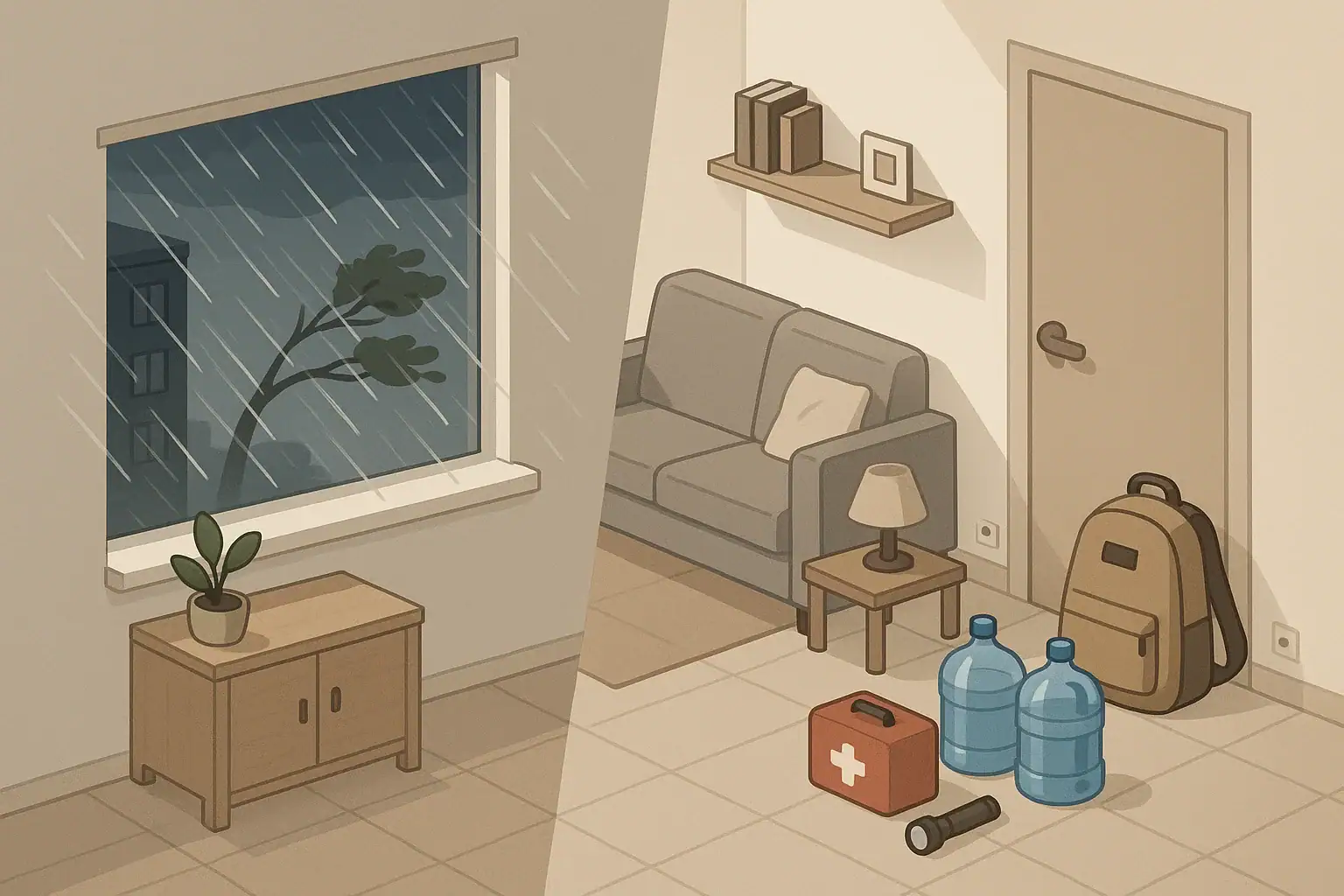
Why Hurricane Readiness Looks Different in Apartments
Living in an apartment during hurricane season brings different challenges than living in a single-family home. You may not control the building structure, windows, or common areas, and you might be several floors up or in a basement unit. Preparedness focuses less on boarding up and more on communication, evacuation options, and compact supplies that work in small spaces.
The goal is to build a simple, realistic plan that helps you:
- Decide early whether to evacuate or shelter in place
- Stay safe if the power or water goes out
- Move quickly with a go-bag if conditions change
- Coordinate with family, roommates, or neighbors
The steps below are designed for renters, small households, families with kids, and people living with pets or older adults.
Know Your Risks, Building, and Local Rules
Before hurricane season, take time to understand how vulnerable your specific apartment is and what your options are if conditions worsen.
Check Your Location and Flood Risk
Hurricane risk depends on where you live and the type of hazards you face: wind, storm surge, inland flooding, or all three. Even if you are several floors up, access roads and parking lots can flood and cut off travel.
Key questions to answer:
- Is your building in a known evacuation or flood-prone area?
- Are you on a ground, basement, or high floor?
- Are nearby streets or parking areas known to flood?
- Where is the nearest higher ground or safer area?
Understand Your Building’s Hurricane Policies
Many apartment complexes and high-rises have specific procedures for hurricanes. These can affect whether you stay or go and what you can do inside your unit.
Ask building management or your landlord:
- How will they communicate updates (email, text alerts, posted notices)?
- Are there backup generators for elevators, hallway lights, or water pumps?
- Will common areas or parking garages close before storms?
- Are there rules about balcony items or window coverings?
- Is there a designated shelter area inside the building?
Know Local Evacuation Routes and Shelters
Local officials provide guidance on evacuation zones and routes. Apartment residents should know:
- Which evacuation zone applies to their address
- Primary and alternate routes to leave the area
- Whether nearby shelters are likely to open
- Any special information for people with pets or mobility needs
Having this information beforehand helps you act early instead of waiting for last-minute instructions.
Example values for illustration.
| Situation | Key Action | Why It Matters | Notes |
|---|---|---|---|
| In official evacuation zone | Plan to leave when advised | Reduces risk from surge and flooding | Pre-pack car or arrange ride in advance |
| Not in zone, but on ground or basement floor | Prepare to move to higher floor or evacuate | Helps avoid flooding in lowest units | Ask neighbors or friends on higher floors |
| High-rise, upper floor | Secure windows and interior safe room | Limits glass and debris hazards | Identify interior hallway or bathroom |
| Rely on elevator for mobility | Act before high winds knock out power | Prevents being stranded on floors | Coordinate early with building and helpers |
| Have pets and no car | Locate pet-friendly options now | Avoid last-minute shelter confusion | Arrange rides with friends or neighbors |
| Staying in place | Stock 3–5 days of basics | Supports short-term outages | Include water, food, lights, chargers |
| Short-notice evacuation | Grab pre-packed go-bags | Saves time under pressure | Keep bags near door and easy to lift |
Apartment Hurricane Checklist: Shelter-in-Place Basics
Sometimes the safest option is to stay put, especially if you are outside evacuation zones and in a structurally sound building. In an apartment, space is limited, so focus on compact, multi-use items and realistic timeframes, such as 3–5 days of essentials.
Water and Simple Food Storage for Small Spaces
Water is one of the most important items to prepare before a hurricane, since outages or contamination can interrupt normal supply.
Consider:
- Storing enough drinking water for several days for everyone, including pets
- Filling reusable containers and clean pitchers before the storm
- Filling bathtub or large basin for non-drinking uses (like flushing toilets) if allowed
For food, choose items that do not require cooking or refrigeration once opened, such as:
- Ready-to-eat canned or packaged foods
- Dry snacks and simple meals
- Infant or medical nutrition products if needed
Favor foods you normally eat so they can rotate into everyday use after the season.
Safe Lighting and Backup Power in Apartments
Power loss is common during hurricanes. In multi-story buildings, that can mean dark hallways, stairwells, and units.
For lighting, focus on:
- Battery-powered or rechargeable lanterns and flashlights
- Headlamps to keep hands free
- A small light kept next to each bed for nighttime outages
Avoid open-flame lighting such as candles in apartments, especially in crowded buildings or with children or pets.
For backup power, consider compact options that can:
- Recharge phones and basic electronics
- Run a small fan or light for comfort and visibility
- Be recharged from wall power before the storm, or from a vehicle outdoors
In most apartments, using fuel-based generators indoors, on balconies, or in enclosed garages is unsafe. Follow local guidance and building rules regarding any fuel-powered equipment.
Communication and Information
Staying informed helps you respond calmly as conditions change.
Useful steps include:
- Charging phones and backup batteries fully before the storm
- Saving key numbers and local emergency contacts
- Enabling local alert systems where available
- Having a battery-powered or hand-crank radio shape to get weather updates
If mobile networks are strained, sending text messages can sometimes work better than voice calls.
Apartment Safe Room Setup
Choose a spot in your unit that is more sheltered from wind and broken glass, such as:
- An interior hallway away from windows
- A bathroom or closet with solid walls
- A room without large exterior glass doors
Before the storm, move some basics into or near this space:
- Water and snacks
- Flashlights or lanterns
- First-aid supplies and essential medications
- Pillows, blankets, and a mat for sitting or resting
If you have kids, frame this as a temporary “camping” area to make it less stressful.
Evacuation Planning for Apartment Residents
Evacuations are usually based on flood risk, storm surge, or other hazards identified by local officials. In an apartment, it can take longer to leave because of elevators, parking garages, and shared exits, so early planning is especially important.
Deciding When to Leave
Follow instructions from local authorities about voluntary and mandatory evacuations. Consider leaving earlier if you:
- Live in an official evacuation or storm surge zone
- Are on a ground or basement level in a flood-prone area
- Rely on elevators or mobility aids
- Have small children, pets, or household members who need extra time
Leaving before conditions deteriorate reduces the chance of traffic delays, road closures, or power outages affecting your building’s exits.
Transportation and Where to Go
Consider your transportation options long before a storm:
- If you have a car, keep at least some fuel in it during hurricane season.
- If you do not drive, identify friends, neighbors, or coworkers you can coordinate with.
- Check if your local area offers transportation assistance during evacuations.
Potential places to go include:
- Friends or relatives in safer areas
- Hotels farther inland, if practical for your budget
- Public shelters, especially if directed there by local officials
If you have pets, confirm whether your destination can accommodate them or identify pet-friendly alternatives.
Quick Apartment Evacuation Checklist
When time is short, a simple checklist helps you remember key tasks:
- Turn off lights and electronics that do not need to run
- Unplug sensitive devices if safe to do so
- Close and lock windows and doors
- Move easily damaged items away from windows and off the floor if flooding is possible
- Take photos or video of your unit and belongings for your records before the storm season or when safe
- Grab go-bags, medications, documents, and chargers
Give yourself extra time to navigate stairs or elevators, especially if many neighbors are leaving at once.
Go-Bags for Apartment Hurricanes: What to Pack
Go-bags are portable kits that let you leave your apartment quickly and manage the first day or two away from home. In apartments, they should be compact, easy to carry down stairs, and stored where you can grab them quickly.
Core Items for Every Household Member
Each person should have a small bag or share a larger one, depending on age and strength. Consider:
- Copies of important documents stored safely
- Basic identification and small amount of cash if available
- List of emergency contacts
- Medications and simple medical supplies
- Change of clothes and sturdy shoes
- Lightweight rain protection
- Small flashlight or headlamp
- Snacks and a water bottle
- Phone chargers and a small power bank
For families, add comfort items for children, such as a familiar toy or blanket, to help reduce stress.
Adding Items for Pets
If you have pets, plan a dedicated pet kit that can travel with you:
- Leash, harness, and carrier if needed
- Collar with identification where possible
- Food and collapsible bowl
- Waste bags, absorbent pads, or litter
- Any regular medications or special supplies
Keep pet records and proof of vaccinations with your documents, in case they are requested by shelters or temporary housing.
Special Considerations for Seniors and People With Disabilities
For household members with mobility, sensory, or medical needs, customize go-bags to include:
- Backup supplies for mobility aids, such as extra batteries where applicable
- Details of medical conditions and care needs
- Contact information for caregivers and health providers
- Simple assistive devices if small enough to carry
Coordinate early with building management and local services to understand what assistance might be available during evacuations.
Staying Safe in the Building During and After the Storm
Once the storm begins, you may need to stay in place until winds and flooding subside, even if conditions change unexpectedly. Focus on safety inside the building and your unit.
During the Hurricane
While high winds are present:
- Stay away from windows and glass doors
- Move to your pre-identified safe room if conditions worsen
- Keep pets and children close and indoors
- Use flashlights rather than open flames for light
Elevators may be shut down for safety. Avoid using them during the most intense part of the storm in case of power interruptions.
After the Storm Passes
Conditions can still be hazardous after the eye of the storm or once winds die down.
Inside and around your building:
- Watch for water leaks, broken glass, and downed debris near exits
- Use stairwells carefully if lights are out
- Do not enter flooded parking garages or basements
- Follow instructions from building management and local officials about returning if you evacuated
Power, water, and elevator service may come back in stages. Plan for an extra day or two of simple supplies even after the main storm has passed.
Water and Pantry Planning for Short-Term Apartment Disruptions
Many hurricane impacts on apartments relate to short-term outages rather than total loss. A small, well-planned water and pantry setup can support you during these disruptions without taking over your limited space.
Compact Water Strategies
In apartments, there may be little room for large containers, so consider:
- A mix of smaller containers that fit in closets or under beds
- Refillable bottles that double for daily use and emergency storage
- Filling sinks or tubs before the storm for non-drinking uses if appropriate
Label containers for drinking versus non-drinking use in a way that everyone in the household understands.
Pantry Readiness Without Overbuying
Instead of buying a large quantity of unfamiliar foods, build a small “storm shelf” from items you already enjoy. Aim for:
- Ready-to-eat meals that do not require refrigeration after opening
- Foods that can be eaten cold if needed
- Simple items for children and older adults
Rotate these items into normal meals throughout the year and restock during the next grocery trip.
Example values for illustration.
| Household | Days Planned | Water Storage Approach | Pantry Rotation Cue |
|---|---|---|---|
| Single adult | 3 days (example) | Several small containers under sink and bed | Check and use oldest items at start of season |
| Two adults | 3–5 days (example) | Mix of refillable bottles and compact jugs in closet | Rotate into weekly meals every few months |
| Family with young kids | 3 days (example) | Smaller containers easier to lift, labeled for kids | Use before expiration dates and replace during sales |
| Apartment with pets | 3 days (example) | Separate containers marked for pet drinking water | Align checks with regular pet food purchases |
| Shared apartment | 3 days (example) | Each roommate keeps a small personal reserve | Review together at start and peak of season |
| Senior household | 3 days (example) | Lightweight containers stored at waist height | Set reminder to review every few months |
Keeping the Plan Simple and Up to Date
Hurricane readiness for apartment living does not need to be complicated or expensive. A short written plan, a few well-chosen supplies, and clear communication with household members and building management can make a significant difference during storms.
Review your plan at the start of each hurricane season:
- Update contact lists and go-bag contents
- Check water and pantry items and rotate as needed
- Confirm building policies and evacuation routes
- Practice how you would leave the apartment if elevators are unavailable
By preparing calmly and steadily, you can increase your sense of control and be ready to adapt whether you stay in your apartment or need to evacuate.
Related guides: Storm Season Pantry Refresh: What to Rotate Before Peak Season · Heatwave Readiness at Home: Cooling, Hydration, and Power Tips.
Authoritative sources
Safety recommendations can change. Confirm critical details with current official guidance and local authorities.
- CDC: Carbon Monoxide Poisoning Basics
- US EPA: Emergency Disinfection of Drinking Water
- USDA FSIS: Keep Food Safe During Emergencies
Frequently asked questions
How much water should I store in an apartment for hurricane readiness?
Aim for about 1 gallon per person per day for drinking and basic hygiene, and plan for at least 3 days as a practical minimum. If you have space, extend that to 5–7 days and include additional water for pets and non-drinking uses if possible.
Can I use a portable generator on my balcony or inside my apartment?
No. Fuel-powered generators should never be used indoors, in balconies, or enclosed garages because of deadly carbon monoxide and fire risks. Follow building rules and local codes and consider battery-based power banks or approved outdoor generator setups well away from openings if you need additional power.
When should apartment residents leave during a hurricane?
Follow local mandatory evacuation orders immediately. If you live in an evacuation zone, on a ground or basement floor, rely on elevators or have mobility needs, consider leaving before roads become congested or services are cut off.
What important documents should I include in my apartment go-bag?
Include photo ID, proof of address or lease, insurance policies, medical records and prescriptions, pet vaccination records, and a list of emergency contacts. Keep digital copies on an encrypted cloud account or a password-protected device as a backup.
How can renters secure windows and balconies if I can’t install shutters?
If permanent shutters aren’t an option, move valuables away from windows, use interior safe rooms, and remove or secure loose items from balconies to prevent them becoming windborne hazards. Avoid relying on tape to prevent window breakage; consult building management about temporary protective options that comply with rules.
- Simple checklists and realistic planning
- Water, power, lighting, and pantry basics
- Family plans (kids, pets, seniors) and seasonal prep
Affiliate disclosure
As an Amazon Associate, we earn from qualifying purchases. Some links on this site may be affiliate links. If you buy through these links, we may earn a small commission at no extra cost to you. This helps support our content. Learn more.