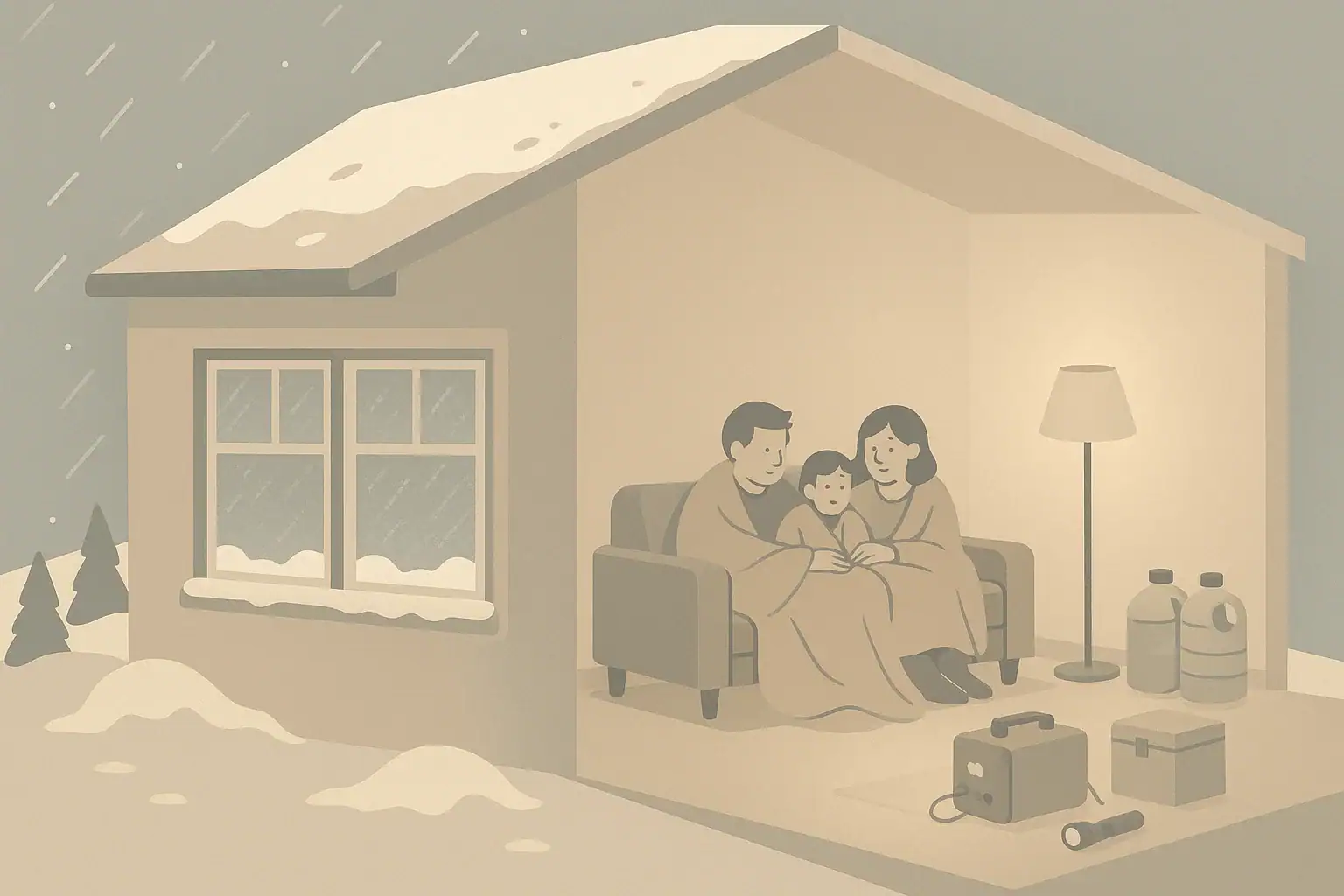
Why Winter Storm Readiness Matters for Houses
Winter storms in the United States can bring heavy snow, ice, high winds, and very low temperatures. For many houses, that can mean short or extended power outages, blocked roads, and dangerous cold indoors if heating systems fail.
Being ready does not mean building a bunker or stocking years of supplies. A practical winter storm readiness plan focuses on staying warm enough, keeping pipes from freezing, and having safe backup power and lighting for a few days.
This guide is written for typical single-family homes and townhouses, but many ideas also apply if you share walls with neighbors or live in a duplex. Renters can use most of these steps too, especially those that do not require permanent changes.
Step 1: Know Your House and Local Winter Risks
Every winter storm is different, and so is every house. Your first step is to understand how your home behaves in cold and during outages.
Understand Your Heating System
Identify how your primary heat works. This determines what happens if the power goes out:
- Electric furnaces or baseboards: No heat during an outage.
- Gas or oil furnace with electric blower: Fuel is available, but the blower and controls usually need electricity.
- Heat pumps: Fully dependent on electricity.
- Wood or pellet stoves: Wood stoves can work without power; pellet stoves usually need electricity for fans and controls.
- Fireplaces: Traditional open fireplaces provide limited heat but may offer some comfort and small local warmth.
Knowing this helps you plan realistic backup options and decide how much insulation, weatherproofing, and emergency heat you need.
Check How Your House Holds Heat
Some houses stay warm longer than others when the power is out. Think about:
- Insulation level: Newer or recently insulated homes usually keep heat longer.
- Window quality: Double-pane windows and tight seals reduce heat loss.
- Air leaks: Drafts around doors, windows, and outlets let warm air escape.
- House size and layout: Smaller, compact homes and those with central rooms away from exterior walls may be easier to keep warm.
Know Your Local Winter Hazards
Look at past storms where you live:
- Does your area get ice storms that often knock out power?
- Are roads to your neighborhood usually cleared quickly, or do you get snowed in?
- Have you had frozen pipes before, or do neighbors mention it?
- Are you on a well that stops working without electricity?
These details shape how much water, backup power, and pipe protection you should prioritize.
| Task | Why it matters | Notes |
|---|---|---|
| Identify heating type and power needs | Shows what fails in an outage | Check if blower, pumps, or controls need electricity |
| Locate main water shutoff valve | Helps prevent water damage | Practice turning it off before a storm season |
| Seal obvious drafts around doors/windows | Reduces heat loss | Use weatherstripping or temporary draft blockers |
| Protect pipes in unheated areas | Lower risk of burst pipes | Insulate or add heat tape where appropriate |
| Prepare at least a 3-day water supply | Covers outages and stuck roads | Include water for people, pets, and basic cleaning |
| Test flashlights and battery lanterns | Safe lighting when power fails | Store spare batteries in a dry, known location |
| List critical devices for backup power | Avoid overloading backup systems | Think about furnace controls, phone chargers, and a lamp |
Step 2: Keep Heat In and Cold Out
Keeping the heat you already have is usually easier and safer than trying to create new heat. Insulation, air sealing, and small habits can make a big difference in winter storms.
Weatherproof Before the Storm
Simple, low-cost steps can improve how your house holds warmth:
- Seal drafts: Use weatherstripping around drafty doors and windows. Add door sweeps to exterior doors with gaps underneath.
- Insulate outlets on exterior walls: Foam outlet and switch gaskets can reduce tiny but constant drafts.
- Add temporary window insulation: Clear plastic film kits or interior window coverings can reduce heat loss through older windows.
- Close fireplace dampers when not in use: An open damper works like a chimney for your heated air.
Plan a Warm Room Strategy
During an outage, especially in very cold weather, it is often more realistic to keep a smaller space warm enough rather than the whole house.
- Pick one or two core rooms: Prefer smaller rooms on lower floors, away from large windows and exterior doors.
- Pre-position supplies: Keep extra blankets, sleeping bags, warm clothing layers, and safe lighting in that space.
- Close off unused rooms: Shut doors to rooms you are not using and consider hanging blankets or sheets over open archways.
- Use interior doors and curtains: Even makeshift barriers can slow warm air from escaping.
Safe Supplemental Heat
Heat sources that do not depend on the main power grid can help, but safety comes first. Common options include:
- Built-in wood stoves and fireplaces: Use only if they are maintained and vent properly.
- Portable heaters: Only use models designed for indoor use and follow manufacturer safety instructions, including ventilation and distance from flammable materials.
- Layering and bedding: Warm clothing, hats, socks, and extra bedding can reduce how much additional heat you need.
Always keep clear space around any heat source, use stable surfaces, and never leave open flames unattended.
Step 3: Protect Pipes and Water Supply
Frozen and burst pipes can cause significant damage once they thaw. A winter storm plan for a house should include basic pipe protection and a backup for household water needs.
Find and Protect Vulnerable Pipes
Pipes most at risk are usually in:
- Unheated basements or crawl spaces
- Garages
- Exterior walls, especially under sinks
- Attics or uninsulated spaces
To reduce freezing risk:
- Insulate exposed pipes: Foam pipe sleeves or similar products can help in garages, crawl spaces, and basements.
- Seal gaps: Fill holes where pipes pass through exterior walls to block cold air.
- Open cabinet doors under sinks: During very cold weather, let warm air circulate around pipes in exterior walls.
- Consider heat tape: For especially vulnerable sections, use heat tape designed for pipes and follow manufacturer guidelines.
Use Your Main Water Shutoff Wisely
Knowing how to quickly shut off water can limit damage if a pipe bursts.
- Find the main water shutoff valve and make sure it turns smoothly.
- Show other household members how to turn it off.
- In an extreme, extended outage in very cold weather, some homeowners choose to shut off and drain the system. If you are unsure, consult a local plumbing professional for guidance specific to your region and house.
Prevent Outdoor Line and Hose Damage
Outside connections can freeze and damage indoor plumbing if not prepared:
- Disconnect garden hoses from outdoor spigots.
- Use insulated covers on outdoor faucets, especially on older homes.
- If you have an irrigation system, follow recommended steps to winterize it.
Store Water in Case of Outages
Power loss, frozen lines, or well pump issues can interrupt water service. Aim for at least a few days of water on hand.
- Drinking and cooking: Common guidance is about one gallon per person per day as a planning estimate.
- Pets: Include water for pets in your calculations.
- Basic cleaning: Extra water in clean containers or tubs can help with handwashing and simple cleaning tasks.
Store water in food-safe containers, away from direct sunlight and chemicals, and rotate periodically to keep it fresh.
Step 4: Plan Safe Backup Power and Lighting
Backup power in a winter storm is not just about comfort. It can keep critical systems running, reduce the risk of frozen pipes, and maintain communication.
Decide What You Really Need to Power
Most homes do not need to power everything during an outage. Focus on essentials:
- Furnace controls and blower (if feasible and safe with your system)
- Well pump, if you rely on one
- Refrigerator and freezer (to reduce food loss)
- Phone and basic electronics for communication
- One or two efficient lights
Make a short list of your must-run items and approximate their wattage or power draw. This helps you choose realistic backup options and avoid overloading them.
Common Backup Power Options
Several backup approaches can fit typical houses, depending on your budget, space, and comfort with equipment:
- Portable power stations: Battery-based units that can run small devices like phones, lights, and sometimes a fridge for limited hours.
- Portable generators: Fuel-powered units that can handle larger loads, such as furnaces and multiple appliances, when used correctly.
- Standby generators: Permanently installed systems that start automatically during outages and can power much or all of a home.
Any system that connects to home wiring should be installed or reviewed by a qualified electrician to avoid backfeeding the grid and other hazards.
Generator Safety Basics
Improper generator use can be dangerous. Follow general safety practices:
- Operate fuel-powered generators outdoors only, far from doors, windows, and vents.
- Use proper extension cords rated for outdoor and heavy-duty use if plugging items directly into the generator.
- Never plug a generator into a wall outlet. Use a transfer switch or interlock device installed by an electrician.
- Store fuel safely, outside living areas, in approved containers, and follow local regulations.
- Keep working smoke and carbon monoxide alarms in your home.
Lighting Without Open Flames
In winter storms, safe lighting reduces the temptation to use candles, which carry fire risk.
- Battery-powered lanterns provide room-filling light with less glare than flashlights.
- Headlamps keep your hands free for tasks like tending to pipes or checking breakers.
- Small, efficient LED lights draw little power from backup batteries.
Store a set of lights and fresh batteries together where everyone in the house can find them in the dark.
Step 5: Household Routines During a Winter Outage
Once a winter storm is underway and the power is out, a few simple routines can stretch your supplies and help keep the house livable.
Heat Management Habits
- Close curtains at night: Reduce heat loss through windows.
- Open curtains on sunny days: Let in free solar warmth.
- Limit door openings: Try to keep exterior doors closed as much as possible.
- Move as a group: Staying in the same room concentrates body heat.
Water and Plumbing Checks
- Run a small trickle of water through at-risk faucets if directed to do so by local advice for your region and plumbing setup.
- Periodically feel accessible pipes in unheated areas for unusual cold spots or bulging.
- If you suspect a frozen pipe, consider turning off the main water supply until you can safely address it.
Food and Refrigeration
If the power goes out during a winter storm, your refrigerator and freezer will warm gradually.
- Keep doors closed as much as possible to preserve cold air.
- Plan simple meals that use perishable items first, if it is safe to do so.
- Have some shelf-stable, no-cook foods for when cooking is difficult or not possible.
Communication and Information
- Keep at least one battery-powered or hand-crank radio to receive local updates.
- Use phone battery-saving modes and limit nonessential use.
- Have a written list of important phone numbers in case your phone battery dies or contacts are inaccessible.
| Device type | Typical watts range (example) | Planning notes |
|---|---|---|
| LED lamp | 5–15 watts | Very efficient; prioritize over older bulb types |
| Phone charger | 5–20 watts | Can often be charged from small battery packs |
| Wi‑Fi router | 10–25 watts | Optional; turn off if cell data works and power is limited |
| Refrigerator | 100–300 watts (running) | Cycles on and off; door openings increase usage |
| Furnace blower | 300–800 watts | Large load; often requires generator or sizable backup system |
| Well pump | 500–1500 watts (startup surge) | High startup draw; plan capacity with an electrician |
| Electric space heater | 750–1500 watts | Very power-hungry; usually not practical on small backups |
Step 6: Simple Planning for Families, Kids, and Pets
A winter storm plan works best when it fits the people and animals in your home. A few targeted preparations can make outages less stressful.
Comfort and Safety for Kids
- Keep extra warm clothing and blankets in kid sizes.
- Set aside quiet activities that do not require power, such as books, puzzles, and simple toys.
- Talk through what a power outage is like in age-appropriate terms so it feels less frightening.
Considering Older Adults and Mobility Needs
- Plan for any electrically powered medical or mobility equipment. If applicable, ask your healthcare provider or device supplier about backup options.
- Reduce the need to climb stairs in dark or cold conditions by setting up a comfortable space on one level.
- Keep pathways clear to reduce trip risks in low light.
Pet Needs in Winter Storms
- Store extra pet food and water along with your main supplies.
- Have a warm resting area for pets, away from drafts.
- Plan for leashes, carriers, and waste bags in case you need to move to another location.
Write Down Your Winter Storm Plan
It helps to keep a simple, written summary of your winter storm readiness plan:
- Where flashlights and backup batteries are kept
- Which room is your designated warm room
- Location of the main water shutoff and electrical panel
- Key phone numbers and local information sources
A short checklist on paper makes it easier to act quickly when a storm is approaching and the power or internet is unreliable.
Related guides: Hurricane Readiness for Houses: Outdoor Prep, Power, and Water · Summer Outages: Keeping Cool When Power Is Limited.
Authoritative sources
Safety recommendations can change. Confirm critical details with current official guidance and local authorities.
- CDC: Carbon Monoxide Poisoning Basics
- USDA FSIS: Keep Food Safe During Emergencies
- U.S. CPSC: Battery Safety
Frequently asked questions
How much backup power do I need to run a furnace blower and refrigerator during a winter storm?
Estimate the combined running watts plus any startup surge: typical furnace blowers often draw about 300–800 watts running and refrigerators about 100–300 watts running with a higher startup surge. Add a margin for the startup surge and extra devices, and consult an electrician when sizing a generator or transfer switch to ensure safe operation.
What are the most effective quick steps to prevent indoor pipes from freezing during an extended outage?
Insulate exposed pipes with foam sleeves, open cabinet doors under sinks to let warm air reach pipes, and seal gaps where cold air enters around pipe penetrations. For especially vulnerable runs, consider approved heat tape and follow manufacturer guidance; if you’re unsure about complex plumbing, consult a local plumber.
Can I run a portable generator inside my garage or close to the house to keep heat and pumps working?
No. Fuel-powered generators must be used outdoors, positioned well away from doors, windows, and vents to avoid dangerous carbon monoxide entering living spaces. To connect a generator to home circuits, use a transfer switch or interlock installed by a qualified electrician and keep working carbon monoxide and smoke alarms in the home.
What are the best quick actions to keep a house livable without power for several days?
Designate a warm room, concentrate people and supplies there, close off unused rooms, and use extra clothing and bedding layers to retain body heat. Maximize solar gain during the day by opening curtains on sunny windows, minimize door openings, and use battery-powered lighting to safely navigate the house.
How much water should I store as part of a winter storm readiness plan for houses?
Plan for at least one gallon per person per day for drinking and basic cooking, plus additional water for pets and hygiene; a several-day supply is recommended if you may be snowed in. Store water in food-safe containers, keep it away from chemicals and heat, and rotate supplies periodically to maintain freshness.
- Simple checklists and realistic planning
- Water, power, lighting, and pantry basics
- Family plans (kids, pets, seniors) and seasonal prep
Affiliate disclosure
As an Amazon Associate, we earn from qualifying purchases. Some links on this site may be affiliate links. If you buy through these links, we may earn a small commission at no extra cost to you. This helps support our content. Learn more.