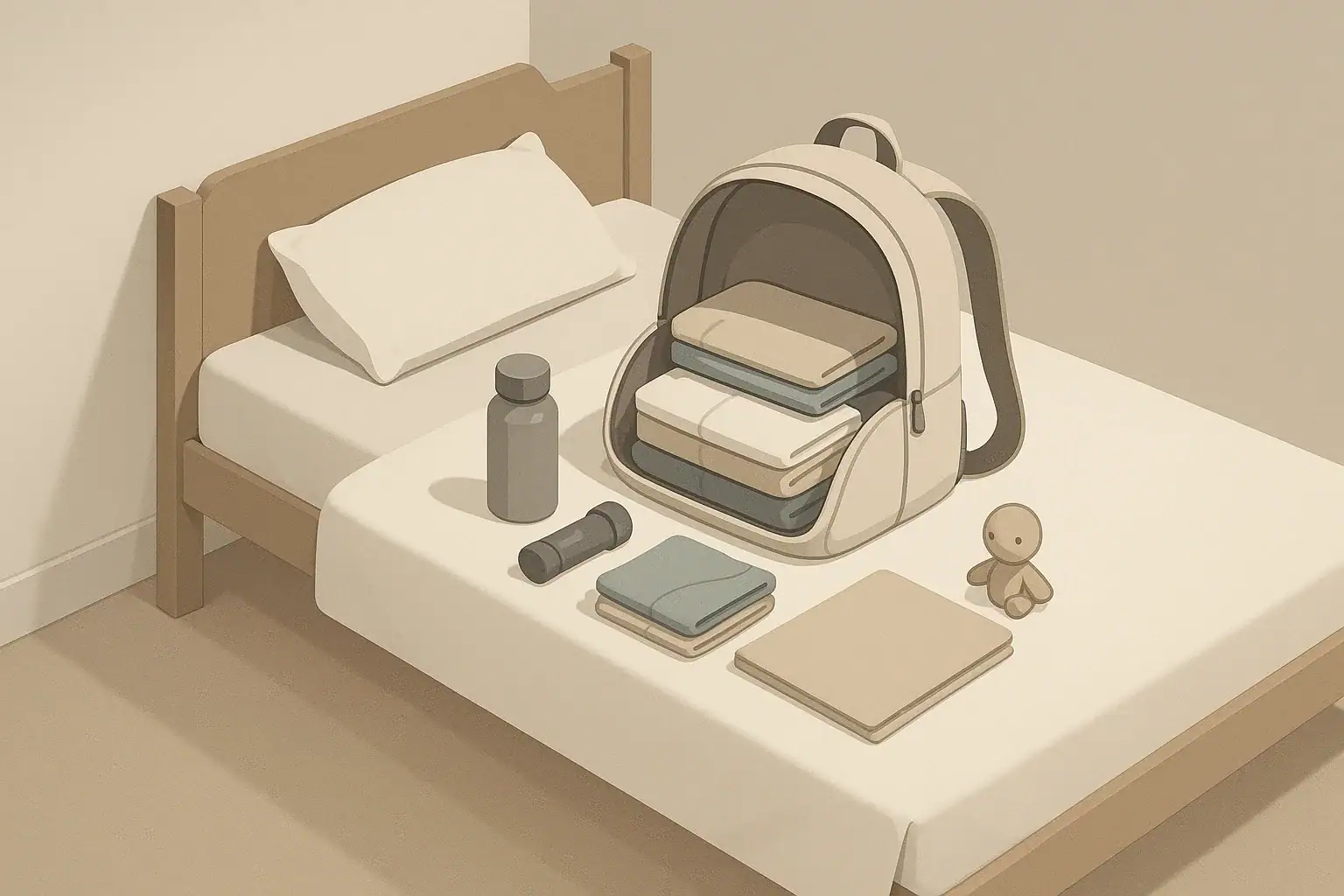
A go-bag for kids is a small, ready-to-grab bag with basics your child might need if you have to leave home quickly or stay somewhere else for a short time. It is not about extreme scenarios. It is about everyday disruptions: a short evacuation for a gas leak, staying with relatives during a power outage, or heading to a shelter during a storm.
Kids handle change better when a few familiar things come with them. A well-planned go-bag focuses on three simple goals:
- Comfort: Familiar items to reduce stress and help with sleep and routines.
- Practical basics: Clothes, small hygiene items, and simple snacks.
- Safety and information: Contact details, basic supplies, and a way to communicate if possible.
Why a Go-Bag for Kids Matters
This guide breaks down what to pack by age, how to fit kid go-bags into small spaces and busy family life, and how to keep them updated without turning preparedness into a source of worry.
General Principles for Kids’ Go-Bags
Before looking at age-specific lists, it helps to understand a few guiding principles. These apply whether you live in a small apartment or a large house, and whether you drive or rely on public transit.
Keep It Light and Manageable
A child’s go-bag should be sized for their body and your reality. Children will not carry a fully loaded adult bag. Aim for:
- Shared load: Adults carry most supplies; kids carry comfort items and a few light essentials.
- Short-duration focus: Plan for about 24–72 hours away from home, not weeks.
- Portability: Choose a simple backpack or small duffel that is easy to grab and stack.
Prioritize Familiar Routines
Children cope better when they can keep some of their usual routine. In their go-bag, try to support:
- Sleep routines (favorite small blanket, stuffed animal, or pillowcase).
- Bedtime or quiet time (simple book, small toy, or coloring supplies).
- Daily hygiene (toothbrush, travel-size toothpaste, hand wipes).
Plan for Your Space and Transportation
Your living situation affects how you pack:
- Apartment or small space: Store kids’ go-bags in a closet near the exit, under a bed, or on a high shelf away from curious hands, but easy for adults to reach.
- Car access: Some non-perishable items can live in a small car kit, with backup kid items in the trunk, while the main kid bags stay indoors to avoid temperature extremes.
- No car: Keep weight low and bags compact so you can manage them on foot, on transit, or in a rideshare.
Include Simple Information and Contacts
Even young kids can carry basic information:
- Child’s name and date of birth.
- Parent or guardian names and phone numbers.
- One or two trusted backup contacts outside your local area.
- Any important notes (allergies, communication needs, or other special considerations).
durable card inside the bag. For older kids, go over what the card is and when to share it with an adult helper, such as staff at a shelter or school.
| Living situation | Bag storage idea | If you rely on transit | If you usually drive |
|---|---|---|---|
| Small apartment | One small bag per child on a closet shelf near the door | Keep bags light; prioritize comfort items and documents | Store extra diapers or bulky items in a shared family bin |
| Large apartment | Kids’ bags on hooks by the entry; adult bag nearby | Limit to what adults can carry plus one light kid bag | Consider a rolling carry-on for combined family supplies |
| House with garage | Bags in a hallway closet; backup bin in garage | Plan to leave garage bin behind if walking out | Garage bin can hold extra clothes and water |
| House without garage | Bags under beds or in bedroom closets | Practice carrying only essential bags to a meeting point | Keep a small extra car kit to reduce bag weight |
| Shared housing | Compact bags labeled discreetly and kept in your room | Focus on privacy-friendly packing and small sizes | Agree on where to stage bags before loading the car |
| Dorm or campus housing | One compact bag per child in a shared family closet | Plan routes using stairs and outdoor meeting spots | Include parking location and building exit notes |
Go-Bag Basics by Age Group
Every child is different, so use these lists as a starting point and adjust for your family’s needs, climate, and typical risks in your area. Keep items simple, non-fragile, and sized for kids.
Babies and Toddlers (0–3 Years)
For the youngest children, the go-bag is mostly carried by adults. Focus on diapers, feeding, and comfort.
Essentials:
- Diapers or training pants (at least several changes; more if driving is uncertain).
- Wipes in a travel pack.
- Small changing pad or folded towel.
- Diaper cream or barrier ointment in travel size if used routinely.
- Two changes of clothes (one warm, one lighter layer) in a labeled bag.
- Warm hat and socks, even in warmer climates (indoor spaces can be cool).
- Lightweight blanket or swaddle.
Feeding:
- For formula-fed infants: formula measured into small containers or single servings, plus bottles.
- For older toddlers: shelf-stable snacks you know they tolerate (soft crackers, fruit pouches).
- Small, spill-resistant cup.
Comfort and routine:
- Favorite small stuffed animal or comfort toy.
- Pacifier (plus a spare if used).
- Simple board book.
Preschool and Early Elementary (4–7 Years)
Kids in this group can carry a small backpack with very light items, while adults carry heavier supplies. Involve them in choosing one or two comfort items.
Essentials:
- Two changes of clothes in a resealable bag (top, bottoms, underwear, socks).
- Light jacket or hoodie; hat and gloves in colder regions.
- Travel-size toothbrush and toothpaste.
- Travel pack of tissues and a small pack of wipes.
- Basic contact card with names and phone numbers.
Food and water:
- Reusable water bottle (adults carry backup water if possible).
- A few familiar, non-messy snacks like granola bars or crackers.
Comfort and quiet-time items:
- Soft small toy or stuffed animal.
- Small coloring book or notebook and a few crayons or pencils.
- Simple card game or small puzzle in a bag.
Safety and visibility:
- Small, child-safe flashlight or clip-on light (with batteries checked regularly).
- Bright accessory like a hat or band to help you spot your child in a crowd.
Tweens (8–12 Years)
Tweens can understand more about why a go-bag exists and can help keep their own bag updated. Keep explanations calm and focused on being ready, like packing for a sleepover that might be last-minute.
Essentials:
- Two complete outfits and extra socks and underwear.
- Weather-appropriate outer layer (rain jacket, warm hoodie, or sun hat).
- Basic hygiene kit: toothbrush, toothpaste, comb or brush, small soap or body wipes, deodorant if they use it.
- Contact card with numbers and any important notes.
Food and water:
- Reusable water bottle sized for their comfort.
- Light, non-perishable snacks they actually like.
Comfort and activities:
- Notebook and pen or pencils.
- Small book or e-reader if you already use one (charged in advance; no need to buy anything special).
- Compact game, deck of cards, or puzzle.
Simple responsibility items:
- Small flashlight or headlamp with spare batteries stored separately.
- Plain watch if they are used to wearing one.
- Copy of any important instructions you want them to know (for example, a reminder to stay with a designated adult).
Teens (13+ Years)
Teens can manage more of their own packing and may have strong preferences. Involve them in deciding what goes in so they will actually carry it and know where things are.
Essentials:
- Two changes of clothes, including extra socks and underwear.
- Layered clothing options for your typical climate.
- Hygiene kit including menstrual supplies if needed.
- Contact card and any important written information, even if they usually rely on their phone.
Food, water, and small extras:
- Reusable water bottle or small canteen.
- Non-perishable snacks they will actually eat.
- Optional: simple, compact utensil set if they find that useful.
Comfort and connectivity:
- Book, journal, or other offline activity.
- Earplugs or simple eye mask if they are sensitive to noise or light (optional).
- Charging cable for their phone and a simple plan for what to do if power or networks are down.
Simple planning:
- Written family meeting spots and a basic route if you get separated.
- Reminder card for any daily routines they need to continue if possible (for example, morning and evening checklists).
Comfort Items That Make a Big Difference
Comfort items are not an extra; they are part of how kids handle unfamiliar situations. The goal is not to pack everything they love, but to choose a few small items that bring a sense of normal life with them.
Sleep and Soothing
Sleep often becomes harder when kids are away from home or routines are disrupted. A few small items can help:
- Familiar pillowcase that can slip over different pillows.
- Favorite small blanket or comfort square.
- Stuffed animal or small toy that feels safe and familiar.
- Optional: soft, simple sleep mask for older kids who find light distracting.
Activities and Distraction
Quiet activities help pass time in waiting rooms, shelters, or relatives’ homes.
- Coloring book or plain notebook with crayons or colored pencils.
- Small pack of cards or a travel-size game.
- Simple building toy in a small pouch, if your child enjoys that.
- Printed puzzles or word games tucked into a folder.
Personal Touches
A go-bag can also carry reminders of connection and reassurance:
- Printed family photo in a small protective sleeve.
- Short note from a parent or caregiver with calming, encouraging words.
- For older kids, a short list of things that help them calm down (breathing ideas or favorite activities) written by them or with your help.
Packing Strategies for Families and Small Spaces
Many families juggle limited storage, busy schedules, and multiple kids. A realistic plan keeps kid go-bags simple and easy to maintain.
Shared Family Bin Plus Individual Bags
One helpful approach is to separate supplies into:
- Individual kid bags: Light backpacks with clothes, contact cards, and comfort items.
- Family bin: A shared container with extra diapers, bulkier items, and some additional water or snacks.
In a quick exit, you prioritize the kid bags first. If there is time and room, the family bin comes too.
Labeling and Organizing Inside the Bag
Clear organization saves time and frustration when you are tired or in a new place.
- Use resealable plastic bags or small fabric pouches for clothes, hygiene items, and activities.
- Label bags with the child’s name and the type of contents (clothes, snacks, comfort).
- Place the contact card in a consistent place in every child’s bag, like the front pocket.
- Keep comfort items near the top so they are easy to reach first.
Apartment-Specific Tips
If you live in an apartment or other small space:
- Store bags vertically on a shelf to save floor space.
- Use under-bed storage bins for shared supplies like diapers and extra clothes.
- Consider keeping seasonal items (like heavy coats) near the door rather than inside each bag.
Special Considerations: Allergies, Sensory Needs, and Medications
Some kids have additional needs that affect what you pack. Focus on small, practical adjustments that support their comfort and safety.
Food Allergies and Sensitivities
For kids with food allergies or sensitivities:
- Choose snacks that are already safe and familiar from everyday life.
- Keep ingredients lists or simple notes about what they cannot have with the contact card.
- Pack an extra set of snacks in the family bin if space allows.
Sensory or Comfort Needs
Children who are sensitive to noise, light, textures, or crowds may benefit from:
- Soft, tag-free clothing or a favorite comfortable outfit.
- Small, familiar fidget toy if they use one.
- Simple earplugs or soft headphones (without needing to connect to a device).
- Written notes about what helps them feel calmer, for older kids or for adults who may assist.
Medications and Daily Care
Medication management can be complex. A cautious, simple approach:
- Keep a written list of medications, doses, and usual times with the contact card.
- Keep regular medications in your daily routine bag or at home as directed by your clinician, and plan to bring them with you if you leave.
- If your child uses medical devices or equipment, write down simple operating notes and any backup steps in case electricity or water are limited.
Reviewing and Updating Kids’ Go-Bags
Children grow quickly, so clothes, tastes, and needs change. A short check a few times a year keeps bags useful.
Simple Update Schedule
To avoid constant repacking, tie updates to regular events, such as:
- Beginning and end of the school year.
- Start of winter and summer.
- Daylight saving time changes if your area observes them.
During each check, quickly look at:
- Clothing size and season-appropriateness.
- Snack expiration dates.
- Batteries in small flashlights or clip-on lights.
- Current phone numbers and contact details.
Involving Kids in the Process
Involving kids in age-appropriate ways can reduce worry and help them feel prepared instead of scared. You might:
- Let them choose a new photo, drawing, or small toy for the bag.
- Have older kids check their own clothing sizes and suggest a replacement outfit.
- Talk about the go-bag as a “just in case sleepover” bag rather than focusing on emergencies.
| Snack type | Storage tip | Rotation interval idea | No-cook use |
|---|---|---|---|
| Granola or cereal bars | Keep in original wrapper inside a small pouch | Swap every few months or at school-year changes | Quick energy snack while waiting or traveling |
| Crackers | Choose sturdy types; avoid easily crushed shapes | Rotate with regular pantry snacks during family snack time | Pair with shelf-stable spreads if available |
| Fruit pouches | Store upright in a small bag to protect seals | Check dates at seasonal clothing changes | Easy option for younger kids with no utensils |
| Trail mix | Use small, sealed bags; avoid ingredients your child dislikes | Make a fresh batch a few times a year | Snack during travel or as part of a light meal |
| Plain cookies | Choose simple, low-crumb options in small sleeves | Replace during holidays or family treat days | Comfort snack in unfamiliar settings |
| Nut-free protein snacks | Pick options that fit your child’s usual diet | Review at the same time as other go-bag checks | Helps kids feel full between meals |
Keeping Things Calm and Doable
A go-bag for kids is not about planning for every possible problem. It is about making a few small, thoughtful choices now so that if you need to leave home on short notice, you can bring comfort, basic supplies, and a sense of normal life with you.
one simple bag, add a few age-appropriate items, and adjust over time. Even a partially packed go-bag can make an unexpected night away from home easier for both you and your child.
Authoritative sources
Safety recommendations can change. Confirm critical details with current official guidance and local authorities.
- USDA FSIS: Keep Food Safe During Emergencies
- U.S. CPSC: Battery Safety
- CDC: Guidelines for Cleaning Safely After a Disaster
Frequently asked questions
How heavy should a go-bag for kids be and who should carry it?
Keep a child’s go-bag light so they can carry it comfortably for short distances, while adults carry bulkier items like water and family supplies. Generally, children should only carry a few comfort items, a light water bottle, and basic personal items; adults should manage shared bins and heavier gear.
What medications and documents should I include in my child’s go-bag?
Include a written list of medications with doses and usual administration times, any known allergies, clinician contact details, and emergency contacts. If possible, keep a short paper copy of prescriptions or pharmacy information and store medications in their original labeled containers or a clearly labeled pill organizer.
How often should I check and update a kids’ go-bag?
Check go-bags a few times a year, tied to easy reminders like the start and end of the school year or seasonal changes. During each check, verify clothing sizes and season-appropriateness, rotate snacks by expiration date, and test batteries and contact information.
What comfort items work best for children with sensory needs?
Choose small, familiar items that address the child’s specific sensitivities, such as soft tag-free clothing, a small favorite blanket, a quiet fidget toy, or earplugs/soft headphones to reduce noise. Also include a short written note about calming strategies so caregivers or helpers know what soothes the child.
Can I store formula and feeding supplies in a go-bag for toddlers?
Yes. For formula-fed infants or toddlers, include single-serve or shelf-stable formula packets, clean bottles or nipples, and a spare bottle; rotate items before expiration. If using powdered formula, plan for safe water for mixing and follow preparation guidance for hygiene and temperature when possible.
- Simple checklists and realistic planning
- Water, power, lighting, and pantry basics
- Family plans (kids, pets, seniors) and seasonal prep
Affiliate disclosure
As an Amazon Associate, we earn from qualifying purchases. Some links on this site may be affiliate links. If you buy through these links, we may earn a small commission at no extra cost to you. This helps support our content. Learn more.