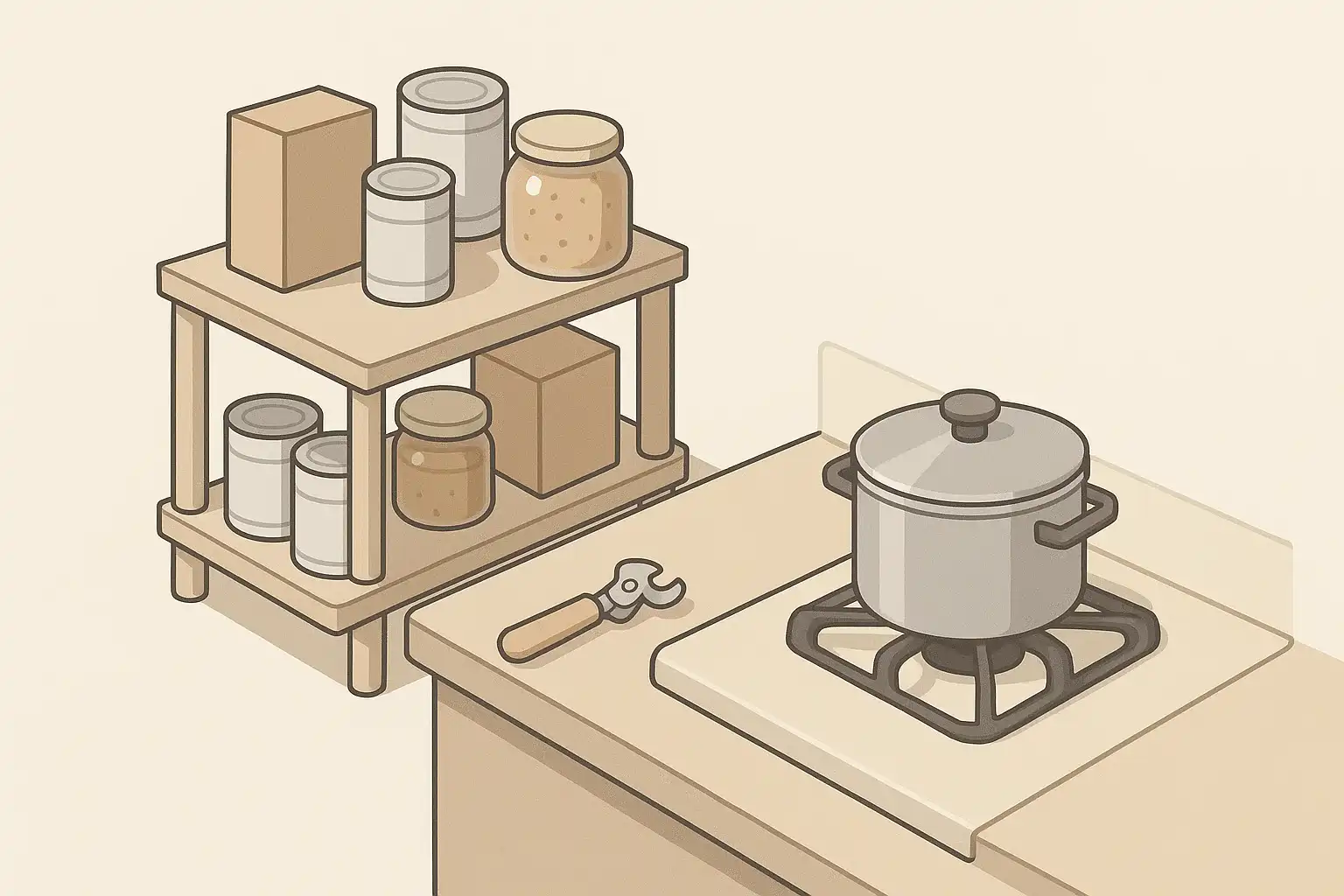
Why Plan for Cooking Without Power
Short power outages are common during storms, heatwaves, and other local disruptions. In many cases, electricity returns within hours. But even a day or two without power can make cooking feel stressful, especially with kids, pets, or older adults at home.
Planning a few simple ways to cook without power helps you:
- Keep meals predictable and calming during an outage
- Use refrigerated and frozen food safely before it spoils
- Avoid risky improvised heat sources indoors
- Stretch pantry supplies if stores are closed or crowded
This guide focuses on realistic options for apartments and houses in the United States, with an emphasis on safety and basic, no-fuss meals rather than elaborate emergency setups.
Start With No-Cook and Low-Effort Meals
Before thinking about flames or fuel, it helps to plan what you can eat without cooking at all. Many power outages are short enough that you can rely mostly on shelf-stable and ready-to-eat foods.
No-cook pantry staples
Consider keeping a small reserve of foods that can be eaten straight from the package or with just room-temperature water:
- Canned beans, vegetables, and fruit (with manual can opener)
- Nut butters and shelf-stable spreads
- Crackers, tortillas, and dry cereals
- Ready-to-eat canned soups and chili (can be eaten cold if needed)
- Energy bars, granola bars, and trail mix
- Shelf-stable milk or non-dairy alternatives in cartons
- Instant oatmeal or noodles that can soak in warm (not boiling) water if you have any heat source
Using perishable food safely
Refrigerators generally keep food cold for several hours if doors stay closed. When the power first goes out, plan to:
- Use up easily spoiled foods first (leftovers, dairy, cut fruits/vegetables)
- Move items you will eat soon to the front for quick access
- Avoid opening the freezer unless you are taking food out to cook or eat
If food feels warm or has been at room temperature for a long time, it is safer to discard it rather than risk foodborne illness. When in doubt, choose shelf-stable options.
| Situation | Best primary option | Backup idea |
|---|---|---|
| Outage under 12 hours | No-cook foods from fridge and pantry | Use cooler with ice to extend cold items |
| Outage 12–24 hours | Use refrigerated foods first with simple outdoor cooking | Shift to canned and dry pantry foods |
| Outage 1–3 days | Rely mainly on shelf-stable meals | Cook frozen items early if safe outdoor heat is available |
| Apartment with no outdoor space | No-cook meals and indoor-safe devices only | Plan to visit a friend or community site if safe |
| House with yard or driveway | Use existing outdoor grill or camp stove | Build up no-cook pantry for poor weather days |
| Families with young kids | Easy snacks and finger foods | Hot meals when possible, but not required each time |
| Hot weather outage | Light cold meals, high fluids | Limit heavy cooking that adds heat indoors |
| Cold weather outage | Hearty meals using safe outdoor or backup heat | No-cook foods plus extra layers and blankets |
Example values for illustration.
Indoor-Safe Options for Heating Food
Indoor cooking during a power outage requires extra care. Some common fuel-burning devices can release carbon monoxide or present a fire risk if used inside. Whenever possible, use methods specifically designed for indoor use and follow manufacturer instructions.
When you have a gas or propane stove
Many gas stoves can be lit with a match or lighter when the power is out, though some models have safety systems that prevent this. If your stove allows manual lighting, keep these basics in mind:
- Use the burners, not the oven, for short cooking tasks
- Open a window slightly if outdoor conditions are safe
- Never use the oven or stove as a room heater
- Turn off the burner fully when finished
Electric stoves and plug-in appliances
Electric stovetops, ovens, and microwaves will not work without power from the grid or a backup power source. Most small backup power stations are not designed to run high-wattage appliances for long. If you have any backup power, reserve it for essentials like communication devices, small fans, or medical-related equipment if needed, unless you clearly understand its limits.
Non-electric, indoor-safe warmers
Some households keep compact devices that warm or gently cook food using fuel or chemical reactions. When assessing indoor use, consider:
- Is the device clearly labeled or described as safe for indoor use?
- Does it require strong ventilation, or is it meant for well-ventilated spaces only?
- Does it produce an open flame?
If there is any doubt, treat the device as outdoor-only. It is safer to eat cold food than to risk smoke or carbon monoxide buildup inside.
Simple heat-conserving-tricks
Even without a full stove, you can make limited heat go further:
- Use lids on pots and pans to keep heat in
- Cut food into smaller pieces to cook faster
- Pre-soak rice, beans, or pasta if time allows, to reduce cooking time
- Wrap a pot (off the flame) in towels to keep food warm longer, keeping all fabric well away from any burner
Outdoor Cooking During a Power Outage
If you have a balcony, yard, driveway, or nearby safe outdoor space, outdoor cooking may be the most flexible way to prepare hot meals without power. Safety and ventilation are much better outdoors, but there are still important rules.
General outdoor safety rules
Whatever equipment you use outside:
- Keep grills and stoves at least several feet from buildings, railings, and vehicles
- Set up on a stable, non-flammable surface
- Never cook inside a garage, shed, or under an overhang where smoke can build up
- Have a way to put out small fires, such as water or a fire extinguisher, if it is safe to store and use one
- Stay with the cooking setup the entire time it is lit
Common outdoor options
Many households already own outdoor cooking tools for normal weekends and holidays. In an outage, they can become valuable, with the same safety practices you would use any other time.
- Charcoal or wood grills: Good for larger quantities of food. Allow fuel to burn completely and cool fully before disposal. Never bring hot coals indoors.
- Gas grills: Often quicker to start and control than charcoal. Check fuel levels regularly so you are not surprised during a longer outage.
- Portable camp stoves: Useful for small meals and boiling water. Use only with the recommended fuel and outdoors.
Apartment and balcony considerations
If you live in an apartment or condominium, building rules may limit the type of cooking allowed on balconies or near structures. Before an outage:
- Check your lease or building guidelines for grill and open-flame restrictions
- Consider compact, building-approved options or no-cook plans if open flames are not allowed
- Identify nearby friends or family with safer outdoor space, if practical
Fuel, Ventilation, and Fire Safety Basics
Cooking without power often means bringing new heat sources into your routine. A few basic safety habits reduce the chance of fire or unsafe air during an already stressful event.
Never use outdoor devices indoors
Certain devices are intended only for outdoor use, even during cold weather outages. This typically includes:
- Charcoal grills and smokers
- Gas grills
- Most camp stoves
- Homemade heaters using charcoal, fuel, or open flames
Using these indoors, including garages or covered porches, can allow carbon monoxide and smoke to build up. It is safer to wear extra layers and eat cold food than to bring these devices inside.
Storing and handling fuel
Only store as much cooking fuel as your space and local rules reasonably allow. General practices include:
- Keep fuel containers upright, in a cool and ventilated place, away from living and sleeping areas if possible
- Do not store fuel next to heaters, pilot lights, or other ignition sources
- Follow local guidelines on maximum amounts and storage locations
- Check fuel devices periodically for leaks or damage, especially before storm seasons
Basic fire precautions
For any emergency cooking setup, plan ahead for what you would do if something ignites unexpectedly.
- Keep flammable items (curtains, paper towels, clothing) away from open flames
- Tie back long hair and avoid loose sleeves when cooking
- Turn pan handles away from edges where they can be bumped
- Know how to turn off the fuel quickly
Working smoke and carbon monoxide detectors provide important warning if things go wrong. Test them regularly according to manufacturer guidance.
Simple Meal Ideas for Short Outages
During a power outage, the goal is not gourmet cooking. Aim for meals that are quick, familiar, and easy to clean up with limited water.
No-cook meal ideas
- Crackers or tortillas with nut butter and sliced fruit from the fridge
- Canned tuna or chicken mixed with canned beans and vegetables
- Cereal with shelf-stable milk or dry as a snack
- Snack plates with nuts, dried fruit, and canned vegetables
Minimal-heat meal ideas
If you have a safe cooking method available, you can add simple hot elements:
- Canned soup warmed on a grill or camp stove
- Pasta with jarred sauce, using small amounts of water
- Rice cooked in a covered pot, then mixed with canned beans and spices
- Oatmeal made with heated water, topped with nuts or dried fruit
Planning for kids, seniors, and special diets
Outages are easier when everyone has at least one meal or snack they enjoy and can tolerate well.
- Keep a few familiar snacks for young children to reduce stress
- Ensure any medically necessary foods are part of your pantry rotation
- Label special items clearly so they are easy to find in low light
Apartment vs House: Adapting Your Plan
Your living situation strongly shapes which cooking options make sense without power. The goal is not to match someone else’s setup, but to find what fits your space, rules, and comfort level.
Emergency cooking in apartments
Apartment and condo residents typically have less storage space and more restrictions on fuel and flames. Priorities often include:
- Building a reliable no-cook pantry
- Using any existing indoor-safe stove carefully and within building rules
- Keeping a manual can opener, disposable utensils, and simple cleaning supplies
- Knowing where you could go if an outage lasts longer than your supplies
Emergency cooking in houses
People in single-family homes may have yards, patios, or driveways suitable for outdoor cooking. Helpful steps include:
- Maintaining your grill or outdoor stove so it is ready when needed
- Storing a modest amount of extra fuel safely
- Keeping a basic cast-iron or heavy-duty pan that works well over grills
- Planning simple one-pot meals that can be cooked outside
Considerations for renters
Renters may not control building systems or storage areas. It can help to:
- Review your lease for any restrictions on grills and fuel
- Use portable, easy-to-pack items in case you move
- Rely more on pantry planning than permanent installations
| Food type | Storage tip | Rotation interval idea | No-cook or low-heat use |
|---|---|---|---|
| Canned beans | Store in a cool, dry cabinet | Use and replace every few months | Eat cold in salads or heat briefly on grill |
| Canned vegetables | Group by type so they are easy to find | Rotate into weekly dinners | Add to cold bean mixes or warm as a side |
| Canned soup or chili | Stack lightest cans on top rows | Replace during seasonal sales | Eat at room temperature or warm outdoors |
| Nut butters | Keep tightly sealed after opening | Use regularly in snacks | Spread on crackers, bread, or fruit |
| Dry cereal and crackers | Seal in containers once opened | Check freshness every few months | Serve with shelf-stable milk or spreads |
| Instant oats or noodles | Protect from moisture with sealed bags | Use in normal breakfasts and lunches | Prepare with any available hot or warm water |
| Shelf-stable milk | Store upright, avoid high heat | Rotate into baking or cereal | Drink plain or mix into cereal and coffee |
| Snack bars and trail mix | Keep in a small bin or basket | Replace as they are eaten or yearly | Quick energy with no prep needed |
Example values for illustration.
Quick Checklist: Getting Your Kitchen Outage-Ready
A few small steps taken in advance can make emergency cooking feel much more manageable.
Basic items to keep on hand
- Manual can opener that works with your common cans
- Sturdy matches or a lighter stored in a dry, known spot
- A small supply of shelf-stable foods that you actually eat
- Disposable plates and utensils or a simple wash basin for reusable dishes
- Dish soap, paper towels, and trash bags for easy cleanup
Simple planning steps
- Write down three no-cook meals your household would actually enjoy
- Check once or twice a year that fuel, grills, and stoves are in good condition
- Store a flashlight or battery lantern where you can see your cooking area safely
- Talk briefly with family members about what you will and will not use indoors
With a small amount of preparation, cooking without power becomes another household challenge you can handle calmly, using tools and foods you already understand and trust.
Authoritative sources
Safety recommendations can change. Confirm critical details with current official guidance and local authorities.
- CDC: Carbon Monoxide Poisoning Basics
- USDA FSIS: Keep Food Safe During Emergencies
- U.S. CPSC: Battery Safety
Frequently asked questions
How long will refrigerated and frozen food stay safe during a power outage?
Refrigerators generally keep food safe for about 4 hours if the door stays closed; a full freezer can hold temperature for roughly 48 hours (about 24 hours if half-full). When in doubt, discard items that have been above 40°F for more than 2 hours or that show signs of spoilage.
Is it safe to cook on a balcony with a gas or charcoal grill during a power outage?
Check your lease and local regulations first, because many buildings prohibit open flames on balconies. If allowed, place grills well away from the building and railings, use on a stable non-flammable surface, and never cook under overhangs or inside enclosed spaces.
Can I use a charcoal or gas grill indoors if I open windows?
No. Charcoal and gas grills produce carbon monoxide and smoke and must only be used outdoors; opening windows does not provide adequate ventilation to make them safe indoors.
What indoor cooking methods are safest when the power is out?
Safest indoor options are devices explicitly labeled for indoor use, such as certain electric or chemical warmers, or a gas stove that can be manually lit if the appliance allows it. Always follow manufacturer instructions, ensure good ventilation, and rely on working carbon monoxide and smoke detectors.
How should I store small amounts of cooking fuel at home?
Keep fuel in approved containers, upright in a cool, ventilated area away from living and sleeping spaces and other ignition sources. Store only the small amount you reasonably need and follow local guidelines for maximum quantities and safe handling.
How can I plan meals for young children, older adults, or people with special diets during outages?
Keep familiar, shelf-stable foods and at least one preferred no-cook meal for each person; include medically necessary items and label them clearly. Rotate these items into regular meal planning so they stay fresh and accessible when an outage occurs.
- Simple checklists and realistic planning
- Water, power, lighting, and pantry basics
- Family plans (kids, pets, seniors) and seasonal prep
Affiliate disclosure
As an Amazon Associate, we earn from qualifying purchases. Some links on this site may be affiliate links. If you buy through these links, we may earn a small commission at no extra cost to you. This helps support our content. Learn more.