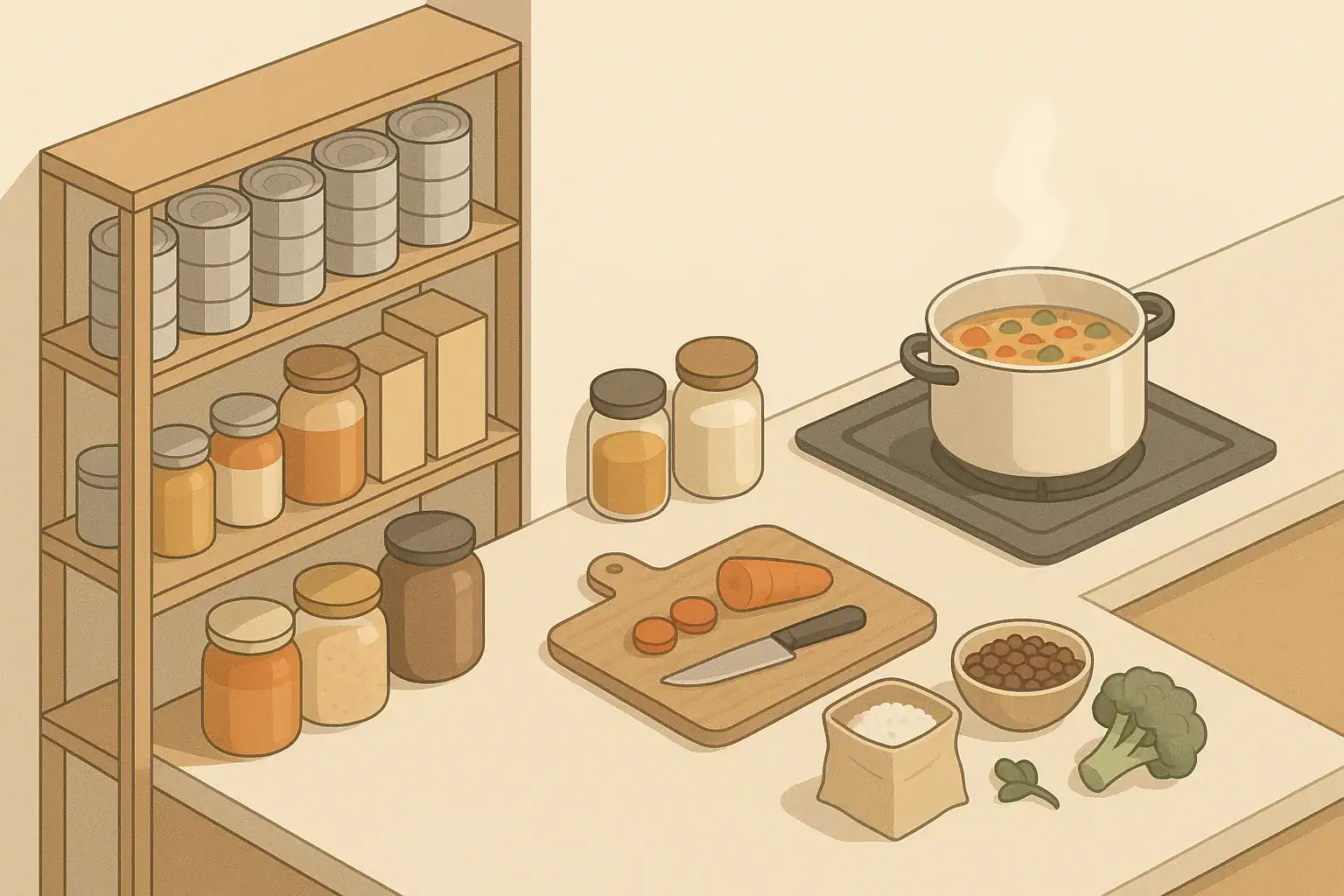
When power is out or you cannot reach a store, deciding what to cook can be harder than the actual cooking. Emergency meal templates turn your shelf-stable foods into simple building blocks. Instead of following exact recipes, you plug what you have into flexible patterns.
These templates are useful for realistic, short-term situations such as:
- Winter storms that delay travel or grocery deliveries
- Hurricanes or strong storms that cause brief power outages
- Heatwaves when you want low-cook or no-cook options
- Smoke days when you prefer to stay inside and use what is on hand
The goal is not gourmet food. It is calm, predictable meals that:
- Rely on shelf-stable ingredients you can store safely
- Work in apartments or small kitchens with limited tools
- Can be adjusted for picky eaters, kids, and older adults
- Still feel like “normal” food, not emergency rations
The templates below assume you have some form of heat at least part of the time (stove, portable but safe cooking device, or communal kitchen). When you do not, you can shift to the no-cook versions of the same patterns.
Why Emergency Meal Templates Make Short-Term Disruptions Easier
When power is out or you cannot reach a store, deciding what to cook can be harder than the actual cooking. Emergency meal templates turn your shelf-stable foods into simple building blocks. Instead of following exact recipes, you plug what you have into flexible patterns.
These templates are useful for realistic, short-term situations such as:
- Winter storms that delay travel or grocery deliveries
- Hurricanes or strong storms that cause brief power outages
- Heatwaves when you want low-cook or no-cook options
- Smoke days when you prefer to stay inside and use what is on hand
The goal is not gourmet food. It is calm, predictable meals that:
- Rely on shelf-stable ingredients you can store safely
- Work in apartments or small kitchens with limited tools
- Can be adjusted for picky eaters, kids, and older adults
- Still feel like “normal” food, not emergency rations
The templates below assume you have some form of heat at least part of the time (stove, portable but safe cooking device, or communal kitchen). When you do not, you can shift to the no-cook versions of the same patterns.
Pantry Building Blocks: Shelf-Stable Foods That Plug Into Any Template
Before using templates, it helps to think in categories, not specific products. This lets you substitute freely based on what is available or affordable.
Core categories to keep on hand
- Staple carbohydrates (“base” foods)
Rice, pasta, instant grains, shelf-stable flatbreads, crackers, oats, dry cereal, instant mashed potatoes, tortillas that store at room temperature. - Proteins
Canned beans, dry beans or lentils, canned fish, canned poultry, shelf-stable tofu, shelf-stable plant proteins, nut or seed butters, canned chili, canned refried beans. - Vegetables and fruits
Canned vegetables, canned tomatoes, canned or jarred fruit, applesauce cups, dried fruit, shelf-stable juice in boxes or cartons. - Flavor boosters
Cooking oil, salt, pepper, dried herbs, spices, bouillon, sauces in shelf-stable bottles or packets, vinegar, lemon or lime juice, salsa, hot sauce. - Ready-to-eat items
Canned soups and stews, shelf-stable meal pouches, instant noodles, granola bars, crackers, shelf-stable cheese spreads. - Breakfast and snack basics
Oats, dry cereal, powdered milk or shelf-stable milk cartons, nut butters, jam, shelf-stable pancake mix, nuts and seeds.
Planning for space and special diets
If you live in a small apartment or have limited storage, choose compact options that stack easily such as cans and small boxes. For special dietary needs (allergies, low-sodium preferences, or specific cultural foods), build templates around items you actually eat often. Rotate them into normal meals so your emergency pantry is familiar, not a separate “prep” zone.
Example values for illustration.
| Category | Why it matters | Example items to consider |
|---|---|---|
| Staple carbohydrates | Form the base of most quick meals and keep you satisfied. | Rice, pasta, tortillas, crackers, oats. |
| Protein sources | Add staying power to meals and support a varied diet. | Canned beans, canned fish, nut butters. |
| Vegetables | Provide variety and bulk to mix into bases and soups. | Canned mixed vegetables, tomatoes, corn, peas. |
| Fruits | Add flavor contrast and familiar options for kids. | Canned fruit, applesauce cups, dried fruit. |
| Flavor boosters | Make repetitive meals feel different without extra storage. | Salt, spices, bouillon, sauces, vinegar. |
| No-cook items | Cover periods with no safe way to heat food. | Ready-to-eat soups, bars, nut butters, crackers. |
| Breakfast basics | Help keep routines normal at the start of the day. | Cereal, oats, shelf-stable milk, pancake mix. |
Template 1: Grain + Protein + Vegetable Bowls
This template works for rice bowls, pasta dishes, and hearty salads built from room-temperature ingredients. It is flexible and forgiving: swap any element with what you have.
Basic pattern
- Base: Rice, pasta, couscous, instant grains, or even crushed crackers or toasted bread for crunch.
- Protein: Canned beans, canned fish, canned poultry, or shelf-stable tofu or plant protein.
- Vegetable: Canned vegetables, canned tomatoes, jarred roasted vegetables, or even drained salsa.
- Flavor: Oil, vinegar, soy-style sauce, hot sauce, dried herbs, or seasoning packets.
Example combinations:
- Rice + canned black beans + canned corn + salsa + a drizzle of oil
- Pasta + canned tomatoes + canned chickpeas + dried Italian herbs
- Couscous + canned lentils + jarred roasted peppers + vinegar and oil
Low-cook and no-cook versions
If you can boil water briefly, instant grains and pasta become easy bases. If you cannot cook at all, you can still:
- Use precooked instant grains that soften in hot tap water if available
- Rely on canned potatoes or canned beans as the “grain” base
- Serve drained beans and vegetables over crackers or tortillas
For families with kids, keep flavors simple at first, and offer sauces on the side so each person can adjust their own bowl.
Template 2: One-Pot Soups and Stews From Cans
Soups and stews are forgiving, use minimal dishes, and can stretch ingredients. With shelf-stable items, the pattern stays the same even when specific cans change.
Basic pattern
- Liquid base: Water plus bouillon, canned broth, or thin canned soup.
- Bulk starch: Rice, pasta, barley, instant potatoes, or canned potatoes.
- Protein: Beans, lentils, canned fish, or canned poultry.
- Vegetables: Mixed vegetables, carrots, peas, corn, green beans, tomatoes.
- Seasoning: Salt and pepper, dried herbs, or seasoning blends.
One simple process:
- Add liquid base to a pot.
- Stir in starch and bring to a simmer if you have heat.
- Add drained canned vegetables and protein.
- Season, heat through, and adjust thickness with more water if needed.
Stretching limited fuel
When fuel is limited, choose ingredients that heat quickly:
- Use small pasta shapes or instant grains instead of long-cooking grains.
- Pre-soak dry beans in advance during normal times, then freeze or refrigerate if power is available before an expected storm.
- Favor canned beans since they are already cooked and only need reheating.
For no-cook days, you can make a “room-temperature soup” by combining drained beans, canned vegetables, and a little shelf-stable dressing or oil and vinegar in a bowl, then eating with crackers.
Template 3: No-Cook Meals for Power-Out Days
No-cook options are helpful when it is too hot to cook, when you want to keep indoor air as clear as possible, or when fuels and stoves are not available. The key is to rely on foods that are safe at room temperature and do not require heating to be palatable.
Sandwich and wrap style meals
- Base: Shelf-stable bread, tortillas, or crackers.
- Spread: Nut or seed butter, canned bean spread (mashed with a fork), shelf-stable cheese spread, or hummus-style shelf-stable products.
- Add-ins: Canned vegetables (drained well), sliced canned fruit (for sweet versions), pickles, or simple seasonings.
Example combinations:
- Tortilla + peanut or other nut butter + sliced canned fruit (drained)
- Crackers + mashed canned beans with a bit of oil, salt, and seasoning
- Bread + shelf-stable cheese spread + sliced pickles from a jar
Snack plate meals
Instead of a single dish, assemble snack-style plates that add up to a full meal:
- Crackers or dry cereal
- Nuts or nut butters
- Canned fruit or applesauce cups
- Canned beans or canned fish (drained)
Snack plates are especially practical for kids, people with small appetites, or households that do not all eat at the same time.
Template 4: Simple Breakfasts That Feel Normal
Keeping breakfast familiar can help days feel calmer, especially for children. Breakfast templates mainly rely on grains plus an optional protein or fruit.
Hot or warm breakfasts (when heat is available)
- Oatmeal: Oats + water or shelf-stable milk + toppings like dried fruit, nuts, or a spoon of jam.
- Pancake-style mixes: Shelf-stable mix + water, cooked on a lightly oiled pan if you can heat a surface.
- Hot cereal blends: Instant grains + sugar or honey + powdered milk.
Choose smaller-sized grains or instant versions to reduce cooking time and fuel use.
No-cook breakfasts
- Cereal and milk: Dry cereal with powdered or shelf-stable milk prepared as directed, or eaten dry as a snack.
- Nut butter and crackers: A few crackers spread with nut butter and served with canned fruit.
- Fruit cups and bars: Applesauce or fruit cups with granola bars or plain nuts.
To keep routines consistent, consider storing a small “breakfast box” of shelf-stable items that you only rotate into everyday use and then restock.
Template 5: Kid-Friendly and Picky-Eater Adjustments
In short-term emergencies, it can be easier to keep eating patterns similar to normal life, especially for kids or picky eaters. Instead of creating entirely different meals, adjust the templates you already use.
Ways to adapt templates for kids
- Keep flavors simple: Set aside a portion of soup or grain bowls before adding strong spices or hot sauce.
- Offer build-your-own options: Lay out separate bowls of rice, beans, vegetables, and toppings so kids can combine them themselves.
- Use familiar shapes: Small pasta shapes, crackers, or sliced tortillas can feel more approachable.
- Sweeten lightly: Add a small amount of jam, canned fruit, or dried fruit to oats or pancakes.
Managing texture and routine
Some people strongly prefer specific textures or foods not touching. In that case:
- Serve components side by side instead of mixed together.
- Rely more on snack plates built from pantry items.
- Use divided containers or plates if you have them, even during power outages.
Maintaining normal mealtimes when possible can also make the situation feel more predictable, especially for children and older adults.
Planning Quantities and Rotation for Short-Term Emergencies
The amount of shelf-stable food to keep on hand depends on space, budget, and how often you face disruptions. Many households aim to cover several days of regular-style meals without shopping.
Estimating amounts for a few days
One approach is to plan for three template-based meals per day per person. For example, for a household of four for three days, you might roughly plan:
- Staple bases: Enough rice, pasta, oats, or breads for about 9–12 simple meals.
- Proteins: One can or equivalent per meal to share, depending on size and appetites.
- Vegetables and fruits: At least one type to add to most meals, plus some fruit or applesauce for snacks or breakfasts.
- No-cook backups: A few meals’ worth of bars, nut butters, and ready-to-eat items in case cooking is not possible.
These are only examples. Adjust for your household’s age ranges, preferences, and whether you usually eat larger or smaller portions.
Rotation without waste
To keep your pantry fresh and avoid throwing food away:
- Use a “first in, first out” pattern: place newer items at the back and move older ones forward.
- Incorporate pantry items into normal weekly meals so nothing just “sits” as emergency food.
- Set a reminder a few times a year to check dates, donate what you will not eat in time if possible, and restock.
Write down your favorite combinations from the templates and keep the list near your pantry. This reduces decision fatigue when power or communication is limited.
Example values for illustration.
| Food type | Storage tip | Rotation interval idea | No-cook use |
|---|---|---|---|
| Canned beans | Store in a cool, dry cabinet away from moisture. | Use and replace in regular meals a few times per month. | Drain, rinse, and serve over crackers or in salads. |
| Rice and dry grains | Keep in sealed containers or sturdy bags. | Cook in normal dinners weekly or biweekly. | Pre-cooked leftover rice can be eaten cold if handled safely. |
| Canned vegetables | Group by type so you see what you have at a glance. | Use in soups, casseroles, or side dishes every month. | Serve drained as a side with crackers or bread. |
| Canned fruit and applesauce | Stack lighter items on top to prevent dents. | Offer as snacks or dessert weekly. | Eat straight from the can or cup, drained if preferred. |
| Nut butters | Store tightly closed; stir occasionally if oil separates. | Use in sandwiches or snacks several times per month. | Spread on crackers or tortillas for quick meals. |
| Crackers and shelf-stable breads | Keep in sealed bags or containers to maintain crispness. | Rotate as regular snacks or sides every few weeks. | Serve with spreads, beans, or canned fish. |
| Ready-to-eat soups and meals | Place near the front so they are easy to grab. | Use a few times per season and restock. | Eat at room temperature if heating is not an option. |
Putting It Together: A Simple Written Plan
Writing down a short plan can make emergencies feel more manageable. You do not need anything complex. A single page posted inside a cabinet door can include:
- Your main pantry categories and where they are stored
- Three or four favorite grain + protein + vegetable bowl combinations
- Two soup or stew ideas built from cans you usually keep
- A list of no-cook meal ideas for times when you cannot heat food
- Any notes about family preferences, allergies, or soft-texture options for seniors
In a short-term disruption, having those templates visible means anyone in the household can step in to prepare a basic meal. Combined with routine pantry rotation, it turns shelf-stable storage from an afterthought into an everyday tool for calm, practical home readiness.
Related guide: Shelf-Stable Breakfasts That Don’t Need Refrigeration.
Authoritative sources
Safety recommendations can change. Confirm critical details with current official guidance and local authorities.
- US EPA: Emergency Disinfection of Drinking Water
- USDA FSIS: Keep Food Safe During Emergencies
- CDC: Guidelines for Cleaning Safely After a Disaster
Frequently asked questions
How do I use emergency meal templates when I have no heat?
Use the no-cook versions of the templates by relying on bases like crackers, tortillas, or shelf-stable breads and spreads such as nut butters, canned bean mash, shelf-stable cheese, or canned fish. Assemble snack plates, wraps, or simple bowls using drained canned vegetables, fruit cups, and shelf-stable milk or juice to round out meals.
How much shelf-stable food should I store per person for a short-term (three-day) outage?
A simple target is three template-based meals per person per day; for a three-day outage plan roughly nine meals per person. In practice that often looks like one base portion per meal, one can-equivalent of protein to share across meals, and a vegetable or fruit serving with most meals, adjusted for appetite and household needs.
Which shelf-stable proteins are best for quick, no-heat meals?
shelf-stable tofu or plant-protein pouches, canned beans, canned fish, nut and seed butters, and ready-to-eat meal pouches are particularly useful because they require little or no heating and provide concentrated protein. Choosing varieties you normally eat simplifies rotation and reduces waste.
How can I adapt emergency meal templates for low-sodium or allergy needs?
Select labeled low-sodium or allergen-free products when possible and rotate them into regular meals so they are familiar in an emergency. Rinsing canned vegetables and beans can reduce sodium, and keeping a separate, clearly labeled area for allergy-safe items helps avoid cross-contamination.
Are canned goods safe to eat after a power outage or flooding?
Canned goods that are not bulging, leaking, severely dented, or exposed to floodwater are generally safe to eat; discard cans showing those signs or that have been submerged in floodwater. Note that perishable refrigerated or frozen items may be unsafe if they have been above safe temperatures for an extended period, so prioritize shelf-stable foods for short-term outages.
- Simple checklists and realistic planning
- Water, power, lighting, and pantry basics
- Family plans (kids, pets, seniors) and seasonal prep
Affiliate disclosure
As an Amazon Associate, we earn from qualifying purchases. Some links on this site may be affiliate links. If you buy through these links, we may earn a small commission at no extra cost to you. This helps support our content. Learn more.