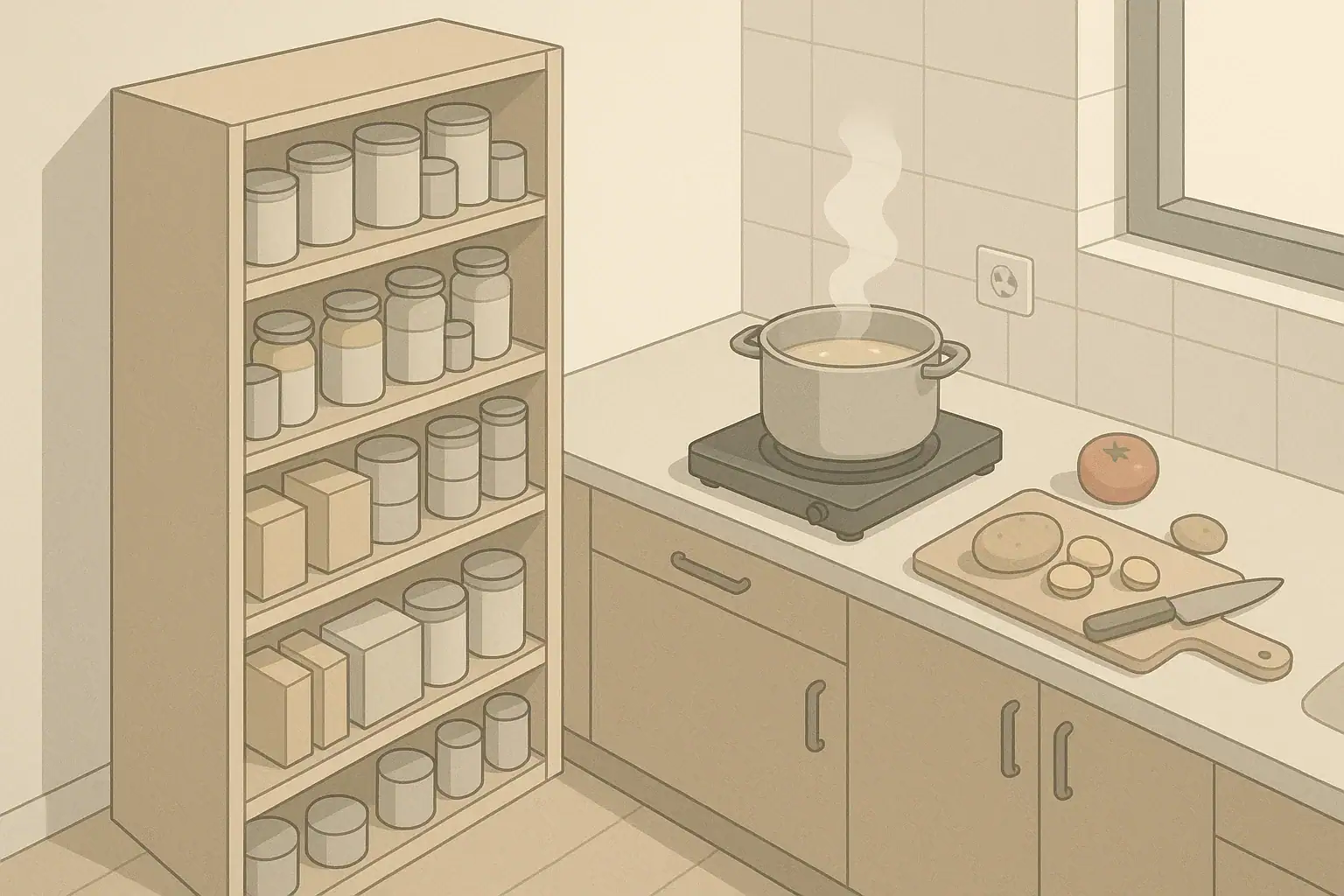
During short-term emergencies like winter storms, hurricanes, or local power outages, cooking can become harder, slower, and less safe. Stoves may not work, or you may want to conserve fuel and avoid heat or smoke indoors. Minimal-cooking emergency meals focus on foods that require little or no heat, simple tools, and very little water.
This approach is especially useful for:
- Apartment dwellers who cannot store large fuel supplies
- Renters who cannot modify stoves or install new appliances
- Families with young kids or seniors who need easy, predictable meals
- People in areas with frequent short power cuts or storm-related outages
Instead of building a separate “emergency pantry,” you can choose regular pantry items that also work well when cooking options are limited. This keeps food rotation simple and reduces waste.
Why Minimal-Cooking Meals Matter in Emergencies
During short-term emergencies like winter storms, hurricanes, or local power outages, cooking can become harder, slower, and less safe. Stoves may not work, or you may want to conserve fuel and avoid heat or smoke indoors. Minimal-cooking emergency meals focus on foods that require little or no heat, simple tools, and very little water.
This approach is especially useful for:
- Apartment dwellers who cannot store large fuel supplies
- Renters who cannot modify stoves or install new appliances
- Families with young kids or seniors who need easy, predictable meals
- People in areas with frequent short power cuts or storm-related outages
Instead of building a separate “emergency pantry,” you can choose regular pantry items that also work well when cooking options are limited. This keeps food rotation simple and reduces waste.
Planning Around Your Cooking Constraints
Start by looking at how you could safely heat food during an outage, if at all. Your options shape what kinds of emergency meals make sense.
Common Low-Fuel Cooking Options
In many homes, especially in cities and rentals, options may include:
- Working gas stovetop with electric ignition: Can sometimes be lit with a match or lighter if it is designed to operate without power. Follow manufacturer safety instructions.
- Portable camp stove: For outdoor use only, away from doors and windows, to avoid indoor fumes and fire risk.
- Small electric appliances on backup power: Such as a compact hot plate or electric kettle, if you have a backup power source sized for short bursts of use.
- No heat source: Some situations, like high-rise apartments or wildfire smoke events, may make heating food difficult or unwise.
For each option, think about safety (ventilation, fire risk, carbon monoxide), fuel storage limits, and how often outages happen where you live.
How Much Cooking Do You Really Need?
Minimal-cooking planning emphasizes:
- No-cook meals: Ready to eat from the package or with basic assembly.
- Heat-optional meals: Tasty cold but nicer warmed, so they work whether fuel is available or not.
- Fast-cook items: Foods that cook in just a few minutes, using less fuel and less water.
In most short-term emergencies (a few days to a week), you can rely heavily on no-cook and heat-optional foods, reserving fuel for comfort items like hot drinks or one warm meal per day.
Example values for illustration.
| Home situation | Cooking constraint | Priority pantry items | Planning focus |
|---|---|---|---|
| Small apartment | No safe indoor flame use | Ready-to-eat cans, pouches, snack staples | All no-cook, easy to open and portion |
| House with gas stove | Stovetop may work in blackout | Fast-cooking grains, canned beans, sauces | Plan for 1 short cooking session per day |
| Family with kids | Short attention and appetite changes | Familiar shelf-stable kid-friendly foods | Comfort snacks and simple assembly meals |
| Seniors at home | Limited lifting and chewing | Soft canned meals, soups, ready grains | Light containers and easy-open packaging |
| Wildfire smoke days | Windows closed, avoid indoor fumes | No-cook and electric-only options | Minimize heat and odors indoors |
| Hurricane/ice storm | Power may be out for several days | Mix of no-cook and fast-cook foods | Use fridge food first, then pantry |
Building a Low-Fuel Pantry: Core Staples
A low-fuel pantry leans on foods that are shelf-stable, flexible, and easy to eat when you are tired, stressed, or short on cooking tools.
No-Cook Proteins
Protein helps meals feel more satisfying, especially if you are doing cleanup work or dealing with cold weather. Useful options include:
- Canned beans, lentils, or chickpeas (already cooked; rinse if water is available)
- Canned fish or poultry in water or oil
- Shelf-stable tofu in aseptic packages (if you already use it)
- Nut and seed butters in jars or squeeze packs
- Roasted nuts and seeds
Choose a mix of flavors and textures you already enjoy in everyday meals and snacks.
Fast and No-Cook Carbohydrates
Carbohydrates are the backbone of many simple meals and can be stored compactly.
- Crackers and crispbreads
- Instant rice or couscous that rehydrates quickly in hot water
- Quick oats or instant oatmeal packets
- Tortillas or shelf-stable flatbreads
- Dry cereal and granola
These pair well with canned items and spreads, and many can be eaten without heating if necessary.
Fruits, Vegetables, and Shelf-Stable Extras
Produce can be hard to get during storms or outages. Pantry-friendly options help you add variety and texture.
- Canned vegetables and tomatoes
- Canned or jarred fruit in juice or water
- Applesauce cups or pouches
- Dried fruit such as raisins or apricots
- Pickles, olives, or other brined vegetables
These can be eaten alone or mixed into other foods to make simple stews, salads, or grain bowls.
Flavor Add-Ons and Comfort Items
In stressful times, small comforts and familiar flavors can make meals feel more normal.
- Jarred sauces and shelf-stable salsa
- Bouillon cubes or concentrated stock
- Spice blends and salt
- Shelf-stable plant or dairy alternatives for coffee or tea
- Tea bags, instant coffee, and hot cocoa mixes
- A few favorite snacks like cookies or chips
Keep these in reasonable amounts so they fit within your regular grocery rotation.
Minimal-Cooking Meal Ideas for Different Situations
Once you have flexible ingredients, planning actual meals helps you estimate quantities and avoid waste. The goal is not gourmet cooking but simple, filling combinations that work with limited tools.
No-Cook Meal Ideas (No Heat Needed)
These work when you cannot safely use any heat source, or when you are conserving fuel for another day.
- Bean and cracker plate: Canned beans rinsed if possible, drizzled with oil or a jarred sauce, served with crackers and pickles.
- Tuna or chicken salad wraps: Canned protein mixed with a little shelf-stable spread, wrapped in tortillas with canned vegetables.
- Nut butter and fruit stack: Crackers or bread topped with nut butter and sliced canned fruit or applesauce.
- Pantry grain bowl: Pre-cooked shelf-stable grains topped with canned beans, vegetables, and a drizzle of dressing or olive oil.
- Snack-style lunch: Nuts, dried fruit, canned vegetables, and crackers arranged as a simple “picnic” plate.
Low-Fuel Hot Meals (Short Heat Time)
If you have a safe heat source, reserve it for foods that warm up quickly and use one pot when possible.
- Quick soup: Combine canned beans, canned vegetables, and bouillon in a pot with water. Simmer briefly and season.
- Fast couscous bowl: Bring water to a boil, stir in couscous, and turn off heat. After it rests, top with canned beans, tomatoes, and spices.
- Hearty oatmeal: Cook quick oats with water, then stir in nut butter and dried fruit for a filling meal at any time of day.
- Skillet hash: If you have a working stovetop, lightly pan-heat pre-cooked potatoes or grains with canned vegetables and beans.
Kid-Friendly and Senior-Friendly Options
For kids and older adults, focus on familiar flavors, softer textures, and easy-to-hold portions.
- Applesauce cups and soft canned fruit
- Smooth nut butters on soft bread or tortillas
- Soft canned beans mashed slightly and seasoned
- Instant oatmeal with extra water for a softer texture
- Simple crackers or cereal eaten dry or with shelf-stable milk
Before an emergency, test a few of these options on a regular day so you know which ones are actually enjoyed.
Fuel, Water, and Safety Considerations
Minimal-cooking planning is not just about food; it is also about how you prepare it safely and manage limited resources.
Planning for Limited Fuel
If you rely on propane, butane, or other fuels:
- Know approximately how many short cooking sessions your stored fuel can support.
- Choose meals that cook in one pot and in under about 10–15 minutes where possible.
- Group cooking tasks (for example, boil water once and use it for tea and instant grains).
- Store fuel in line with local regulations and manufacturer safety guidance.
If you use backup power for an electric hot plate or kettle, factor in the power draw and run time so you do not rely on it for every meal.
Managing Water Use in the Kitchen
Cooking and cleanup can take a lot of water. To reduce use:
- Favor foods that are ready to eat or pre-cooked in the can or pouch.
- Use minimal-water cooking methods (for example, just enough water to cover grains).
- Wipe dishes with paper towels before washing so you need less soapy water.
- Designate a small basin or tub as a dishwashing station if tap water is limited.
If your water service may be disrupted, store extra water ahead of storms and keep some bottled or stored water dedicated to cooking and handwashing.
Food Safety During Power Outages
Short power cuts are common in many regions. A few general practices can help reduce food waste and risk of spoilage:
- Keep refrigerator and freezer doors closed as much as possible.
- Use perishable foods from the fridge first while they are still at safe temperatures.
- Once you move fully to pantry foods, avoid half-opening multiple containers unnecessarily.
- When in doubt about the safety of perishable items that warmed for many hours, it is safer to discard them.
Plan some meals that use up fridge items quickly on the first day of an outage, then transition to your pantry staples.
Small-Space and Special Household Considerations
Not every home has a large pantry or extra storage. It is possible to prepare for emergencies even in compact spaces.
Apartment and Condo Strategies
For small homes, focus on dense, flexible items you already eat:
- Stackable cans and jars instead of bulky boxes.
- Flat pouches and instant grains that store vertically.
- Multipurpose foods such as beans, which work in salads, soups, or wraps.
- Under-bed or closet bins dedicated to rarely used emergency-only items.
Rotate through your emergency foods by using them in regular meals and replacing them on your next grocery trip.
Families with Children
For households with kids, consider:
- Including familiar brands and types of cereal, crackers, or spreads they already like.
- Adding simple treats to mark the days, like a small dessert or special drink.
- Keeping some shelf-stable versions of their usual breakfast and lunch foods.
- Involving older kids in assembling “blackout picnic” plates to make it feel like an activity, not a crisis.
Pets and Household Members With Dietary Needs
Include pet food and special diets in your minimal-cooking planning:
- Store extra dry or canned pet food in rotation so it stays fresh.
- Keep a few days of shelf-stable options suitable for household members with allergies or dietary limits.
- Label a small bin or shelf for these items so they are easy to find when routines are disrupted.
Example values for illustration.
| Food type | Storage tip | Rotation interval idea | No-cook or low-cook use |
|---|---|---|---|
| Canned beans | Store by earliest date in front | Use a few cans every 1–2 months | Rinse for salads or quick soups |
| Instant rice or couscous | Keep in sealed containers once opened | Use in weeknight dinners every month | Rehydrate with hot water for grain bowls |
| Nut butters | Note open date on lid | Finish jar within a few months | Spread on crackers or tortillas |
| Canned vegetables | Group by type for easy access | Add to meals every 1–3 months | Serve as side dishes or in hashes |
| Oats and cereal | Store in dry, cool cupboard | Rotate as part of normal breakfasts | Eat dry or with shelf-stable milk |
| Canned fruit | Check for dents or bulges regularly | Use in desserts every few months | Serve as snacks or oatmeal topping |
| Jarred sauces | Keep unopened jars in back stock | Use in pasta nights every 1–2 months | Flavor grains, beans, or wraps |
Putting It All Together: A Simple, Calm Plan
A minimal-cooking emergency meal plan does not have to be complicated or expensive. By gradually choosing pantry items that work both for everyday cooking and low-fuel situations, you create a flexible buffer for common disruptions like snow days, local power outages, and temporary supply issues.
Start small: aim for a few days of easy meals for everyone in your household, including pets. Over time, adjust your supplies based on what you actually eat, what fits in your space, and the types of events that are most common where you live.
Review your pantry a few times a year, rotate foods into regular meals, and restock gradually. With a bit of planning, even a modest shelf of well-chosen staples can make the next outage or storm feel more manageable and less disruptive.
Related guides: Butane Stove Emergency Cooking: Ventilation, Fuel, and Safe Setup · Freezer-First Meal Plan: What to Eat Before It Spoils.
Authoritative sources
Safety recommendations can change. Confirm critical details with current official guidance and local authorities.
- CDC: Carbon Monoxide Poisoning Basics
- US EPA: Emergency Disinfection of Drinking Water
- USDA FSIS: Keep Food Safe During Emergencies
Frequently asked questions
How many days can I rely on no-cook pantry items during a short power outage?
Relying on no-cook pantry items can comfortably cover most short outages of a few days; plan for at least three days and up to a week depending on your household size and supplies. Use perishable refrigerated foods on the first day and transition to pantry staples to reduce spoilage and waste.
What are safe low-fuel heating options for minimal-cooking in apartments?
If you need heat, a gas stovetop that can be manually lit (following manufacturer guidance) or an electric kettle/hot plate on verified backup power are common choices. Portable fuel stoves should be used outdoors only, and any combustion-based option requires good ventilation and a working carbon monoxide detector.
How can I minimize water use when preparing minimal-cooking emergency meals?
Choose ready-to-eat or pre-cooked items and use minimal-water methods such as adding just enough water to rehydrate grains or using instant products. Wiping dishes before washing, using a single basin for cleanup, and reserving bottled water for cooking can stretch limited supplies.
Which proteins keep best for no-cook or minimal-cook emergency meals?
Canned beans, canned fish or poultry, nut and seed butters, roasted nuts, and shelf-stable tofu are reliable protein options that require little or no cooking. These items are versatile for wraps, salads, and grain bowls and fit easily into a regular pantry rotation.
How do I handle food safety for refrigerated and frozen items during an outage?
Keep refrigerator and freezer doors closed; a full freezer can keep foods frozen for about 48 hours (about 24 hours if half-full) when unopened, while a refrigerator generally keeps food safe for around four hours without power. Use refrigerated perishables first, and move quickly to shelf-stable meal options to reduce the risk of spoilage.
- Simple checklists and realistic planning
- Water, power, lighting, and pantry basics
- Family plans (kids, pets, seniors) and seasonal prep
Affiliate disclosure
As an Amazon Associate, we earn from qualifying purchases. Some links on this site may be affiliate links. If you buy through these links, we may earn a small commission at no extra cost to you. This helps support our content. Learn more.