Why Generator Safety Matters in Everyday Power Outages
Portable generators can make power outages much more comfortable, but they also introduce real safety risks if used incorrectly. The biggest concern is carbon monoxide (CO), an odorless gas created whenever fuel burns. Poor placement and ventilation can let CO build up indoors or near open windows, putting people and pets at risk.
This guide focuses on practical, common-sense safety steps for everyday households in the United States. The goal is simple: if you choose to use a fuel-powered generator, you should be able to run it with the lowest reasonable risk while keeping your home livable during short-term outages.
We will cover:
- Basic types of backup power and why placement matters
- Safe distances, ventilation, and exhaust direction
- CO risk basics and household precautions
- Noise, neighbors, and shared spaces like apartments
- Practical readiness tips for different home types and seasons
Types of Backup Power: Fuel Generators vs. Battery Stations
Not all backup power options work the same way. Understanding the difference helps you decide what is realistic and safe for your home, especially if you are in an apartment or densely built neighborhood.
Fuel-Powered Portable Generators
These use gasoline, diesel, or propane to run an engine that creates electricity. They are common for whole-house or multi-appliance backup, especially in single-family homes with yards or driveways.
Key points:
- Must stay outside: They produce exhaust containing CO and should never be used inside homes, garages, or enclosed porches.
- Louder and heavier: Noise and vibration can disturb neighbors and limit where you can safely set them.
- Fuel storage: Extra fuel needs cool, ventilated, outdoor storage away from living areas and ignition sources.
- Weather exposure: They must be protected from rain and snow while remaining fully outdoors and well-ventilated.
Battery-Based Power Stations
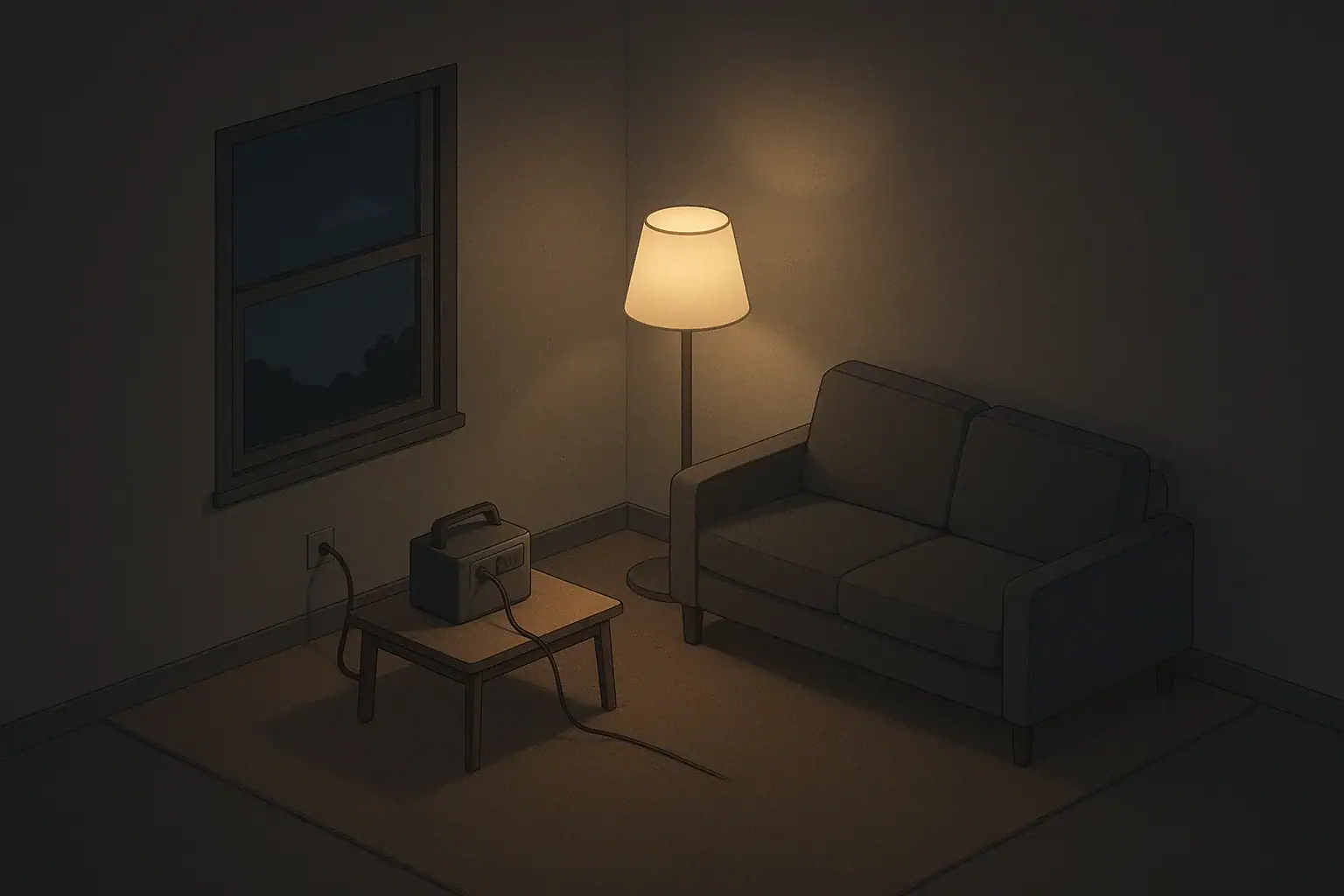
Portable power stations use rechargeable batteries (often charged via wall outlets, solar panels, or vehicles). They do not burn fuel and do not make exhaust.
Key points:
- No exhaust: Safer to use indoors for small loads like phones, small lights, and low-power devices.
- Quieter operation: Usually nearly silent, making them easier to use in apartments.
- Limited runtime: They provide less power than many fuel generators and need time to recharge.
- Still need care: Protect them from water, extreme temperatures, and physical damage following manufacturer guidance.
Many households combine both: a fuel generator outdoors for major loads (like refrigerators) and a small battery station indoors for safe nighttime use and sensitive electronics.
Example values for illustration.
| Home situation | Fuel generator suitability | Battery station suitability | Planning notes |
|---|---|---|---|
| Apartment with no balcony | Generally poor fit | Often good fit | Focus on phones, lights, small electronics; avoid running fuel units from windows. |
| Apartment with open balcony | Usually poor fit | Often good fit | Balconies can trap exhaust and transmit noise; follow building rules. |
| Townhome with small yard | Moderate fit | Good supplemental option | Check if you can maintain safe distances from windows and neighbors. |
| Single-family home with driveway | Often good fit | Useful for indoor essentials | Plan a fixed outdoor spot with proper exhaust direction and weather cover. |
| Rural home with outbuilding | Often very good fit | Optional add-on | Outbuildings or open areas can help keep noise and exhaust away from living spaces. |
| Household with sensitive sleepers | Use selectively | Very helpful indoors | Run fuel generator in daytime; rely on batteries at night for quiet and safety. |
Safe Generator Placement: Distance, Direction, and Surfaces
Improper placement is one of the most common causes of CO incidents during outages. The basic idea is simple: keep engine exhaust far away from any place air can enter your home or a neighbor’s home.
Core Placement Rules for Fuel Generators
While exact distances vary by design and local guidance, there are some widely accepted principles:
- Keep it outside and open: Place the generator outdoors in an open, well-ventilated area, never in garages, sheds, basements, crawlspaces, or enclosed porches.
- Avoid nearby openings: Put it as far as practical from doors, windows, dryer vents, and other air intakes. Greater distance and more open space reduce the chance of exhaust drifting inside.
- Point exhaust away: Aim the exhaust outlet away from your home, neighboring homes, and common paths people use.
- Elevation and channels: Avoid low spots, narrow side yards, or alleyways where exhaust can linger or funnel directly toward openings.
- Stable, non-flammable base: Place the unit on a level surface such as concrete, compacted soil, or a dedicated pad, not on dry leaves, grass piles, or anything that can easily ignite.
Weather and Shelter Considerations
Generators should be kept dry to prevent shock and equipment damage, but they also need air flow.
- Use open-sided shelter only: If you use a canopy or small roof, keep sides widely open to allow exhaust to disperse.
- Avoid improvising indoor placement: Do not move the generator into a garage or carport to avoid rain; water management should never override ventilation needs.
- Plan cord routes: Run heavy-duty outdoor extension cords on the ground where they will not sit in standing water, be pinched by doors, or create trip hazards.
Shared Spaces and Neighbors
In dense neighborhoods, exhaust and noise affect more than your household.
- Respect property lines: Keep the generator on your property and away from fences where exhaust can blow directly at a neighbor’s window or yard.
- Check building rules: Some homeowners associations or landlords restrict generator use; understand these before an outage.
- Mind quiet hours: Plan to run the generator mostly in daytime and rely on battery power, coolers, or blankets at night when possible.
Ventilation Basics and Why Indoors Is Never Safe for Fuel Generators
Opening windows or doors does not make indoor generator use safe. Even with a garage door partly open, exhaust can quickly build to dangerous levels in enclosed or attached spaces.
Why Garages and Porches Are Still Indoors
It is tempting to place a generator in an attached garage with the door up, or in a screened porch, to protect it from weather or theft. These are still enclosed spaces connected to living areas.
- Air flow is uneven: Exhaust can collect in corners or drift into the home through interior doors and tiny gaps.
- Shared air with the home: Attached garages and porches often share framing and small openings with the main house.
- Parking and storage risks: Other stored materials, including fuel, can add fire risk.
Windows and Fans Do Not Fix Exhaust Indoors
Running a box fan or cracking windows while a generator operates inside does not guarantee safety.
- CO mixes quickly: It spreads through rooms and vents faster than many people expect.
- Fans can redirect exhaust: Fans may move CO into sleeping areas instead of pushing it outside.
- Changing wind patterns: Gusts and shifts in wind direction can blow exhaust back into the building even if it seems fine at first.
For fuel-powered generators, the safest assumption is simple: if it has an engine and exhaust, it belongs outside, in the open, with as much distance as practical from where people live and sleep.
Understanding Carbon Monoxide Risk in Plain Terms
CO is produced whenever fuel burns, including gasoline, propane, diesel, charcoal, and wood. Portable generators are a concentrated source because their engines can run for hours close to buildings.
Why CO Is So Concerning
CO is colorless and odorless. You cannot see or smell it building up, which is why simple precautions are essential.
- Moves with air: CO can travel through open windows, gaps around doors, shared vents, and interior stairways.
- Affects everyone inside: People, pets, and guests in the home share the same air, even if they are on different floors.
- Nighttime is higher risk: People are less aware of changes in air quality while sleeping.
CO Alarms as a Last Line of Defense
CO alarms are not a substitute for safe placement, but they provide important backup.
- Install on every level: Place CO alarms in sleeping areas and near central parts of each floor, following manufacturer spacing guidance.
- Test regularly: Use the test button monthly and replace batteries as recommended.
- Do not ignore alarms: Treat any sounding alarm as serious, move everyone to fresh air, and investigate possible sources only when it is safe to do so.
In multi-unit buildings, CO from someone else’s generator can still enter your unit through shared walls or vents. Alarms help you detect these situations even if you are not using a generator yourself.
Fuel Handling, Refueling, and Fire Safety
Safe generator use also means handling fuel carefully to avoid fire or burn hazards, especially when the unit is hot.
Refueling Basics
- Cool before refueling: Turn the generator off and let it cool before adding fuel to reduce the risk of ignition from hot surfaces.
- Refuel outdoors: Keep fuel containers outdoors and away from ignition sources, including open flames and hot exhaust.
- Use appropriate containers: Store fuel in containers designed for that fuel type, with tight-closing caps.
Storage and Distance
- Away from living areas: Store fuel in a detached shed or outdoor storage box if possible.
- Limit excess: Keep only the amount of fuel you can safely store and rotate during normal seasons.
- Secure from children and pets: Place fuel where it cannot be accessed or accidentally tipped.
Fire Readiness
- Extinguisher nearby: Keep a household fire extinguisher rated for common combustibles and flammable liquids where it is easy to reach, not right next to the generator.
- Clear area: Remove dry leaves, cardboard, and other burnable materials from around the generator location.
- No smoking near fuel: Prevent open flames or sparks in the fueling and storage area.
Apartment and Small-Space Considerations
Many CO incidents occur when people in apartments or townhomes try to improvise with generators in spaces never designed for them.
Why Balconies and Hallways Are Problematic
Balconies and stairwells might feel “outdoors,” but they are often semi-enclosed and close to doors and windows.
- Vertical spread: Exhaust can drift upward to neighbors above or sideways into nearby units.
- Shared escape paths: Hallways and shared exits must stay clear of equipment and fumes in case of an emergency.
- Building rules: Many buildings prohibit fuel storage or generator operation on balconies due to fire and exhaust risks.
Practical Alternatives for Apartments
For many renters, fuel-powered generators are simply not a good fit. Instead, focus on:
- Portable battery stations: Sized for small essentials like phones, a router, fans, or LED lights.
- Device-specific power banks: Several charged power banks for phones and small electronics.
- Non-electric backups: Battery-powered lights, extra blankets, shelf-stable foods that do not require cooking, and manual can openers.
Check your lease or building guidelines before storing any fuel, even for other equipment.
Planning What You Power: Essentials vs. Nice-to-Have
Thoughtful planning reduces how long you need a fuel generator running and how close to the home it must be. The less you run it, the lower your fuel use, noise, and exhaust.
Prioritize Truly Essential Loads
Before an outage, list what matters most.
- High priority: Refrigerator or freezer, medical-related devices that must stay powered, basic lighting, phone and communication charging.
- Moderate priority: Fans or space heaters rated for generator use, modem/router, small cooking appliances.
- Low priority: Entertainment electronics, non-essential power tools, decorative lighting.
By limiting the number of devices, you may be able to:
- Use a smaller generator.
- Run the generator fewer hours each day.
- Rely more on indoor battery power when the generator is off.
Daytime vs. Nighttime Strategy
Many households choose to:
- Run the generator during the day to cool the fridge, run a fan, and charge batteries.
- Shut it off at night and switch to battery lights and pre-charged power banks.
This approach reduces nighttime noise and the chance that exhaust will quietly drift indoors while people sleep.
Example values for illustration.
| Device type | Typical power draw range (example) | Planning notes |
|---|---|---|
| LED table lamp | 5–15 watts | Very efficient; a small battery or generator can power several lamps. |
| Phone charger | 5–20 watts | Multiple full charges from a compact power bank or station. |
| Wi‑Fi router | 10–20 watts | Often worth powering if internet service remains available. |
| Box fan (small) | 30–70 watts | Useful in heat; plan time-limited use to conserve power. |
| Refrigerator (cycling) | 100–300 watts while running | Does not run constantly; consider running a generator in blocks of time. |
| Small microwave | 600–900 watts while in use | Use briefly for quick meals; avoid continuous operation. |
Seasonal and Family-Friendly Safety Habits
Generator safety is easier when it is built into your seasonal routines and family communication, rather than improvised during a storm.
Winter Storms and Cold Weather
- Snow and exhaust: Clear snow away from the generator area and nearby vents so exhaust does not get trapped.
- Frozen windows: Remember that closed windows in cold weather do not fully block CO; placement still matters.
- Layering and blankets: Reduce the need for electric heaters by planning warm clothing and bedding for outages.
Hurricanes, Heatwaves, and Summer Outages
- Heat management: Use generators to power fans and shaded spaces rather than trying to run whole-house cooling.
- Storm prep: Identify a safe generator spot before a storm, and secure or store loose items that could blow into the equipment.
- Hydration: Plan for stored drinking water and non-electric ways to stay cool, such as cool cloths and shaded areas.
Kids, Pets, and Visitors
- Set boundaries: Define a “no-go” zone around the generator where children and pets are not allowed.
- Explain in simple terms: Tell older kids that the generator’s exhaust is dangerous to breathe and that fuel is not a toy.
- Share your plan with guests: If others shelter with you during an outage, let them know where the generator is and remind them not to move it or adjust cords.
By treating generator safety as part of basic household readiness—similar to smoke alarms, flashlights, and emergency snacks—you can stay more comfortable in outages without adding avoidable risks.
Authoritative sources
Safety recommendations can change. Confirm critical details with current official guidance and local authorities.
- CDC: Carbon Monoxide Poisoning Basics
- US EPA: Emergency Disinfection of Drinking Water
- USDA FSIS: Keep Food Safe During Emergencies
Frequently asked questions
How far should I place a fuel-powered generator from my house and openings?
Place a fuel-powered generator at least 20 feet (about 6 meters) away from doors, windows, vents, and other air intakes whenever practical, and point the exhaust away from occupied buildings. Some manufacturer instructions or local codes may recommend greater distances, so follow those specifics if provided. Increasing distance and ensuring an open, upwind location both reduce the risk of exhaust drifting into living spaces.
Can I run a generator in a garage with the door open to protect it from weather?
No. An attached garage or enclosed porch is still effectively connected to the home and can allow exhaust and carbon monoxide to enter through gaps, vents, or shared framing. Generators should be operated in a fully outdoor, well-ventilated area to keep exhaust from accumulating near the house.
Are carbon monoxide alarms enough to keep me safe when using a generator?
CO alarms are an important last line of defense but not a substitute for safe generator placement and ventilation. Install alarms on every level and in sleeping areas, test them regularly, and treat any alarm as a real emergency; however, always prioritize running the generator outside and away from openings to prevent CO buildup in the first place.
What are the safest practices for refueling a running generator during an outage?
Always turn the generator off and let it cool before refueling to avoid igniting fuel on hot surfaces. Refuel outdoors, away from ignition sources and exhaust outlets, use approved fuel containers, and store only a limited amount of fuel in a secure, ventilated location away from living areas.
What backup power options work best for apartments where fuel generators are impractical?
Battery-based power stations, multiple charged power banks, and non-electric supplies (like battery lights and blankets) are typically safer and more practical for apartments. These options produce no exhaust and are suitable for indoor use; always check building rules before storing any fuel or operating equipment on balconies or in shared spaces.
- Simple checklists and realistic planning
- Water, power, lighting, and pantry basics
- Family plans (kids, pets, seniors) and seasonal prep
Affiliate disclosure
As an Amazon Associate, we earn from qualifying purchases. Some links on this site may be affiliate links. If you buy through these links, we may earn a small commission at no extra cost to you. This helps support our content. Learn more.