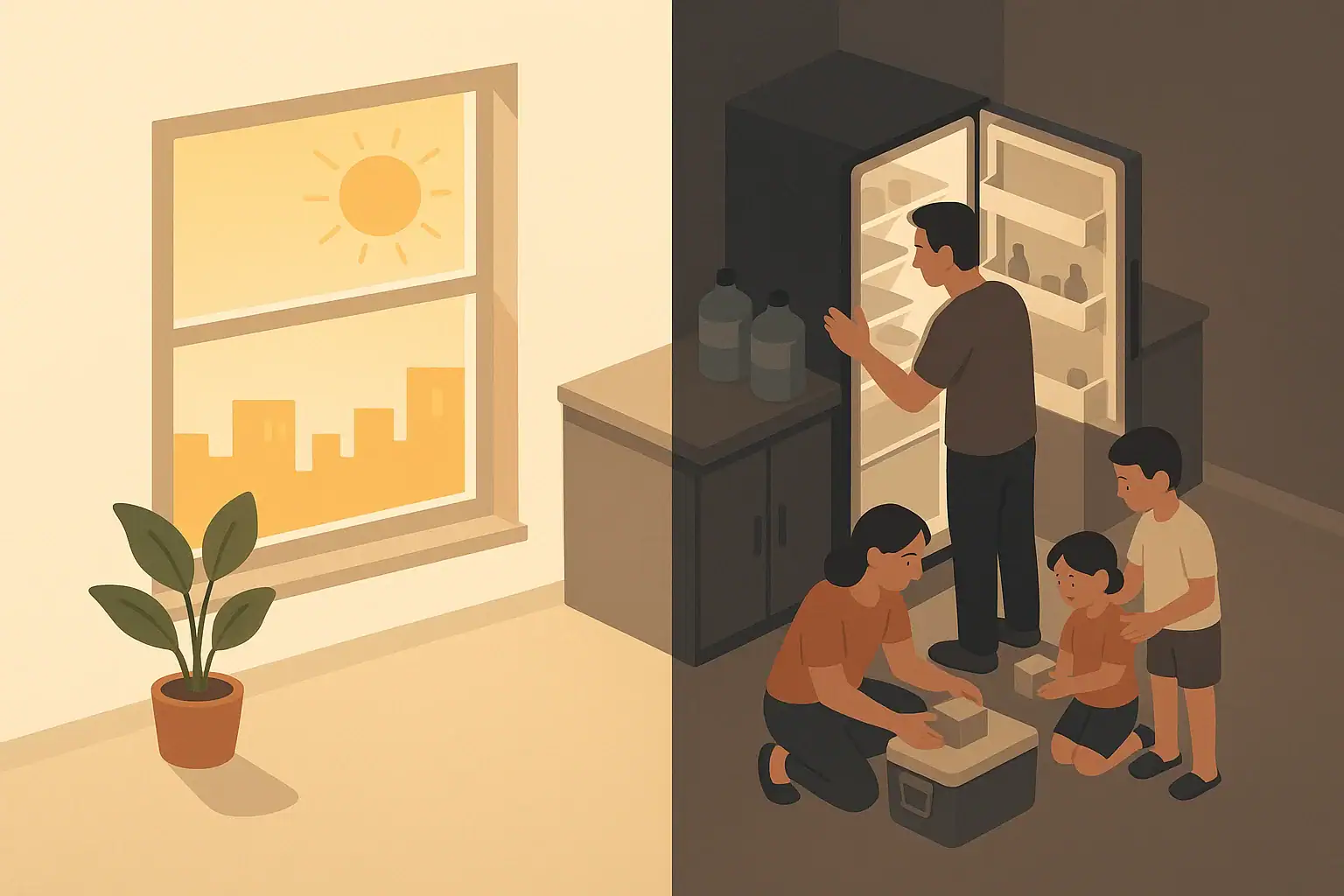
Summer power outages are common in many parts of the United States, especially during heatwaves and storms. High temperatures and humidity make it harder to keep food safe and drinking water appealing. Even short blackouts can lead to spoiled groceries, warm tap water, and uncomfortable indoor conditions.
Preparing for summer blackouts does not require a large budget or a dedicated storage room. With a few simple habits and some basic supplies, most households can keep water cool enough to drink comfortably and food safe long enough to ride out a typical outage of several hours to a couple of days.
This guide focuses on practical, calm planning for everyday homes, including apartments and rentals, where space and budgets may be limited.
Why Summer Blackouts Are Different
Summer power outages are common in many parts of the United States, especially during heatwaves and storms. High temperatures and humidity make it harder to keep food safe and drinking water appealing. Even short blackouts can lead to spoiled groceries, warm tap water, and uncomfortable indoor conditions.
Preparing for summer blackouts does not require a large budget or a dedicated storage room. With a few simple habits and some basic supplies, most households can keep water cool enough to drink comfortably and food safe long enough to ride out a typical outage of several hours to a couple of days.
This guide focuses on practical, calm planning for everyday homes, including apartments and rentals, where space and budgets may be limited.
Know Your Risks: How Long Might Power Be Out?
Thinking ahead about how long power might be out where you live helps you decide how much to prepare. Many summer blackouts are brief, but it is wise to plan for at least 24–72 hours without electricity.
Common summer outage causes include:
- Heatwaves overloading the power grid
- Thunderstorms and high winds knocking down lines
- Planned rolling blackouts during peak demand
- Local equipment failures, such as transformers
Outage length can vary by region and housing type:
- Apartments and condos: Often restored sooner in dense areas, but cooling can be slower, especially in upper floors and units with large windows.
- Single-family homes: May experience longer outages if located on smaller distribution lines, but often have more storage space for water and coolers.
- Rural homes: Sometimes face the longest restoration times and benefit most from extra water storage and backup cooling methods for food.
Plan as if your outage will last on the longer side. Extra preparation usually just means more convenience and less food waste, even if power comes back quickly.
Example values for illustration.
| Likely outage length (guess) | Water plan focus | Food safety focus | Notes |
|---|---|---|---|
| Up to 4 hours | Use existing tap water and a few chilled bottles | Keep fridge and freezer closed | Minimal prep; focus on not opening doors |
| 4–12 hours | Pre-chill several bottles or jugs | Plan no-cook meals from pantry | Use coolers only if very hot indoors |
| 12–24 hours | Store at least 1 gallon per person as backup | Prioritize eating easily spoiled foods first | Consider basic ice or ice packs |
| 24–48 hours | Have extra stored water for drinking and minimal washing | Use coolers and ice to extend food life | Shift to more shelf-stable foods over time |
| 2–3 days | Plan storage for at least several days' drinking water | Assume most perishable foods may need to be discarded | Rely mainly on pantry, with careful use of remaining cold items |
| More than 3 days | Consider extra containers and simple treatment options | Focus on long-lasting pantry foods and safe preparation | Advanced planning helps reduce waste and stress |
Keeping Water Safe and Pleasant to Drink
In most U.S. cities and towns, tap water remains safe to drink during a blackout because treatment plants have their own backup systems. However, water may become lukewarm, and in some situations water pressure can drop or service can be interrupted temporarily. Planning ahead keeps you comfortable and reduces the risk of running short.
How Much Water to Store for Short Outages
A commonly used planning target is about one gallon of water per person per day for basic needs. For a short summer blackout, many households focus mainly on drinking water and light washing.
For a 1–3 day outage, consider:
- Drinking water: Roughly half a gallon to one gallon per person per day, depending on age, activity, and heat.
- Light hygiene: A small extra amount for hand rinsing and basic cleaning, if space allows.
For apartments or small spaces, it may be more realistic to store smaller containers you can tuck into closets or under beds rather than large barrels.
Simple Ways to Keep Water Cool Without Power
Cold water is more appealing on hot days, especially for children and older adults who may be sensitive to heat. Even without refrigeration, you can keep water relatively cooler than indoor air.
Useful low-tech methods include:
- Pre-chill bottles: Keep several reusable bottles or jugs filled and chilled in the refrigerator and freezer during summer. In an outage, move frozen containers to a cooler or the main refrigerator to help keep other items cool.
- Use the coolest room: Store water containers on the lowest shaded floor, away from windows and heat sources.
- Cover and shade: Wrap bottles in a light-colored cloth or towel and keep them out of direct sunlight to slow warming.
- Evaporative cooling (if safe to do so): In dry climates, placing a damp cloth around a bottle and allowing air to circulate can modestly lower the water temperature. This is less effective in humid areas.
If you have access to ice, prioritize using it in drinking water and for keeping a small amount of food cold, rather than trying to chill large volumes of water.
Water Quality Considerations During Outages
Most short blackouts do not affect water safety. However, there are situations where local authorities may issue advisories. Since guidance varies by location and situation, follow local instructions if you are told to limit use or to treat tap water.
As a general readiness step, many households choose to keep simple water treatment options on hand, such as:
- Household bleach with clear instructions for emergency disinfection
- Basic water filters designed for general improvement of taste and clarity
- Boiling (if you have a safe way to heat water, such as gas or an outdoor stove used correctly)
These options can provide extra flexibility if water service is disrupted, but they are most effective when used according to instructions provided by manufacturers or local authorities.
Food Safety Basics When the Power Goes Out
In summer, high indoor temperatures cause food to warm more quickly, especially if refrigerators and freezers are opened often. A few simple habits make a big difference in keeping food safe and reducing waste.
How Long Fridges and Freezers Stay Cold
Refrigerators and freezers are insulated, so they can keep food cold for a while even after the power goes out. Actual times vary with appliance age, room temperature, and how often doors are opened, but general expectations are:
- Refrigerator: Often keeps food acceptably cold for several hours if doors remain closed.
- Freezer: A full freezer usually stays colder longer than a mostly empty one. Frozen items grouped together warm more slowly.
To stretch cooling time:
- Keep doors closed as much as possible. Decide what you will take out before opening.
- Group perishable items together on one shelf or in one bin so you can grab them quickly.
- Use frozen water bottles or ice packs as added cold sources inside the refrigerator if you know a blackout is likely.
Which Foods to Use First
During a summer blackout, plan to eat the most perishable items first, then shift toward more shelf-stable foods.
Foods generally used early include:
- Leftovers and prepared foods from the refrigerator
- Cut fruits and vegetables
- Dairy products like milk and soft cheeses
- Cooked meats and dishes containing eggs
Foods that typically tolerate room temperature better include:
- Whole fruits and vegetables that normally sit on the counter
- Certain harder cheeses
- Nut butters, dry cereals, and crackers
- Canned and shelf-stable packaged foods
Check food for obvious signs of spoilage, such as unusual smell or appearance. When in doubt, it is generally safer to discard questionable items than to take risks.
Using Coolers and Ice Wisely
Coolers can help extend the life of important foods when the fridge is warm, especially during hot weather.
Consider these strategies:
- Reserve coolers for high-priority foods: Use them for items that are costly to replace or essential for certain diets, rather than everything at once.
- Pre-chill coolers: If you know a heatwave or rolling blackout is likely, cool the empty cooler indoors beforehand.
- Pack tightly: Fill empty spaces with ice packs, frozen bottles, or crumpled paper to reduce warm air pockets.
- Keep coolers out of the sun: Store in the coolest available room, on a floor rather than near windows or heat sources.
If you have limited ice, using frozen water bottles can provide both cooling and later drinking water as they melt.
Easy No-Cook Meals for Hot Weather Blackouts
During a summer outage, cooking may not be practical or safe, especially in apartments where ventilation is limited. Planning simple no-cook meals reduces stress and keeps indoor temperatures lower.
Pantry Staples That Work Without Cooking
Stocking a modest selection of shelf-stable foods provides flexibility. Aim for items you already like and use, so rotation is simple.
Examples of useful no-cook staples include:
- Canned beans, fish, and vegetables with easy-to-open lids or a manual opener
- Nut butters and spreads
- Crackers, flatbreads, and shelf-stable tortillas
- Ready-to-eat cereals and granola
- Trail mix, nuts, and dried fruit
- Applesauce cups and shelf-stable fruit cups
- Boxed or shelf-stable milk alternatives
For families with children, include familiar snacks and simple items that kids are likely to eat even in warm conditions.
Simple Meal Ideas Without Heat
You can create balanced meals from shelf-stable foods and any remaining refrigerated items that are still safely cold.
Some combinations that work well include:
- Canned beans mixed with canned vegetables and a small amount of oil or seasoning
- Nut butter spread on crackers or flatbread with sliced fruit that tolerates room temperature
- Canned fish served with crackers and pickled or canned vegetables
- Cold cereal with shelf-stable milk or dry with a side of fruit
- Trail mix, nuts, and dried fruit as a compact, calorie-dense snack
Keep a non-electric can opener in an easy-to-find place, and store any seasoning or condiments you use frequently in small containers for quick access.
Planning for Different Homes, Families, and Pets
Summer blackout planning looks different in a studio apartment than in a large house, and for a single person compared with a multi-generational household. A few adjustments can make plans more realistic for your situation.
Apartment and Small-Space Strategies
In small homes, space is often the biggest limitation, so compact and multi-use items are helpful.
- Use vertical space: Store water in stackable containers, on closet floors, or under furniture where possible.
- Choose smaller coolers: A couple of small coolers can be easier to store and carry than one large one.
- Focus on dense foods: Prioritize pantry items that pack more nutrition and calories into smaller space, such as nuts, nut butter, and dried foods.
- Ventilation awareness: If you consider non-electric cooking options, make sure they are designed for safe use where you live and follow all safety guidance, especially about ventilation.
Families With Kids, Seniors, or Specific Dietary Needs
Some household members may be more sensitive to heat or more affected by limited food choices. Planning ahead for their needs reduces worry later.
Think about:
- Favorite familiar foods: Include shelf-stable items that children and older adults already enjoy.
- Special diets: Store extra non-perishable foods that fit medical or dietary needs, such as low-sodium options or allergen-aware choices.
- Hydration encouragement: Keep flavored drink mixes that can be added to safe water (if appropriate for your household) to encourage drinking during heat.
- Cooling breaks: For very hot days, identify nearby public places that may have cooling centers or air conditioning when open, following local guidance.
Planning for Pets
Pets also need water and appropriate food during outages.
- Store a separate supply of drinking water for pets.
- Keep a modest stock of their regular food in sealed containers.
- In hot weather, create shaded, well-ventilated resting areas indoors.
As with people, introduce any new foods gradually when possible, so that pets are used to them before an outage happens.
Using Small Backup Power Wisely for Food and Water
Many households use small battery power stations, battery packs, or vehicle power outlets during outages. These can be helpful for running small appliances temporarily, but capacity is usually limited, especially during long summer blackouts.
What to Power First
Most people find that keeping communication devices and information sources working is the top priority. For food and water, consider:
- Short runs of a compact electric cooler, if you have one designed for low power use
- Brief use of a blender or small appliance to prepare food for someone with chewing or swallowing difficulties
- Fans on low settings to reduce perceived temperature and help make water and cool drinks feel more refreshing
It is usually more efficient to use backup power sparingly and rely on insulation (coolers, freezer mass, shade) for keeping food and water cool where possible.
Charging and Runtime Planning
Because every power device is different, focus on general planning rather than exact numbers. A simple approach is:
- List the devices you might want to run (for example, a small fan, a radio, a compact cooler).
- Look up typical power draw ranges for each type of device.
- Use this to plan limited, timed use rather than continuous operation.
If you have access to solar charging or vehicle charging, schedule charging during the day and reserve stored power for cooler evening and night hours.
Example values for illustration.
| Device type | Typical watts range (example) | Planning notes |
|---|---|---|
| Small USB fan | 5–10 watts | Use on low speed and cycle on/off to conserve power. |
| Phone charging | 5–20 watts | Charge during cooler times; avoid unnecessary screen use. |
| LED lantern or light | 3–10 watts | Use focused task lighting instead of lighting entire rooms. |
| Compact electric cooler | 30–80 watts | Pre-chill before outage if possible; run intermittently. |
| Radio or small speaker | 5–15 watts | Use only as needed for news or important information. |
| Laptop charging | 30–90 watts | Limit use to essential tasks to preserve stored energy. |
Putting It All Together: A Simple Summer Blackout Plan
A practical plan does not need to be complicated. Most households can improve their readiness with a few focused actions spread over time.
Consider this simple checklist to adapt to your home:
- Store a modest supply of drinking water in containers that fit your space.
- Keep several water bottles or jugs chilled in your refrigerator or freezer during summer.
- Organize your fridge and freezer so you can quickly find and use the most perishable foods first.
- Set aside a small pantry section for no-cook, shelf-stable meals and snacks your household actually likes.
- Keep at least one cooler and reusable ice packs accessible, or plan where you would get ice if needed.
- Decide in advance what you would power with any backup batteries or power stations and for how long.
- Talk with family members, including kids and older adults, about what to expect during a summer blackout.
By making these steps part of normal household organization, you can move through most summer power outages with safe food, drinkable water, and a calmer home environment.
Authoritative sources
Safety recommendations can change. Confirm critical details with current official guidance and local authorities.
- CDC: Carbon Monoxide Poisoning Basics
- US EPA: Emergency Disinfection of Drinking Water
- USDA FSIS: Keep Food Safe During Emergencies
Frequently asked questions
How long will refrigerated and frozen foods stay safe during a summer blackout?
A refrigerator that remains unopened will generally keep food safely cold for about 4 hours. A full freezer can often maintain safe temperatures for about 48 hours, and a half-full freezer for about 24 hours, though actual times vary with appliance quality and room temperature.
Is tap water safe to drink after a short summer power outage?
In most U.S. communities, tap water remains safe during short blackouts, but it may become lukewarm or experience pressure drops. Pay attention to local advisories—if authorities recommend boiling or treating water, follow those instructions or use an appropriate disinfection method.
What are simple, low-tech ways to keep drinking water cool without electricity?
Pre-chill reusable bottles and frozen water bottles, store them in the coolest shaded part of the home, and use insulated coolers or ice packs to extend cold storage. In dry climates, wrapping a damp cloth around a bottle and allowing air to circulate can provide modest evaporative cooling, but this is less effective in humid conditions.
Which foods should I eat first during a hot-weather outage?
Eat the most perishable items first—leftovers, cut fruits and vegetables, dairy, and cooked meats—then move to harder cheeses, whole fruits, and shelf-stable pantry items. Discard perishable foods that show obvious signs of spoilage or that have been at unsafe temperatures for an extended period.
Can I use a generator or outdoor stove indoors to keep food cold?
Never operate generators or outdoor-fuel-burning stoves inside living spaces due to the risk of carbon monoxide poisoning; use them only outdoors and away from windows and vents. For keeping food cold indoors, prefer insulated coolers, frozen bottles, or battery-powered coolers rather than indoor combustion devices.
- Simple checklists and realistic planning
- Water, power, lighting, and pantry basics
- Family plans (kids, pets, seniors) and seasonal prep
Affiliate disclosure
As an Amazon Associate, we earn from qualifying purchases. Some links on this site may be affiliate links. If you buy through these links, we may earn a small commission at no extra cost to you. This helps support our content. Learn more.