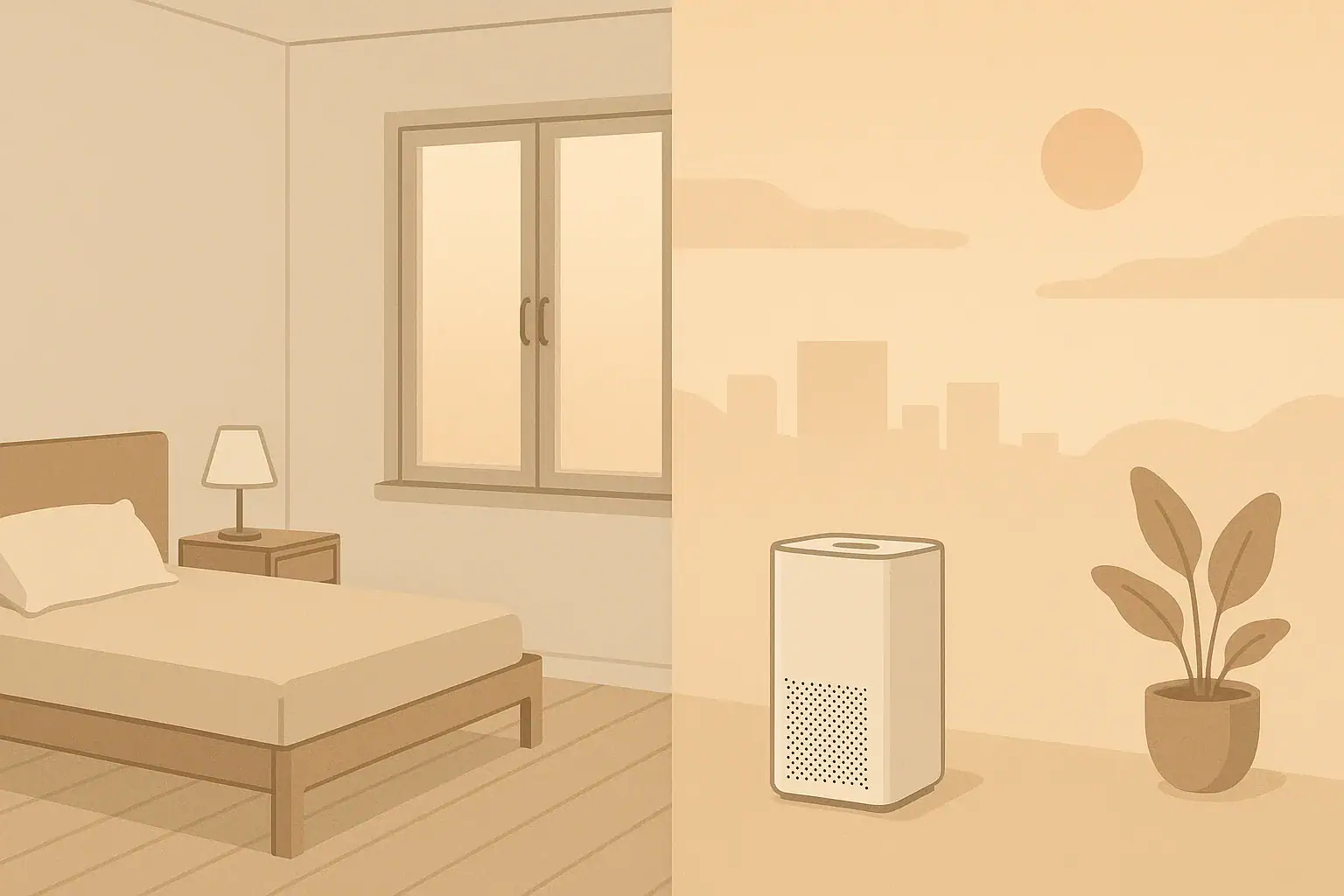
Why Wildfire Smoke Affects Homes Far From Fires
Wildfire smoke can travel hundreds or even thousands of miles. You might see news about a large fire in another state, or wake up to a hazy sky, even if there is no fire anywhere near your town. When that happens, outdoor air quality can drop for hours or days, and some of that smoky air can find its way indoors.
This guide focuses on practical, low-stress steps you can take at home. It does not replace medical advice, and it does not assume you are in immediate danger from flames. Instead, it covers how to make the air in your living space calmer and easier to manage during smoky periods.
Key ideas in this guide:
- Use your home’s structure to slow how much smoke gets in.
- Use basic filtration to lower smoke particles indoors.
- Plan around your actual space: small apartment, house, shared home, pets, and kids.
- Prepare simple backups for when smoke and power issues overlap.
First Decisions: Stay Put, Seal Up, or Go Somewhere Cleaner
Wildfire situations vary a lot. Smoke can be light and short-lived, or thick and lingering. Your first step is to decide what makes sense for your situation without overreacting. This section assumes you are not under an evacuation order due to active fire. Always follow local emergency instructions first.
Check Local Conditions Calmly
Before changing your whole routine, check a few basics:
- Local alerts: Look for public updates from your city, county, or air quality agencies.
- Visibility and smell: If you can see haze or smell smoke outdoors, it is reasonable to treat it as a smoky day, even without exact numbers.
- Duration expectations: Short, passing smoke may only need light steps. Multiple days of smoke may call for more structured planning.
When Staying Indoors Makes Sense
On most smoky days, people simply stay indoors more and try to keep outdoor air from flowing freely through the home. This approach works best when:
- There is no immediate fire threat to your neighborhood.
- Your home can close windows and doors reasonably well.
- You can keep at least one room relatively comfortable in terms of temperature.
When to Consider Going Somewhere With Cleaner Air
Sometimes the air inside stays smoky even after you close things up and run filtration. In those cases, it may be calmer to spend part of the day somewhere with better air, such as a public building or a friend’s home outside the smoke-affected area, if available and safe to reach.
Reasons you might consider this option include:
- Your building has many gaps and does not seal well.
- Indoor temperatures get uncomfortably hot if you close windows and reduce ventilation.
- You share space with people who are especially sensitive to poor air (for example, older adults, babies, or anyone advised by their clinician to avoid smoky air).
Example values for illustration.
| Situation you notice | Common next step | Notes |
|---|---|---|
| Light haze, faint smell, short forecast | Close windows, run existing fans/filters | Focus on main living room or bedroom. |
| Thicker haze but moderate temperature | Seal obvious gaps, limit outdoor trips | Use towels or tape at drafty areas. |
| Home cool enough with windows closed | Create a “cleanest room” and filter it | Choose a room you already use often. |
| Home gets very hot with windows shut | Balance cooling and smoke reduction | Use short window openings when smoke eases. |
| Indoor air still smoky after basic steps | Consider public spaces with filtration | Libraries, malls, or community centers if open. |
| Evacuation alert or nearby fire risk | Follow official instructions | Smoke steps are secondary to safety. |
Reducing How Much Smoke Gets Indoors
Smoke particles are small and can slip through many openings. You do not need a perfect seal, but you can make meaningful improvements with simple actions. Aim for “better than before,” not “perfect.”
Close Obvious Openings
Start with the big paths that air takes in and out:
- Windows and doors: Keep them closed during smoky periods, especially on the side of the building facing the wind.
- Fireplaces and chimneys: Close dampers if you have them and are not using the fireplace.
- Window AC units: Set them to “recirculate” or close any outdoor vent options if available.
Simple Gap-Blocking for Renters and Owners
You do not need permanent construction changes. Many small, reversible steps can help:
- Door drafts: Use rolled towels, draft stoppers, or a folded blanket at the base of leaky doors.
- Window gaps: Painter’s tape or removable putty can reduce the most obvious leaks around frames for the duration of the smoke event.
- Unused vents: For vents you are sure are unused, you can temporarily cover the grille with a sheet of paper and low-tack tape during the worst smoke, taking care not to block any vent that serves active appliances.
Be Careful With Fans That Pull Outdoor Air In
Some devices move air in ways that may increase smoke indoors:
- Window fans: Turn off fans that pull outdoor air in during heavy smoke.
- Bathroom and kitchen exhaust fans: These push indoor air out and can sometimes draw smoky air in from other cracks. Many people turn them on only when needed for moisture or cooking, then off again.
- Swamp coolers / evaporative coolers: These bring in outdoor air as part of normal operation, so they may increase indoor smoke when air quality is poor.
Creating a “Cleanest Room” for Smoky Days
During extended smoky periods, you may not be able to keep your whole home as clear as you would like. Focusing on one “cleanest room” is a realistic, low-stress strategy.
This is a room where you spend a large share of your time, such as a bedroom or main living area. The goal is to make that single space as protected from smoke as is reasonably possible for your home.
Choosing the Right Room
Consider these points when picking a room:
- Fewer exterior walls: Interior rooms usually have fewer windows and gaps.
- Door that closes: A door helps separate the room from the rest of the home during especially smoky hours.
- Comfort potential: Ideally, the room can stay at a manageable temperature with the door mostly closed.
- Space for essentials: You should have room for seating or a bed, drinking water, and basic activities.
Setting Up the Room
Once you choose a room, work through a simple checklist:
- Close windows and use towels or tape to reduce any obvious drafts.
- Close the door and block gaps at the bottom with a towel or draft stopper.
- Place your main filtration device (portable air cleaner or DIY filter-fan) in this room.
- Keep a small set of comfort items: water, snacks, light, and quiet activities for kids.
Adding Filtration to the Cleanest Room
For this room, continuous or near-continuous filtration can gradually reduce particle levels. There are two common approaches:
- Portable air cleaner: A dedicated unit designed to move air through a filter.
- DIY filter-and-fan setup: A simple arrangement where a standard box fan pulls air through one or more furnace-style filters attached to it.
For any approach, choose settings and placement that are safe and stable. Keep devices on flat surfaces, away from water, and follow all safety instructions for fans and electrical cords.
Using Filtration and Ventilation Without Overcomplicating It
You do not need to understand detailed air science to get practical benefits from filtration. A few clear rules of thumb can go a long way, whether you live in a small apartment or a larger house.
Central Systems in Houses
If your home has a forced-air heating or cooling system, you may be able to use it to improve indoor air during smoke:
- Filter quality: Some homeowners choose higher-efficiency furnace filters that capture more fine particles. These are typically changed on a schedule recommended by the manufacturer or your service professional.
- Fan setting: Running the system fan in “on” or “circulate” mode (if available) can keep air moving through the filter, not just when heating or cooling is active.
- Outdoor air settings: If your system includes fresh air intakes or ventilators, some people reduce or pause them during the smokiest hours, then turn them back on when outdoor air improves.
If you are unsure about your system, you can ask a qualified technician during regular maintenance visits about the safest ways to use it during wildfire smoke events.
Apartments and Small Spaces Without Central Air
Many apartments rely on individual heating units and window or wall air conditioners. In these homes, portable filtration becomes especially important:
- One main unit: Focus your strongest filtration in the cleanest room where you sleep or spend most of your time.
- Door management: Keeping doors closed to that room during the smokiest periods can help your filter keep up.
- Shared buildings: In buildings with shared hallways, propped-open doors can let more smoke in. Close your own door when practical.
Balancing Fresh Air and Smoke
On clear days, bringing in fresh outdoor air is usually healthy for indoor environments. During heavy smoke, the priorities shift. You might:
- Keep windows closed during times when smoke looks or smells strongest.
- Open windows briefly during cleaner periods if you need fresh air or cooling.
- Watch for daily patterns: sometimes smoke is worse in early morning or late evening and lighter in the middle of the day, or the reverse, depending on conditions.
Everyday Habits That Matter More During Smoke Events
Indoor activities that are usually minor contributors to pollution can become more noticeable when outdoor smoke is already stressing your air. Adjusting a few habits can help your filtration work more effectively.
Reduce Extra Indoor Particles
On smoky days, many people choose to:
- Avoid burning candles or incense.
- Skip indoor smoking or vaping.
- Limit high-heat frying that generates a lot of cooking smoke and grease.
- Use bathroom and kitchen exhaust fans just long enough to manage moisture and odors, then turn them off again.
Cleaning and Dust Management
Dust can hold onto particles over time. Calm, gentle cleaning helps more than aggressive scrubbing:
- Use a slightly damp cloth or mop for hard surfaces to avoid kicking dust into the air.
- If you vacuum, using a machine with good filtration may help reduce how much dust is blown back into the room.
- Wash bedding and soft surfaces periodically, especially in the cleanest room.
Planning Around Power, Kids, Pets, and Shared Homes
Wildfire smoke sometimes arrives during heat waves or periods of grid stress. Power interruptions, kids at home, pets, and shared living situations all shape what is realistic for you. Planning ahead a little can make smoky days feel less chaotic.
When Smoke and Power Concerns Overlap
Filtration requires electricity. If you are in an area where outages sometimes occur during hot, smoky weather, it can help to:
- Know your options without power: During an outage, focus on passive steps like sealing gaps and choosing rooms that stay cooler.
- Have low-power fans: Small fans can run from modest backup power supplies if you choose to keep one, helping with comfort when windows are closed.
- Use cooler hours: Open windows temporarily during the least smoky, coolest times if you must cool the home without powered cooling.
Making Smoky Days Easier for Kids
Children may be restless if outdoor play is limited. You can:
- Prepare a small indoor activity kit that only comes out on smoky or stormy days.
- Explain smoky weather in simple, calm terms: that the air outside is “dusty” for a while, so you are making inside air nicer.
- Keep routines as normal as possible within the cleanest room, including reading, games, and quiet time.
Considering Pets in Your Plan
Pets still need food, water, and bathroom breaks. To limit their outdoor exposure:
- Use shorter, more frequent bathroom trips instead of long walks during the smokiest times.
- Keep pet beds and litter boxes out of the cleanest room if possible, especially if odors make you more likely to open doors and windows.
- Provide water and a comfortable resting spot in the cleaner air space when they are indoors.
Shared Homes, Roommates, and Neighbors
When you share space, it helps to agree on a few basics:
- Decide together which room will be the cleaner space.
- Agree on doors and windows staying closed during the smokiest hours.
- Coordinate cooking times and methods so you are not adding extra smoke indoors.
Example values for illustration.
| Food type | Storage tip | Rotation interval idea | No-cook use |
|---|---|---|---|
| Canned beans | Store in a cool, dark cabinet. | Use and replace every few months. | Rinse and eat in salads or bowls. |
| Canned fish or poultry | Keep together with manual can opener. | Work into weekly lunches. | Mix with crackers or bread. |
| Nut butters | Seal lids tightly after each use. | Use regularly, replace before best-by date. | Spread on bread, fruit, or crackers. |
| Ready-to-eat soups | Group by flavor on one shelf. | Use in cooler months to refresh stock. | Can be eaten at room temperature if needed. |
| Shelf-stable milk or alternatives | Store upright in boxes or bins. | Rotate into breakfasts regularly. | Drink plain or add to cereal. |
| Dried fruit and nuts | Keep in sealed containers or bags. | Use as snacks each month. | Quick snacks when staying indoors. |
Simple Wildfire Smoke Readiness Checklist
You do not need to do everything at once. Many people build up their smoke-readiness over a season or two. Here is a calm, basic checklist you can adapt to your home:
Before Smoke Season
- Identify which room could become your “cleanest room.”
- Check windows and doors for the most obvious drafts.
- If you have a central system, note your filter size and replacement schedule.
- Decide where a portable air cleaner or DIY fan-filter would go if you use one.
- Keep a small stash of shelf-stable, low-effort foods for days you prefer not to cook heavily.
When Smoke is in the Forecast
- Charge any backup power banks or small battery devices you have.
- Top up regular groceries and pet supplies so you can limit extra trips outside.
- Walk through the home and plan which windows and vents you will close first.
- Talk briefly with household members about the plan for smoky days.
During Smoky Days
- Close windows and doors when smoke is thick, especially on the windy side of the building.
- Set up the cleanest room and run your main filtration there.
- Limit indoor activities that create additional smoke or strong odors.
- Ventilate briefly during cleaner periods if needed for temperature or moisture.
- Stay aware of any official fire and air quality updates, without constantly checking.
After Smoke Clears
- Open windows when outdoor air improves to flush out lingering odors.
- Dust with a damp cloth and vacuum as needed to remove settled particles.
- Check air filters and replace them on a sensible schedule if they are heavily used.
- Note what worked well and what you want to adjust for next time.
Each smoke season gives you feedback about your home and routines. With a few calm adjustments and a bit of planning, you can make your indoor air noticeably more comfortable when wildfire smoke drifts through your area.
Authoritative sources
Safety recommendations can change. Confirm critical details with current official guidance and local authorities.
- CDC: Carbon Monoxide Poisoning Basics
- US EPA: Emergency Disinfection of Drinking Water
- USDA FSIS: Keep Food Safe During Emergencies
Frequently asked questions
How can I know when it’s okay to open windows during wildfire smoke at home?
Check local air quality reports (AQI) and look for visible improvements in haze and smell outside before opening windows. If the AQI shows air is in a healthier range and you have only brief openings, ventilate for short periods to flush indoor air, then close windows again if smoke returns.
Are portable air cleaners or DIY filter-fan setups effective for reducing wildfire smoke at home?
Yes — when appropriately sized and run continuously in the room you occupy, portable air cleaners and properly built fan-plus-filter setups can substantially reduce indoor smoke particles. They are most effective when placed in the cleanest room with doors closed, but they do not remove gases or certain odors.
Can my central heating or cooling system protect my home from wildfire smoke?
A forced-air system can help if it uses a higher-efficiency filter that fits properly and the fan runs in a continuous or circulating mode. Minimize any fresh-air intake during heavy smoke, and supplement the system with portable filtration for best results, since central systems are not designed to fully seal a home from outdoor particles.
What quick steps can renters take to reduce smoke entry without making permanent changes?
Use draft stoppers or folded towels at door bottoms, apply painter’s tape or removable putty to small window gaps, and temporarily cover unused vent grilles with paper and low-tack tape while ensuring you do not block vents serving appliances. These reversible fixes reduce the easiest air pathways without permanent alteration.
How should families protect children, older adults, and pets from wildfire smoke at home?
Create a single cleaner room where sensitive people spend most of their time and run a filtration device there continuously; limit outdoor time during the worst air and watch for respiratory symptoms. Keep pets indoors when possible, shorten their outdoor trips during smoky periods, and consult a clinician for people with preexisting conditions who may need extra precautions.
- Simple checklists and realistic planning
- Water, power, lighting, and pantry basics
- Family plans (kids, pets, seniors) and seasonal prep
Affiliate disclosure
As an Amazon Associate, we earn from qualifying purchases. Some links on this site may be affiliate links. If you buy through these links, we may earn a small commission at no extra cost to you. This helps support our content. Learn more.