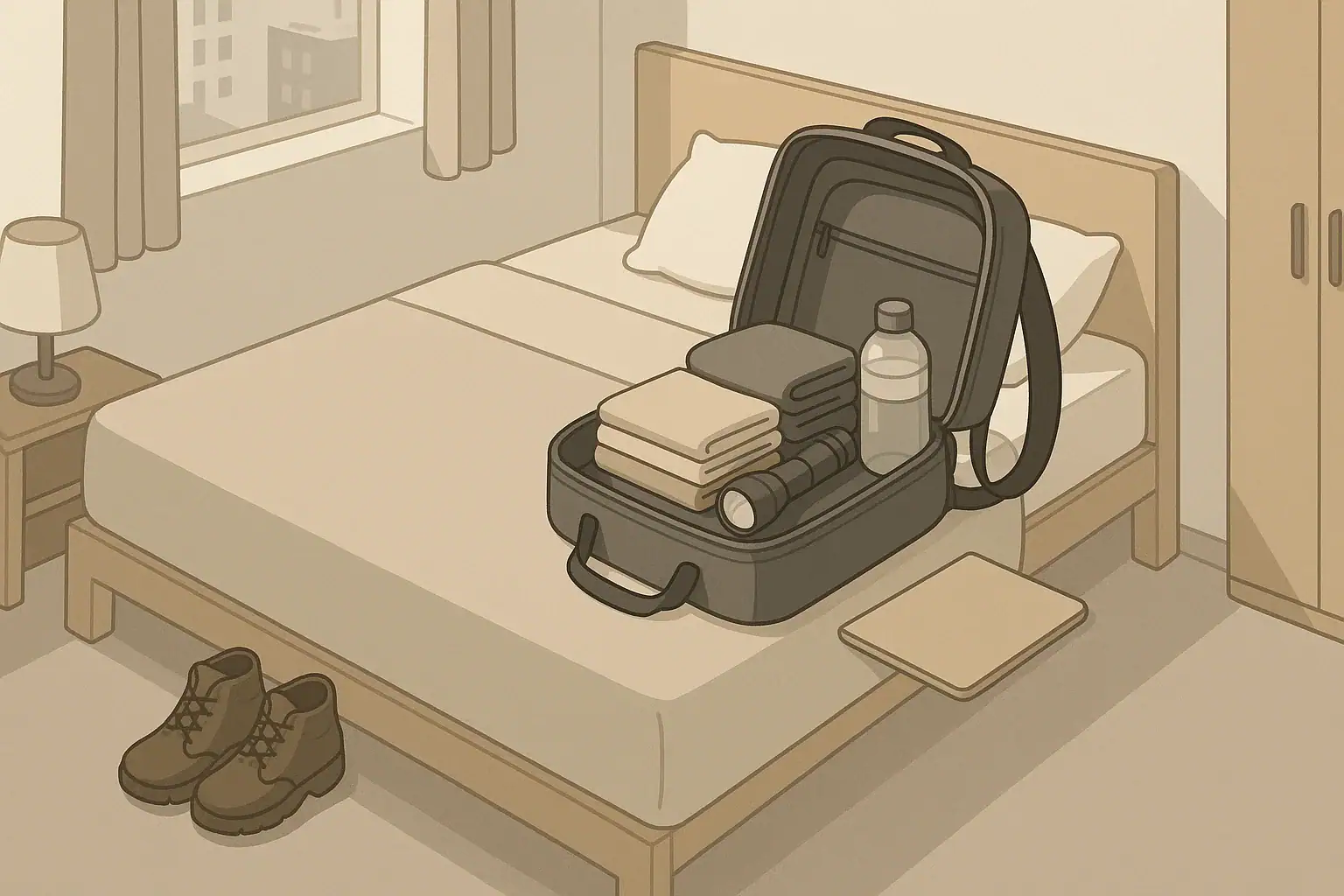
What to Wear in an Evacuation: Layers, Footwear, and Simple Rules
In many real-world evacuations, people leave home with only minutes to decide what to wear. Having a simple clothing plan ahead of time helps you move quickly, stay comfortable, and avoid injuries, whether you live in a small apartment or a single-family home.
You do not need specialized gear for most short-term evacuations. Focus on comfort, mobility, and protection from the elements. A good rule of thumb: dress as if you might be outdoors longer than you expect, walking more than you planned, in weather a bit worse than it looks right now.
In an evacuation, your clothing should prioritize:
- Speed: Simple outfits you can put on in under a minute.
- Mobility: Clothes that let you walk, bend, and climb stairs easily.
- Protection: Coverage from sun, cold, wind, light debris, and minor scrapes.
- Durability: Fabrics that hold up to walking, sitting on rough surfaces, and light rain.
- Versatility: Pieces you can add or remove as weather changes.
Simple Principles for Evacuation Clothing
Priorities When You Get Dressed
Clothing to Avoid
Some everyday items can make evacuations harder or less safe. If possible, avoid:
- Flip-flops or thin sandals: Poor grip and almost no protection.
- High heels or dress shoes: Hard to walk long distances or on uneven ground.
- Very tight clothing: Restricts movement and can be uncomfortable over time.
- Heavy, non-breathable fabrics: Hard to dry and uncomfortable if you get wet.
- Exposed midriff or very short shorts: Less protection if you brush against rough surfaces.
Layering Basics: Top, Bottom, and Outerwear
Layering lets you adjust to changing conditions without repacking your bag. Build a simple, repeatable system you could put on half-asleep in the dark.
Base Layers: Next to Your Skin
Your base layer is about comfort and moisture management. In many climates, normal everyday clothes work fine, but a little planning helps:
- Top: A comfortable T-shirt or long-sleeve shirt that you do not mind wearing for a full day.
- Bottom: Flexible pants, leggings, or joggers that allow a full range of movement.
- Underwear and socks: Choose items without annoying seams that might rub during extra walking.
If your region is often hot and humid, favor light, breathable fabrics. In cooler areas, consider a light, long-sleeve base top even in warmer months so you can roll sleeves up or down.
Mid Layers: Warmth You Can Add or Remove
Mid layers give you insulation. You may not need them every time, but having one in your go-bag or by the door is useful.
- Light sweater or sweatshirt: Easy to pull on and off, not too bulky.
- Fleece or light jacket: Works well for many seasons and is usually quick-drying.
- Extra socks: A simple way to add warmth and comfort if your first pair gets damp.
Even in warm climates, air-conditioned shelters or overnight temperature drops can feel chilly. A light mid layer is usually enough for most short-term evacuations.
Outer Layer: Weather and Wind Protection
Your outer layer protects you from wind, light rain, and sun. It does not need to be heavy-duty; focus on practical features:
- Light windbreaker or rain shell: Packs small and blocks wind.
- Hood: Useful if you do not have a hat or umbrella.
- Pockets: Helpful for carrying a phone, ID, and small items.
For winter climates, keep a warmer coat near your go-bag during cold months so you are not searching for it in a hurry.
Example values for illustration.
| Weather at departure | Core layers to wear | Extra item to grab |
|---|---|---|
| Hot, sunny | Light shirt, breathable pants or long shorts | Hat or light hooded layer for sun |
| Warm, cloudy | T-shirt, pants, light socks | Thin sweater or light jacket |
| Cool, breezy | Long-sleeve shirt, pants | Fleece or sweatshirt plus windbreaker |
| Cold, dry | Long-sleeve base top, warm pants | Insulating mid layer and warm coat |
| Rainy, mild | Comfortable base outfit | Water-resistant shell with hood |
| Snowy or freezing | Base layer top and bottom, warm pants | Heavy coat, hat, gloves, scarf or neck gaiter |
Footwear: Protect Your Feet First
Footwear is one of the most important clothing choices in an evacuation. You may need to walk farther than expected, use stairs if elevators are out, or step around small debris.
Best Everyday Choices
Look for shoes that are already part of your normal life so you can slip them on without thinking:
- Closed-toe shoes: Protect against scrapes, broken glass, or loose gravel.
- Sturdy soles: Provide traction on wet sidewalks or stairs.
- Lace-up or secure closure: Less likely to slip off while moving quickly.
- Broken-in, not worn-out: Comfortable to walk in, but not falling apart.
If you often wear sandals or house slippers at home, consider keeping a pair of sturdy shoes by the door or in a go-bag so you can switch quickly if you need to leave.
Footwear to Avoid if Possible
The goal is to reduce blisters, trips, and slips. If you have a choice, avoid:
- New, untested shoes: Higher chance of blisters on a long walk.
- Backless shoes: Easy to lose on stairs or in a crowd.
- Very smooth soles: Less grip on wet floors.
Socks and Foot Comfort
Dry, cushioned socks can make a big difference if you are on your feet for hours. Consider:
- Keeping one extra pair of socks in your go-bag.
- Avoiding socks with holes or thin spots if you have time to change.
- Choosing socks that fit well and do not bunch up in your shoes.
Special Clothing Considerations by Season
Evacuation clothing should match your local weather patterns. Think about the most likely seasons for storms, wildfires, or power outages in your area, and adjust your plan twice a year.
Warm-Weather Evacuations
In hot climates or during summer:
- Light colors: Absorb less heat from the sun.
- Breathable fabrics: Help with sweat and heat.
- Sun coverage: Long, lightweight sleeves and pants can protect from sun without being too hot.
- Hat or hood: Useful if you end up walking or standing in open areas.
Even if it is very hot, still aim for closed-toe shoes. You can always loosen laces or remove socks later if you reach a safe, clean indoor space.
Cold-Weather Evacuations
Evacuations during winter storms or cold snaps require more layers and better coverage:
- Insulating mid layer: Fleece, sweater, or other warm layer.
- Warm outer coat: Long enough to cover your hips if possible.
- Head and hands: Hat, ear coverage, and simple gloves or mittens.
- Neck coverage: Scarf, neck gaiter, or high collar to block wind.
- Warm socks: Consider a thicker pair, especially if you expect snow or slush.
If you live in a small space, you do not need a large collection of winter gear. A single warm coat, basic gloves, and a hat stored with your go-bag are usually enough for short-term evacuations.
Rain, Flooding, and Storms
For heavy rain or flood-prone conditions:
- Water-resistant shell: Even a light one helps you stay warmer and drier.
- Quick-drying fabrics: On your legs and torso if possible.
- Longer jacket or coat: Helps keep water from soaking your pants and waistband.
In deeper water, specialized waterproof boots would help, but many people will not have them. Focus instead on a change of socks and a way to dry your feet once you reach a dry place.
Apartment vs House: Clothing When You Have to Move Fast
Your living situation shapes how you leave and how far you might need to go on foot.
Apartment Living: Stairs, Hallways, and Shared Exits
If you live in an apartment building, plan for:
- Stair-friendly shoes: Good grip for going down several flights.
- Light, close-fitting layers: Less likely to catch on door handles or railings.
- Easy-to-carry outer layer: A jacket you can tie around your waist if you get warm in stairwells.
Consider keeping a “grab outfit” on a hook or chair by the door: pants, shirt, and a light jacket you can pull on over sleepwear if needed.
Houses: Yard, Driveway, and Uneven Surfaces
If you live in a house, your first steps may be across grass, gravel, or uneven sidewalks:
- Thicker soles: Protect from small stones or sharp debris.
- Leg coverage: Pants help with brush, branches, or yard obstacles.
- Weather-specific outerwear: Near the door you usually use to leave.
For both apartments and houses, try one simple drill: pick a basic outfit and see if you can put it on, including shoes, in under one minute. Adjust your setup so that is realistic for you.
Kids, Seniors, and People With Mobility Needs
Clothing choices matter even more for family members who may move slowly or need assistance.
Children
For kids, aim for simple outfits that are easy to help them into quickly:
- Pull-on pants or leggings: Faster than complex fasteners.
- Slip-on or Velcro shoes: Secure but quick to put on.
- Bright but comfortable layers: Helpful for visibility in crowded areas, as long as they are not scratchy.
Consider packing a complete change of clothes for each child in a labeled bag inside your go-bag: top, bottom, underwear, socks, and a light layer.
Seniors and Mobility Challenges
For older adults or anyone with mobility limitations:
- Easy closures: Elastic waistbands, larger zipper pulls, and minimal buttons.
- Stable footwear: Non-slip soles and shoes that are easy to put on while seated.
- Layering that is simple to adjust: Cardigans or front-zip layers rather than pullovers.
If using mobility aids, ensure pant legs are not so long that they interfere with walking or wheels. Keep a warm layer and rain protection attached to or stored with the mobility aid if possible.
Accessories and Small Extras That Make a Big Difference
Small clothing-related items can greatly increase comfort and flexibility without taking much space.
Useful Accessories to Keep Handy
- Hat or cap: For sun or light rain.
- Gloves: For cold climates or winter storms.
- Lightweight scarf or neck gaiter: Adds warmth and can help with wind or dust.
- Simple belt: Helpful if you lose weight, share clothes, or carry small items.
Backup Clothing in Your Go-Bag
Space is limited, especially in small homes or apartments. Prioritize a few items that cover basic needs:
- One basic outfit (top and bottom) that works in most seasons.
- One extra pair of socks and underwear.
- One light, compressible layer for warmth.
Update sizes occasionally for growing kids or if your own clothing sizes change.
Example values for illustration.
| Need | Simple supplies | Safe use note | Disposal idea |
|---|---|---|---|
| Fresh socks | 1–2 spare pairs in a small bag | Change if socks get wet or sandy | Seal used pair in plastic bag |
| Basic cleanliness | Small pack of wipes, tissues | Use sparingly, avoid eyes | Trash can or lined bag |
| Minor leaks or spills | Lightweight spare shirt or pants | Change quickly to stay dry | Bag damp clothes separately |
| Cold hands | Thin gloves or mittens | Keep dry for better warmth | Air-dry if they get damp |
| Dusty conditions | Simple scarf or neck gaiter | Use mainly for warmth and wind | Shake out dust outdoors |
| Wet shoes | Spare socks and small towel | Dry feet as soon as practical | Hang items to air dry later |
Simple Rules to Decide What to Wear in the Moment
Emergencies rarely happen at convenient times. A short list of rules can help you decide quickly, even if you are tired or stressed.
Quick-Decision Checklist
When you hear that you need to evacuate, run through these steps:
- Cover your feet: Put on the most comfortable closed-toe shoes you can reach.
- Cover your legs: If you are in shorts or sleepwear and have 30–60 seconds, switch to pants or leggings.
- Add one layer: Grab a light jacket or sweater, even if it seems warm.
- Check pockets: Make sure you have keys, ID, and a phone if you use one.
- Grab your go-bag: It should hold any extra clothing and small accessories.
If you truly have seconds, do not delay leaving to change clothes. The best outfit is the one you are already wearing plus the fastest improvements you can make on your way out the door.
Practice Once, Then Adjust Over Time
Take five to ten minutes on a calm day to walk through your clothing plan from bed to door. Notice what slows you down: searching for shoes, missing socks, or coats in a different room. Small adjustments, like keeping a complete set of clothes and shoes near your evacuation route, can make leaving faster and less stressful when it counts.
Authoritative sources
Safety recommendations can change. Confirm critical details with current official guidance and local authorities.
- CDC: Guidelines for Cleaning Safely After a Disaster
- Ready.gov: Preparedness Tips for People with Disabilities
Frequently asked questions
What are the most important clothing priorities when deciding what to wear in an evacuation?
Prioritize speed, mobility, and protection: choose simple outfits you can put on quickly, that allow walking and stair use, and that provide coverage from sun, wind, cold, or light debris. Favor durable, breathable fabrics and versatile layers you can add or remove as conditions change.
How should I choose shoes for an evacuation?
Choose closed-toe shoes with sturdy soles and secure closures to protect against debris and provide traction, and pick pairs that are already broken in to reduce blister risk. If you normally wear slippers at home, keep a pair of sturdy shoes by the door or in your go-bag for a fast change.
What clothing items should I pack in a go-bag for short-term evacuations?
Pack one basic outfit suitable for your climate, an extra pair of socks and underwear, and a light compressible mid layer or rain shell. Keep items compact and update sizes periodically, especially for children.
How should I adjust my evacuation clothing for hot versus cold weather?
In hot weather, choose light, breathable fabrics, sun coverage like a hat or lightweight long sleeves, and still aim for closed-toe shoes; in cold weather, add insulating mid layers, a warm coat, hat, and gloves. Carrying a thin jacket or shell is useful because temperatures can drop in shelters or at night.
How can I prepare clothing for children, seniors, or people with mobility needs?
Choose easy-to-don clothing like pull-on pants, Velcro or slip-on shoes, elastic waists, and front-zip layers; keep complete outfits labeled and ready in go-bags for each person. For mobility aids, ensure pant lengths won’t catch and attach weather protection to the aid if possible.
- Simple checklists and realistic planning
- Water, power, lighting, and pantry basics
- Family plans (kids, pets, seniors) and seasonal prep
Affiliate disclosure
As an Amazon Associate, we earn from qualifying purchases. Some links on this site may be affiliate links. If you buy through these links, we may earn a small commission at no extra cost to you. This helps support our content. Learn more.