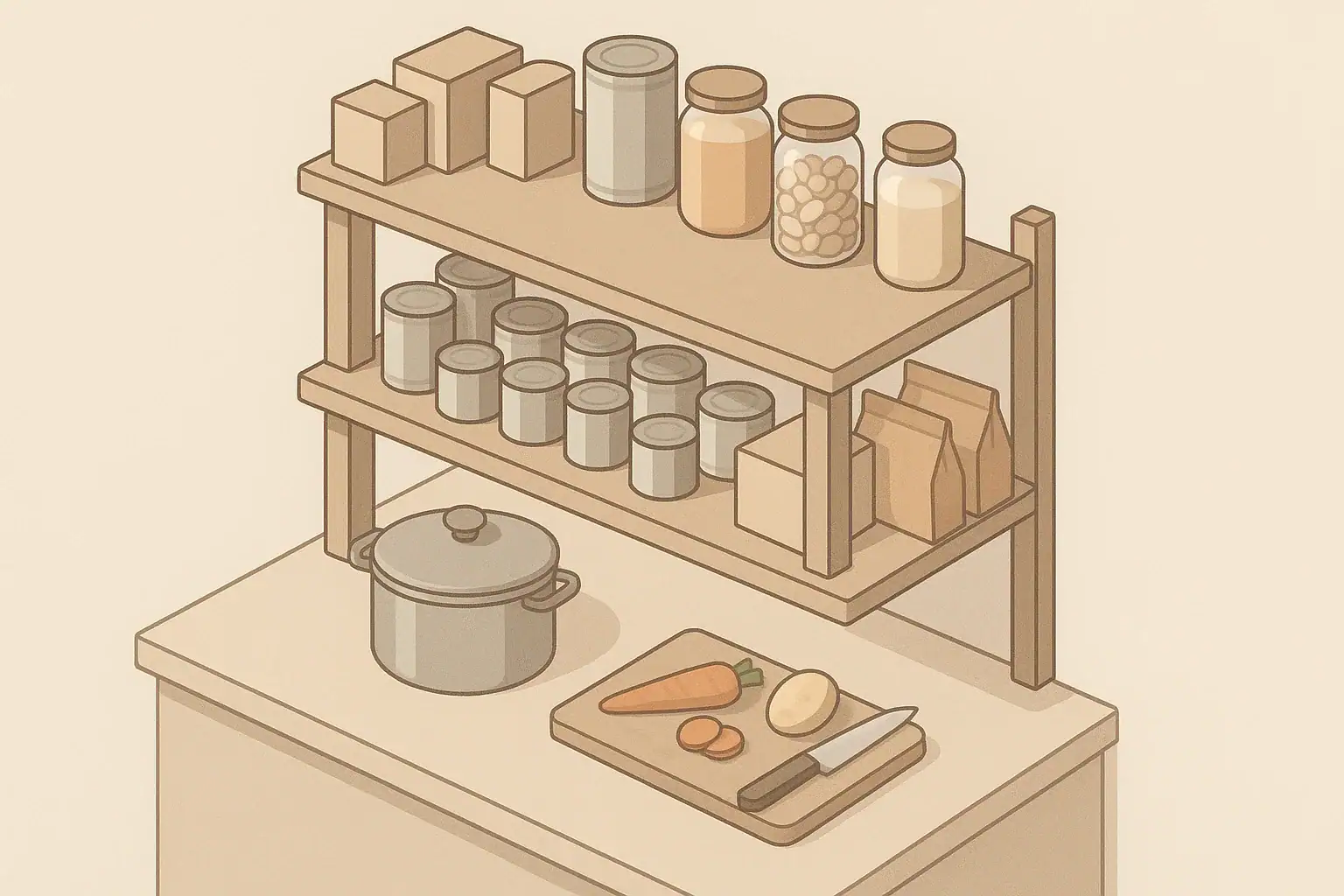
Why an Emergency Pantry Matters for Everyday Households
A small, well-planned emergency pantry can turn a stressful disruption into an inconvenience you can manage calmly. Instead of stockpiling for extreme scenarios, you can build a simple backup food supply that fits real life: short power outages, winter storms, heatwaves, or a few unexpected days when getting to the store is hard.
The idea of “buy once, rotate monthly” keeps this realistic. You create a core pantry once, then maintain it with simple habits. You are not hoarding; you are just keeping a buffer of everyday foods you already eat.
This approach works for renters, small apartments, houses, families with kids, and households with pets or seniors. The key is to choose shelf-stable foods your household actually likes and that you can store safely with the space you have.
How the Buy-Once, Rotate-Monthly System Works
Instead of buying a huge stockpile all at once and forgetting about it, you build a right-sized base pantry and keep it fresh with a simple rotation habit. The system has three parts:
- Set a goal: Decide how many days of simple meals you want on your shelves.
- Buy once: Build up to that goal over a few trips or a single planned shopping run.
- Rotate monthly: Use and replace items regularly so your pantry stays fresh and familiar.
For many households, a reasonable starting point is about three days of food that does not require cooking, plus another four to seven days of meals that only need boiling water or simple stovetop heating (if you have a safe backup way to heat food). Adjust up or down based on your comfort level and storage space.
Rotation is simple: you store extras in the back, bring older items to the front, and use from the front in everyday cooking. Once a month, you check dates, bring older items into your meal plan, and replace what you used on your normal shopping trips.
| Household situation | Initial days of food to aim for | Primary focus |
|---|---|---|
| Single person in small apartment | 3–5 days | Compact no-cook meals and snacks |
| Couple or two roommates | 5–7 days | Shared staples and easy one-pot meals |
| Family with young kids | 7–10 days | Kid-friendly foods and simple breakfasts |
| Household with seniors | 7–10 days | Easy-to-chew options and familiar meals |
| Pet owners | 3–7 days extra pet food | Usual brand/type and gradual rotation |
| Limited storage space | 3–5 days | High-calorie, compact shelf-stable foods |
Core Categories for an Emergency Pantry Shopping List
A balanced emergency pantry covers several basic needs: energy, simple meals, comfort foods, and items that support safe food use (like manual tools). You can customize amounts and specific items to your household.
1. No-Cook Essentials
These are foods you can eat straight from the package if power and gas are unavailable or you cannot safely cook.
- Canned beans and lentils
- Canned fish or poultry
- Canned vegetables and fruit
- Nut or seed butters
- Shelf-stable snack bars
- Crackers, rice cakes, or shelf-stable flatbreads
- Ready-to-eat soups or chilis that are safe at room temperature
- Single-serve shelf-stable milks or milk alternatives
Choose items you like enough to eat cold if you need to, and that fit any dietary needs or restrictions in your household.
2. Simple Heat-and-Eat Meals
For outages where you can safely heat water or use a camp stove outdoors, it is useful to have foods that cook in one pot with minimal water.
- Instant or quick-cooking rice
- Pasta and shelf-stable sauces
- Quick-cooking grains (couscous, instant oatmeal, instant grits)
- Dry soup mixes or shelf-stable boxed soups
- Dry beans and lentils (if you also keep some fuel and time for longer cooking)
- Meal pouches that can be warmed in hot water
Favor foods with short cooking times to save fuel and make meal preparation easier under stress.
3. Breakfast Basics
Simple, familiar breakfasts can help maintain routines, especially for kids.
- Instant oatmeal packets or quick oats
- Shelf-stable cereal that can be eaten dry if needed
- Granola or muesli
- Shelf-stable milk or powdered milk (if you are comfortable mixing it)
- Nut or seed butters and jam
4. Snacks and Comfort Foods
During stressful events, familiar snacks can matter. Include a few shelf-stable options that your household genuinely enjoys.
- Dried fruit and trail mix
- Nuts and seeds
- Crackers, pretzels, or popcorn kernels (if you have a way to pop them)
- Simple sweets like shelf-stable cookies or chocolate
- Tea, coffee, or other shelf-stable drink mixes
5. Special Diets and Baby or Senior Needs
If anyone in your household has specific dietary needs, build your list around them first.
- Gluten-free grains or pasta if needed
- Lactose-free or plant-based shelf-stable milks
- Lower-sodium versions of canned goods if that is part of usual care
- Baby formula and age-appropriate baby foods
- Easy-to-chew foods for seniors (soft canned fruits, smooth nut butters, soft-cooked grains)
Label a section of your pantry or a dedicated bin for these items so they are easy to find in a hurry.
6. Pet Food and Treats
Include pets when you plan your emergency pantry. Sudden food changes may bother some animals, so store what they already eat.
- Dry or canned pet food (same type you usually use)
- Simple treats if they are part of your normal routine
- Spare feeding bowls or a collapsible bowl
Rotate pet food just like human food: feed from your emergency supply and replace it with fresh purchases.
7. Pantry Support Items and Tools
Some simple tools make it easier and safer to use your pantry foods during an outage.
- Manual can opener
- Sturdy utensils and a heat-safe pot or pan
- Basic cutting board and knife
- Resealable bags or reusable containers for leftovers
- Disposable plates and utensils if washing dishes might be difficult
- Food-safe storage wrap or foil
Building Your Buy-Once Emergency Pantry on a Budget
You do not need to fill an entire cart in one trip. It is often easier on your budget to build your pantry gradually and deliberately.
Step 1: Set a Simple Target
Pick a realistic goal for your household, such as:
- Three days of no-cook food per person, plus pet needs
- Another four days of heat-and-eat meals if you have safe cooking options
Estimate a rough number of meals and snacks per person per day. For example, you might plan for three small meals and one or two snacks each day.
Step 2: Create a Short, Repeatable Shopping List
List out a few core items in each category—no-cook, heat-and-eat, breakfast, snacks, special diets, pet food. Aim for foods that work in more than one meal.
Instead of a long, overwhelming list, build a “template” for your cart, for example:
- Several cans of beans, vegetables, and fruits
- A few cans or pouches of meat or fish
- One or two large bags of rice, pasta, or similar staples
- A couple of boxes of instant oatmeal or cereal
- One large jar of nut or seed butter
- A small selection of snacks your household likes
- One extra package of pet food
Repeat this template each week until you reach your target days of food.
Step 3: Buy a Little Extra When You Shop
Each time you do your regular grocery trip, add one or two items from your emergency list. Over a month or two, your pantry will fill out without a large one-time expense.
Some households like to set aside a small, fixed amount in their budget each week specifically for pantry building. Others time pantry purchases to store discounts on shelf-stable items. Either way, aim for slow, steady progress instead of a rush.
Step 4: Store Smart in Small Spaces
Even in apartments, you can usually find a bit of space for a compact emergency pantry. Consider:
- Under-bed storage bins for sealed foods
- Labeled bins in bedroom or hallway closets
- Top shelves in kitchen cabinets
- A small, sturdy shelving unit in a cool, dry corner
Avoid areas with high heat or moisture, such as near heaters or in damp basements. When in doubt, choose cooler, stable locations.
Simple Monthly Rotation: Keep It Fresh Without Overthinking
Once your emergency pantry is set up, rotating it monthly keeps it useful and familiar. You do not need complex systems—just a quick, regular check.
Monthly Five-Minute Check
Choose a reminder that works for you, such as the first weekend of the month. During your check:
- Scan dates and pull forward items you want to use soon.
- Move newer items to the back (first in, first out).
- Make a short list of anything that is low and needs replacing.
- Note any foods you are not actually eating and adjust your list.
Work your “use soon” items into regular meals over the next week, then replace them on your normal shopping trip.
Labeling Made Easy
Simple labeling can make rotation faster:
- Use a marker to write the purchase month and year on the top of cans and boxes.
- Group foods by type (soups together, beans together, grains together) to see what you have at a glance.
- Keep a notepad or digital note listing your target quantities (for example, number of cans of beans or bags of rice).
Meal Planning with Your Pantry
To avoid waste, intentionally cook with pantry items every month. You might:
- Designate one weekly dinner as “pantry night.”
- Rotate through beans, rice, pasta, and canned vegetables in regular recipes.
- Use older snacks in lunchboxes or as afternoon snacks.
As you discover which items you enjoy and use most often, adjust future purchases toward those foods and away from anything that tends to sit untouched.
Sample Emergency Pantry Rotation Plan
Once your pantry is set, you can build a simple rotation plan by food type. The idea is to use items within a comfortable time frame while staying stocked for disruptions.
| Food type | Storage tip | Rotation interval idea | No-cook or low-cook use |
|---|---|---|---|
| Canned beans and vegetables | Store in a cool, dry cabinet | Plan to use within about 1–2 years | Eat cold in salads or warm in one-pot meals |
| Canned fish or poultry | Rotate into sandwiches and pastas | Plan to use within about 1–2 years | Mix with crackers or ready grains |
| Dry grains (rice, pasta) | Keep sealed to reduce moisture | Plan to use within about 1–3 years | Boil with minimal water as fuel allows |
| Nut or seed butters | Store tightly closed after opening | Plan to use within about 6–12 months | Spread on crackers or eaten with fruit |
| Snack bars and crackers | Keep in airtight container if opened | Plan to use within about 6–12 months | Ready-to-eat snacks and light meals |
| Shelf-stable milk or alternatives | Store away from heat and light | Plan to use within about 6–12 months | Drink as is or add to cereal and oats |
| Dry pet food | Keep in sealed container after opening | Plan to use within about 3–12 months | Feed as part of regular pet meals |
Example values for illustration.
Adapting Your Emergency Pantry Over Time
An emergency pantry is not a one-time project. It evolves as your household changes. New family members, dietary shifts, and moving to a new home are all good times to reassess what you store.
Once or twice a year, take a slightly deeper look than your monthly check:
- Confirm that serving sizes still match your household size.
- Review any new dietary needs, including allergies or intolerances.
- Note which items you consistently use and which you avoid.
- Adjust your shopping template so most items are things you look forward to eating, not just “emergency only” foods.
With a calm, routine approach—buy once, rotate monthly—your emergency pantry becomes an everyday asset: a small buffer that keeps you more comfortable, whether you are weathering a storm, a short power outage, or simply a busy week when getting to the store is not convenient.
Authoritative sources
Safety recommendations can change. Confirm critical details with current official guidance and local authorities.
- CDC: Carbon Monoxide Poisoning Basics
- USDA FSIS: Keep Food Safe During Emergencies
- Ready.gov: Preparedness Tips for People with Disabilities
Frequently asked questions
How do I start an emergency pantry using the “buy once, rotate monthly” approach?
Begin by setting a realistic target for days of food you want on hand, then create a short shopping template that covers no-cook items, heat-and-eat meals, breakfasts, snacks, and any special-diet needs. Build the core pantry over a few regular shopping trips, label purchase dates, and perform a quick monthly rotation to use older items and replace them during normal shopping. This keeps the supply fresh without a large one-time expense.
How many days of food should I plan for based on household type?
Recommended targets vary: a single person in a small space might aim for 3–5 days, couples or roommates 5–7 days, and families or households with seniors 7–10 days, with an extra 3–7 days of pet food if applicable. Choose a level that balances comfort, budget, and available storage space, and adjust as your household or needs change.
What are the best no-cook items to include on an emergency pantry shopping list?
no-cook items include canned beans, canned fish or poultry, canned fruits and vegetables, nut or seed butters, shelf-stable snack bars, crackers or flatbreads, ready-to-eat soups safe at room temperature, and single-serve shelf-stable milks. Pick items your household already likes so you can eat them cold if necessary.
How can I rotate pantry items monthly without creating waste?
Use a simple monthly five-minute check: scan dates, move older items to the front, and add any low items to your shopping list. Plan regular meals that use pantry items—such as a weekly “pantry night”—and replace what you used on your normal shopping trip so nothing expires unused.
What are practical storage tips for renters or households with limited space?
Store sealed foods in labeled under-bed bins, closet bins, top kitchen shelves, or a small shelving unit in a cool, dry corner, and avoid heat or damp areas. Keep similar items grouped together, write purchase month on cans and boxes, and use airtight containers for opened goods to maximize space and shelf life.
- Simple checklists and realistic planning
- Water, power, lighting, and pantry basics
- Family plans (kids, pets, seniors) and seasonal prep
Affiliate disclosure
As an Amazon Associate, we earn from qualifying purchases. Some links on this site may be affiliate links. If you buy through these links, we may earn a small commission at no extra cost to you. This helps support our content. Learn more.