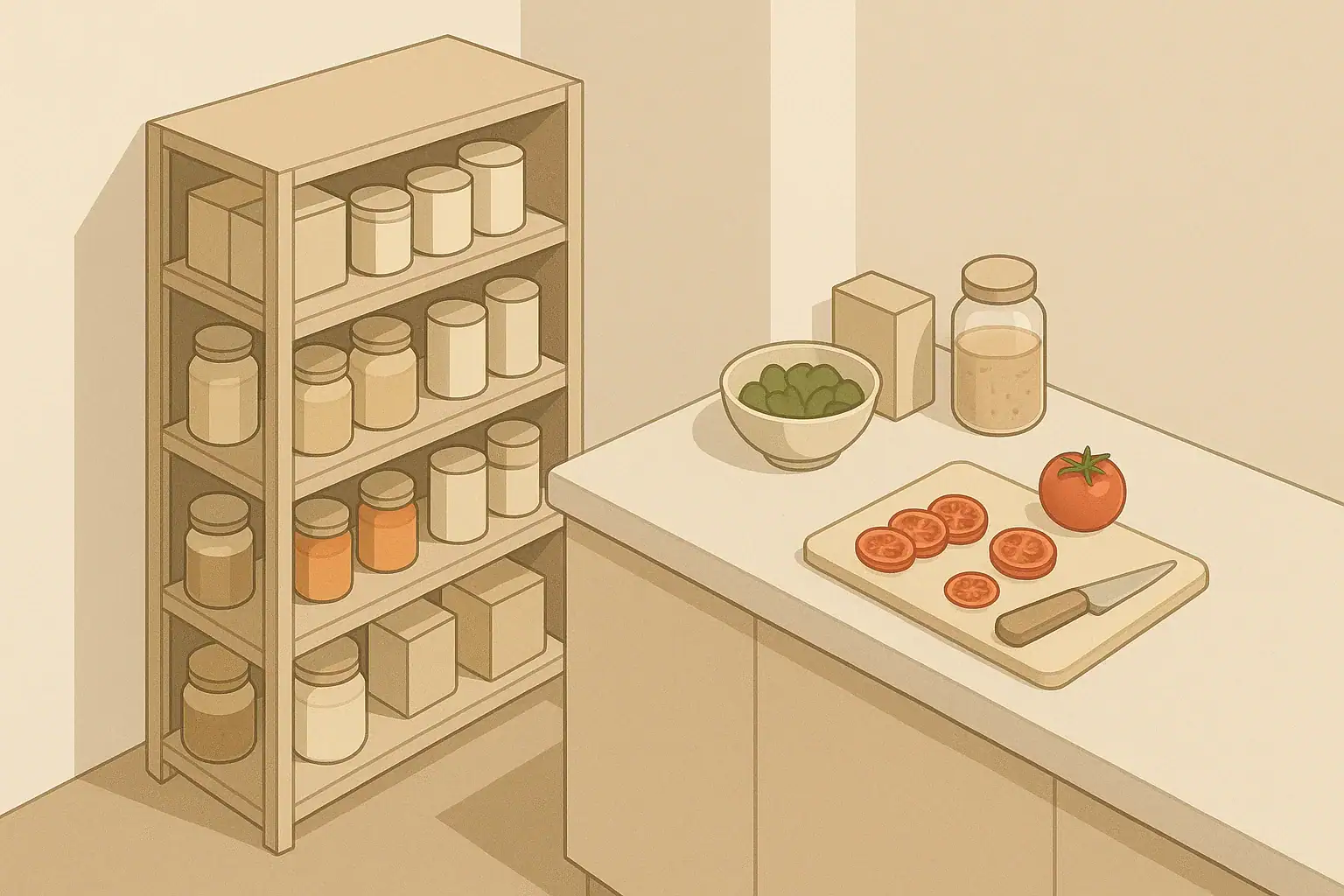
You do not need a big basement or a dedicated storage room to be reasonably prepared. A small, well-planned emergency pantry can help you get through short-term disruptions such as winter storms, water line repairs, power outages, or supply hiccups at local stores.
For most households in apartments or small homes, the goal is simple: have enough easy-to-use food and basic supplies to stay put for a few days without stress. That usually means focusing on:
- Compact foods that do not require refrigeration
- Items you will actually eat in normal life
- Simple ways to cook or eat food without a full kitchen
- Storage that fits under beds, in closets, or on existing shelves
This is about practical readiness, not stockpiling. A small, rotating pantry can blend into everyday life and still give you a cushion when plans change unexpectedly.
Why an Emergency Pantry Matters Even in a Tiny Space
You do not need a big basement or a dedicated storage room to be reasonably prepared. A small, well-planned emergency pantry can help you get through short-term disruptions such as winter storms, water line repairs, power outages, or supply hiccups at local stores.
For most households in apartments or small homes, the goal is simple: have enough easy-to-use food and basic supplies to stay put for a few days without stress. That usually means focusing on:
- Compact foods that do not require refrigeration
- Items you will actually eat in normal life
- Simple ways to cook or eat food without a full kitchen
- Storage that fits under beds, in closets, or on existing shelves
This is about practical readiness, not stockpiling. A small, rotating pantry can blend into everyday life and still give you a cushion when plans change unexpectedly.
How Much to Store in a Small-Space Emergency Pantry
The right amount depends on your household size, where you live, and your tolerance for risk. Many people aim for about three days of extra food as a starting point and build up to a week or slightly more as space allows.
Think about:
- Number of people and pets: Children, teens, and adults may eat different amounts. Pets also need a small reserve of their regular food.
- Cooking options during outages: Can you safely use a gas stove without power? Do you have a small camp stove for a balcony or outdoor area where it is allowed? If cooking is uncertain, lean toward no-cook foods.
- Climate and likely scenarios: Winter storms, hurricanes, or heatwaves might limit your ability to cook, shop, or travel for a few days.
A simple way to estimate is to plan for two or three straightforward meals and a snack per person per day, using foods that are familiar to your household. For very small spaces, you might start with just a few extra days of shelf-stable versions of what you already eat: dry pasta, rice pouches, canned beans, shelf-stable milk, or instant oats.
Example values for illustration.
| Living Situation | Storage Reality | Practical Pantry Goal | Planning Notes |
|---|---|---|---|
| Studio or micro-apartment, 1 person | Very limited cabinets and no extra closet | About 3 days of simple meals | Use under-bed bins and top shelves; choose dense foods |
| Small apartment, 2 adults | Shared closet space and small kitchen | 5–7 days of meals and snacks | Stackable containers in closets; double up on favorites |
| Apartment with kids | Toys and clothes take most storage | 3–5 days plus extra kid-friendly items | Use labeled bins; include familiar snacks and simple breakfasts |
| Small home without basement | Some attic or garage shelving | 1–2 weeks of flexible meals | Use sturdy totes; protect from temperature extremes when possible |
| Roommates sharing a rental | Split cupboards and limited fridge space | At least 3 days per person | Each person keeps a small personal bin; avoid overlap in bulk items |
| Senior in compact senior housing | Some cabinet space, limited lifting ability | 3–5 days of very easy-to-open foods | Prioritize light containers and easy-open packaging |
Smart Food Choices for Tiny Emergency Pantries
In a small space, every inch counts. Focus on foods that are compact, versatile, and easy to use during a power outage or when you are tired or stressed.
Compact, Shelf-Stable Staples
Pick foods that pack a lot of usefulness into a small footprint and do not require refrigeration until opened:
- Dry grains such as rice, couscous, or instant grains
- Dry pasta or noodle cups that cook quickly
- Canned or shelf-stable beans and lentils
- Canned vegetables and tomatoes
- Canned tuna, chicken, or other protein options
- Nut butters and seeds
- Instant oatmeal or other hot cereals
- Broth cubes or shelf-stable cartons
Choose a mix of ready-to-eat foods and items that only need hot water. This gives you options if you cannot cook on a full stove.
No-Cook or Low-Cook Options
If you live in a building where open-flame stoves are not allowed on balconies or outdoor spaces, it is wise to have foods that require little or no heating:
- Ready-to-eat canned meals such as chili, soups, or stews
- Crackers, rice cakes, or flatbreads
- Trail mix, nuts, and dried fruit
- Granola or cereal that can be eaten dry or with shelf-stable milk
- Bags or pouches of pre-cooked rice or grains (can be eaten at room temperature if needed)
Include a manual can opener if you rely on canned goods. Keep at least one that is easy to grip if someone in your household has limited hand strength.
Food for Kids, Seniors, and Special Diets
For small households with specific needs, tailor your pantry so it is realistic to use:
- Kids: Mild flavors, familiar snacks, simple breakfast foods, and shelf-stable versions of what they already like.
- Seniors: Easy-to-open containers, softer foods if chewing is a concern, and items that do not require long prep.
- Allergies or special diets: Keep a backup supply of key staples that meet your dietary needs so you are not relying on last-minute store options.
Small-Space Storage Ideas: Making Room You Didn’t Know You Had
Even in a small apartment, there are often overlooked spots where a compact emergency pantry can live. The key is to spread items out in an organized way so they do not become clutter.
Use Vertical and Hidden Spaces
Look up, down, and behind existing furniture:
- Under-bed bins: Low rolling bins can hold flat, lightweight items such as pasta, rice, and snack boxes.
- High shelves: Top shelves of closets or kitchen cabinets can hold rarely used emergency items in labeled boxes.
- Behind doors: Over-the-door organizers with sturdy pockets can hold small, lightweight food items or utensils.
- Cabinet risers: Small shelf inserts let you stack cans and boxes more efficiently without losing visibility.
Multi-Use Furniture and Containers
In very tight spaces, storage often needs to serve more than one purpose:
- Storage ottomans: Keep lightweight, non-fragile pantry items inside.
- Stackable bins: Clear or labeled bins can sit in a closet, laundry area, or under a hanging rod.
- Slim rolling carts: Slide a narrow cart between the fridge and wall or between cabinets to store cans and bottles.
Labeling is important. Simple labels like “pasta and grains” or “canned meals” help you use items in everyday cooking and replace them easily.
Apartment-Friendly Safety Tips
When storing food in small spaces, consider basic safety and comfort:
- Avoid storing food directly against exterior walls if they get very hot or cold.
- Keep items off the floor where possible to reduce the chance of water damage from minor leaks.
- Do not overload high shelves with heavy cans that could fall.
- If you have pests in the building, use sealed containers to protect food.
Simple Non-Food Essentials to Store with Your Pantry
Your emergency pantry can also house a few non-food basics that make it easier to eat, stay informed, and keep things clean during a short disruption.
Basic Utensils and Cooking Aids
Set aside:
- Manual can opener
- Lightweight plates, bowls, and cups (reusable or disposable)
- Basic cutlery and a small knife with a sheath
- Small cutting board
- Portable cookware if you have a safe backup cooking method
If you plan to use a small backup stove, follow building rules and only operate it in safe, well-ventilated areas approved for that use.
Hygiene and Clean-Up Items
Keeping things reasonably clean can make a short-term emergency more manageable:
- Dish soap and a sponge or cloth
- Paper towels or cleaning rags
- Trash bags and resealable bags
- Basic surface wipes or spray cleaner
Light and Information Near the Pantry
It is helpful to keep at least a small light source stored with your pantry so you can find items in the dark:
- Flashlight or small lantern with extra batteries
- Battery-powered or crank radio to hear local updates
Storing these near your emergency pantry means you can access food and information quickly during an outage without searching through multiple drawers.
Planning for Power Outages in Small Kitchens
Power outages change how you use your pantry. A little advance planning helps you avoid food waste and make the most of what you have.
What to Eat First When the Power Goes Out
Refrigerated and frozen items usually need to be used before long-shelf-life pantry items. To reduce waste during shorter outages, consider this general order:
- Foods already open in the refrigerator
- Perishables that can be eaten cold, such as some leftovers
- Frozen items that can thaw safely and be cooked soon after
- Stable pantry items such as canned meals, grains, and snacks
Keep your refrigerator and freezer doors closed as much as possible to help them stay cool. Use a flashlight rather than leaving the door open for long periods while you decide what to eat.
Low-Energy Meal Ideas
Think about meals you can assemble quickly with minimal cooking:
- Rice or grain bowls using canned beans and vegetables
- Cold pasta salads using canned vegetables and shelf-stable dressing
- Crackers or flatbreads topped with nut butter and dried fruit
- Simple soups using broth, canned vegetables, and quick-cooking grains
Keeping a short list of quick pantry meals on a note in your kitchen can make decision-making easier when you are tired or stressed.
Rotation and Organization: Keeping a Tiny Pantry Fresh
An emergency pantry works best when it is part of your regular cooking routine. Instead of a separate “do not touch” stash, think of it as a slightly deeper shelf of your everyday foods.
Use What You Store, Store What You Use
Choose foods you already enjoy, then rotate them:
- Place newer items at the back and bring older ones to the front.
- Use pantry foods regularly in meals, and replace them on your next shopping trip.
- Check dates a few times a year and plan meals around items getting older.
This approach keeps your small pantry fresher and makes it more likely you will rely on it confidently when needed.
Simple Labeling System
Clear labeling can make a small-space pantry feel bigger and easier to manage:
- Use a marker to write the purchase month and year on the top of cans and boxes.
- Group items by type: grains, proteins, vegetables, snacks, breakfasts.
- Keep a short list of what you consider your “minimum” emergency stock so you know when you are running low.
Example values for illustration.
| Food Type | Storage Tip | Rotation Interval Idea | No-Cook or Low-Cook Use |
|---|---|---|---|
| Canned beans | Store upright in a shallow bin | Use and replace every few months | Rinse and add to salads or grain bowls |
| Canned vegetables | Keep with beans for easy meal pairing | Use regularly in soups and side dishes | Drain and mix with rice or pasta |
| Dry pasta and instant grains | Store in sealed bags or jars | Rotate through weekly meals | Use quick-cooking types for low-fuel meals |
| Canned or pouch meats | Group by type in a labeled container | Use in salads or sandwiches every few months | Combine with crackers or pasta salads |
| Nut butters | Store cool and upright, lid tightly closed | Use as part of normal breakfasts and snacks | Spread on crackers or stir into oats |
| Breakfast items (oats, cereal) | Place in a dedicated breakfast bin | Rotate continuously as part of everyday use | Eat dry as a snack or with shelf-stable milk |
| Snacks (nuts, dried fruit, bars) | Store in small containers to avoid crushing | Use older snacks first and replace gradually | Grab-and-go no-cook options |
Putting It All Together Without Overwhelming Your Space
Building an emergency pantry for a small space works best when done gradually and thoughtfully. Start by setting a modest goal, such as three days of simple meals and snacks for everyone in your household. Add one or two extra items to your regular shopping trips rather than trying to buy everything at once.
As you figure out which foods your household uses most often, you can adjust your pantry to match. Over time, you will have a compact, familiar set of staples that fits into your existing storage and gives you a comfortable buffer against everyday disruptions.
Authoritative sources
Safety recommendations can change. Confirm critical details with current official guidance and local authorities.
- CDC: Carbon Monoxide Poisoning Basics
- USDA FSIS: Keep Food Safe During Emergencies
- U.S. CPSC: Battery Safety
Frequently asked questions
How much food should I realistically store in an emergency pantry for small spaces?
Start with a three-day supply of familiar, shelf-stable foods for each person and pet in your household, then expand to a week if space allows. Base the amount on household size, likely scenarios in your area, and how easily you can cook without full utilities.
What are the best space-saving storage options for a tiny emergency pantry?
Use clear, stackable bins, slim rolling carts, and under-bed containers to maximize underused spaces. Pick airtight or resealable containers for loose items to protect against pests and moisture, and label everything for quick access.
Can I safely store canned goods and dry grains in an apartment without a basement?
Yes—store them in cool, dry locations away from direct heat or exterior walls, and keep items off the floor to avoid water damage. Use sealed containers or boxes to reduce pest risk and inspect dates periodically.
What are safe cooking options during a power outage in a small kitchen?
Rely first on no-cook foods or items that need only hot water. If you plan to use a backup stove, follow building rules and safety guidance: use it only in well-ventilated, approved areas and never operate an open-flame device indoors if prohibited.
How often should I rotate and check items in a small emergency pantry?
Integrate rotation into regular shopping—use pantry items in meals and replace them when you restock. Check dates and inventory a few times a year, and rotate higher-turnover items every few months to keep the supply fresh.
- Simple checklists and realistic planning
- Water, power, lighting, and pantry basics
- Family plans (kids, pets, seniors) and seasonal prep
Affiliate disclosure
As an Amazon Associate, we earn from qualifying purchases. Some links on this site may be affiliate links. If you buy through these links, we may earn a small commission at no extra cost to you. This helps support our content. Learn more.