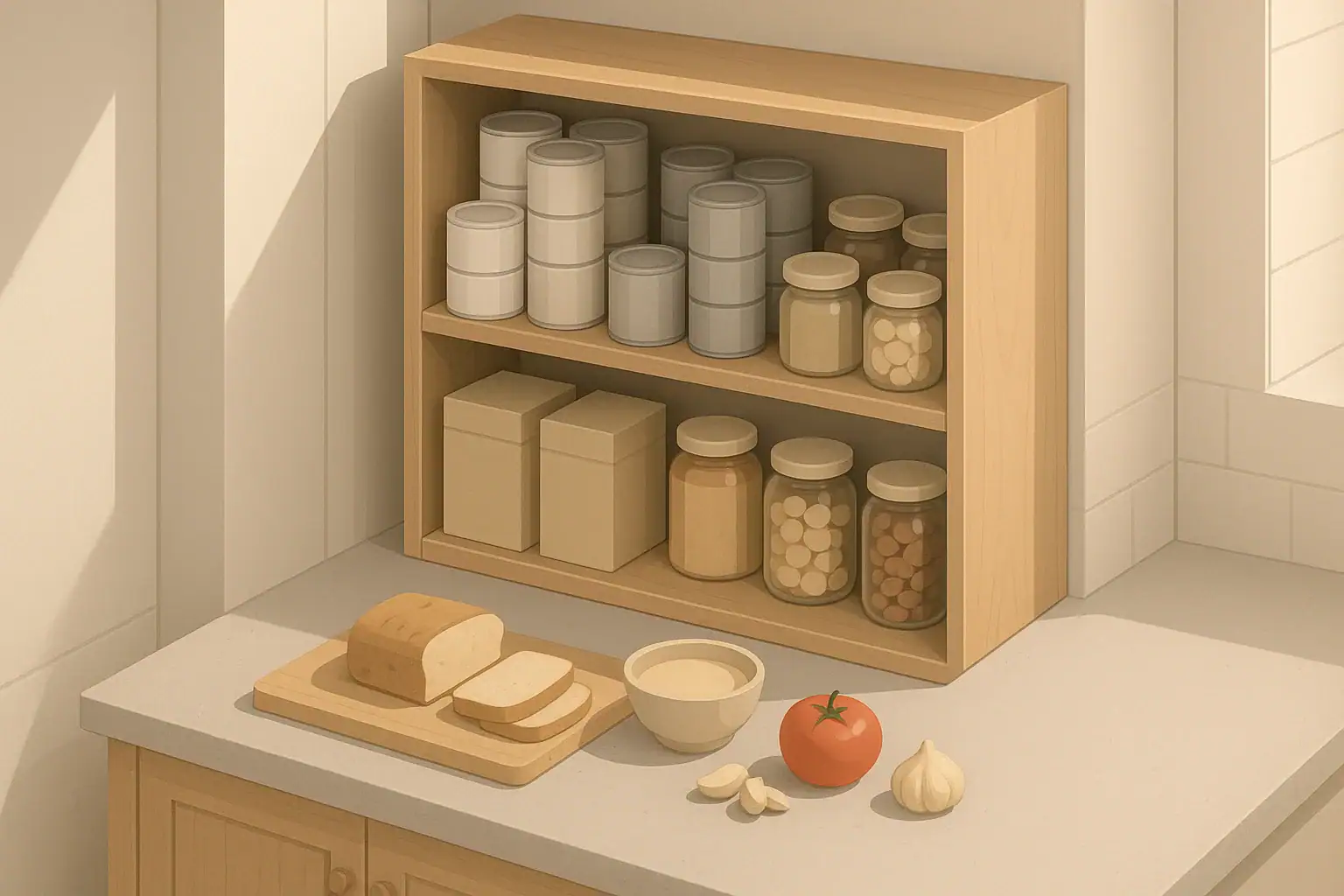
A 7-day pantry gives you a solid buffer for many short disruptions, like brief power outages, local water issues, or a winter storm that slows deliveries. Extending that basic setup to a 14-day pantry adds comfort, flexibility, and fewer last-minute errands when conditions are uncertain.
A 14-day pantry does not have to be extreme or expensive. It mostly involves:
- Doubling up on the shelf-stable foods you already use
- Adding a few no-cook options in case cooking is difficult
- Planning simple meals that match your household’s usual tastes
- Making it workable for your living situation (apartment, house, roommates, kids, pets, or seniors)
This article assumes you already have a basic 7-day pantry built around simple staples: shelf-stable meals, some snacks, and a few comfort items. The next step is to make that setup easier to live with for a full two weeks.
Why Extend From 7 Days to 14 Days?
A 7-day pantry gives you a solid buffer for many short disruptions, like brief power outages, local water issues, or a winter storm that slows deliveries. Extending that basic setup to a 14-day pantry adds comfort, flexibility, and fewer last-minute errands when conditions are uncertain.
A 14-day pantry does not have to be extreme or expensive. It mostly involves:
- Doubling up on the shelf-stable foods you already use
- Adding a few no-cook options in case cooking is difficult
- Planning simple meals that match your household’s usual tastes
- Making it workable for your living situation (apartment, house, roommates, kids, pets, or seniors)
This article assumes you already have a basic 7-day pantry built around simple staples: shelf-stable meals, some snacks, and a few comfort items. The next step is to make that setup easier to live with for a full two weeks.
Step 1: Review Your Existing 7-Day Pantry
Before you add more food, take stock of what you already have. A quick review helps you avoid buying items you will not eat and shows where your current plan might feel thin if you had to rely on it for 14 days.
Check What You Actually Eat
Look at your 7-day basics and compare them to your typical weekly meals. Ask:
- Are these foods familiar? Emergency weeks are not ideal for experimenting with completely new flavors.
- Is there enough variety? Eating the exact same meal every day can get tiring by day five.
- Are there options for everyone? Consider kids, older adults, and anyone with food allergies.
Note Gaps for Special Situations
Certain needs often get overlooked in a basic week of food:
- Babies and toddlers: Formula, baby food pouches, plain cereals.
- Seniors: Softer foods that are easy to chew and digest.
- Pets: Enough pet food for 14 days, not just the humans.
- Dietary limits: Gluten-free, low-sodium, or other restrictions.
Once you see these gaps, you can expand to 14 days with more purpose instead of just “buying extra.”
Example values for illustration.
| If you notice this | Then consider adding | Why it matters |
|---|---|---|
| Meals depend mostly on the fridge or freezer | More canned, boxed, and dry meals | Keeps you fed if power is out or shopping is limited |
| Same meal repeated more than three days in a row | Alternate sauces, grains, or fillings | Prevents “menu fatigue” over 14 days |
| Few or no snacks | Nuts, crackers, shelf-stable bars | Helps with energy dips and kids’ routines |
| Not many no-cook foods | Ready-to-eat items in cans or pouches | Covers days when cooking is hard or unsafe |
| No items tailored to kids or seniors | Softer, milder foods and familiar favorites | Makes two weeks less stressful for vulnerable family members |
| Pet food nearly empty near refill time | Spare bag or cans of pet food | Ensures animals are covered for the full period |
Step 2: Build Out 14 Days of Simple Meals
With your current pantry reviewed, you can turn it into a 14-day meal plan instead of a random collection of cans and boxes. Aim for simplicity: meals you could prepare with limited power and dishes.
Plan Core Meal Types
For two weeks, most households do well with:
- Breakfast: 1–3 easy options you rotate.
- Lunch: Lighter but filling meals that can be cold if needed.
- Dinner: Warm, comforting meals when cooking is possible, plus a backup no-cook option.
Think in “building blocks” you can mix and match:
- Grains and starches: Rice, pasta, instant grains, shelf-stable tortillas, crackers.
- Proteins: Canned beans, fish, poultry, meats, nut butters, shelf-stable tofu or plant proteins.
- Vegetables and fruit: Canned or jarred vegetables, tomato products, fruit packed in juice.
- Flavor helpers: Broths, spices, shelf-stable sauces, oil, vinegar.
Example 14-Day Meal Framework
You do not need a rigid calendar, but a loose framework makes shopping easier. For example (adjust for household size):
- Breakfast (14 days):
- Oatmeal or cereal with shelf-stable milk or dry milk.
- Nut butter on crackers or bread alternatives.
- Fruit cups or applesauce for variety.
- Lunch (14 days):
- Canned soup or chili with crackers.
- Beans with rice and a simple seasoning.
- Canned fish or poultry mixed with shelf-stable grains.
- Dinner (14 days):
- Pasta with canned tomatoes and seasoning.
- Rice with canned beans and vegetables.
- Ready-made shelf-stable meals that only need heating.
- On a few nights, no-cook meals such as canned beans, tuna, and crackers if cooking is limited.
This does not have to be perfect. The goal is to have enough combinations that you are not eating the same bowl of soup for 10 straight days.
Step 3: No-Cook and Low-Cook Backups
Many short-term disruptions involve power or gas issues: storms, heatwaves, or local grid work. Your 14-day pantry should work even if you temporarily lose your main cooking method.
Good No-Cook Pantry Items
Consider keeping at least a few days’ worth of foods that can be eaten straight from the package or with only hot tap water if available:
- Canned beans and lentils (rinsed if possible)
- Canned fish, chicken, or other meats
- Ready-to-eat soups, stews, and chili that are still safe at room temperature
- Nut butters and shelf-stable spreads
- Crackers, rice cakes, and shelf-stable flatbreads
- Granola, cereal, and instant oats that can be eaten with water or dry if needed
- Fruit cups, canned fruit in juice, and applesauce
Low-Cook Options for Limited Power
If you have a small backup cooking source that is safe for your space (for example, a camp stove used outdoors and away from openings, or a small electric appliance on backup power), low-cook meals can make 14 days more comfortable.
Focus on foods that:
- Cook quickly (instant grains, thin pasta)
- Use minimal water and dishes
- Can be prepared in one pot or pan
Store a note in your pantry with a few “one-pot” ideas so you are not trying to invent recipes during a stressful moment.
Step 4: Space-Smart Storage for Apartments and Small Homes
A 14-day pantry can work even in a studio apartment if you are intentional. You do not need a separate room or a towering shelf; you need compact, dense calories and thoughtful organization.
Use Vertical and Hidden Spaces
Some common spots for extra food storage include:
- Top shelves of clothing closets (in closed bins to keep things neat)
- Under beds, using shallow, labeled storage containers
- On top of kitchen cabinets if there is clearance
- Behind items in deep cabinets, with the least-used foods at the very back
In rented spaces, avoid permanent fixtures. Stackable bins or crates can create a “virtual pantry” that moves with you.
Choose Compact Foods
For tight spaces, prioritize items that pack a lot of meals into small containers:
- Dry grains and pasta over bulky chips or individually oversized packaging
- Canned goods that you actually use in regular cooking
- Shelf-stable milk in compact cartons
- Condensed or concentrated products when you are comfortable using them
Balance compactness with practicality. If a large, heavy container will be hard to handle, smaller packages may be safer even if they take a bit more room.
Step 5: Snacks, Comfort Foods, and Morale Boosters
Living through 14 days of disruption can be tiring even when everyone is safe. Familiar foods and small treats can make the situation feel more manageable, especially for children.
Plan Simple Snacks
Snacks are more than extras; they help keep energy and routines steady. Consider:
- Crackers, pretzels, and popcorn kernels (if you have a way to pop them)
- Nuts and seeds
- Shelf-stable snack bars or granola bars
- Dried fruit or trail mixes
- Plain cookies or simple sweet snacks
Comfort Items for Kids and Adults
Include small amounts of foods that signal “normal life” to your household:
- Hot cocoa mix or tea bags
- Instant coffee if that is part of your usual day
- A favorite sauce or seasoning blend
- Special snacks tied to movie nights or family games
Store these with your regular pantry so they get used and replaced, rather than forgotten until they expire.
Step 6: Pantry Readiness for Different Households
How you expand to 14 days will depend on who lives with you and where you live. The goal is to build around your actual daily life, not an idealized version.
Families With Children
For kids, change and uncertainty can be harder than for adults. Your pantry can support stable routines:
- Keep at least one familiar breakfast and one dinner that resemble “normal” meals.
- Include kid-friendly snacks and fruit options.
- Think about easy-to-hold foods for younger children (soft crackers, mild canned vegetables, simple pasta).
Older Adults and Limited Mobility
For seniors or anyone with mobility or chewing difficulties:
- Favor softer foods: soups, stews, canned vegetables, soft fruits, and well-cooked grains.
- Store heavier items at waist height to reduce lifting.
- Use clear labeling so items are easy to find.
Roommates and Multi-Unit Buildings
In apartments, condos, or shared housing:
- Coordinate so each person keeps a personal 3–5 day backup, then share a larger 14-day common pantry if that works for your group.
- Label shared versus personal items to avoid confusion when stress is higher.
- Be realistic about fridge and freezer space; base your 14-day plan mainly on shelf-stable foods.
Step 7: Water, Cooking, and Safety Basics
A 14-day pantry is most useful when you also consider water and safe cooking. Food and water planning usually go together.
Water for Cooking and Cleaning
Even if tap water remains available, disruptions can affect quality or pressure. When building your 14-day pantry, think about:
- Having enough drinking water stored for your household according to general guidance you are comfortable with.
- Setting aside extra for cooking simple meals (rice, pasta, soups).
- Keeping some foods that require little or no water in case supplies are tight.
Safe Cooking During Outages
If you plan to use any backup stove or grill, take safety seriously:
- Never use outdoor-only stoves or grills indoors or in enclosed spaces.
- Keep combustion devices away from windows and doors where fumes could flow inside.
- Have a plan for ventilation and heat if using any fuel-burning device.
Where possible, pair your 14-day pantry with at least one safe, low-fuss cooking option that matches your home type (apartment versus house) and local rules.
Example values for illustration.
| Food type | Storage tip | Rotation interval idea | No-cook use |
|---|---|---|---|
| Canned beans | Store in a cool, dry cabinet | Use and replace every few months | Rinse and eat with crackers or vegetables |
| Canned vegetables | Keep labels visible and group by type | Rotate into regular meals several times per year | Serve as a side dish from the can |
| Pasta and dry grains | Use sealed containers to deter pests | Cook from the oldest package first | Soak some grains if cooking is limited |
| Nut butters | Store upright; stir if separated | Replace as part of normal grocery cycles | Spread on crackers or bread alternatives |
| Canned fruit | Choose fruit packed in juice when possible | Serve as dessert weekly to keep it fresh | Eat straight from the can or cup |
| Ready-to-eat soups | Group by flavor for quick meal decisions | Use periodically for quick lunches | Eat at room temperature if needed |
Step 8: Rotate and Maintain Your 14-Day Pantry
Once your 14-day pantry is in place, light maintenance keeps it ready without much extra effort.
Use What You Store
Instead of a separate “emergency stash,” treat your 14-day pantry as a deeper version of your normal pantry:
- Place newer items at the back and older items in front.
- Cook with older cans and boxes first, replacing them on your next normal shopping trip.
- Set a simple reminder a few times a year to skim expiration or best-by dates.
Adjust With the Seasons
Your needs may change with the time of year and local risks:
- In winter storm season, you might emphasize no-cook and low-cook foods in case of power issues.
- For hot-weather disruptions, lighter meals and extra hydration options can be more comfortable.
- If your household size changes, update portions so 14 days still means 14 days for everyone.
By expanding thoughtfully from a 7-day base to a balanced 14-day pantry and keeping it in regular use, you create a quiet safety net that fits into everyday life rather than sitting on a shelf “just in case.”
Authoritative sources
Safety recommendations can change. Confirm critical details with current official guidance and local authorities.
- CDC: Carbon Monoxide Poisoning Basics
- US EPA: Emergency Disinfection of Drinking Water
- USDA FSIS: Keep Food Safe During Emergencies
Frequently asked questions
How much water should I store for a 14-day pantry plan?
A common baseline is to store at least 1 gallon (about 4 liters) of water per person per day to cover drinking and minimal cooking and hygiene, which works out to roughly 14 gallons per person for a 14-day period. Increase quantities for hot weather, breastfeeding, young children, medical needs, or pets, and keep extra water specifically for cooking and cleaning if space allows.
Which no-cook proteins are most practical for a 14-day pantry plan?
Practical no-cook proteins include canned fish and poultry, canned beans and lentils, nut butters, shelf-stable plant-protein pouches, and ready-to-eat protein bars or meals. These options provide variety and balanced nutrition without heating and can be mixed with grains, crackers, or canned vegetables for fuller meals.
How can I rotate my 14-day pantry so items don’t go to waste?
Use a first-in, first-out approach by placing newly purchased items behind older ones, label or date packages when you buy them, and intentionally cook with older emergency items during normal meal planning. Set calendar reminders a few times a year to check expiration dates and replace used items so your 14-day plan stays fresh.
What are space-smart food choices for building a 14-day pantry in a small apartment?
Prioritize compact, calorie-dense essentials like dry grains, pasta, canned proteins, concentrated sauces, and small cartons of shelf-stable milk, and use stackable bins, top-of-closet shelves, or under-bed containers for storage. Choose multi-use ingredients and pre-portion supplies to maximize limited space while keeping meals varied for two weeks.
What special items should families with infants or seniors include in a 14-day pantry plan?
Families with infants should store extra formula, baby food pouches, plain cereals, and any feeding accessories needed, while seniors may require softer foods, low-sodium choices, and items that need minimal preparation. Also account for prescription medications, mobility considerations by storing heavy items at waist height, and any special diets when planning two weeks of supplies.
- Simple checklists and realistic planning
- Water, power, lighting, and pantry basics
- Family plans (kids, pets, seniors) and seasonal prep
Affiliate disclosure
As an Amazon Associate, we earn from qualifying purchases. Some links on this site may be affiliate links. If you buy through these links, we may earn a small commission at no extra cost to you. This helps support our content. Learn more.