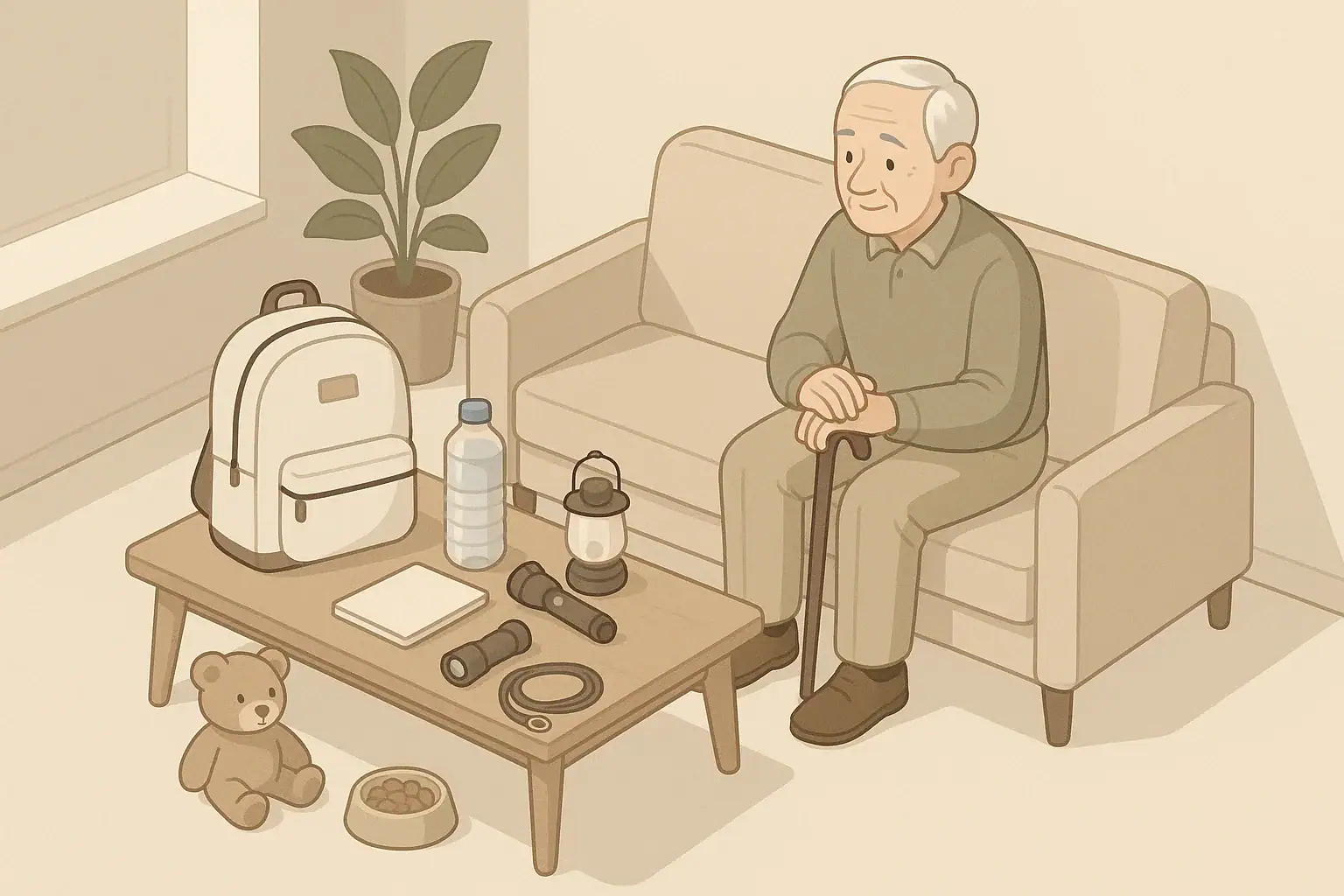
Why Seniors Need a Simple, Practical Emergency Plan
Emergencies like short power outages, winter storms, or heatwaves can be more challenging for older adults. Limited mobility, medication schedules, and assistive devices all add extra considerations. A calm, realistic plan helps seniors stay safer and more comfortable, whether they live alone, with family, or in a shared building.
This guide focuses on three basics for seniors in the United States:
- Mobility: moving safely at home and, if needed, leaving the building
- Power: keeping essential devices running during short outages
- Communication: staying in touch with family, neighbors, and emergency services
The goal is practical home readiness, not extreme scenarios. Most of these steps can be done gradually and adapted for apartments, houses, and small spaces.
Mobility Planning: Moving Safely During an Emergency
Mobility planning starts with an honest look at how a senior moves on a typical day, then asking what would change in the dark, on stairs, or if elevators stop working. The plan should be specific to the person and the home.
Assess Daily Mobility Needs
Begin with a simple checklist of current needs and supports:
- Does the person use a cane, walker, or wheelchair?
- Can they manage stairs, or do they rely on an elevator or ramp?
- Do they get out of bed or a chair independently, or need help?
- How well do they see in low light?
This assessment helps decide whether the main focus is making it safer to stay in place, or planning assisted evacuation if authorities request people to leave.
Make the Home Easier to Move Around
Small changes can greatly reduce fall risk during stressful moments like a late-night power outage.
- Clear pathways: Keep floors free of clutter, cords, and loose rugs along routes to the bathroom, kitchen, and front door.
- Sturdy support: Install handrails on stairs and grab bars near toilets and in showers where allowed.
- Stable seating: Use chairs with arms and firm seats that are easier to get out of.
- Bedside setup: Keep a flashlight, glasses, and mobility aids within arm’s reach of the bed.
Plan for Power Loss in Multi-Story Buildings
For seniors in apartments or condos, elevators stopping is a common concern during outages or after storms.
- Know the options: Ask building management what the plan is if elevators are out and a resident cannot use stairs.
- Identify safe areas: Plan where to wait safely if leaving the unit is necessary but stairs are difficult.
- Neighbor check-ins: Arrange with at least one neighbor on the same floor to knock or call during outages or alarms.
Decide When to Stay and When to Go
For many short-term events, staying at home is safer and more comfortable for seniors, especially if they use mobility aids. The plan should outline:
- Stay-at-home triggers: Minor power outages, brief water disruptions, or short weather alerts.
- Consider-leaving triggers: Mandatory evacuation orders, building damage, or extended outages affecting medical or mobility equipment.
Family or caregivers should discuss these scenarios calmly ahead of time, so decisions are easier when they need to be made quickly.
Example values for illustration.
| Task | Why it matters | Notes |
|---|---|---|
| Clear main walking paths | Reduces trips and falls during low light or stress | Focus on bedroom to bathroom and front door routes |
| Place flashlight by bed | Immediate light for safe standing and walking | Check batteries a few times per year |
| Label or map exits | Helps seniors and helpers find quickest safe way out | Walk the route together during daylight |
| Confirm elevator outage plan | Avoids last-minute confusion in multi-story buildings | Ask management about procedures and contacts |
| Identify safe waiting spots | Provides a stable place if stairs are not possible | Could be hallway, stair landing, or lobby as allowed |
| Share mobility needs with neighbors | Ensures others know who may need extra assistance | Exchange phone numbers with at least one neighbor |
Power Basics for Seniors: Outages and Essential Devices
Many seniors rely on powered devices, from simple lamps and phones to mobility or medical-related equipment. While detailed medical power planning should be done with healthcare providers, families can still create basic backup plans for everyday needs.
List Devices That Truly Matter
Start with a short list of what needs power first during an outage:
- Lighting: bedside lamp, hallway light, bathroom light
- Communication: phone, basic radio
- Mobility or comfort: powered recliner, bed controls, or lift (if used)
- Temperature comfort aids: small fan in heat, extra blankets in cold
For electrically powered medical devices, ask the healthcare team about their specific emergency guidance, including how long they can be safely off and whether alternative arrangements are needed.
Plan for Short-Term Power Outages
Many outages in towns and cities last a few hours to a day. Simple, low-maintenance options can help seniors remain more comfortable during that time.
- Non-electric lighting: Keep battery-powered flashlights or lanterns in easy-to-reach spots.
- Phone charging: A small battery bank can keep a phone working for calls and texts.
- Warmth and cooling: Place extra blankets, socks, and light clothing layers where they are easy to find. In hot regions, plan for window shades or curtains to block sun.
- Easy-to-open food: Store some shelf-stable foods that do not require heating or complex preparation.
Backup Power: Simple Concepts for Seniors and Caregivers
Backup power planning does not have to be technical. A few basic concepts help families make calm choices:
- Runtime: How long a battery or power source can run a device before needing a recharge.
- Charging options: Wall outlets, car outlets, or small solar panels (where practical).
- Priorities: Power communication and lighting first, then comfort devices.
Caregivers can label important plugs, keep cords untangled, and show seniors how to use simple backup devices safely. Avoid overloading outlets or using improvised wiring, which can create fire risks.
Refrigeration and Medications
Some medications need to stay within specific temperature ranges. For seniors with these needs:
- Ask the pharmacist or healthcare provider how long the medication can be at room temperature.
- Keep medications together in one easy-to-find container.
- Note any special storage instructions in the emergency contact sheet.
If an outage is expected to be long, families may need to coordinate with healthcare providers or local resources for safe storage options.
Communication Basics: Staying Connected and Informed
Clear communication can reduce confusion and stress for seniors and their families. The goal is a simple, written plan that works whether cellphone service is strong or spotty.
Build a Simple Contact List
Every senior should have an easy-to-read contact list stored in at least two places:
- Printed copy near the phone or on the refrigerator
- Copy in a wallet, purse, or go-bag
Include:
- Primary family contacts
- At least one out-of-town contact
- Local neighbor or building manager
- Healthcare provider offices (general numbers)
Use large print and simple labels, such as “Daughter,” “Neighbor,” or “Doctor.”
Decide How You Will Check In
Set a routine for check-ins during storms, heatwaves, or news of local disruptions:
- Before: Family or caregivers call to confirm the senior has water, food, and basic supplies.
- During: Agree on how often to check in (for example, twice a day) if phones are working.
- If phones are out: Decide which neighbor or building contact will knock on the door.
This routine can be written on the same sheet as the contact list so everyone knows the plan.
Keep Information Easy to Understand
Stress can make details hard to remember. Simple steps help seniors follow the plan even when they feel overwhelmed:
- Write instructions in short sentences.
- Use large, clear handwriting or large printed type.
- Store all emergency notes in one visible folder or envelope.
review the plan with the senior to keep it fresh and adjust it as needs change.
Alerts and Local Information
Some communities offer local alert systems for severe weather or urgent notices. Caregivers can sign up and then relay important information to seniors in a calm way. A basic battery-powered radio can also provide regional updates when internet and cable are out.
Planning for Pets in Senior Households
Many seniors share their home with a pet. Including pets in the plan can prevent last-minute scrambling and ensure both the person and animal stay more comfortable.
Pet Supplies and Mobility
Consider how easy it is for the senior to care for the pet during disruptions:
- Keep leashes, carriers, and harnesses where they can be reached without bending or climbing.
- Store a small supply of pet food and any simple grooming items in a single container.
- For larger pets, plan who can help with walks if stairs or ice are a concern.
Backup Caregivers for Pets
Identify at least one person who can take temporary care of the pet if the senior needs to stay elsewhere or cannot safely manage daily pet tasks for a short time. Add that person’s contact information to the main emergency contact list.
Go-Bags vs Stay-at-Home Kits for Seniors
Not all emergencies require leaving home. For many short-term situations, it is safer and simpler for seniors to stay where they are. Planning for both possibilities keeps options open.
Stay-at-Home Kit Basics
A stay-at-home kit is a small collection of items stored where the senior spends most of their time, often the living room or bedroom. Useful items include:
- Bottled water and simple no-cook foods
- Flashlight or battery lantern
- Extra batteries, stored dry and separate from devices
- Printed contact list and written emergency plan
- Copies of key documents in a sealed envelope or folder
- Basic hygiene items, such as wipes and tissues
Keep the kit easy to open and light enough for the senior to move if needed.
Simple Go-Bag for Seniors
A go-bag is useful if authorities ask people to leave, or if family chooses to bring a senior to another home for comfort during longer disruptions. For seniors, a go-bag should focus on:
- Comfortable clothing and sturdy shoes
- Basic toiletries and personal items
- Copies of identification and a list of medications
- Contact list and any care instructions
- Small snacks and a water bottle (refillable where possible)
- Small, familiar items like a sweater or simple keepsake, to ease anxiety
Keep the bag in a consistent spot, such as a closet near the front door or at the end of the bed. Family or caregivers can help update it seasonally (warmer layers in winter, lighter items in summer).
Example values for illustration.
| Food type | Storage tip | Rotation interval idea | No-cook use |
|---|---|---|---|
| Canned soups | Store together at eye level if possible | Use and replace every few months | Can be eaten at room temperature if needed |
| Canned beans | Rinse before eating when water is available | Check dates during seasonal cleanups | Add to salads or eat directly from can |
| Peanut butter or similar spreads | Keep near crackers or bread | Replace when opened containers are nearly empty | Spread on dry bread or plain crackers |
| Shelf-stable milk or alternatives | Store upright in a cool, dry cabinet | Rotate into regular use monthly | Drink directly or mix with cereal |
| Ready-to-eat breakfast cereal | Seal bags tightly after opening | Use within a few weeks of opening | Eat dry as a snack if no milk |
| Granola or snack bars | Keep in a visible basket or box | Check dates once or twice a year | Quick snack for energy without cooking |
Keeping the Plan Manageable and Up to Date
An emergency plan for seniors works best when it feels simple and familiar, not overwhelming. Families and caregivers can support seniors by:
- Reviewing the plan once or twice a year, or after any major life change
- Practicing small parts of the plan, like finding flashlights or reading the contact sheet
- Updating phone numbers and addresses when they change
- Adjusting supplies if medications, mobility needs, or living arrangements change
Written, calm plans help seniors stay oriented and give families confidence that basic needs—mobility, power, and communication—have been thoughtfully covered for everyday emergencies.
Related guides: Dietary Needs in Emergency Planning: A Safe Checklist for Families · Extension Cords and Power Strips During Outages: Safe Use Tips.
Authoritative sources
Safety recommendations can change. Confirm critical details with current official guidance and local authorities.
- USDA FSIS: Keep Food Safe During Emergencies
- U.S. CPSC: Battery Safety
- CDC: Guidelines for Cleaning Safely After a Disaster
Frequently asked questions
How can a senior safely plan for elevator outages in an apartment building?
Ask building management about their outage procedures and identify safe waiting areas such as lobbies or stair landings. Arrange at least one same-floor neighbor to check in during outages and record building contacts and mobility needs on the emergency contact sheet so helpers know how to assist.
Which devices should be prioritized for backup power during short outages?
Prioritize lighting and communication devices (phone or battery radio) first, followed by mobility or daily comfort devices like bed controls. For electrically powered medical equipment, consult the healthcare provider about safe runtime and specific backup recommendations.
How should medications that require refrigeration be handled during a power outage?
Ask the pharmacist how long each medication can be kept at room temperature and note those limits on the emergency information sheet. Keep refrigerated medications together in an insulated container and contact healthcare providers or local resources if an outage is expected to be prolonged.
What should a simple stay-at-home kit for seniors contain?
A basic kit should include bottled water, easy no-cook foods, a flashlight or battery lantern with spare batteries, a printed contact list, copies of key documents, basic hygiene items, and any essential medications. Keep the kit easy to open and store it where the senior spends most of their time.
How can caregivers set up an effective check-in routine during severe weather?
Agree on a clear schedule (for example, once in the morning and once in the evening), write it on the contact sheet, and specify who will call and who will do in-person checks if phones fail. Include an out-of-town contact and define triggers for extra checks so everyone knows when to act quickly.
- Simple checklists and realistic planning
- Water, power, lighting, and pantry basics
- Family plans (kids, pets, seniors) and seasonal prep
Affiliate disclosure
As an Amazon Associate, we earn from qualifying purchases. Some links on this site may be affiliate links. If you buy through these links, we may earn a small commission at no extra cost to you. This helps support our content. Learn more.