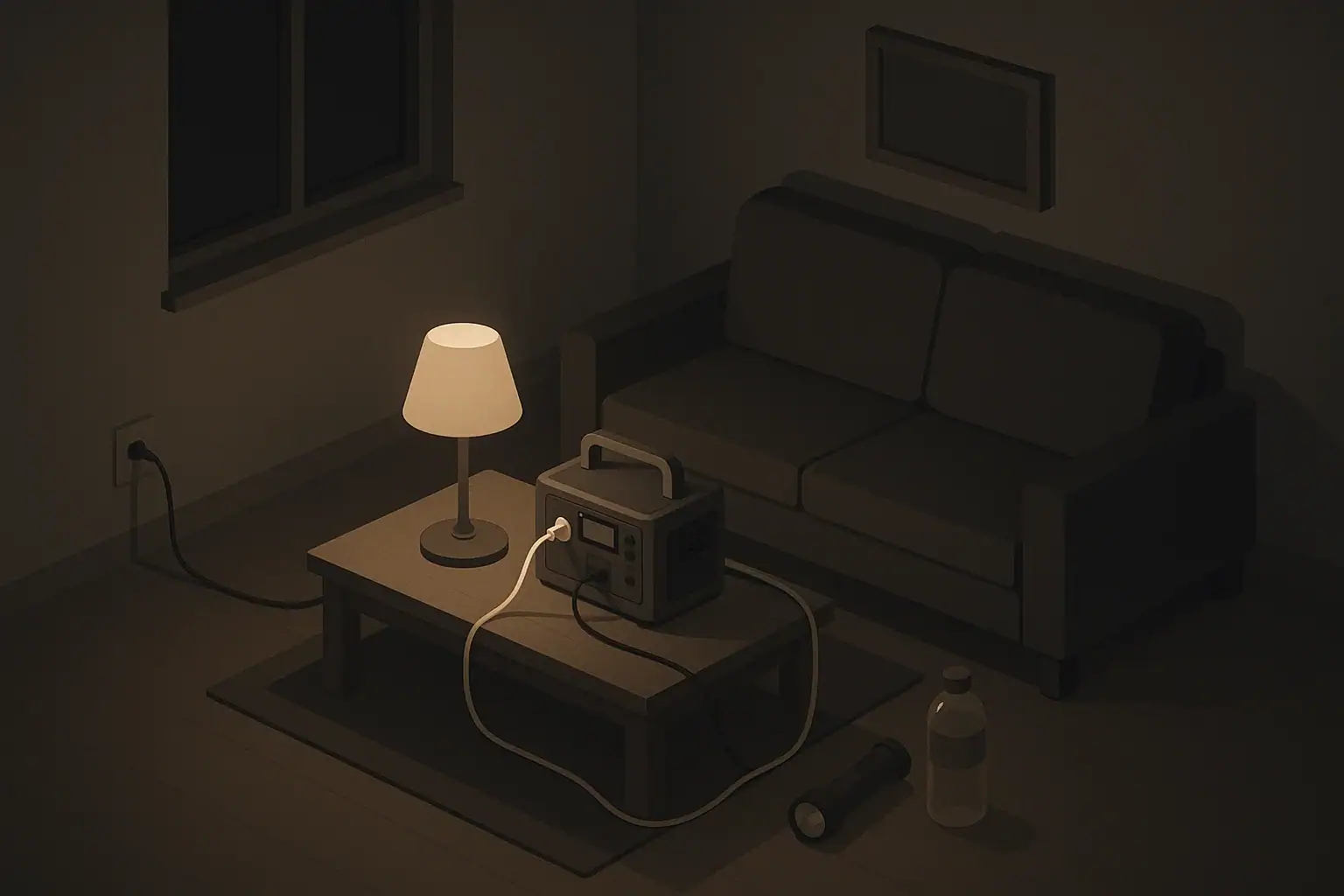
Why Extension Cord Gauge Matters in Emergencies
When the power goes out, an extension cord can be more than a convenience. It can be a safe way to reach a generator, a small backup power station, or an outlet that still works in part of your home. In these moments, the thickness of the cord's wire — its gauge — matters for both safety and reliability.
Using a cord that is too thin for the load can lead to:
- Overheating along the cord
- Tripped breakers or blown fuses
- Voltage drop that makes devices run poorly or shut off
During an emergency, you are likely powering essential items: a refrigerator, space heater, phone chargers, medical devices (per your professional guidance), fans, or lights. Choosing the right gauge helps those items run as they should and keeps heat buildup in check.
This guide focuses on simple, practical choices for typical households in the United States, including apartments, small homes, and rentals. It assumes 120-volt household circuits and short-term situations like storms, heatwaves, or localized power disruptions.
Understanding Wire Gauge and Amps in Plain Language
Extension cord gauge is labeled with a number such as 16, 14, 12, or 10. This is called AWG (American Wire Gauge). The smaller the number, the thicker the wire and the more current it can safely carry over a distance.
In emergencies, three things matter most:
- Gauge (AWG): How thick the copper conductors are.
- Length: Longer cords have more resistance and more voltage drop.
- Load: How many watts or amps your devices draw in total.
Gauge basics for common home use
For most short-term emergency use in a typical home:
- 16 AWG: Light-duty, short cords for small loads like phone chargers and a few LED lamps.
- 14 AWG: Medium-duty, suitable for moderate loads like a small window fan or a few small devices together.
- 12 AWG: Heavy-duty, better for higher current items like a refrigerator or a portable space heater (used carefully and one at a time on a circuit).
These are general examples, not official limits. Always read the rating printed on the cord and match it to the device ratings and the circuit capacity.
How amps and watts fit in
Household extension cords and devices are often labeled with amps (A) or watts (W). In the United States, most standard outlets supply about 120 volts. As an approximate guide:
- Watts = Volts × Amps.
- At 120 V, a 600-watt load is roughly 5 amps (600 ÷ 120).
- A 1,200-watt load is roughly 10 amps.
Knowing this helps you add up the total demand on a single cord or circuit, especially when several devices are plugged into one extension cord or power strip.
Example values for illustration.
| Scenario | Typical total load (example watts) | Suggested cord gauge | Approximate length idea | Notes |
|---|---|---|---|---|
| Phone charging and small LED lamp | Under 150 W | 16 AWG | Up to about 25 ft | Light duty; avoid daisy-chaining cords. |
| Small fan or laptop plus light | 150–400 W | 16–14 AWG | Up to about 50 ft | Use 14 AWG if close to upper range. |
| Refrigerator only | 500–800 W starting surge | 14–12 AWG | Prefer 25–50 ft | Use heavy-duty, grounded cord. |
| Portable space heater (one unit) | 1,000–1,500 W | 12 AWG | As short as practical | Use only on dedicated circuit where possible. |
| Connecting to outdoor generator | Up to several small loads | 12 AWG | 50 ft or less | Use cord rated for outdoor use and load. |
| Multiple phone chargers, radio, LED lights | Under 300 W | 16–14 AWG | 25–50 ft | Keep well under cord rating; feel for warmth. |
Matching Extension Cord Gauge to Real-World Emergency Uses
Different emergencies call for different loads. A winter storm may have you running a space heater in one room. A summer power outage might focus on a fan, phone charging, and a small fridge or cooler. Thinking through your likely needs ahead of time helps you choose cord gauges that make sense for your home.
Light-duty cords for small electronics
For many apartment dwellers and small households, the most realistic emergency power plan is modest: keeping phones charged, running a small radio, and powering a few efficient lamps. For these uses:
- A short 16 AWG cord can be adequate if it is kept under its rated amps.
- Use it only for low-wattage items like phone chargers, tablets, and LED lights.
- Avoid plugging space heaters, large appliances, or power tools into a light-duty cord.
Medium-duty cords for fans and small appliances
During a heatwave or after a storm, moving air can be the difference between an uncomfortable room and an unsafe one, especially for older adults or those with mobility challenges. For items like:
- Window or box fans
- Small dehumidifiers
- Basic countertop appliances like a small coffee maker (used briefly)
a 14 AWG cord is often a better choice than 16 AWG. It can handle higher currents with less voltage drop, especially if the cord needs to run 25 to 50 feet from a working outlet or generator to where you are sheltering in place.
Heavy-duty cords for higher loads
Certain emergency loads draw significantly more power and call for a heavy-duty extension cord:
- Refrigerators or freezers you want to keep running during an outage
- Portable space heaters used to warm a single room in a winter storm
- Portable air conditioners or high-draw tools for short repair tasks
For these higher-current devices, a 12 AWG cord is often recommended, used as short as practical while still being long enough to route safely. Always check:
- The amp or watt rating printed on the device's label
- The amp rating printed on the cord
- The breaker size of the circuit you are plugging into (often 15 or 20 amps in homes)
Aim to stay comfortably below the smallest rating among these three, rather than pushing to the limit.
Special note for renters and small spaces
If you are in an apartment or rental where you cannot make electrical modifications, extension cords may be one of your few options for flexible emergency power. In these cases:
- Own at least one heavy-duty, grounded 12 AWG extension cord that can reach from a safe power source to your main living space.
- Label it (for your own reference) as your "emergency cord" and store it with your blackout supplies.
- Keep at least one shorter, lighter cord for small indoor devices.
Safety Rules for Using Extension Cords in an Outage
The right gauge is just one part of safe extension cord use. How you run and load the cord matters just as much, especially when everyone is moving around in a dark space or in a crowded small home.
Check ratings, condition, and markings
Before relying on a cord during an emergency, inspect it during calm times:
- Look for damage: Cracked insulation, exposed copper, bent blades, or loose plugs are reasons to retire a cord.
- Find the ratings: Most cords have printing along the jacket showing AWG, indoor or outdoor rating, and maximum amps.
- Prefer grounded cords (three-prong) for most emergency loads, especially appliances and heaters.
Avoid overheating and overloading
During use, periodically check for heat and signs of stress:
- Feel the cord along its length with the back of your hand. It may be slightly warm under load, but it should not feel hot.
- Do not coil extra cord tightly. Loosely lay it out to allow heat to dissipate.
- Avoid running several high-wattage appliances on one cord or one outlet.
- If a breaker trips, reduce the load before resetting; do not just reset repeatedly.
Use cords only as a temporary solution
Extension cords are meant for temporary use, not as permanent wiring. In an emergency, that may mean:
- Using them for the duration of the outage or specific task.
- Unplugging and storing them once normal power returns.
- Not routing them through walls, ceilings, or under doors that might pinch the cord.
Reduce tripping and water hazards
In low light or crowded rooms, extension cords can become trip hazards.
- Run cords along walls instead of across walking paths whenever possible.
- Use simple, non-damaging methods to keep them in place, like gently tucking behind furniture.
- Keep cords away from standing water, leaks, or damp basement floors.
- Unplug from the outlet first, then from the device, when disconnecting.
Connecting Extension Cords to Generators and Backup Power
Many households rely on small portable generators or compact power stations to get through a blackout. Extension cord gauge becomes especially important in these setups, because the cord may be the single path between your power source and several key devices.
Portable generators outside, cords inside
Portable generators must stay outdoors, away from windows, doors, and vents. That often means running a cord from the generator through a window or suitable opening into the home. For this situation:
- Use a heavy-duty, outdoor-rated 12 AWG cord.
- Keep the cord as short as practical while keeping the generator safely placed.
- Protect the opening from rain and drafts as best you can without crushing the cord.
- Plug only essential loads into this cord, and consider using a small power strip rated for the load to distribute power safely.
Small power stations and indoor loads
Compact battery-based power units are often used indoors to run phones, small fans, lights, and sometimes a compact refrigerator. For these:
- Follow the unit's output rating and do not exceed its maximum watts.
- A 14 or 16 AWG cord may be sufficient for small total loads and short distances.
- For a higher load single appliance, use a sturdier 12 AWG cord.
Because these devices have limited capacity, it is helpful to prioritize what you plug in and how long you run each item instead of trying to power the whole home.
Never backfeed a home through an outlet
One unsafe practice is plugging a generator into a household outlet to energize a home's wiring. This is dangerous for utility workers and can damage your home's electrical system. Avoid any setup that sends power "backwards" into household wiring through extension cords or improvised connections.
Planning a Simple Extension Cord Kit for Home Readiness
As part of your overall home readiness plan, it helps to think of extension cords and power strips as part of your "infrastructure" kit, just like water containers and flashlights. You do not need a large collection, but a small, thought-out set can make a big difference during a blackout.
Core pieces for most households
Consider assembling a small extension cord kit that lives with your blackout supplies. It might include:
- One short 16 AWG indoor cord (around 10–15 ft) for phones and lamps.
- One medium 14 AWG cord (around 25–50 ft) for fans and general use.
- One heavy-duty 12 AWG outdoor-rated cord (around 25–50 ft) for a refrigerator or connection to a generator.
- One quality power strip with a switch and built-in overload protection, rated for the expected loads.
Label them clearly for quick identification in low light. Store them coiled neatly in a breathable bag or bin, away from moisture and direct sunlight.
Apartment, house, and multi-story considerations
Your housing type influences how long your cords should be and where they should reach from:
- Small apartments: Shorter cords may be enough to reach from a hallway outlet or power station to your main shelter-in-place room.
- Larger homes: You may want one longer heavy-duty cord that can run from a garage or back porch to a central room.
- Multi-story homes: Think about whether you want to keep emergency loads on one floor or plan a safe route for a cord between levels.
Integrating cord planning with other emergency gear
Extension cords interact with other parts of your emergency readiness:
- Lighting: Decide where your lanterns and lamps will sit and how they will reach outlets or power stations.
- Cooling and heating: Plan cord paths in the rooms where people will actually sleep or shelter during extreme temperatures.
- Communication: Choose safe spots to charge phones and radios away from water and trip hazards.
Example values for illustration.
| Device type | Typical watts range (example) | Extension cord note | Planning reminder |
|---|---|---|---|
| Smartphone charger | 5–20 W | Light-duty cord usually sufficient. | Can share cord with several chargers. |
| LED table lamp | 5–15 W | Low impact on cord capacity. | Good priority load during blackouts. |
| Box or tabletop fan | 30–75 W | Use at least 16–14 AWG cord. | Check cord warmth during prolonged use. |
| Refrigerator (running) | 100–300 W | Prefer 14–12 AWG heavy-duty cord. | Startup surge can be higher briefly. |
| Portable space heater | 750–1,500 W | Use short 12 AWG cord only. | Run alone on its circuit where possible. |
| Compact microwave | 600–1,000 W | Heavy-duty cord; use briefly. | Limit runtime to preserve backup power. |
| Small dehumidifier | 200–500 W | 14 AWG cord recommended. | Helps manage damp spaces after storms. |
Keeping Extension Cord Use Simple and Safe
Extension cords are a straightforward tool, but in emergencies they become part of your safety plan. A few clear habits go a long way:
- Choose gauges that match realistic loads in your home.
- Inspect cords during calm times, not just when the lights go out.
- Practice setting up your "blackout layout" so you know where cords run and which outlets you will use.
- Teach children and other household members not to overload cords, and to avoid pulling on them or yanking them from outlets.
By treating extension cords as part of your everyday readiness, you can make power outages and short-term emergencies more manageable, with less stress and fewer last-minute improvisations.
Authoritative sources
Safety recommendations can change. Confirm critical details with current official guidance and local authorities.
- CDC: Carbon Monoxide Poisoning Basics
- US EPA: Emergency Disinfection of Drinking Water
- USDA FSIS: Keep Food Safe During Emergencies
Frequently asked questions
What extension cord gauge for emergencies should an apartment dweller keep on hand?
For most apartment dwellers, having a small kit with a short 16 AWG for chargers and lights, a 14 AWG for fans and moderate loads, and one heavy-duty 12 AWG grounded cord for higher-draw items is practical. Keep the 12 AWG cord labeled as your emergency cord and store them where you can access them quickly during an outage.
Can I run a refrigerator on a 14 AWG extension cord during a power outage?
A 14 AWG cord can sometimes run a refrigerator for short distances if the cord and fridge remain within the cord's amp rating, but refrigerators have a brief startup surge that may exceed running current. For reliability and safety, a short 12 AWG heavy-duty, grounded cord is the safer choice when you need to keep a fridge running during an outage.
How long can an extension cord be before voltage drop becomes a safety or performance issue?
Voltage drop increases with length and thinner gauges; as a rule of thumb, keep 16 AWG cords under about 25 ft for meaningful loads, 14 AWG under about 50 ft for moderate loads, and 12 AWG 50 ft or less for higher loads or generator runs. When in doubt, use the next heavier gauge or shorten the cord to reduce voltage drop and heat buildup.
Is it safe to run an extension cord from an outdoor generator into my home?
Yes, provided the generator stays outdoors and you use a heavy-duty, outdoor-rated 12 AWG cord that is long enough but as short as practical. Protect the entry point from weather, plug in only essential loads, and never backfeed the home by connecting the generator to household wiring without a properly installed transfer switch.
What are the signs an extension cord is overloaded during an outage?
Common signs include the cord feeling hot to the touch, melting or discolored insulation, a burning smell, and repeated tripping of breakers. If you notice any of these, unplug devices, allow the cord to cool, and redistribute loads to avoid hazards.
- Simple checklists and realistic planning
- Water, power, lighting, and pantry basics
- Family plans (kids, pets, seniors) and seasonal prep
Affiliate disclosure
As an Amazon Associate, we earn from qualifying purchases. Some links on this site may be affiliate links. If you buy through these links, we may earn a small commission at no extra cost to you. This helps support our content. Learn more.