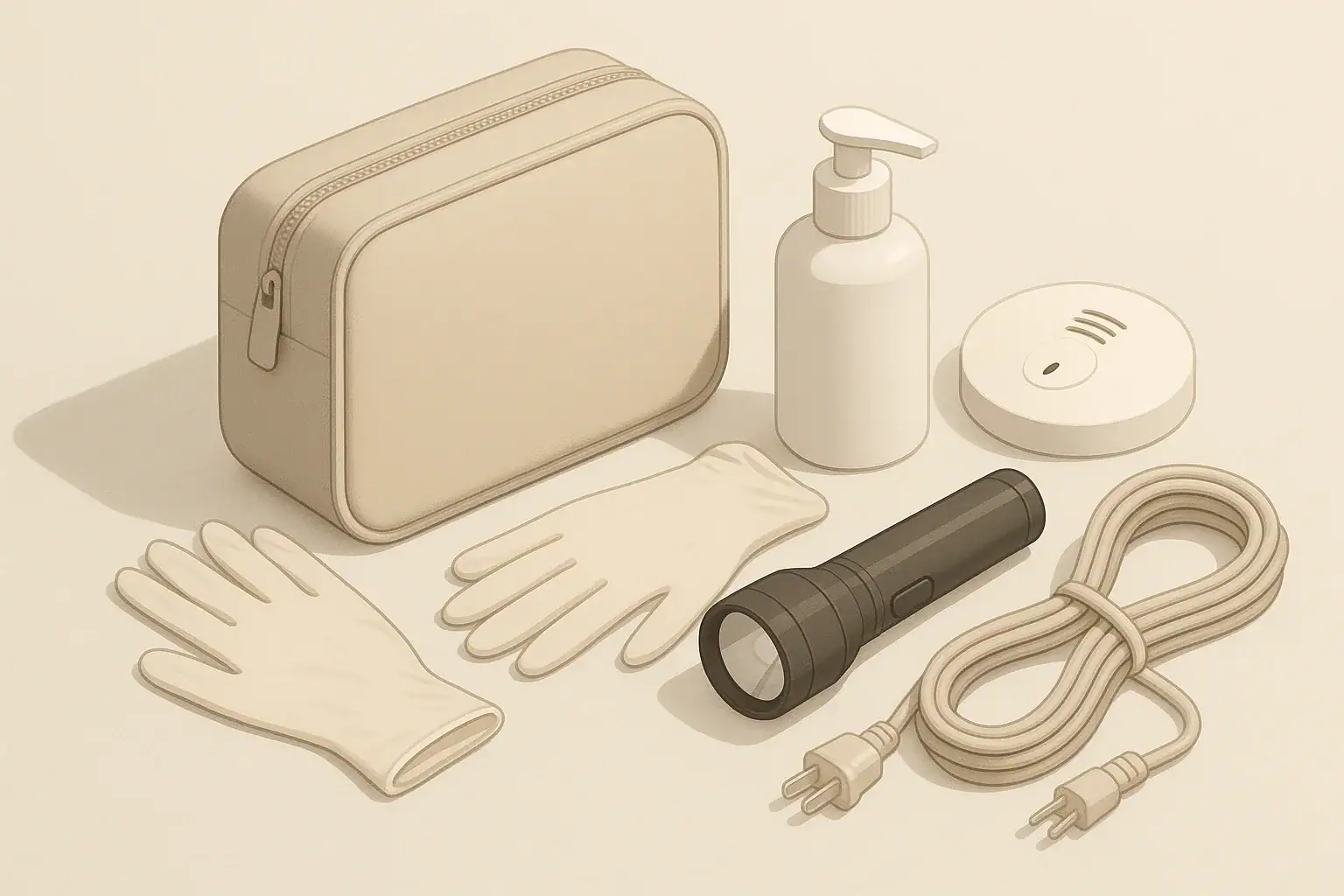
Why Electrical Safety Matters More During Outages
Power outages change how a home’s electrical system is used. Instead of a few steady loads on normal outlets, you might plug many devices into a single power strip, run extension cords across rooms, or rely on portable power banks and car chargers. These are all practical strategies, but they also raise the risk of fires, shocks, and damaged electronics.
Preparing for outages is not about buying more gadgets. It is about using what you have safely and knowing the limits of cords, chargers, and circuits. With a few basic habits, you can keep lights and essential devices running without overloading your home or putting your family at risk.
This guide focuses on simple, realistic situations: renters in apartments, families in houses, small spaces, and households with kids, pets, and older adults. It covers how to choose and use cords, power strips, and chargers during short-term power disruptions, including seasonal events like winter storms, hurricanes, and heatwaves.
Using Extension Cords and Power Strips Safely
Extension cords and power strips are often the first tools people reach for during a blackout, especially when only a few outlets are available from a small backup power source or generator. Understanding their limits is essential.
Extension Cords: Indoor vs. Outdoor Use
Not all cords are the same. Some are designed for indoor use only, while others are built to handle moisture, sunlight, and rough surfaces.
- Indoor cords: Generally lighter, thinner, and intended for temporary use inside dry rooms.
- Outdoor cords: Thicker insulation, often in bright colors, designed to handle moisture and physical wear.
For outages, especially in storms when windows or doors may be opened or if you are running cords to a porch or garage, use outdoor-rated cords for any connection that might see moisture or abrasion.
Gauge and Length: Why They Matter
Longer cords and thinner wires increase resistance, which can cause overheating under heavy loads. While you do not need to memorize technical ratings, follow these basic ideas:
- Use the shortest cord that comfortably reaches your device.
- For higher-draw items like space heaters or large appliances, use a heavier-gauge (thicker) cord rated for the load.
- Do not daisy-chain multiple extension cords to reach farther; run a single appropriate cord instead.
Power Strips vs. Surge Protectors
Power strips and surge protectors look similar but serve different purposes:
- Power strip: Adds extra outlets but may not provide surge protection.
- Surge protector: Includes components designed to help absorb voltage spikes.
During outages, especially when power cycles on and off, electronics can be exposed to surges. Plug sensitive devices, such as laptops and routers, into surge-protecting strips when possible.
Safe Placement and Everyday Habits
Even if a cord is rated correctly, unsafe placement can still cause problems. During an outage, rooms may be darker and more crowded, increasing trip and damage risks.
- Do not run cords under rugs, carpets, or bedding. This traps heat and can hide damage.
- Keep cords away from standing water, wet floors, and sinks.
- Secure cords along walls or baseboards when possible, not across doorways or stairs.
- Uncoil long cords fully when using higher loads, so heat can dissipate.
Check cords before an outage when the lights are on. Look for cracks, fraying, loose plugs, or bent blades. It is better to retire a suspect cord than to risk a fire in the dark.
| Task | Why it matters | Notes |
|---|---|---|
| Inspect cords for damage before outage season | Prevents shock and fire from hidden faults | Look for cracks, frays, loose plugs |
| Match cord rating to device load | Avoids overheating from undersized cords | Heavier devices need heavier cords |
| Use one cord instead of chaining several | Reduces resistance and weak connections | Plan layout so one reach is enough |
| Keep cords visible, not under rugs | Prevents heat buildup and hidden wear | Route along walls where possible |
| Limit one high-draw device per strip | Helps avoid overloading the strip | Heaters and cooking devices especially |
| Unplug nonessential items when power returns | Reduces surge risk and circuit load | Plug items back in gradually |
Preventing Circuit Overloads in Real Homes
Most homes are wired so that several outlets and lights share the same circuit. During an outage, it is tempting to plug many devices into one accessible outlet or backup power strip. That can overload the circuit or the strip, especially if high-wattage devices are involved.
Recognizing Common High-Load Devices
Some devices draw much more power than others. When planning what to run in a blackout, it helps to know which ones put stress on circuits:
- Portable space heaters
- Microwaves and toaster ovens
- Hair dryers
- Irons
- Window air conditioners
- Full-size refrigerators and freezers
Smaller items typically draw much less power:
- LED lamps
- Phone chargers
- Radios
- Routers and modems
- Small fans
During an outage, prioritize essential low-draw devices on backup power. Use high-draw devices sparingly and one at a time, if your backup system is rated for them at all.
Simple Ways to Avoid Overloading
You do not need exact wattage calculations to be safer. A few basic rules go a long way:
- One big device per circuit or strip. Do not run a heater and a microwave from the same power strip or extension cord.
- Stagger usage. If you must use a high-draw appliance, turn off other plugged-in items on that strip or circuit first.
- Feel for warmth. If a cord, adapter, or strip is hot to the touch (not just slightly warm), unplug and let it cool.
- Respect breaker trips. If a circuit breaker trips or a strip’s internal breaker pops, find the cause. Do not simply reset and continue with the same load.
Apartment vs. House Considerations
In apartments and small spaces, circuits may serve several rooms at once, and access to the breaker panel might be limited.
- Know the panel location. Ask your landlord or building management if you are not sure.
- Test key outlets in advance. Plug a lamp into different outlets and flip breakers (when safe and allowed) to see which outlets share a circuit.
- Plan your outage layout. Decide in advance which outlets will power which critical items to avoid guesswork in the dark.
In houses, garages, basements, and exterior outlets may be on different circuits. These can be useful for spreading out loads, but only if cords are protected from moisture and physical damage.
Safely Using Chargers, Power Banks, and Vehicle Power
During outages, people often rely on portable chargers, power banks, and vehicle outlets to keep phones, flashlights, and small devices running. These are practical tools when used carefully.
Phone and Device Chargers
Chargers are usually low-power, but they can still overheat or fail if misused.
- Avoid covering chargers with pillows, clothes, or bedding while in use.
- Do not use damaged cables with exposed wires or bent connectors.
- Unplug chargers when not charging anything, especially when power returns and outlets are loaded.
During outages, prioritize charging essential communication devices first, such as phones and battery-powered radios. Then rotate through other devices as capacity allows.
Power Banks and Small Backup Batteries
Power banks store energy for later use and are helpful for renters and people in small spaces who cannot install large systems. To use them safely:
- Charge them fully during normal conditions, especially before a forecasted storm or heatwave.
- Store in a cool, dry place, away from direct sunlight and heat sources.
- Do not stack items on top of them while charging.
- Use compatible cables rather than forcing mismatched connectors.
Rotate their use throughout the year so they are not sitting unused for long periods. Regular light use helps you notice any issues before you are relying on them in an emergency.
Using Vehicle Power Outlets Wisely
Many households charge devices from a car outlet during outages. This can be safe if done carefully:
- Run the vehicle in a well-ventilated outdoor area if the engine is on. Never idle a car in a garage, even with the door open.
- Limit high-draw inverters that convert vehicle power to household outlets. They can stress the vehicle’s electrical system and wiring if oversized.
- Focus on low-draw charging like phones and small battery packs rather than heaters or cooking appliances.
Think of vehicle outlets as a backup for communication and lighting, not a substitute for regular household power.
Planning Lighting Without Overloading Circuits
Lighting is one of the easiest needs to meet safely during a blackout, especially with modern LED options. They use very little power compared to older bulbs or large appliances.
Prioritizing Low-Load Light Sources
When planning your outage kit, lean toward devices that give a lot of light per amount of power used:
- LED flashlights for moving around safely.
- Compact LED lanterns for shared rooms and cooking areas.
- Battery-powered nightlights for hallways, kids’ rooms, and bathrooms.
These can usually be powered by standard batteries or small backup power packs, avoiding the need to run cords across rooms just to keep one lamp on.
Keeping Pathways and Exits Clear
Trip hazards are more likely in the dark, especially with extra cords on the floor.
- Light key routes from bedrooms to bathrooms and exits.
- Keep cords away from these paths as much as possible.
- Use nightlights or small lanterns rather than long cords to reach central ceiling fixtures.
In homes with children, seniors, or pets, a few well-placed battery lights can prevent falls and confusion without adding electrical load.
Safer Use of Small Backup Power Sources
Some households use small backup power sources such as compact power stations, portable inverters, or simple solar-charged batteries. These can keep essentials running for a few hours to a day, depending on use.
Match Loads to Backup Capacity
Backup power has limits. Overloading a system can trip its protection circuits or, in poorly designed units, cause overheating. To stay within safe bounds:
- List the devices you plan to power, such as a lamp, phone chargers, and a small fan.
- Favor low-watt devices so your backup can run longer.
- Avoid plugging in heating or high-cooking appliances unless your system is clearly designed for them.
Think of backup power as a bridge for communication, basic lighting, and perhaps a fan or small medical device, not an attempt to run your home as usual.
Safe Setup and Operation
Place backup units where they can be used safely:
- Set on a stable, dry, well-ventilated surface, away from bedding and curtains.
- Keep them accessible but out of reach of small children and pets.
- Use short cords and avoid creating cord bundles around the unit.
Charge and test your backup system during normal conditions, so you know how long it realistically runs your essential items. This prevents surprises during an actual outage.
| Device type | Typical watts range (example) | Planning notes |
|---|---|---|
| LED desk lamp | 5–10 | Efficient; good choice for long runtime |
| Phone charger | 5–15 | Short charging sessions conserve power |
| Battery charger for AA/AAA | 10–30 | Top up during daytime to use at night |
| Small fan | 20–50 | Use on lowest speed to extend runtime |
| Wi-Fi router and modem | 10–30 | Decide if connectivity is essential |
| Portable space heater | 500–1500 | High draw; often not practical on small backups |
Simple Pre-Outage Checklist for Safer Electrical Use
A short, written checklist can make blackout conditions calmer and safer, especially if not everyone in the household is familiar with the electrical setup.
Before Outage Season
- Inspect and replace damaged extension cords and power strips.
- Label the main breaker panel and major circuits if possible.
- Test backup lights, power banks, and chargers.
- Decide which outlets will be used for critical devices.
- Store essential cords and strips together in a known location.
When an Outage Is Likely or Begins
- Unplug nonessential high-draw devices like space heaters and microwaves.
- Plug sensitive electronics into surge-protecting strips.
- Limit each strip to one high-draw appliance, if used at all.
- Set up dedicated circuits or outlets for critical uses, such as refrigeration or medical equipment, as your home allows.
During the Outage
- Use low-power lighting and keep pathways lit and free of cords.
- Rotate charging of phones and small batteries to conserve backup capacity.
- Check cords and strips periodically for unusual warmth or odors.
- Keep backup power units in safe, ventilated locations.
When Power Returns
- Turn off or unplug high-draw appliances before power is restored, then plug them back in one at a time.
- Recharge power banks and backup units as soon as practical.
- Review what worked well and what felt risky, and adjust your layout or gear before the next event.
With a little planning and awareness, it is possible to stay connected, lit, and comfortable during outages while keeping cords, chargers, and circuits within safe limits.
Authoritative sources
Safety recommendations can change. Confirm critical details with current official guidance and local authorities.
- CDC: Carbon Monoxide Poisoning Basics
- USDA FSIS: Keep Food Safe During Emergencies
- U.S. CPSC: Battery Safety
Frequently asked questions
Can I run a space heater or microwave on an extension cord or power strip during an outage?
No. High-draw appliances such as space heaters and microwaves should not be used on standard extension cords or power strips because they can overheat and start a fire. Plug those appliances directly into a dedicated wall outlet or use equipment specifically rated for their load and verify your generator or inverter’s continuous wattage before connecting.
How do I choose the right extension cord for outage use?
Choose the shortest cord that comfortably reaches your device and select a heavier-gauge (lower AWG number) cord for higher-draw appliances. Use outdoor-rated cords when moisture or abrasion is possible, never daisy-chain cords, and inspect cords for cracks or fraying before use.
What is the safest way to charge phones and power banks during an outage?
Prioritize charging essential communication devices first and rotate charging to conserve backup capacity. Use surge-protecting strips for sensitive electronics when power is cycling, avoid covering chargers or using damaged cables, and store power banks charged in a cool, dry place.
How can I avoid overloading a circuit when many outlets are in use?
Avoid overloading by running only one high-draw appliance per circuit or power strip and staggering when devices are used. Know where your breaker panel is and, if safe, test which outlets share circuits before an outage so you can distribute loads; if a breaker trips, unplug devices and find the cause before resetting.
Is it safe to use my vehicle’s power outlet or an inverter during a prolonged outage?
Vehicle outlets and inverters can safely power low-draw devices like phone chargers if the vehicle is run outdoors with good ventilation. Do not run the engine in enclosed spaces, and limit inverter use to avoid overloading the vehicle’s electrical system; they are not suitable for heating or cooking appliances.
- Simple checklists and realistic planning
- Water, power, lighting, and pantry basics
- Family plans (kids, pets, seniors) and seasonal prep
Affiliate disclosure
As an Amazon Associate, we earn from qualifying purchases. Some links on this site may be affiliate links. If you buy through these links, we may earn a small commission at no extra cost to you. This helps support our content. Learn more.