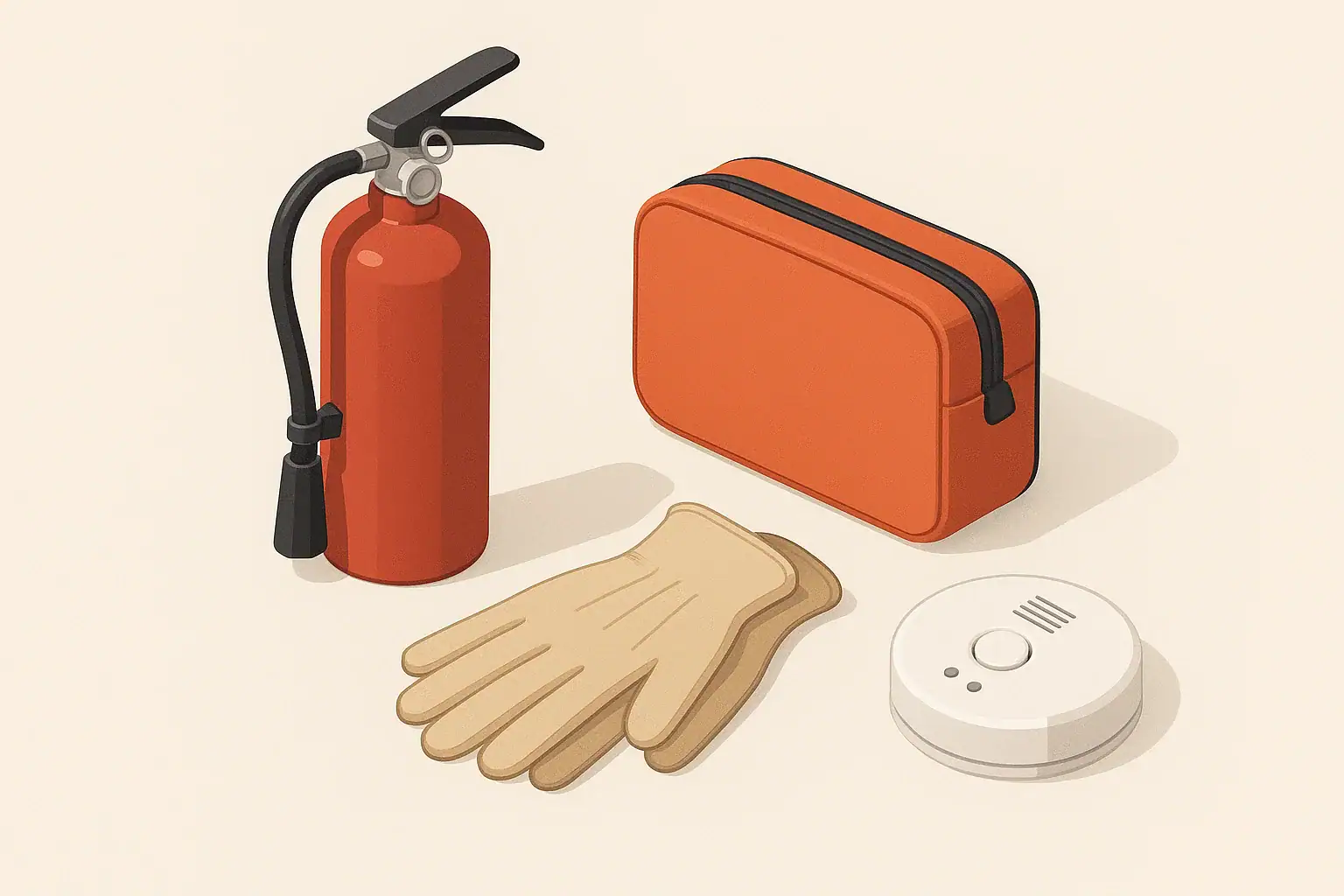
Why Home Fire Extinguishers Matter for Everyday Readiness
Fire extinguishers are a basic, practical part of home safety, just like smoke alarms and flashlights. You may never need one, but having the right type, in the right place, and knowing how to use it can make a small fire easier to control while you get everyone to safety.
For most households, the goal is not to fight big fires. Your priorities are:
- Noticing a fire early (smoke and heat alarms)
- Getting people and pets out quickly
- Calling emergency services
- Using an extinguisher only on small, early-stage fires if it is safe to do so
This guide focuses on the basics for apartments and houses in the United States: what the letters and numbers on extinguishers mean, where to keep them, and simple habits that fit into calm, realistic home readiness.
Understanding Fire Classes and Extinguisher Types
Fire extinguishers are labeled for different classes of fire. The letters on the label (A, B, C, D, K) tell you what kinds of materials they are designed to handle.
Common Fire Classes in Homes
- Class A: Ordinary combustibles like wood, paper, cloth, cardboard, some plastics, and household trash.
- Class B: Flammable liquids and gases such as gasoline, certain solvents, oils, and some paints.
- Class C: Fires involving energized electrical equipment, like outlets, appliances, breaker panels, and power tools.
Two other classes are more specialized:
- Class D: Combustible metals (mainly in industrial settings, not typical homes).
- Class K: Cooking oils and fats, more common in commercial kitchens, though some homes with heavy frying may consider a suitable option.
Common Extinguisher Types for Homes
Most households only need a few basic extinguisher types. The label usually shows both the class letters and a description of the agent inside.
- ABC dry chemical: A multipurpose powder. Suitable for most Class A, B, and C fires. Very common for general home use. Can leave residue that may be messy.
- BC dry chemical: Designed for Class B and C fires (liquids and electrical) but not ordinary combustibles. Less common for general household coverage.
- Water or water mist (Class A, sometimes C-rated): For ordinary combustibles. Some water-mist designs may be rated for certain electrical fires; always check the label.
- CO2 (carbon dioxide): Suitable for some Class B and C fires. Leaves no residue. Often used for electronics and equipment; typically larger and heavier.
- Class K / cooking extinguishers: Designed for cooking oil and grease fires, usually creating a foam-like blanket. Common in commercial kitchens, but some households with frequent deep frying may consider a compatible option near the stove.
For most apartments and single-family homes, one or more ABC-rated extinguishers plus a properly rated option near the kitchen provide practical coverage.
Example values for illustration.
| Home area | Main fire risk | Common extinguisher type to consider | Why it fits |
|---|---|---|---|
| Kitchen | Cooking oils, small appliance fires | ABC dry chemical or cooking-rated unit | Handles grease and small electrical fires near the stove |
| Garage | Gasoline, vehicles, tools, stored items | ABC dry chemical | Covers liquids, electrical tools, and stored combustibles |
| Hallway near bedrooms | Furniture, linens, small electrical sources | ABC dry chemical | General-purpose option along exit routes |
| Workshop or hobby area | Power tools, sawdust, finishes | ABC dry chemical | Addresses mixed material and electrical risks |
| Home office | Electronics, paper, cords | ABC dry chemical or CO2 | Suited to electronics and paper clutter |
| Outdoor grill area (not inside) | Grease, small gas flare-ups | ABC dry chemical | Helps with small flare-ups while evacuating |
What the Numbers and Ratings Mean
In addition to class letters, extinguishers have numbers in front of the letters, such as 2A:10B:C. These ratings indicate fire-fighting capacity under standard test conditions, not a guarantee of performance in every situation.
Class A Ratings (Numbers Before A)
For Class A, the number before the A indicates the approximate water equivalence under test conditions. A higher number generally means a larger tested capacity.
- Example: A unit rated 2A has more capacity than one rated 1A.
- In practice, for small homes, many people choose a unit with a modest A rating that is still easy to lift and operate.
Class B Ratings (Numbers Before B)
For Class B, the number before the B is related to the approximate square footage of a flammable liquid fire that a trained person could extinguish under test conditions.
- Example: 10B suggests more liquid fire-fighting capacity than 5B.
- In homes, moderate B ratings are often adequate for small spills or appliance-related fires.
Class C, D, and K Ratings
- Class C: Indicates the agent is non-conductive and suitable for energized electrical equipment. There is no number rating for Class C.
- Class D and K: Specialized ratings for metal and cooking oil fires. Most typical household extinguishers do not carry these ratings unless specifically designed for that use.
When choosing extinguishers, a straightforward approach for many households is to look for clear ABC ratings for general coverage, and then consider additional specialized extinguishers for areas with specific risks, such as heavy cooking.
Where to Keep Fire Extinguishers in Your Home
Location matters as much as type. The goal is to reach an extinguisher quickly without moving toward danger or into a corner where you might be trapped.
General Placement Principles
- Accessible, not hidden: Mount or place extinguishers where they can be seen and reached easily, not buried in closets or behind stacked items.
- Near exits, not deep inside rooms: Position extinguishers so you can keep a clear path to the door. You want the option to retreat.
- Visible to every adult in the home: Everyone who might use one should know exactly where it is and how to reach it.
- Appropriate height: Mount at a height where an adult can grab and remove it quickly. Consider reach for shorter adults or older family members.
Placement in Houses
In a typical single-family home, many households aim for at least one extinguisher on each level, with more coverage in higher-risk areas.
- Kitchen: Place an extinguisher near the kitchen exit or doorway, not directly over the stove or right next to it. This allows you to approach a cooking fire with an exit behind you.
- Garage: Mount an extinguisher near the interior door leading into the house or another exit, not next to fuel storage.
- Basement or utility area: Consider an extinguisher near the bottom of the stairs or close to an exit route, especially if your furnace, water heater, or laundry machines are there.
- Bedrooms and hallways: A unit in a central hallway can provide quick access if something ignites in a bedroom or living room.
- Outdoor areas: For grilling or outdoor cooking, keep an extinguisher nearby but protected from weather, and never inside the grill enclosure.
Placement in Apartments and Small Spaces
In apartments, space and building rules can limit where you keep extinguishers. Some apartment buildings provide them in hallways or shared areas. Even so, many renters choose a small home unit for their own kitchen and living area.
- Kitchen-focused placement: In a studio or one-bedroom, a properly rated extinguisher near the kitchen entrance is often the most practical spot.
- Know building equipment: Learn where the building’s extinguishers are and how to reach them, especially in stairwells and near exits.
- Mounting options: If you cannot mount hardware, consider approved brackets that attach to existing shelving or use a stable, visible floor stand, following any landlord guidelines.
Special Considerations for Different Households
- Families with young children: Place extinguishers out of reach of very young children but still visible to adults. Teach older children that they must not play with them.
- Seniors or mobility challenges: Prioritize easy access along primary paths of travel and near exits. Lighter units may be more practical to handle.
- Pets: Avoid placing extinguishers where pets frequently knock items over. Stable mounting reduces accidental damage.
How to Use a Fire Extinguisher Safely
Even a well-placed extinguisher is only helpful if you know how to use it and when to walk away. Before you attempt to use an extinguisher, take a moment to check that it is safe to do so.
Know Your Limits
Use an extinguisher only if:
- The fire is small and contained (for example, a wastebasket, a small cooking pan, or a small area of material).
- You have a clear path to the exit behind you.
- Someone has already called emergency services or is calling as you act.
- You feel comfortable operating the extinguisher without hesitation.
If the fire is spreading rapidly, producing thick smoke, or you are uncertain, focus on getting everyone out and closing doors behind you as you exit.
The PASS Technique
A common way to remember the basic steps is the PASS method:
- Pull the pin: This unlocks the operating lever.
- Aim low: Point the nozzle at the base of the fire, not the flames.
- Squeeze the handle: Apply slow, steady pressure.
- Sweep side to side: Move the stream across the base of the fire until it appears out.
Watch the area for re-ignition if it is safe to do so. If the fire grows or you are unsure, leave immediately.
Practicing Without Discharging
Many people never actually discharge an extinguisher until an emergency. To build familiarity without making a mess:
- Pick up and hold your extinguisher occasionally to feel its weight.
- Review the operating instructions printed on the label with your household members.
- Consider attending a local fire department demonstration or safety class if available.
Even a few minutes of review can help you stay calmer if you ever need to use it.
Maintenance, Inspection, and Replacement
Like any safety equipment, extinguishers need occasional attention. A neglected unit may not work as expected.
Simple Monthly Checks
Many households include extinguisher checks in a monthly or seasonal home routine. Quick checks typically include:
- Gauge check: Ensure the pressure indicator is in the recommended range, usually marked on the gauge.
- Physical condition: Look for rust, dents, leaks, loose parts, or signs of tampering.
- Hose and nozzle: Confirm they are clear and not cracked or blocked.
- Label and instructions: Verify they are readable.
- Accessibility: Make sure nothing is stored in front of the extinguisher.
When to Service or Replace
Extinguishers have different maintenance needs depending on whether they are disposable or designed for service:
- Non-rechargeable (often smaller home units): Typically meant to be replaced after use, when damaged, or when they reach the end of their service life as indicated by the manufacturer.
- Rechargeable units: Can often be refilled after use or servicing, but require periodic professional inspection and maintenance according to the manufacturer and local requirements.
Replace or service an extinguisher if:
- The gauge is out of the recommended range.
- There is visible damage, corrosion, or leakage.
- The pin or tamper seal is missing without explanation.
- It has been partially or fully discharged.
Check local guidelines or consult a qualified fire protection professional if you are unsure whether a unit should be serviced or replaced.
Safe Storage and Temperature Considerations
Most household extinguishers are designed for typical indoor temperature ranges. For areas that may experience high heat or freezing conditions, such as unheated garages or outbuildings, review the label for the acceptable temperature range and adjust placement accordingly.
Integrating Fire Extinguishers Into Your Home Readiness Plan
Extinguishers are one piece of a broader home readiness picture that also includes alarms, lighting, communication, and evacuation planning.
Connect Extinguishers With Smoke and CO Alarms
Smoke alarms and carbon monoxide alarms give you early warning so you can act while a situation is still small. A simple routine that some households adopt is to:
- Test smoke and CO alarms on a regular schedule.
- Check extinguisher gauges at the same time.
- Briefly review exit routes and meeting points with household members.
Include Extinguishers in Family Discussions
Calm, age-appropriate conversations help everyone understand what to do if a fire starts.
- Show older children and adults where extinguishers are and how they work.
- Emphasize that getting out and staying out is the priority.
- Practice simple drills: how to exit, where to meet outside, and who will call emergency services.
Apartment vs House Planning
Your plan will look slightly different depending on where you live:
- Apartments: Focus on knowing exits, stairwells, and building alarms. One or two carefully placed extinguishers in your unit can support your escape if a very small fire starts nearby.
- Houses: Plan for multiple levels, garages, and outdoor areas. Consider extinguishers along main paths you would use to exit, such as hallways and kitchen doorways.
Example values for illustration.
| Need | Simple supplies | Safe use note | Disposal idea |
|---|---|---|---|
| Hand cleaning | Soap, small amount of water, or alcohol-based hand cleaner | Use before eating and after restroom use | Dispose of used towels with regular household trash |
| Basic surface wipe-down | Disposable wipes or diluted household cleaner | Ventilate area while cleaning | Seal used wipes in a small trash bag |
| Toilet use during outages | Trash bags, absorbent material, toilet with lid | Line bowl carefully and avoid splashing | Tie bags securely and store in covered bin until disposal |
| Pet waste | Small bags, litter or absorbent material | Wash hands after handling waste | Double-bag and place in outdoor trash when possible |
| Short-term laundry delay | Separate bin for soiled items | Keep bin closed and away from sleeping areas | Launder as soon as services are available |
| Dishwashing with limited water | Minimal water, basin, drying rack | Scrape food first to reduce water use | Strain solids from rinse water before discarding |
Keeping Fire Safety Practical and Manageable
Fire extinguishers work best as part of a simple, realistic safety routine. A few well-chosen units, placed where you can reach them, checked periodically, and paired with clear exit plans can support your household through everyday situations and minor emergencies without turning your home into a storage space for gear.
By understanding types, ratings, and placement, you can make calm, informed choices that fit your living space, whether you are in a compact apartment or a multi-level house.
Authoritative sources
Safety recommendations can change. Confirm critical details with current official guidance and local authorities.
- CDC: Carbon Monoxide Poisoning Basics
- U.S. CPSC: Battery Safety
- CDC: Guidelines for Cleaning Safely After a Disaster
Frequently asked questions
Which type of fire extinguisher is best for a typical home?
For most homes, an ABC-rated dry chemical extinguisher offers the broadest protection against ordinary combustibles, flammable liquids, and energized electrical fires. Consider adding a cooking-rated unit (Class K or a cooking-rated ABC) near the stove if you frequently deep-fry. Keep in mind that ABC powders can leave a residue that may require cleanup and can harm sensitive electronics.
Where is the safest place to keep a fire extinguisher in a small apartment?
In a small apartment, place a properly rated extinguisher near the kitchen entrance or along a primary exit route so you can access it while keeping a clear path to the door. If mounting hardware is restricted by the landlord, use approved brackets or a visible floor stand and learn where any building-provided extinguishers are located. Make sure the unit is visible and not blocked by stored items.
How often should I inspect my home fire extinguishers and what should I check?
Perform a quick visual inspection monthly: check that the pressure gauge is in the recommended range, the tamper seal and pin are intact, the hose/nozzle is clear, and there is no visible corrosion or leaks. Verify the label and instructions are readable and the unit is accessible. For rechargeable models follow manufacturer guidance for professional service and replace non-rechargeable units after any discharge or when they reach end of life.
Can I use an ABC fire extinguisher on a grease fire from cooking?
ABC extinguishers can be effective on many small cooking oil fires, but Class K extinguishers are specifically designed for larger grease and deep-fat fryer fires. Never use water on a grease fire, and only attempt to extinguish a cooking fire if it is small, you have an unobstructed exit behind you, and you are confident the extinguisher will control it. If in doubt, evacuate and call emergency services.
Are home fire extinguishers safe to use on electrical fires and what should I avoid?
Extinguishers rated for Class C (commonly ABC dry chemical or CO2 units) are appropriate for fires involving energized electrical equipment because their agents are non-conductive. Avoid using water-based extinguishers on energized equipment. If possible and safe, disconnect power to the equipment before extinguishing to reduce the chance of re-ignition.
- Simple checklists and realistic planning
- Water, power, lighting, and pantry basics
- Family plans (kids, pets, seniors) and seasonal prep
Affiliate disclosure
As an Amazon Associate, we earn from qualifying purchases. Some links on this site may be affiliate links. If you buy through these links, we may earn a small commission at no extra cost to you. This helps support our content. Learn more.